RiseGuide Team
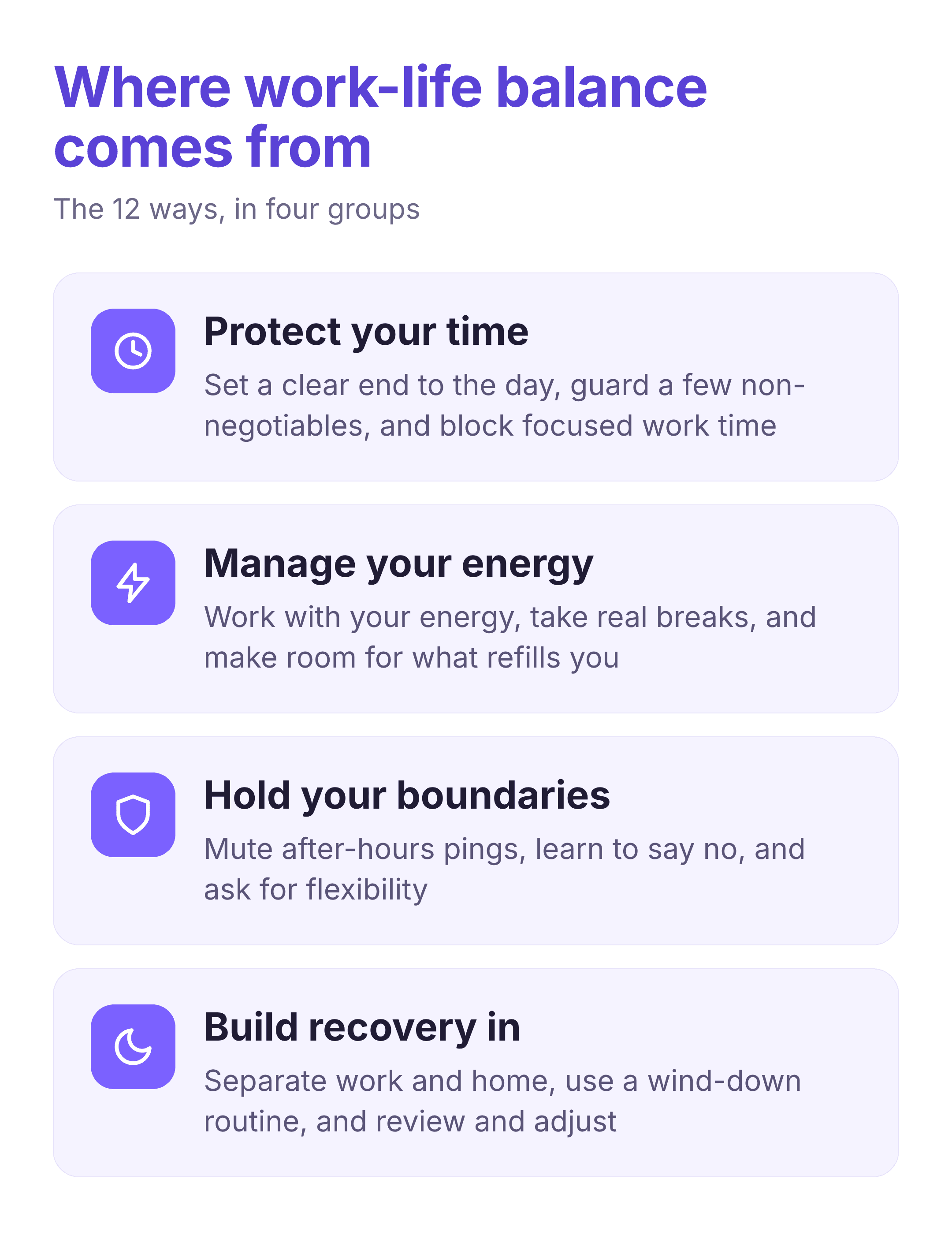
To protect your work life balance, you set a firm end to the workday, guard a few non-negotiable commitments, work with your energy instead of only your hours, mute after-hours notifications, learn to say no, protect blocks of focused time, separate work from home, use a simple wind-down routine, take real breaks and your full time off, make room for people and things that refill you, review your setup regularly, and ask for the flexibility you need. It isn't a perfect 50/50 split. Think of it as a setup you adjust so that work has its place and the rest of your life has room too.
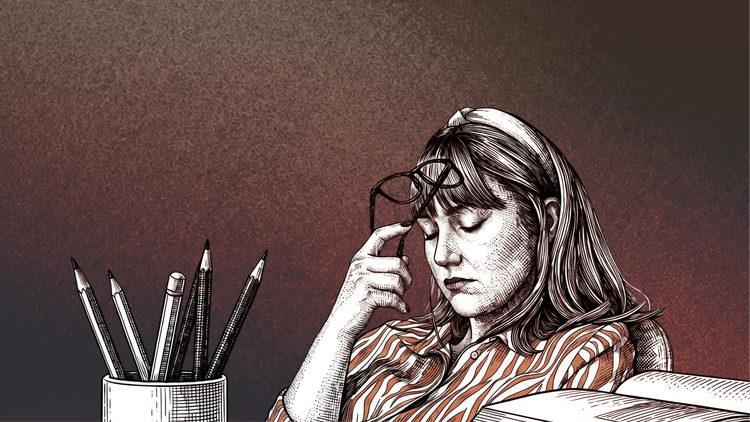
Most people don't lose their work life balance in one dramatic moment. It slips a little at a time — a few late emails, a working lunch, a weekend that quietly fills with catch-up — until work has crept into every corner of the week. The good news is that it can be rebuilt the same way, one small change at a time. Here's what it really means and twelve realistic work life balance tips you can start using this week.
The simplest work life balance definition is this: a healthy division of time and energy between your job and the rest of your life, so neither one is constantly crowding out the other. It doesn't mean an exact split, and it doesn't mean work and life never overlap. What is work life balance in practice is having enough control over your schedule that you can do your job well and still have time and energy left for your health, relationships, and the things that matter to you. Balance also looks different from person to person and changes over time. A parent of young kids, a new graduate, and someone nearing retirement will each draw the line in a different place, and that's fine. The goal is a setup that works for your life right now, not a rule that applies to everyone.
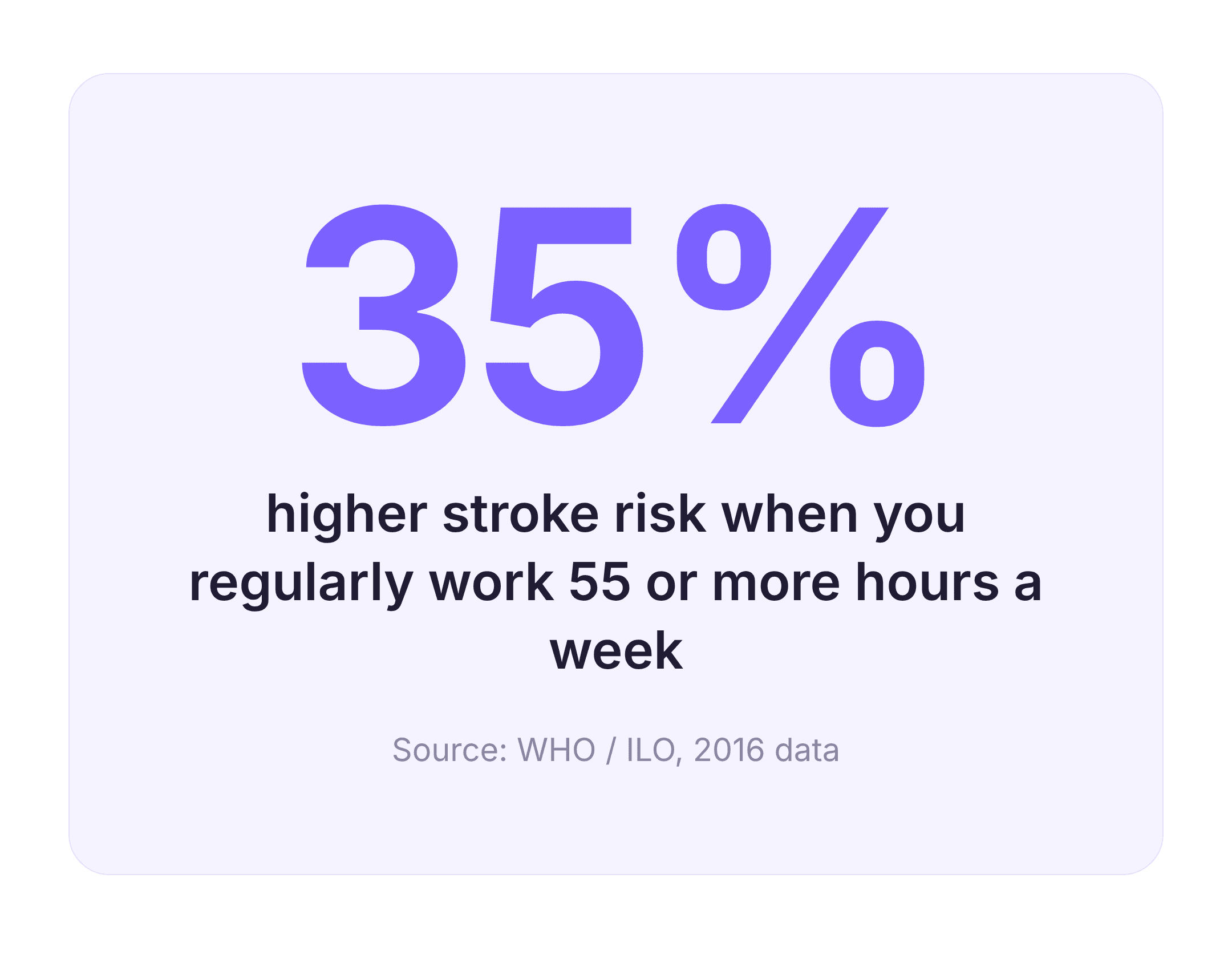
Poor balance does more than make you tired. Over time it takes a toll on your health. Working long hours on a regular basis is linked to serious health risks — the World Health Organization found that regularly working 55 or more hours a week is associated with a 35% higher risk of stroke and a 17% higher risk of dying from heart disease, compared with a 35-to-40-hour week. That finding draws on 2016 global data, but it's a clear reminder that overwork adds up in ways that matter. Protecting your time is part of staying well enough to keep doing good work.
These are ways rather than strict steps, so you don't have to do them in order. Start with the one or two that fit your situation, get them steady, and add more over time. Knowing how to balance work and life comes down to a handful of small habits you actually keep, not one big overhaul.
Decide what time work ends, and treat that time like a meeting you can't miss. A clear stop tells your brain the day is done and stops "just one more thing" from stretching into the evening. If you work from home, a small closing ritual — shutting the laptop, a short walk, changing clothes — makes the end feel real.
Pick two or three things outside work that you refuse to drop: a workout, dinner with family, a class, time with a friend. Put them in your calendar as fixed commitments, not as things you'll do "if there's time." Protecting a small number of them is more realistic than trying to defend your whole evening, and it keeps your life from becoming all work by default.
A balanced week is about more than hours. It also depends on when you have energy and what you spend it on. Notice when you're sharpest and schedule demanding work then, and save low-energy stretches for lighter tasks. If you end every day completely drained, the problem may be how your energy is spent, not just how many hours you worked.
Few things erode work and life balance faster than a phone that buzzes with work messages all evening. Mute work apps outside your hours, or use your phone's focus settings to hold notifications until morning. That protects the recovery time that lets you do your job well tomorrow.
Overload is often a pile of small yeses. Saying no to a non-essential meeting, an extra project, or a favor that isn't yours to do protects the time you need for the work and life that matter. If saying no feels hard, that's worth working on directly — learning to stop people-pleasing makes every other boundary on this list easier to hold.
When work keeps spilling into your evenings, the cause is often a workday broken up by constant interruptions, so nothing finishes on time. Blocking off a couple of hours of uninterrupted, focused work helps you get the important things done inside your hours instead of after them. A few solid time management skills make this easier to put in place.
Balance is easier when work has a place and your home has a place, even if both are in the same apartment. A dedicated spot for work that you can step away from, rather than working from the sofa or bed, helps your brain switch off when you're done. If you commute, use the trip as a buffer between the two; if you don't, build a small one in.
A short, repeatable routine at the end of the day helps you cross from work mode into rest. It can be as small as tidying your desk, writing tomorrow's top three tasks, and then doing something that signals the day is over. The same idea helps in the morning — a steady morning routine starts your day on your terms rather than reacting to the first email you see.
Short breaks during the day and full days off are part of how sustainable work happens. Step away from your screen at lunch, take your vacation days, and when you're off, be off. Rest that you actually take does more for your output than the extra hours you'd have worked instead.
Balance also comes from the life you make room for outside work. Protect time for the people and activities that restore you, whether that's exercise, a hobby, or simply quiet time alone. Giving yourself permission to focus on yourself without guilt is part of a healthy balance, and it helps you show up better everywhere else.
Your ideal balance shifts with your workload, your season of life, and your goals, so it's worth checking in every so often. Once a month, ask what's working, what's slipping, and what one change would help most. Treat balance as something you tune over time, not a target you hit once and forget.
Some of what shapes your balance is set by your job, so it's worth asking for the things that would help — flexible hours, a remote day, a clearer scope, or a lighter load when you're stretched. Many managers would rather adjust than lose a good person to burnout. You won't always get a yes, but you rarely get what you don't ask for.
Figuring out how to find work-life balance that lasts comes down to a handful of small habits you keep: a clear end to the day, a few protected non-negotiables, boundaries around your attention, and real rest. Pick one way from the list that fits your week, make it steady, and add another when you're ready. Balance is something you build and adjust as your life changes, not a finish line you cross once.
Start with one change rather than all twelve. Setting a firm end to the workday and turning off after-hours notifications are two of the highest-impact places to begin, because they protect your recovery time immediately. Add more habits from the list as the first ones become routine.
A healthy balance is one where you can meet the demands of your job and still have time and energy for your health, relationships, and life outside work. It's personal rather than a fixed ratio, so a healthy balance for you is the setup that lets you work well without the rest of your life getting squeezed out.
Practical examples include logging off at a set time each day, keeping one evening fully free, taking a real lunch break away from your desk, not checking email on weekends, and using all of your vacation days. Small, repeatable choices like these add up to balance over time.
Yes, though it looks different in a demanding role. You may not control your total hours, but you can usually control the edges — protecting a few non-negotiables, guarding your focus, taking real breaks, and asking for flexibility where it's possible. Balance is a direction you keep adjusting toward, not an all-or-nothing state.