RiseGuide Team

The best exercises for personal growth are small, repeatable practices you can fit into an ordinary week, not a life overhaul. Keep a journal and write down a few things you're grateful for. Set specific, meaningful goals, and reflect on how each day actually went. Spend a few minutes on mindfulness, learn your character strengths, and build one small habit at a time. Ask people you trust for honest feedback, and step outside your comfort zone on purpose. Practice self-compassion when things go wrong, get clear on your core values, and keep reading regularly while you learn a new skill. Cut back on mindless scrolling, and do something kind for someone else. None of these need special equipment or much time — the point is to do two or three of them consistently rather than all fifteen at once.
Growing as a person can sound like a vague project with no obvious starting point. In practice, it comes down to a handful of ordinary habits done regularly: paying attention to your own patterns, setting a direction, and closing the gap between the two a little at a time. The exercises below are the ones that tend to hold up, either because there's real research behind them or because they've been useful to people for a long time.
You don't need to adopt all of them. Pick the two or three that fit your life right now, do them for a few weeks, and add another when those feel natural. Consistency does far more here than intensity.
Writing things down turns a swirl of half-formed thoughts into something you can actually look at. A few minutes at the end of the day — what happened, how you felt about it, what you'd do differently — is enough to spot patterns you'd otherwise miss.
If a blank page feels intimidating, use prompts. "What drained me today, and what gave me energy?" or "What did I avoid, and why?" are good starting questions. Keeping a self growth journal works best when it's short and regular rather than long and occasional.
Gratitude is one of the most-studied personal development activities, and the findings are consistent. Researchers, including gratitude expert Robert Emmons, have traced benefits like better sleep, fewer symptoms of illness, and more happiness to the simple act of writing down what you're grateful for.
In practice, three specific things a few times a week beats a long daily list you can't sustain. Specific matters: "my friend called to check on me" does more than "my friends." The aim is to notice the good that's already there, not to manufacture forced positivity.
Vague intentions like "get healthier" rarely go anywhere. Decades of research by psychologists Edwin Locke and Gary Latham found that specific, challenging goals lead to higher performance than vague "do your best" goals, because a clear target gives your effort somewhere to go.
Turn a wish into a concrete goal with a number and a deadline: not "read more" but "read one book a month." Write your personal goals down, keep them somewhere you'll see them, and review them often enough to course-correct.
Reflection is the step most people skip, and it's where a lot of the growth actually happens. Experience alone doesn't teach you much; experience you've thought about does.
Set aside a few minutes to ask what went well, what didn't, and what you learned. Some people do this in their journal, others on a walk or during a commute. The habit matters more than the format — the goal is to make sense of the day before it blurs into the next one.
Mindfulness is simply paying attention to the present moment without judging it. Sitting quietly and following your breath for five minutes trains you to notice your thoughts and feelings instead of being swept along by them, which makes it easier to respond thoughtfully rather than react on impulse.
Start small. Five minutes a day is more sustainable than a half-hour you'll dread and drop. A guided app or a quiet corner both work; consistency is what builds the skill.
It's easier to grow when you know what you're already good at. The VIA Institute on Character identifies 24 character strengths that everyone has in a different order, from curiosity and perseverance to kindness and fairness, and using your top ones deliberately is linked to greater wellbeing and confidence.
Once you know your signature strengths, look for one new way to use one of them each week — leaning on curiosity to ask better questions in meetings, say. Working with a strength feels different from forcing yourself against the grain.
Most personal growth comes from habits, and most habit attempts fail because people try to change everything at once. Pick one small behavior and make it almost too easy to skip — two minutes of stretching, one page of reading, a single glass of water when you wake up.
Attaching the new habit to something you already do makes it stick: "after I pour my morning coffee, I write down one goal for the day." Once it's automatic, add the next one. Trying to overhaul your whole routine in a week is the most common way to end up back where you started.
We all have blind spots, and other people can see them more clearly than we can. Asking someone you trust "what's one thing I could do better?" is uncomfortable, which is exactly why it's useful.
Ask specific people specific questions, listen without defending yourself, and thank them regardless of what you hear. You don't have to act on every piece of feedback, but the patterns that come up more than once are worth taking seriously.
Growth happens at the edge of what's familiar. Doing something slightly uncomfortable on purpose — speaking up in a meeting, taking a class where you're a beginner, starting a conversation with a stranger — expands what feels normal to you.
Keep the stakes low and the frequency high. Small, regular stretches build tolerance for discomfort far better than one dramatic leap. Over time, things that once felt daunting become ordinary, and that's the growth.
How you talk to yourself when you fail shapes whether you try again. Psychologist Kristin Neff, who pioneered the research on self-compassion, describes it simply: "Self-compassion involves doing a U-turn and giving yourself the same compassion you'd naturally show a friend when you're struggling or feeling badly about yourself."
The next time you slip up, notice your inner voice and ask what you'd say to a friend in the same spot. Self-compassion, in Neff's framework, means being kind rather than harsh, remembering that everyone struggles, and facing hard feelings without drowning in them. It isn't letting yourself off the hook; people who treat themselves kindly tend to bounce back and keep going, rather than quitting in shame.
A lot of the friction in life comes from spending time in ways that don't match what you actually care about. Getting clear on your values gives you a standard for decisions, from how you spend a weekend to which opportunities you say yes to.
List the handful of things that matter most to you — honesty, family, creativity, freedom, whatever they genuinely are — and then look at whether your week reflects them. Where it doesn't, you've found something worth adjusting. This is one of the more useful ways to work on yourself, because it makes every other choice a little clearer.
Reading is one of the cheapest ways to borrow other people's hard-won experience. A steady reading habit exposes you to ideas, perspectives, and skills you'd never reach on your own, and it compounds over years.
You don't need to finish a book a week. Ten pages a day adds up to a dozen or more books a year. If you're looking for a place to start, our roundup of the best productivity books is full of titles built around exactly this kind of self-directed growth.
Few things build confidence like getting measurably better at something you couldn't do before. Learning a skill — a language, an instrument, coding, cooking — also keeps your mind flexible and gives you a satisfying sense of progress you can point to.
Break it into small, regular sessions and focus on the parts you find hard rather than the parts you've already got. Our guide on how to learn anything faster walks through practical ways to make that practice stick.
Attention is the raw material of self development, and endless scrolling eats it. Reclaiming even part of that time is one of the highest-return changes most people can make.
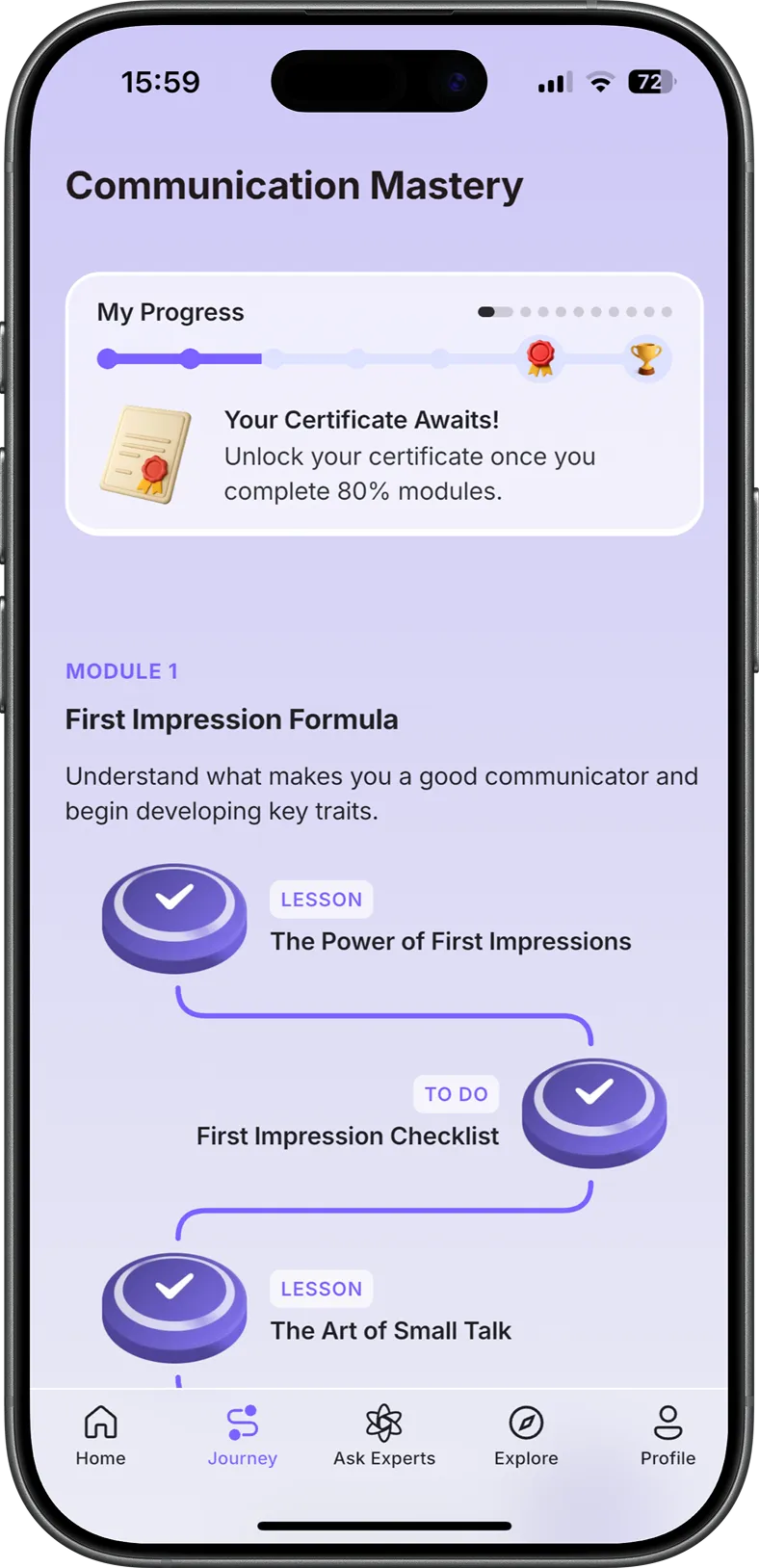
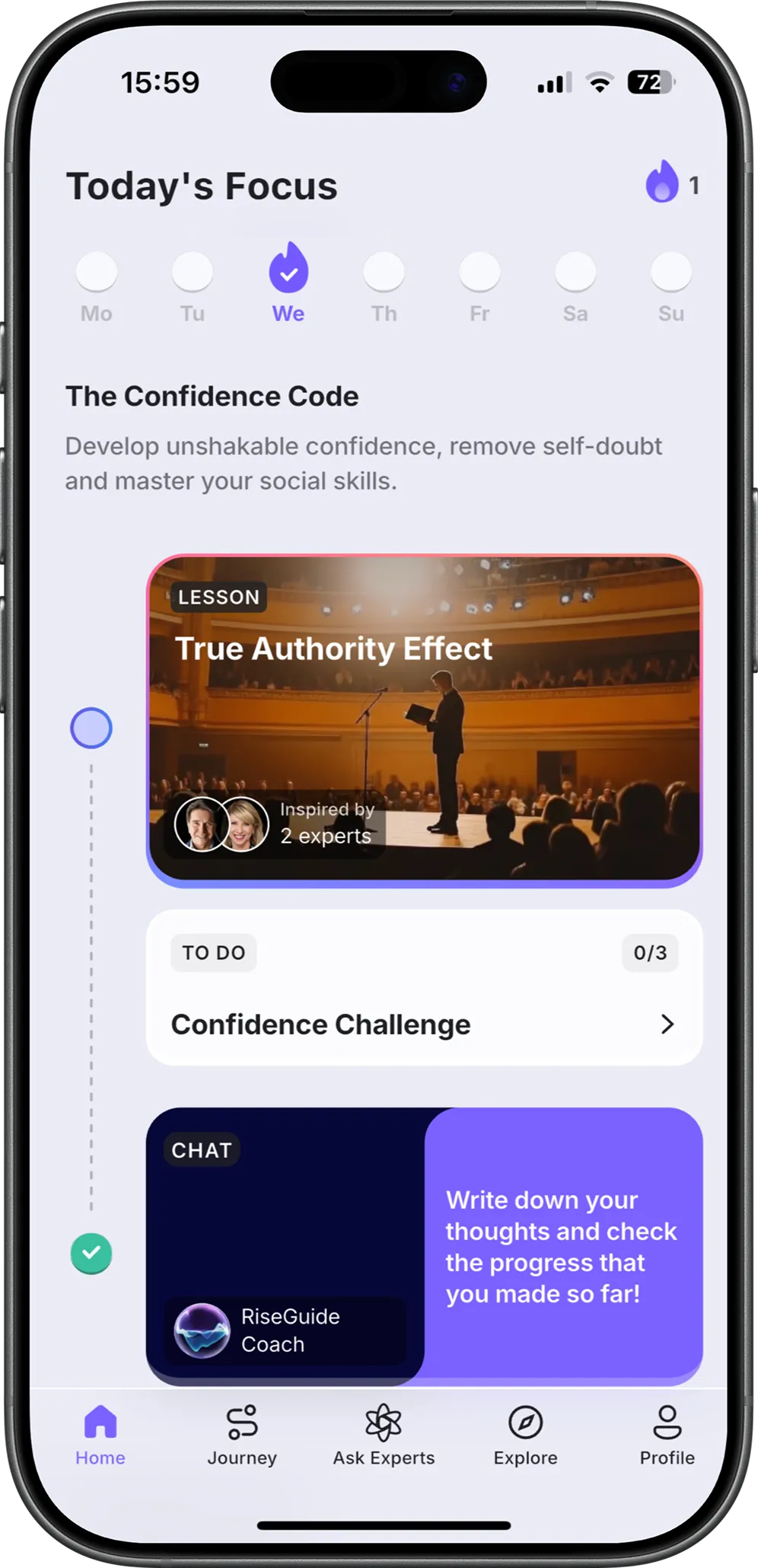
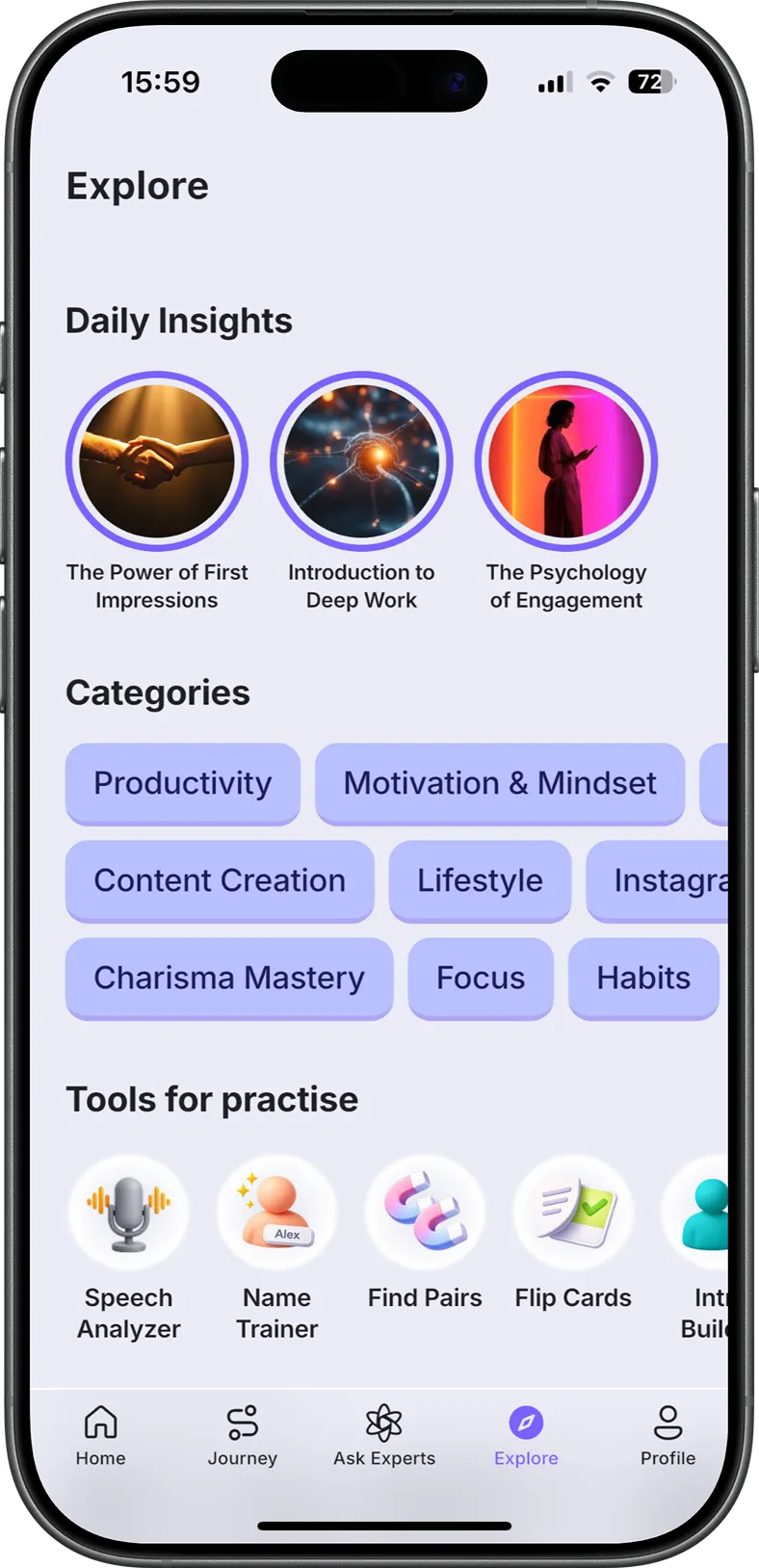
You don't have to quit your phone. Set a few boundaries — no phone for the first hour of the day, app limits in the evening — and redirect some of that time toward the exercises on this list. Swapping a few minutes of scrolling for a few minutes of learning is the whole idea behind RiseGuide, and a range of self-improvement apps can help you make the switch.
Personal growth isn't only inward. Helping other people — a genuine compliment, a favor, volunteering an hour — reliably lifts your own mood and pulls you out of your own head, and it strengthens the relationships that make everything else easier.
Look for small, specific chances rather than waiting for a grand gesture. Kindness done regularly shapes the kind of person you're becoming, which is what growth is really about.
The best exercises for personal growth aren't complicated, and that's the point. Journaling, gratitude, clear goals, a little reflection, one small habit — done consistently, ordinary practices like these change how you think and act over months, not minutes. You won't feel a dramatic shift on day one, and you don't need to. Choose two or three that fit your life, give them a few weeks, and let the results decide what you add next.
Journaling, writing down what you're grateful for, and setting one specific goal are the easiest starting points. They take only a few minutes, need no tools, and give you quick insight into where to focus next.
Pick one small exercise rather than trying to change everything. Attach it to something you already do daily, keep it going for a few weeks until it feels automatic, then add another. Direction and consistency matter more than intensity.
It's any small, repeatable practice that helps you understand yourself better or build a useful skill or habit — journaling, reflection, goal-setting, mindfulness, asking for feedback, and so on. The common thread is that you do it regularly and it moves you forward.
It varies by person and practice, but most people notice small shifts within a few weeks of consistent effort. The bigger changes come from months of steady practice, which is why choosing habits you can actually keep matters more than choosing ambitious ones.
Yes, self-improvement apps like RiseGuide can, especially for building consistency and turning spare minutes into learning. Used well, they support the habits above rather than replacing them.