RiseGuide Team

To focus on yourself, get clear on what you actually want, set boundaries so other people's needs stop crowding out your own, and protect time and energy for your health, your goals, and rest. Start by choosing one area that matters to you and giving it a regular slot in your week, learn to say no without a long apology, cut back on comparison and being constantly available, and treat looking after yourself as the thing that lets you show up for others. Focusing on yourself keeps you steady enough to be any real use to the people around you, which is the opposite of selfish.
"Focus on yourself" is advice you've probably heard after a breakup, a hard stretch at work, or a season spent looking after everyone else. It sounds simple until you try it, and then the guilt shows up: it feels selfish to spend time, money, or energy on yourself when other people need you. That guilt is the real reason focusing on yourself is so hard, and it's also based on a misunderstanding of what focusing on yourself is. This guide covers whether it's selfish, why it's harder than it sounds, and how to focus on yourself in a way you can keep up without feeling like you've abandoned everyone.
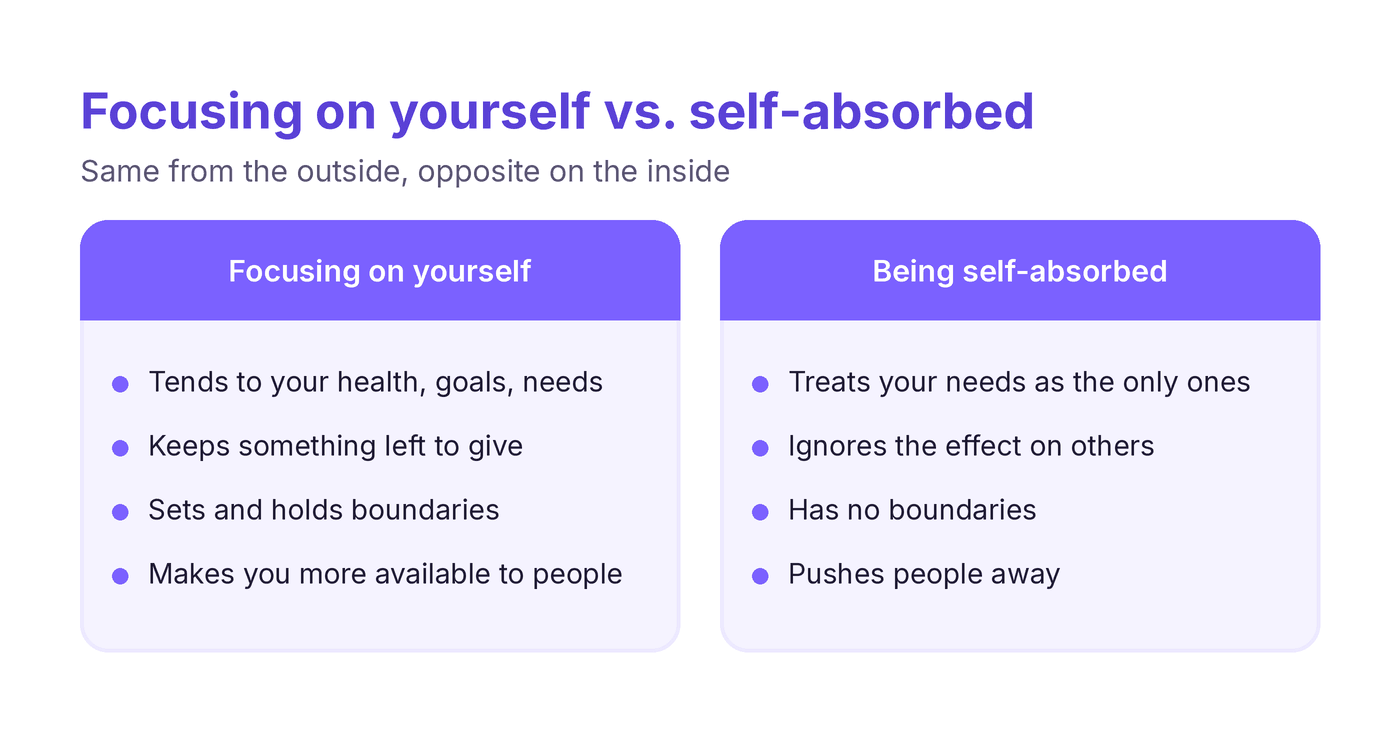
No, and the confusion usually comes from mixing up two different things. Focusing on yourself means tending to your own health, goals, and needs so you have something left to give. Being self-absorbed means acting as though your needs are the only ones that count. The first makes you steadier and more available to people; the second pushes them away. They can look similar from the outside, which is why the guilt creeps in, but they come from opposite places.
There's a reason the "put your own oxygen mask on first" line stuck. You can't support anyone well while running on empty. Being kind to yourself rather than harshly self-critical is linked to greater wellbeing across a large body of research, and people who look after their own needs tend to have more patience and attention for others, not less. So learning how to focus on yourself without being selfish starts with dropping the idea that the two are the same thing.
If focusing on yourself were easy, the advice wouldn't need repeating. A few things get in the way, and naming yours makes it easier to work around.
Guilt and people-pleasing come first. If you learned that your job is to keep everyone else happy, spending attention on yourself feels like breaking a rule. On top of that, when you're always reacting to other people's requests, there's no room left to hear what you want, which is often the honest answer to "why am I not able to focus on myself." Weak boundaries make it worse, because every ask gets a yes by default. And comparison, especially the scrolling kind, keeps your attention pointed at everyone else's life instead of your own.
The techniques below are about reclaiming a bit of your time, attention, and energy for your own life, without turning away from the people in it. Pick the two or three that match where you feel most stretched, rather than trying all of them at once.
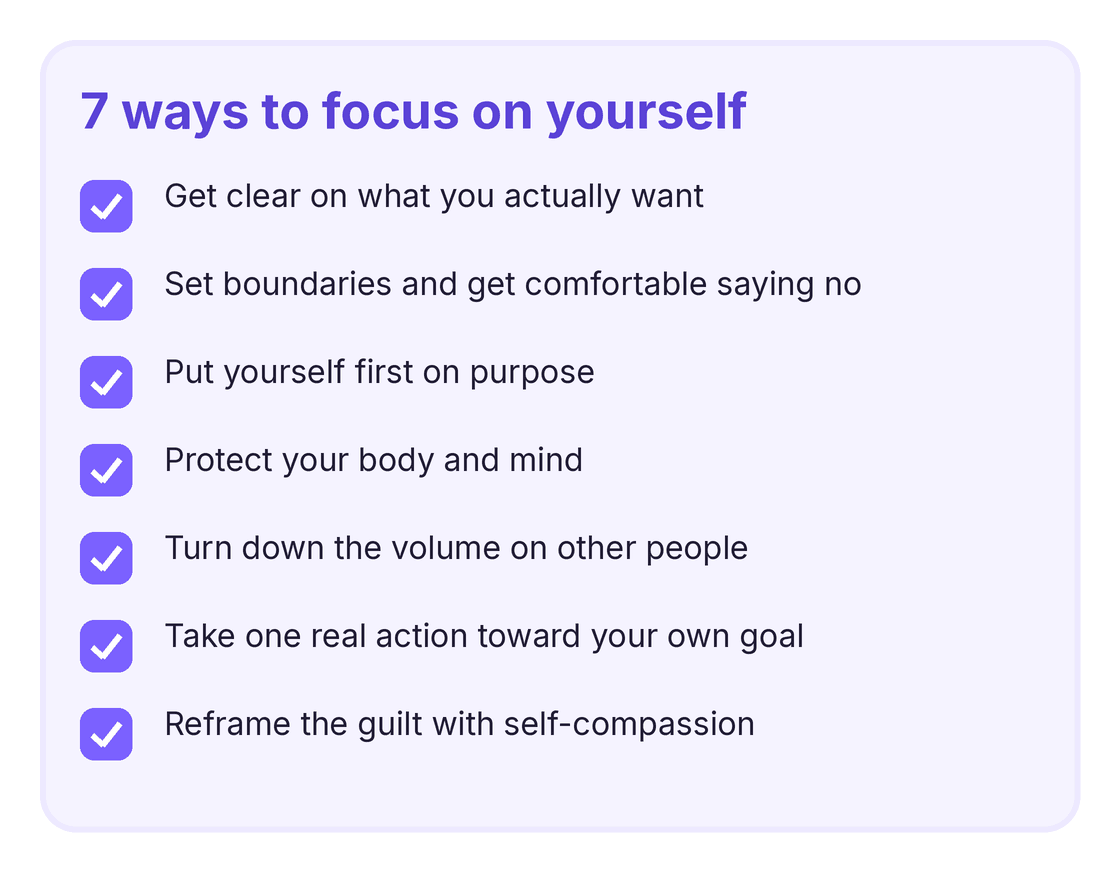
You can't focus on yourself if you don't know what "yourself" wants. Spend a little time on the plain questions: what do you enjoy, what have you been putting off, what would you do with a free evening that was yours? Write a few answers down. When your own priorities are vague, other people's clear requests will always win by default, so naming what you want is what gives you something to protect.
A boundary is just a line that protects your time and energy. Saying no is how you hold it. You don't owe a long apology or a detailed reason; "I can't take that on right now" is a complete answer. Saying no to what drains you frees up time for what matters, and the discomfort of disappointing someone usually passes faster than the resentment that builds from always saying yes.
Most people only get to themselves once everyone else is handled, which means never. Learning how to put yourself first mostly means scheduling it: block an hour that's yours, put it in the calendar like any other commitment, and protect it the same way. It doesn't have to be big. A regular, defended slot beats a vague intention to "make more time for me" that never arrives.
The basics are boring and they work. Sleep, some movement, food that isn't an afterthought, and time that isn't scheduled all give you the baseline energy to focus on anything, yourself included. When you're exhausted, everything feels like more than you can manage, and focusing on yourself is usually the first thing to go. Demetra Moore, one of our experts, makes the case for building mental fitness so your mind has the same steady base your body needs.
Focusing on yourself is partly a matter of reducing how much of other people you take in. Cut the scrolling that leaves you comparing your life to a highlight reel, mute the accounts that make you feel behind, and give yourself permission to be unavailable for a set stretch each day. The quieter it gets, the easier it is to hear what you actually think.
Reflection turns into focusing on yourself only when it becomes action. Pick one goal that's yours, not one you took on for someone else, and do the smallest next step this week. Whitnie Wiley, an executive coach and one of our experts, writes about moving from planning into action when planning becomes a way to avoid starting, which is easy to fall into when the goal is your own and no one else is holding you to it.
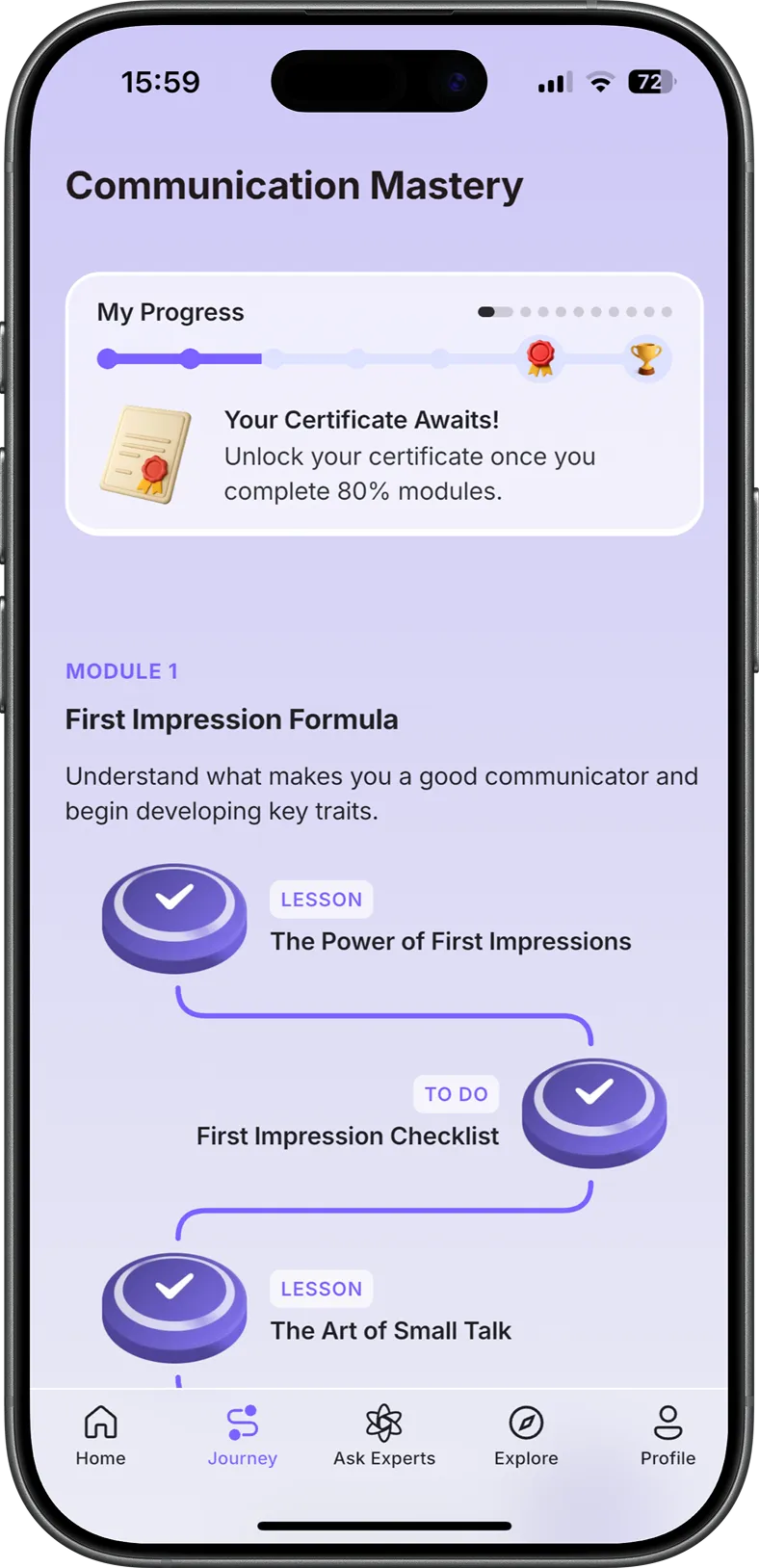
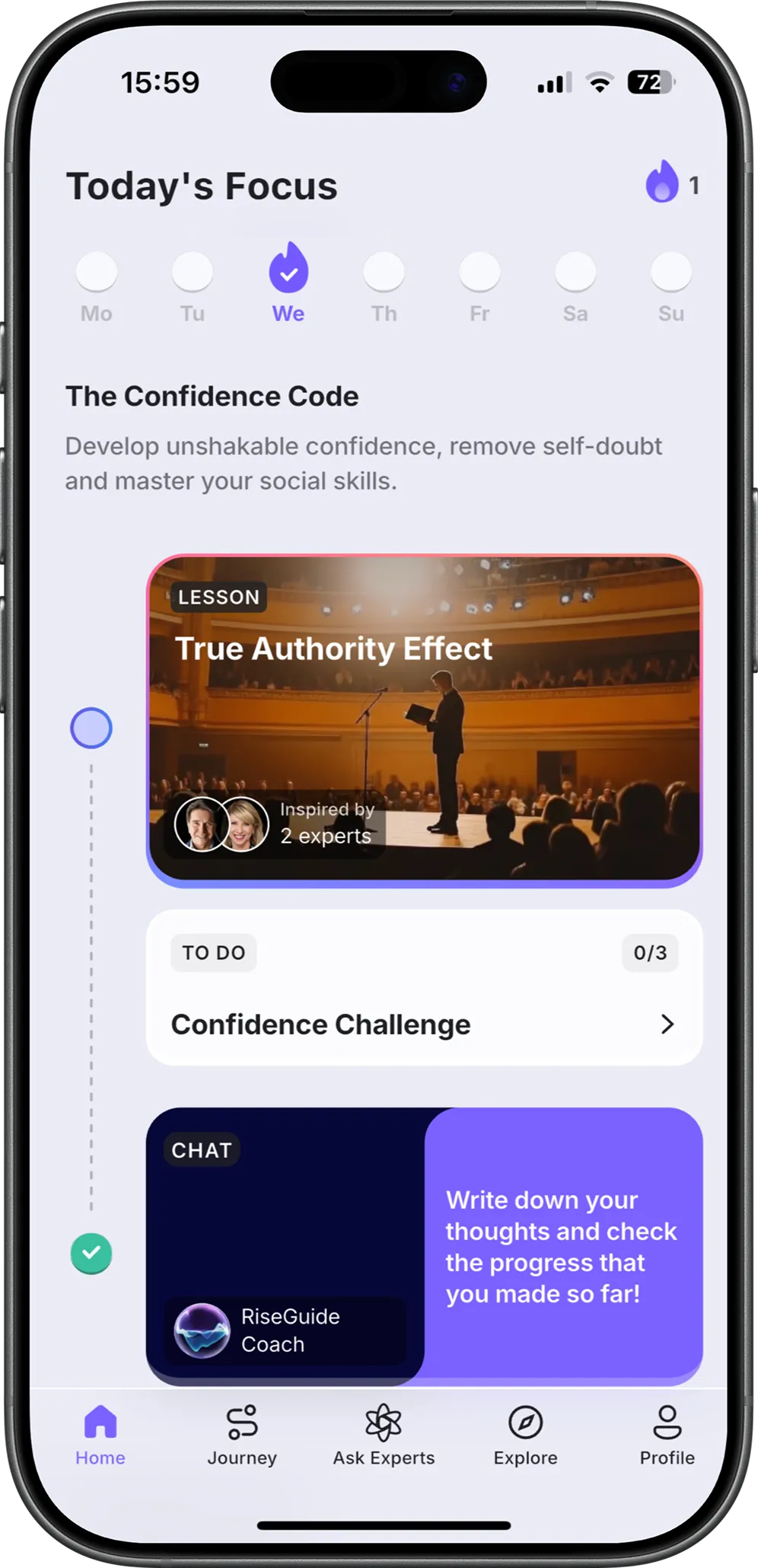
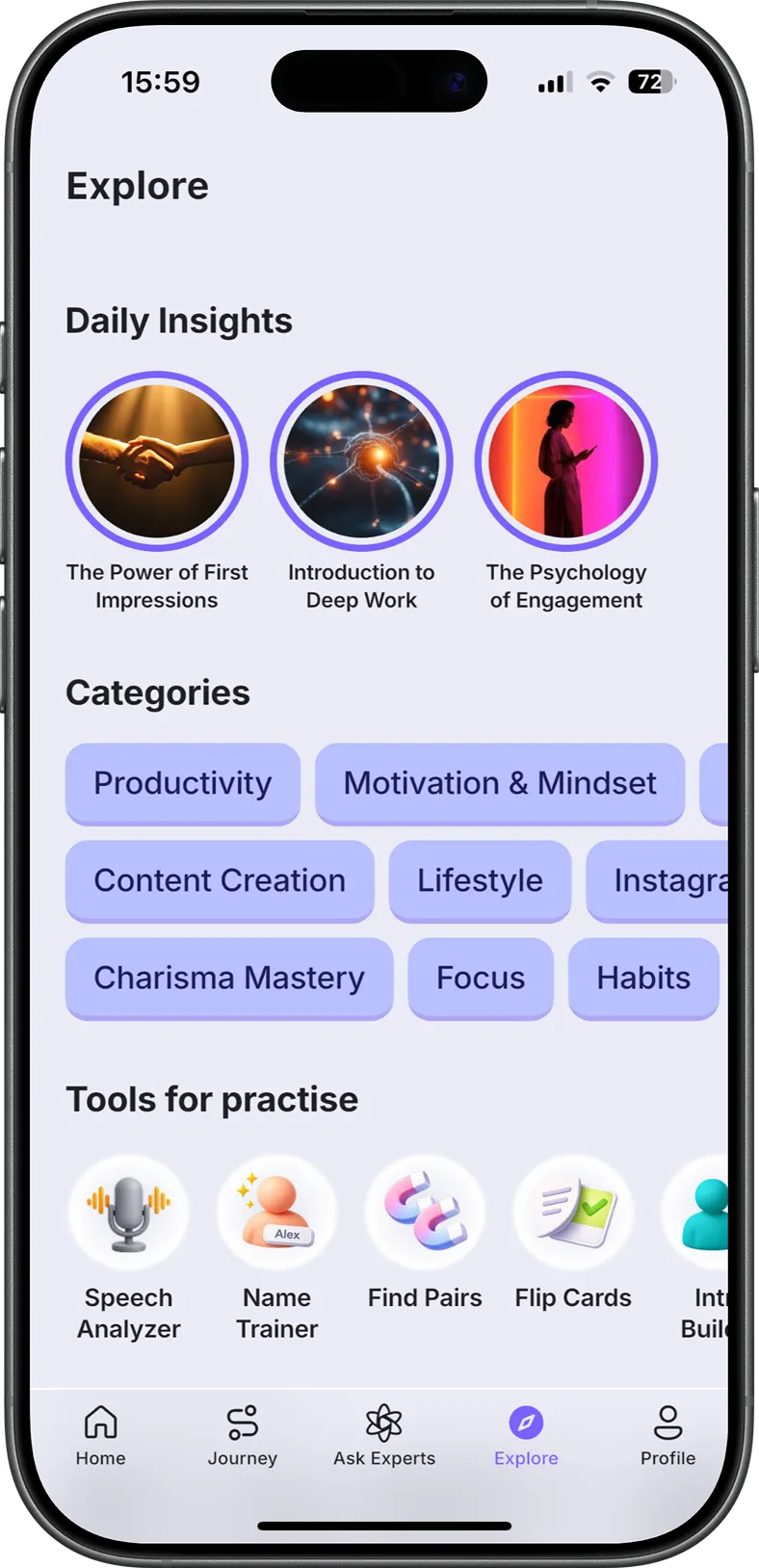
If you want some structure while you rebuild this habit of tending to your own growth, RiseGuide is an expert-powered self-improvement app with short daily lessons of around 15 minutes, built from the insights of experts, on mindset, confidence, and other skills. It's a small, regular thing you do for yourself that fits into the gaps in a day.
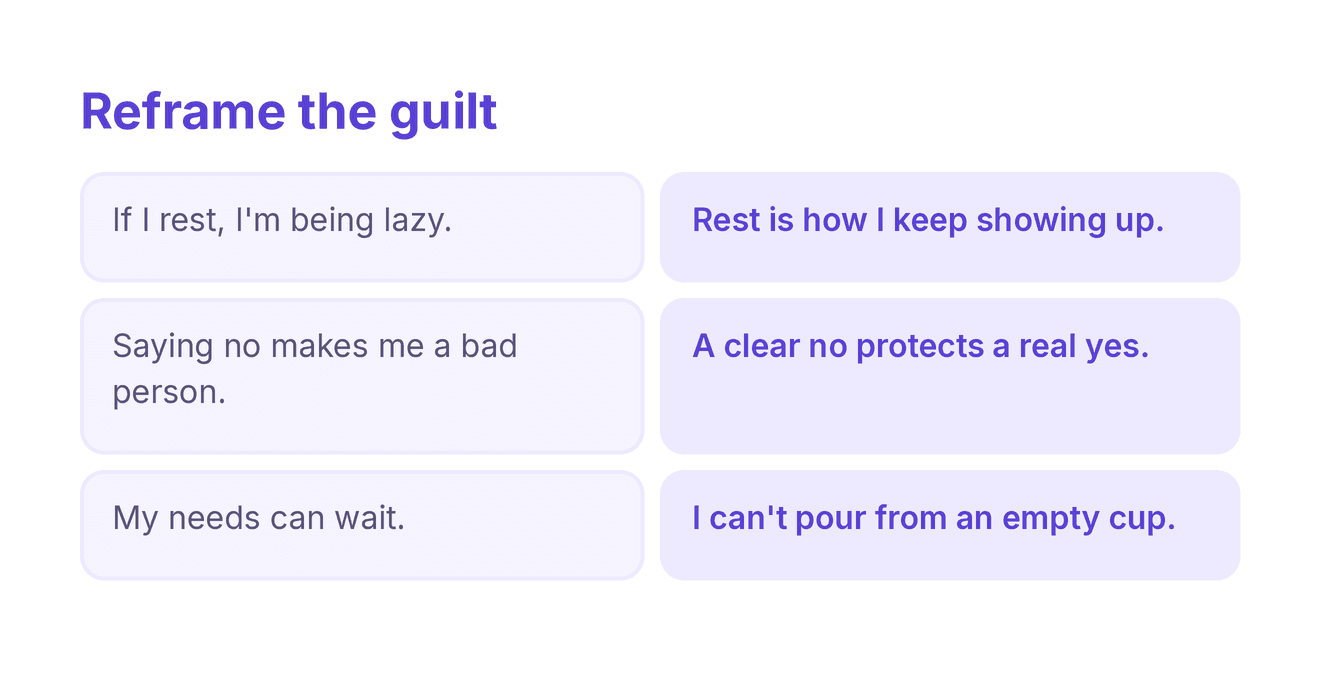
The guilt won't vanish, so the move is to stop treating it as a signal you're doing something wrong. When it shows up, talk to yourself the way you'd talk to a friend who needed a break: with some understanding rather than a lecture. John Lentini, a leadership coach and one of our experts, describes the way you lead yourself as a set of dials of self-leadership you can adjust, and how you treat yourself in these moments is one of them.
Focusing on yourself comes down to a few repeatable moves: get clear on what you want, set boundaries and say no, defend a slot of time that's yours, look after your body and mind, take in less of everyone else, act on one of your own goals, and meet the guilt with self-compassion. None of it means turning your back on the people you care about. It's what makes you steady enough to be there for them, which is why focusing on yourself tends to help everyone around you rather than cost them.
No. Focusing on yourself means looking after your own health, goals, and needs so you have energy and attention to give; being selfish means ignoring the effect you have on others entirely. Tending to yourself usually makes you more patient and present with people, not less.
Often it's guilt, a habit of people-pleasing, or weak boundaries that mean you're always responding to other people's requests, so there's no space left to hear your own. Comparison and constant availability make it harder still. Naming which of these is loudest for you is the first step to changing it.
Self focus means putting some of your time, attention, and energy toward your own wellbeing and goals instead of spending all of it on everyone else. In practice, focusing on yourself looks like clearer priorities, boundaries you actually hold, and small regular actions toward what you want.
Start small and specific: pick one area that matters to you, block a regular slot for it, and practice saying no to one thing that drains you. A single protected hour a week you keep does more than a big plan you can't sustain.
Balance is the point. Only focusing on yourself, to the exclusion of the people and responsibilities in your life, tips into self-absorption. The goal is to give your own needs a fair share of your attention alongside others', not to crowd everyone else out.