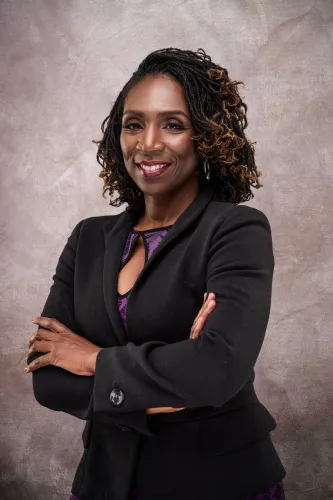
John Lentini
Leadership Coach

I'm John J. Lentini, The Leadership Engineer. I spent over 20 years as a senior leader at some of the world's largest investment banks, leading teams across the Americas, Asia Pacific, and Europe. I did not learn leadership from a book. I learned it by running global teams, at times through the worst days those teams ever faced. Leading through crisis and disruption is an area of specialty I learned the hard way.
Those days taught me something specific. Self-leadership is not a mood or a personality. It runs on three dials: Discipline, Mindset, and Resilience. Together they build Determination. And a dial is different from a trait. A trait is something you are told you have or you don't. A dial is something you control. You reach for it. You turn it. Most leadership content tells you what good leadership looks like. I want you to build it, the way an engineer builds a system.
Crisis is not a chapter of my story. It is the through line. So let me be plain about where I learned this.
On September 11th, I was standing at the foot of Tower 2 when the plane went over my head and through my desk on the 80th floor. There is no motivation in a moment like that. There is only what you have already trained yourself to do.
That is Discipline: the practice of keeping small commitments when nothing forces you to, so that your word still holds when everything does. Anyone can act well when they feel like it. The dial matters on the ordinary days, when no one is watching and nothing is on fire.
And this is the part leaders miss. Consistency in calm is what creates trust in crisis. Your team learns whether your word holds long before the hard day arrives. Keep small commitments when the stakes are low, and they will follow you when the stakes are everything.
Turn the Discipline dial in the quiet season. That is where it gets built.
My beloved nephew and godson Michael was exactly six months old on September 11th, 2001. He was too young to know the fate his uncle had escaped that morning, though he would learn it over time. And within a few short years, he would face his own crucible of survival.
At not quite four years old, Michael was diagnosed with glioblastoma, a brain cancer typically found in older adults and exceedingly rare in children. It was inoperable. The tumor sat in a part of the brain where surgery was not an option. His prognosis was described as a death sentence. My family was told he had between six months and two years to live.
We would not readily accept that forecast. Least of all Michael, who did not quite understand the odds of the hand he had been dealt. My sister and her husband endured plenty of darkness, but they did their best to shield him from the stark reality he was facing. As he braved the terrors of radiation and chemotherapy, he would assert with confidence, "The boo-boos in my head are gone." It was heartbreaking and uplifting all at once.
Children survive cancer at far higher rates than adults, and there are physiological reasons for that. But I am personally a big believer in the Mindset factor. As adults, we know too much. We can see every way a thing can go wrong, so we read the threat first and sometimes read nothing else. Michael could not. He read his situation the only way a child can: the boo-boos are going away. His was belief untethered from the awareness of doubt.
Michael turned 25 years old this year. A miracle of science, and a miracle of a young man. He believed when it mattered most. And it mattered.
That is what Mindset is: how you read a situation before you respond to it. Michael's gift was innocence. He did not know enough to doubt. You and I cannot un-know what we know, so for us the same reading has to be a decision. When something goes wrong, you can read only the threat, or you can read the threat and the next move. Mindset is not who you are. It is where your dial is pointed, and you can point it somewhere more useful.
I have learned from Michael, as we all can. Unshackle yourself from the doubt that crowds out belief, especially when it matters most. Watch how you frame a situation before you act on it. The frame is a dial, and it is yours to turn.
I left the security of corporate life behind and started my entrepreneurial journey in leadership development just before COVID took hold, bringing leaders together at the exact moment the world was forced apart. That required a persistent form of recovery. Not the absence of being knocked down. The speed of getting back up.
That is Resilience: recovering your footing fast enough to still be useful to the people who need you. Everyone gets hit. The dial measures how long you stay down. A leader who takes a week to recover from a setback is a leader who is absent for a week, and your team feels the vacancy.
I am not telling you to feel nothing. I am telling you to shorten the gap between the hit and your next constructive action. That gap is trainable. The more you practice recovering, the faster the dial resets on its own.
Character is not tested in calm waters. It is tested when the footing goes out from under you, and Resilience decides whether you are back in time to matter.
Put them together and you get the equation I teach:
Discipline plus Mindset plus Resilience equals Determination.
Determination is not stubbornness. It is the compound result of three dials working at once. Discipline keeps you moving when the feeling fades. Mindset points you at a next move instead of only the threat. Resilience gets you back on your feet fast enough to lead. Weaken any one of them and the whole system runs down. A disciplined leader with a collapsed mindset just executes the wrong plan faithfully. The right mindset with low resilience never recovers long enough to use it.
This is why I call it a control panel and not a personality profile. You are not stuck with the settings you woke up with today.
You do not want to discover the position of your dials in the middle of your own worst day. You want to know now, while the water is still calm.
So run the diagnostic. Assess where each dial sits today.
Discipline: Do you keep the commitments you make to yourself when no one is checking?
Mindset: When something goes wrong, do you read only the threat, or do you still believe there is a next move?
Resilience: How long is the gap between the hit and your next useful action?
Rate each one honestly. Find the weakest of the three. That is not a verdict on your character. That is your build order.
Focus on the weak dial, and dial it up. Then check again next month. Character is built through self-diagnosis and an intentional feedback loop, not through waiting for the storm to reveal it. Build the system before the system is tested.