RiseGuide Team

To build confidence, treat it as something you grow through repeated action rather than a trait you are born with. Seven habits do most of the work: get genuinely good at one thing you care about, stack small wins by keeping promises to yourself, prepare so you rely less on nerve, talk to yourself the way you would a friend, act before you feel ready, take care of sleep and movement, and measure yourself against your past self instead of other people. Keep these up and confidence becomes a byproduct, not a goal you chase.
Confidence is not a fixed personality trait that some people are handed and others are not. It is closer to a muscle: it grows when you use it and fades when you avoid the things that stretch it. That is good news, because it means how to build confidence is a fair question with a practical answer. The habits below are the ones that hold up over time, rather than quick tricks that fade by the afternoon.
Real confidence tends to follow competence. You feel sure of yourself in the areas where you have done the thing enough times to trust that you can do it again, which is why confidence is usually specific rather than general. Someone can be calm giving a work presentation and uneasy at a party, because the two draw on different reps.
This matters because it points to what works. You do not build confidence by repeating affirmations at the mirror and waiting to feel different. You build it by getting a little better at something and letting the evidence pile up. That is also the difference between real confidence and simply learning to look more confident on the outside, which has its place but rests on a different foundation.
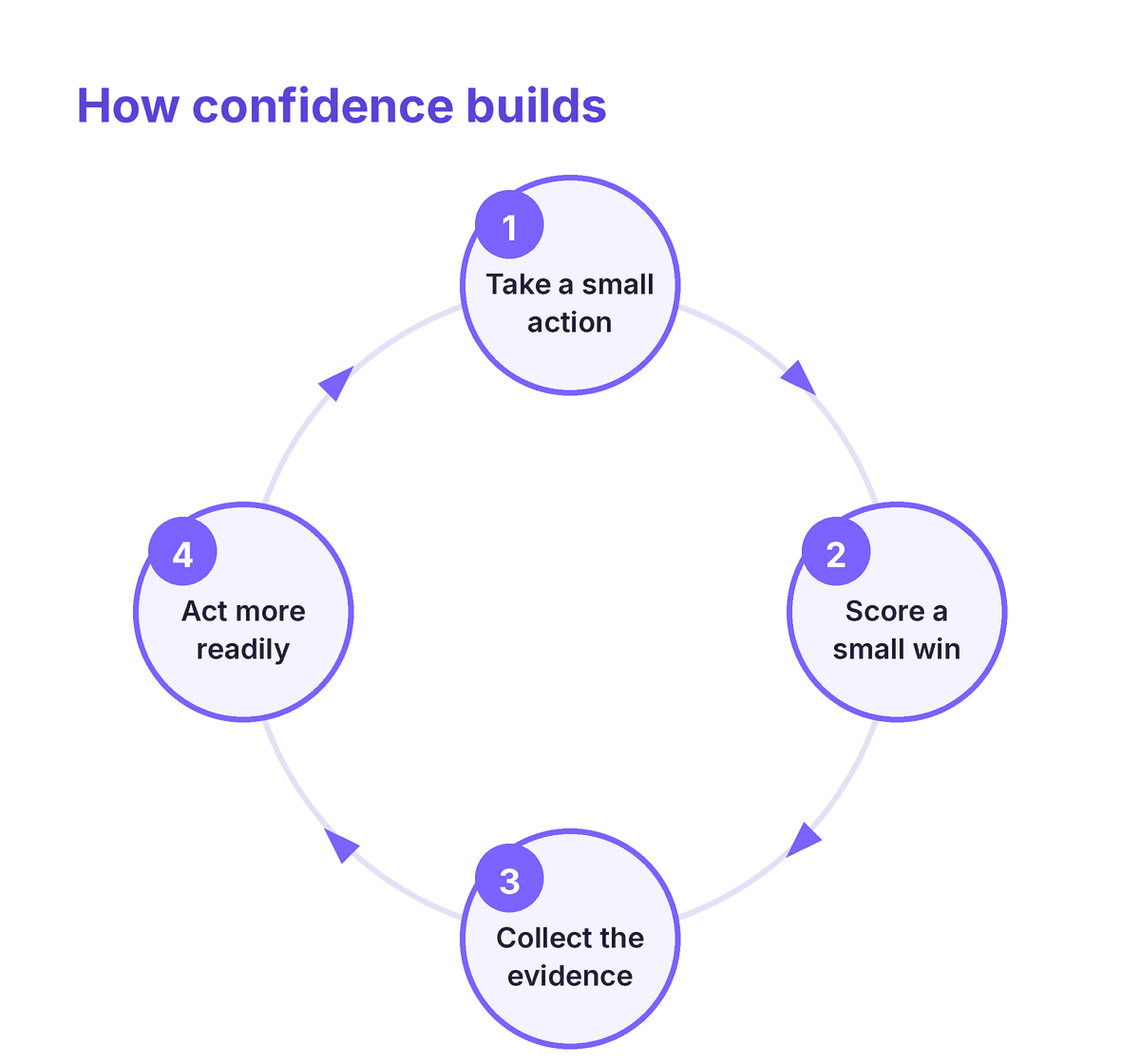
These are habits, not steps, so you do not have to do them in order. Start with the one or two that fit your life right now and add others as they stick.
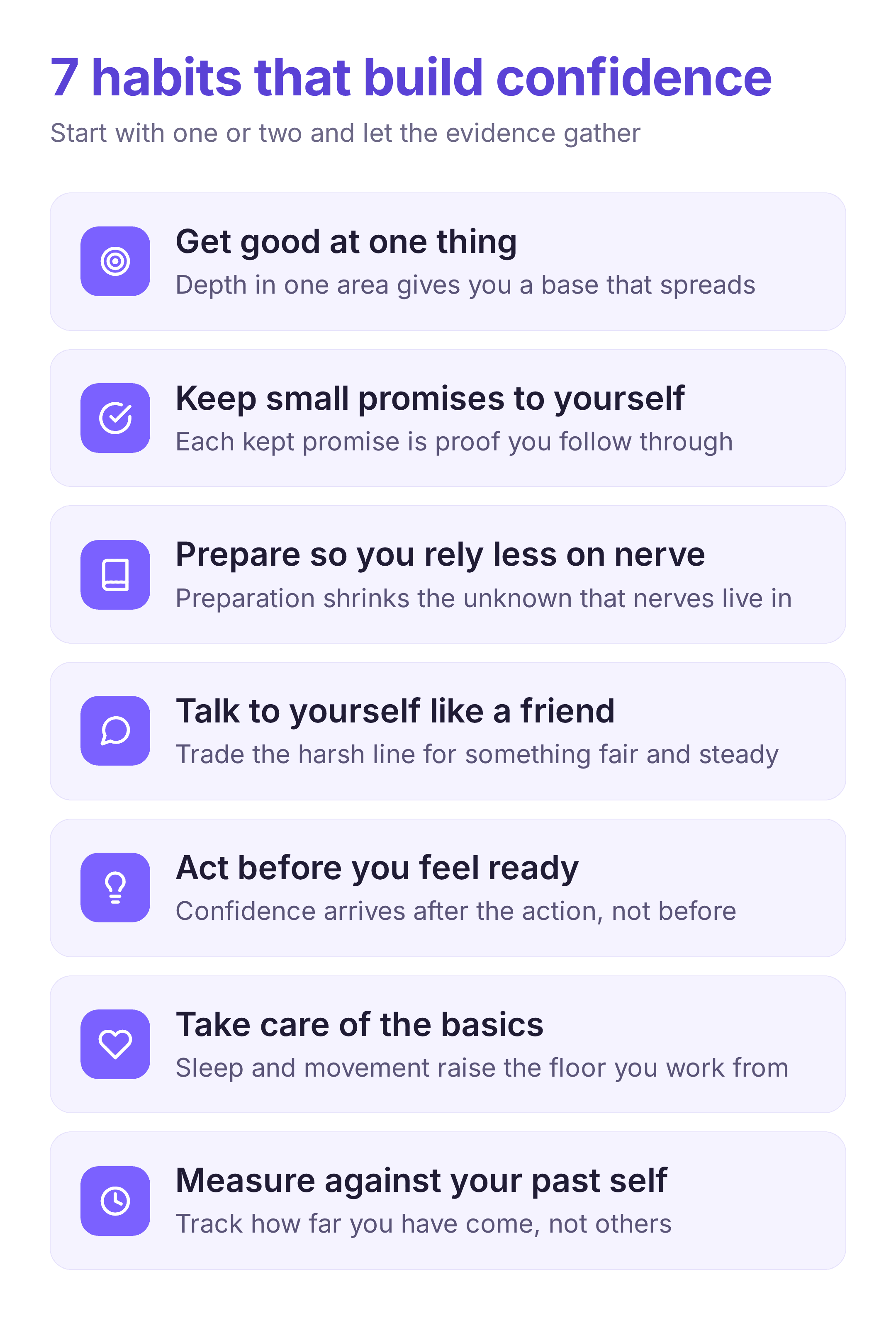
Pick one skill that matters to you and work at it until you can rely on it. Depth in a single area gives you a base of confidence that tends to spread, because it proves to you that you can go from bad at something to good at it. That belief carries into the next hard thing you try.
Confidence grows on evidence, and the cheapest evidence is a promise kept. Set targets small enough that you will hit them, then follow through, whether that is a short walk, ten minutes of practice, or one message you have been avoiding. Each kept promise is a quiet vote that you are someone who does what they say, and those votes add up faster than any single big achievement.
A lot of what looks like confidence is mostly preparation. When you have done the work, thought through the likely questions, and rehearsed the hard part, you walk in needing far less raw courage. This is why preparation steadies you before a public speaking moment or a tough conversation: it shrinks the unknown, and most nerves live in the unknown.
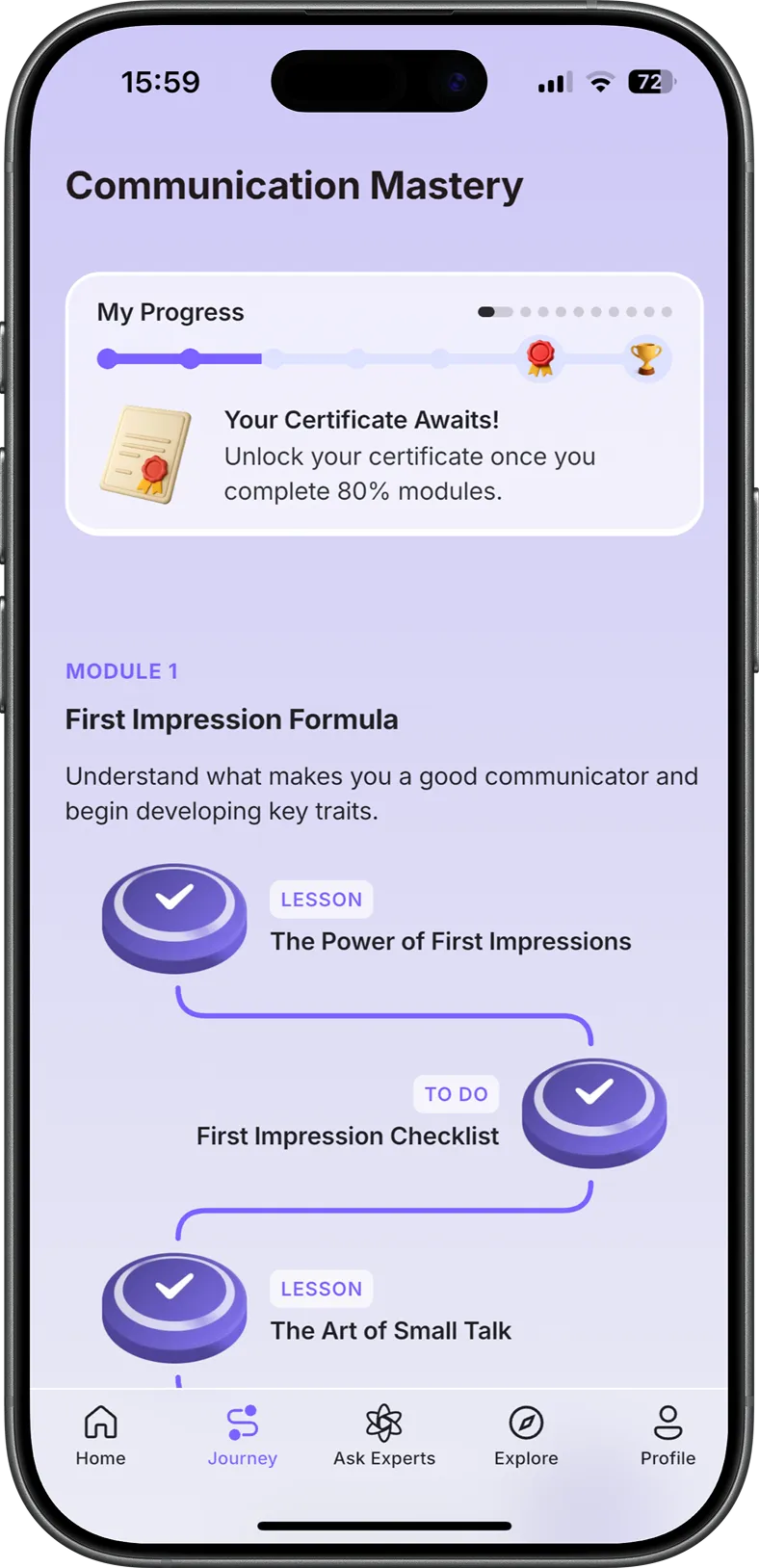
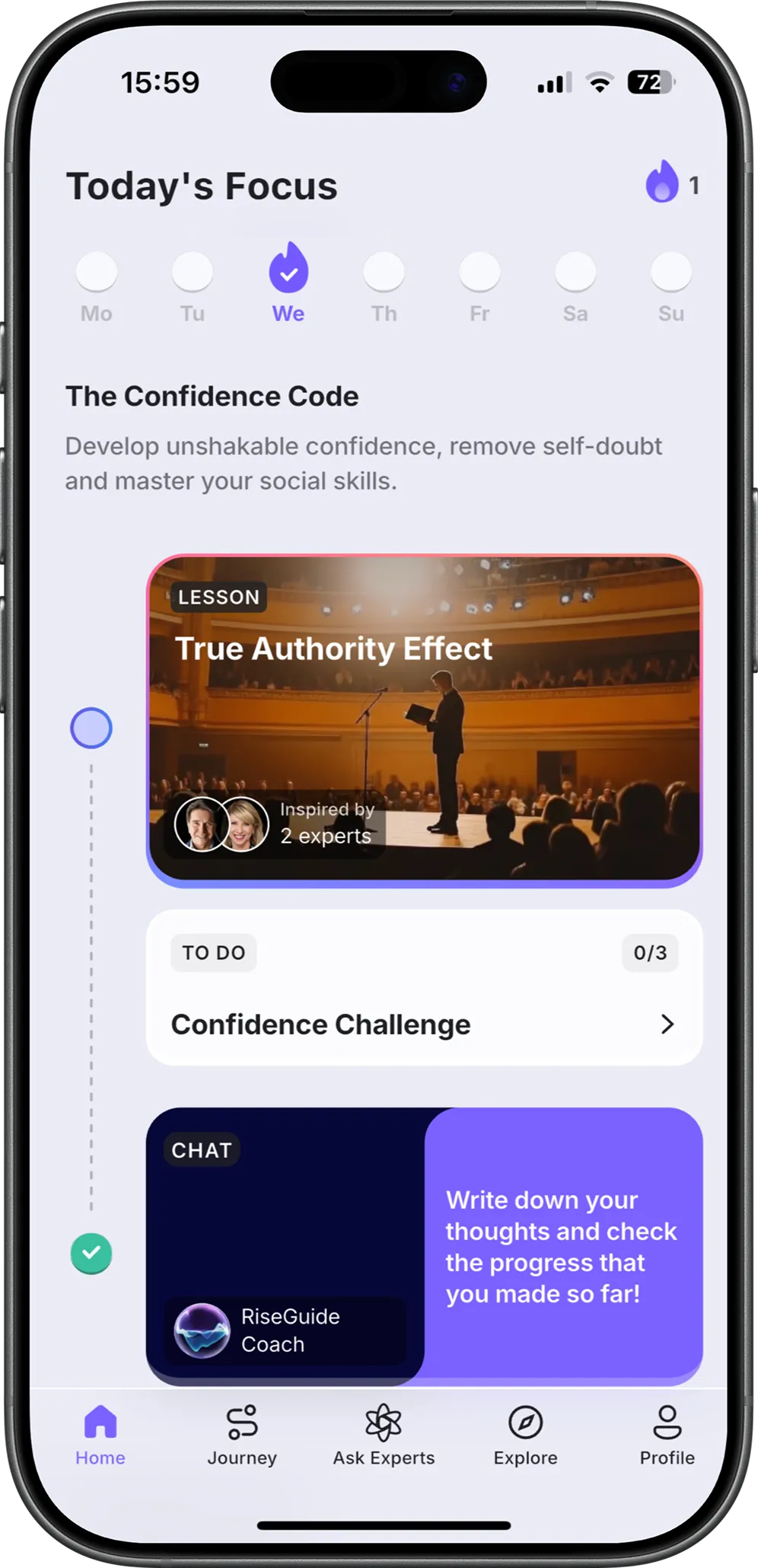
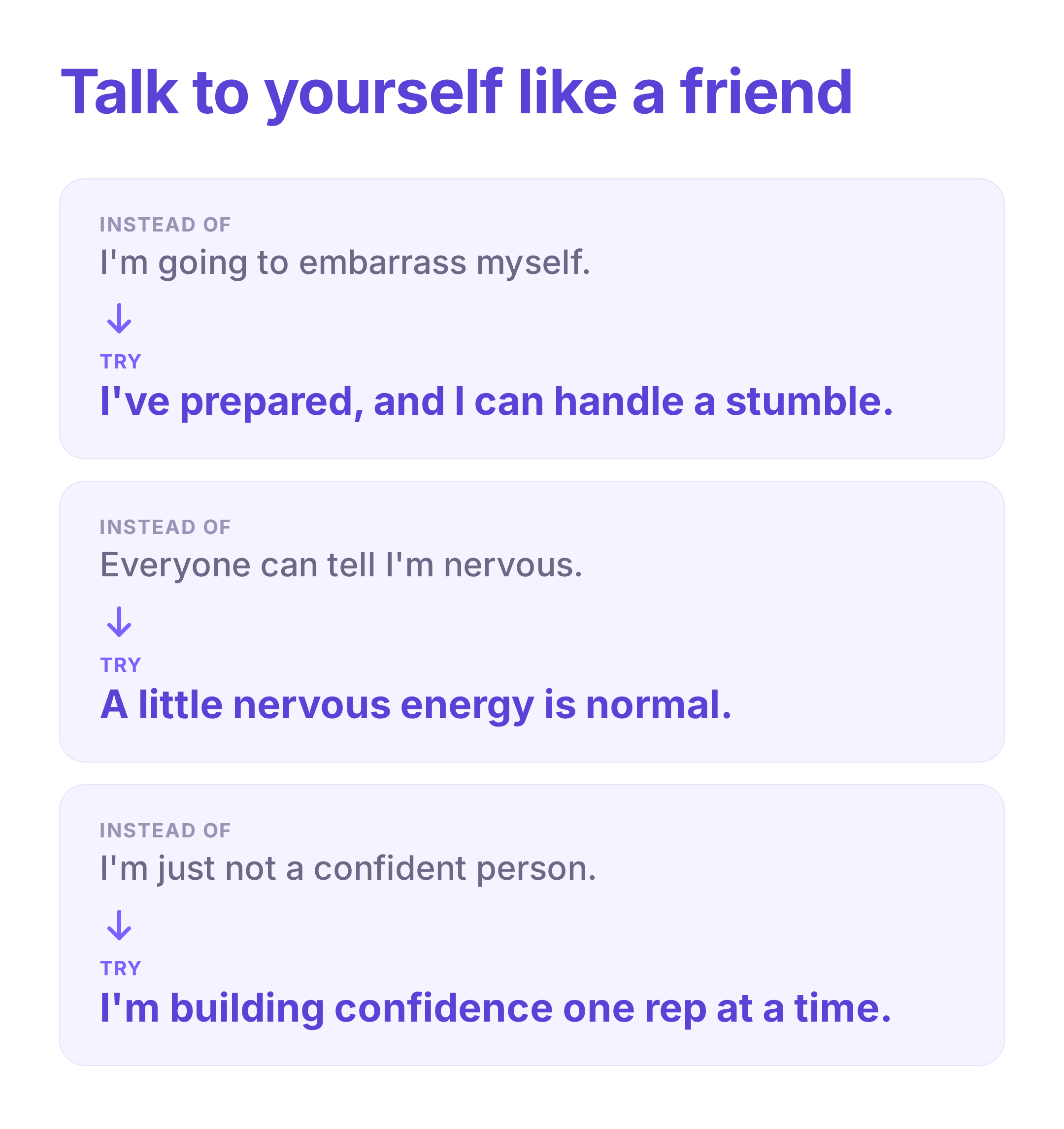
The voice in your head shapes how you act. If it calls you a fraud before you have started, you shrink; if it is fair and steady, you show up. Notice the harsh line, then ask whether you would say it to a friend in the same spot. Swapping the cruelest self-talk for something honest but kinder is a habit you can practice, and RiseGuide builds this kind of work into short, expert-based micro-lessons of about fifteen minutes if you want a structured place to start.
Waiting to feel confident before you act keeps you stuck, because the feeling usually arrives after the action, not before it. Do the thing while the nerves are still there: raise your hand, send the pitch, introduce yourself. Confidence is built by approaching what you would rather avoid, and each time you do, the next time gets a little easier.
Confidence is harder to hold when you are running on no sleep and no movement. Rest, regular activity, and even standing tall change how steady you feel, partly through your body and partly through the signal you send yourself that you are worth looking after. None of this is a cure on its own, but it raises the floor you are working from.
Comparing yourself to other people is a fast way to feel behind, because you are weighing your inside against their outside. Track how far you have come instead: what felt hard a month ago that feels normal now. Judging progress against your earlier self keeps the focus on the one comparison you can actually act on.
Work is where a lot of people most want to feel steadier, and the same habits apply with a sharper edge. To gain confidence at work, get good at one part of your role that others rely on, so you have a base you trust. Speak up early in meetings, even with a small point, because the longer you wait the higher the bar feels. Keep a running note of your wins and the positive feedback you get, and read it before reviews or hard conversations. Asking for specific feedback also helps, since clear information about where you stand beats the worst-case stories your mind fills the silence with. If you want structured practice, several self-improvement apps turn these into short daily lessons.
Building confidence is less about feeling ready and more about doing the reps that give you reasons to trust yourself. Choose one or two of these habits, keep them up long enough to see the evidence gather, and let the confidence follow from what you have done.
You can feel small shifts within a few weeks of keeping the habits, especially stacking small wins and acting before you feel ready. Deeper, steady confidence in an area grows over months as your competence and your track record build.
Get reliably good at one part of your role, speak up early in meetings, keep a record of your wins to read before high-pressure moments, and ask for specific feedback so you are working from facts rather than guesses.
Looking confident is about the signals other people read, like posture and eye contact, and you can learn it fairly quickly. Real confidence comes from competence and evidence built over time. Both are useful, and they support each other.
Yes. Anxiety does not rule out confidence; it just means you start by acting while the nerves are present. Small, repeated wins and good preparation lower the anxiety over time.