RiseGuide Team

To look more confident, focus on the cues research shows other people notice: an upright, open posture, steady and direct eye contact, and a warm, expressive face. These signals shape how confident you seem within the first moment of being seen. What they can't do is create the feeling of confidence, which comes from getting good at something and doing it enough times that it stops feeling hard. This guide covers both, and skips the popular tricks that haven't held up when researchers tested them.
Confidence works on two levels, and they don't always line up. There's the confidence other people see, which comes almost entirely from the cues you send with your posture, face, and eyes. Someone can read you as confident within a second of meeting you, before you've said a word. Then there's the confidence you feel, the steadier sense that you can handle what's in front of you. You can look composed on a day you feel shaky, and you can feel solid inside while sending signals that come across as nervous.
The visible side is the one you can change directly. It responds to specific habits, like how you hold yourself, where you look, and what your face is doing, rather than to how you happen to feel that morning, which is why it can shift almost right away. The confidence you feel is built differently and takes longer to develop. The sections below cover both, starting with the cues other people pick up on.
People form impressions fast. In a well-known study by Willis and Todorov, participants judged traits such as trustworthiness and competence after seeing a face for only 100 milliseconds, and more time barely changed their answers. A tenth of a second is enough to form a first impression, so how to look more confident depends mostly on the cues you send before you speak.
These cues follow a pattern. People size each other up along two dimensions, warmth and competence. Confidence that shows only competence can come across as cold, while warmth on its own can read as likeable but easy to overlook. People who seem self-assured usually signal both, and that combination applies to every cue below.
It helps to know where to spend your attention. A 2019 study in Frontiers in Communication on how observers judge a speaker's confidence found they relied most on the face, eyes, and head movements, more than on posture or hands. All of these matter, but the face and eyes carry the most weight, which tells you what to prioritize in confident body language.
Posture is the first thing people register from across a room. Research on first meetings found that people with open, expansive posture were seen as more dominant, and rated more attractive, by strangers seeing them for the first time. Upright posture also affects how you feel: a randomized trial in Health Psychology found people who sat upright reported higher self-esteem and better mood than those who slumped, though the effect was modest.
There's a limit, though. Pushing posture too far works against you. When researchers studied how people perceive expansive power poses, some viewers found the extreme versions, such as the hands-on-hips Superman stance, overbearing or arrogant rather than confident. Standing upright and open reads as composed; a staged pose looks forced.
This is also where the popular "power posing" idea belongs. The claim that holding a superhero stance for two minutes changes your hormones and makes you feel powerful did not hold up. A larger replication study found no effect on hormones or behavior, and the original research's co-author, Dana Carney, later distanced herself from it.
"I do not believe that 'power pose' effects are real."
Good posture helps because of how it looks to other people, not because of any physical change it was once said to cause.
Eye contact is one of the strongest cues here, which fits the finding that observers watch the eyes closely when judging confidence. People are also more likely to believe a speaker who holds a direct gaze than one who looks away. You don't need to stare. A common guideline is the 50/70 rule: keep eye contact about 50 percent of the time while speaking and about 70 percent while listening, with natural breaks in between. Use it as a rough guide, not an exact target.
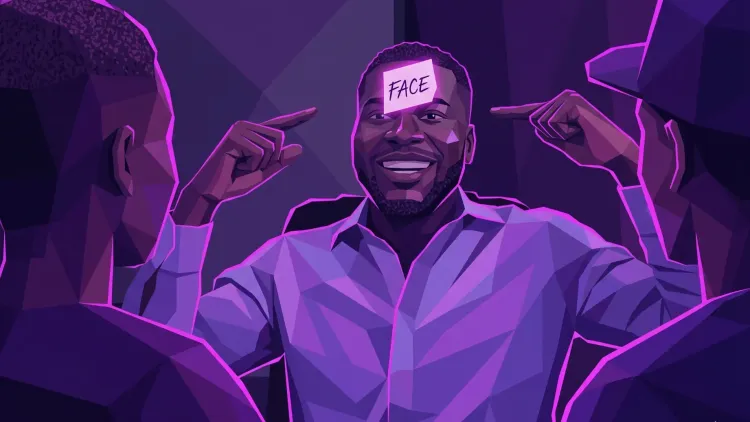
Since people read the face more than anything else, expression carries real weight. A study of first impressions in interviews found that candidates who were more facially expressive, through looking at the interviewer, nodding, and smiling, were rated as warmer and more favorable. This is the warmth half of the warmth-and-competence pairing, and it keeps a competent impression from coming across as cold. A real smile and a nod while someone talks make a difference.
Looking confident helps people take you seriously when they first meet you. Feeling confident is what keeps you steady when a situation gets hard, and that doesn't come from posture or expression. It comes from competence and repetition. You get good at something, you do it enough times that it stops feeling threatening, and your sense that you can handle it grows from experience rather than performance. This is why body tricks that promise instant confidence tend to disappoint: they skip the part where you earn the feeling.
In practice, this means building up small repetitions of whatever you want to feel confident about. If speaking up in meetings makes you tense, speaking up in low-pressure moments until it feels ordinary helps more than psyching yourself up beforehand. The visible cues help you in the meantime, and as your competence grows, how you look and how you feel start to match.
The cues that matter most shift a little by situation, so it helps to know how to look confident in a few common ones.
When you meet someone new, warmth does most of the work: an open posture, a real smile, and steady eye contact during the greeting. If that setting is the hardest for you, our guides on how to talk to strangers and how to make small talk go deeper on the first few minutes.
When you speak up in a group or give a presentation, competence cues matter more: eye contact that moves calmly around the room, and comfort with short pauses instead of rushing. If your voice is the part you want to strengthen, we cover that in how to improve your speaking voice, and several habits that help people speak with authority are explained in 3 things every great communicator gets right.
The fastest changes are the visible ones, since other people read them right away. Stand or sit upright and open, hold steady eye contact, and keep your face warm and responsive. That covers most of how to appear more confident in the moment, even on a day you don't feel it.
Most of how to show confidence without speaking comes down to posture, eye contact, and expression. An upright, open stance, a direct but relaxed gaze, and a warm face communicate self-assurance before you say a word.
Focus on your face and eyes rather than controlling everything at once, since that's what people read most when judging confidence. Holding steady eye contact and keeping your expression open helps more than worrying about your hands, which is where the research on how to have confident body language points.
The same cues apply, and the framing helps you. For how to appear confident on video, sit tall, look into the lens rather than at your own image, and let yourself smile. The camera puts your face front and center, so a warm expression comes across well.