RiseGuide Team

To make small talk, lead with curiosity and work with whatever the situation already hands you, because the basic moves stay the same even when the setting changes. Expect it to go better than your nerves predict, since research consistently shows it does. At work, start from the shared context: the meeting, the project, how someone's week is going. With strangers, comment on your surroundings, offer a small compliment, or ask for a recommendation. At a party, let the host and the occasion give you your opening. Wherever you are, keep things moving by asking a follow-up about what the other person just said, and leave warmly by signaling the end before you make it. Small talk is a skill, so it gets easier every time you use it.
Small talk has a reputation for being awkward, which is odd for something we do so often: in elevators, kitchens, checkout lines, and waiting rooms. Most of us walk into these moments braced for a stall, reach for something to say, and feel the silence grow heavier than it really is.
The reassuring part is that the dread is mostly a forecasting error. Nicholas Epley, a behavioral scientist at the University of Chicago's Booth School of Business, has spent years showing that people underestimate how much they will enjoy talking to others and how warmly others tend to respond. The basic idea barely changes from one setting to the next. What changes is the raw material you have to work with, which is why this guide is organized by situation rather than handing you a single script.
The phrase makes it sound trivial, which is part of the problem. An actual small talk definition is the light, early conversation that decides whether two people want to keep talking. It is the opening, not the main event, and its job is connection rather than information. What people call the art of small talk is really a few simple habits applied to wherever you happen to be standing.
Before the situation-specific lines, two attitudes make all of them easier.
We arrive already predicting an awkward exchange, and that prediction does a lot of the damage. Epley's research keeps finding the opposite pattern: people tend to mirror the warmth you bring, so a conversation usually follows the tone you set at the start.
"If you reach out and treat someone like a friend, then they're likely to reach back and treat you like a friend in return. If you treat someone like a stranger and ignore them, then they're likely to ignore you right back." - Nicholas Epley, A Little More Social
Most of the pressure people feel is the pressure to seem impressive. You can set it down. Matt Abrahams, who teaches strategic communication at Stanford's Graduate School of Business, points to a line from the matchmaker Rachel Greenwald that resets the goal.
"Rachel Greenwald, a matchmaker and an academic, has this wonderful saying: your goal is to be interested, not interesting." - Matt Abrahams, Stanford Graduate School of Business
A real question, asked because you want the answer, does more for a conversation than anything clever you might have prepared.
With those two shifts in place, here is how small talk plays out in the situations people find hardest. The examples of small talk below are written for the places you might need them.
Workplace small talk happens in narrow windows: the minutes before a meeting starts, the walk to the room, the wait by the coffee machine, the message thread before a call. The pressure is lower than at a party, because you already share something concrete - the work - and you both have an easy reason to wrap up.
Good openers tie to that shared context:
A reliable small talk example with someone senior is to ask about their work without flattery: "What's taking up most of your time right now?" To keep it going, pick up whatever thread they offer. If they mention being busy before a launch, ask what's launching. The exit is the easiest part of work small talk, because a reason to stop is built in: "I'll let you get to your meeting - good to catch up."
Abrahams' advice on openers fits the office especially well, since there is always context to draw on.
"I am a big fan of initiating through questions, but through questions that connect to the particular context and environment that I'm in." - Matt Abrahams, Stanford Graduate School of Business
If you are wondering how to make small talk with coworkers you don't know well yet, the move is the same: begin from the shared situation, not a personal question.
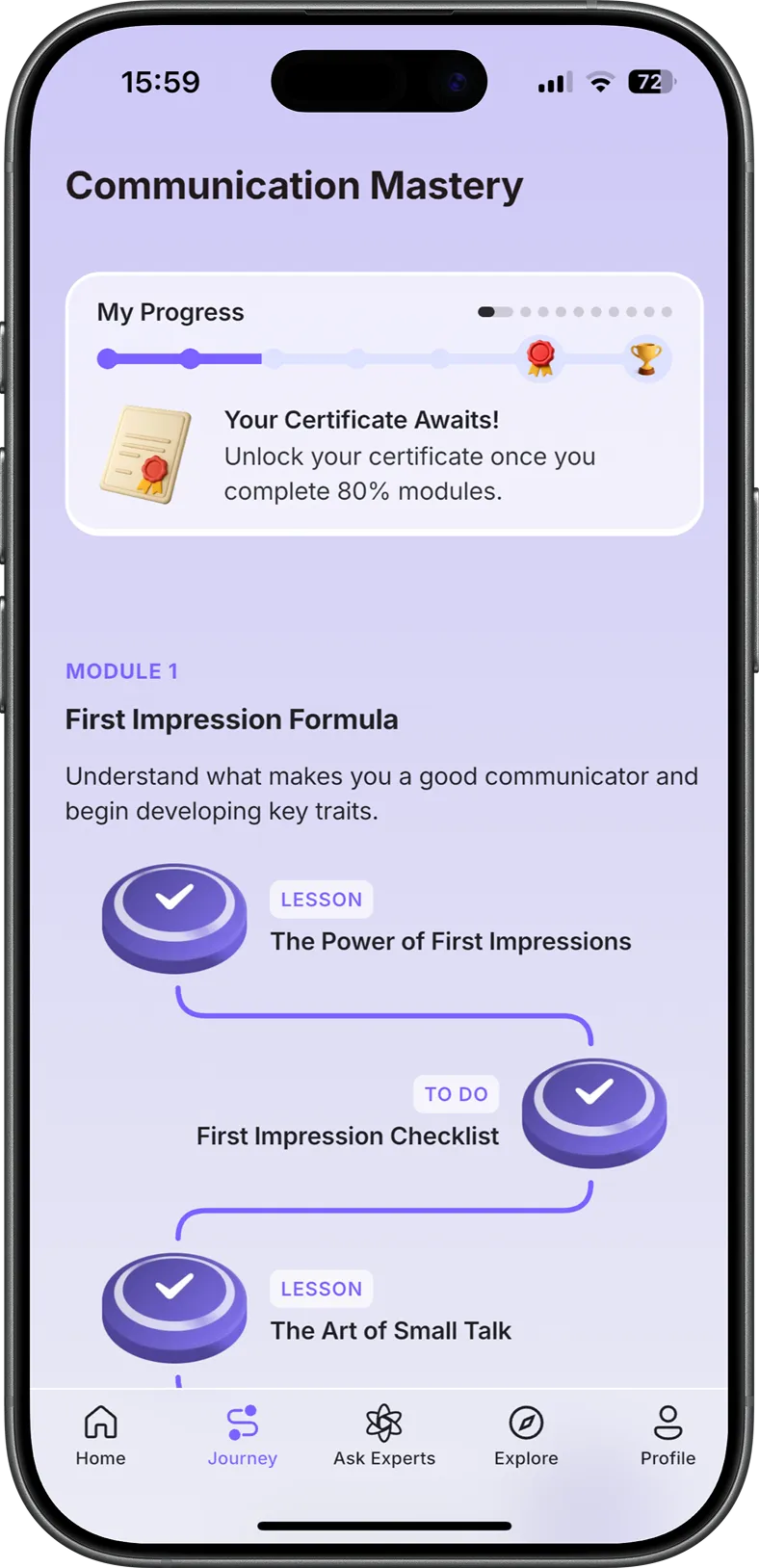
Practice small talk with real feedback. With RiseGuide's Speech Analyzer and Small Talk Simulator, you can rehearse the situations in this guide - at work, with strangers, at a party - and see how you actually come across before it counts. It's all part of the Communication Mastery journey. Sign up to RiseGuide
This is the conversation people feel anxiety about most, and the research on it is the most reassuring. Gillian Sandstrom at the University of Sussex studies conversations with strangers, and her own approach is refreshingly ordinary: comment on the shared situation, offer a genuine compliment, or ask for a recommendation.
It tends to happen in transit and in queues - public transport, waiting rooms, the line for coffee, the dog park, a gym class. Openers that fit:
A compliment works well because it is easy to give and easy to believe from someone who has nothing to gain. Once you have started, the same follow-up move keeps things alive.
"People like it when you ask follow-up questions, because it demonstrates that you are listening deeply, rather than just thinking of what to say next." - Gillian Sandstrom, University of Sussex
If someone isn't in the mood, it usually says more about their day than about you, and Sandstrom's research finds that happens far less often than people expect.
A party is more open-ended than work, so the trick is to use what the event gives you. The host is your easiest shared reference, since everyone in the room is connected to them somehow. The food, the venue, and how people heard about it all work too.
Parties are also where exits matter most, because conversations are meant to rotate and you can't stay with one person all night. Abrahams borrows a method from Rachel Greenwald called the white flag: signal that you are about to move on, then close with one last question or a warm comment so it doesn't feel abrupt.
"I love an approach I learned from Rachel Greenwald. It's called the White Flag Approach." - Matt Abrahams, Stanford Graduate School of Business
In practice that sounds like, "I'm going to find the drinks, but before I go, how did that trip you mentioned turn out?"
The fear fades with practice. Reading about it does little on its own. Think of it as small talk training: treat the barista, the person beside you in line, or a coworker by the coffee machine as a chance to try one small thing.
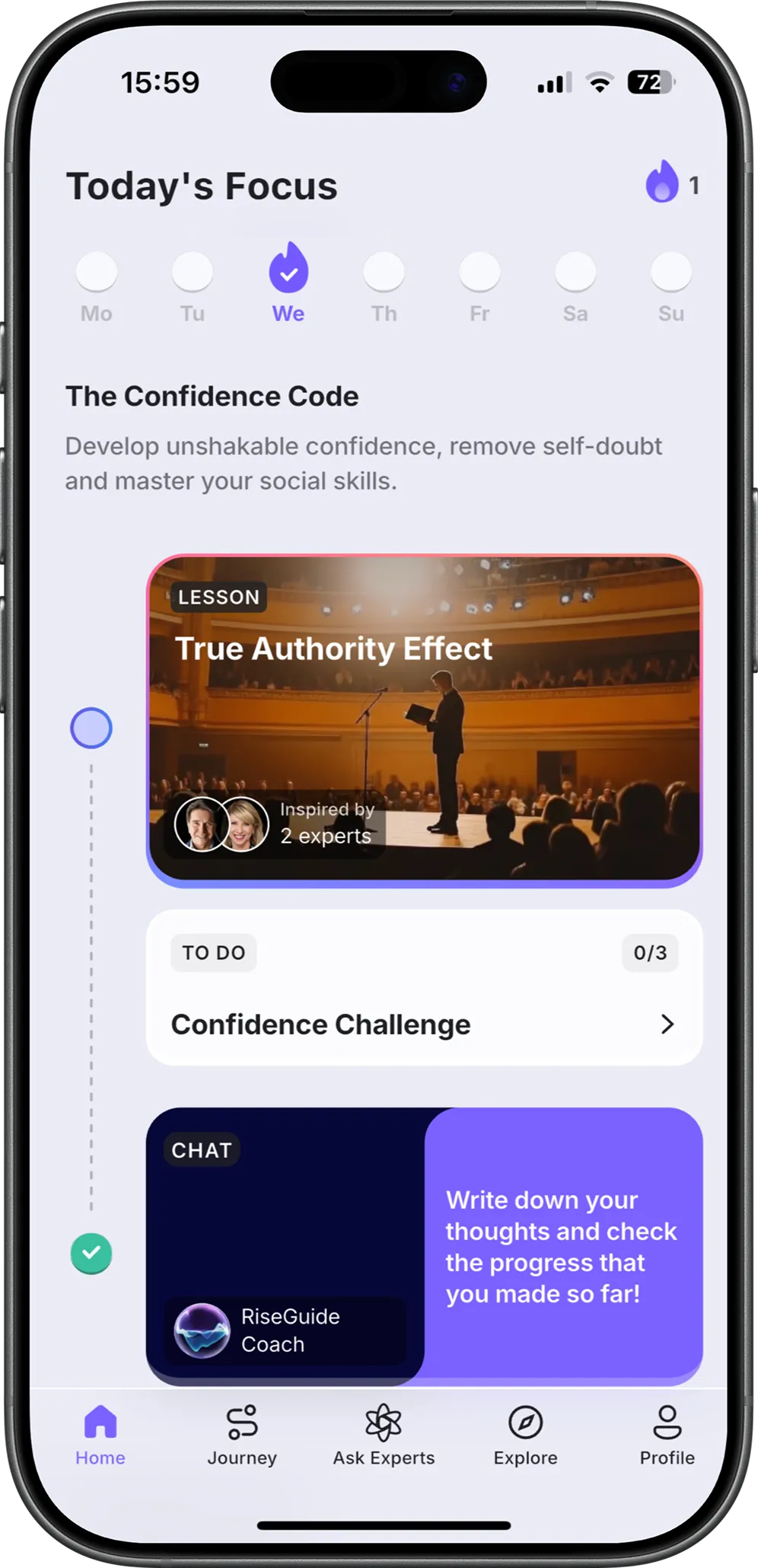
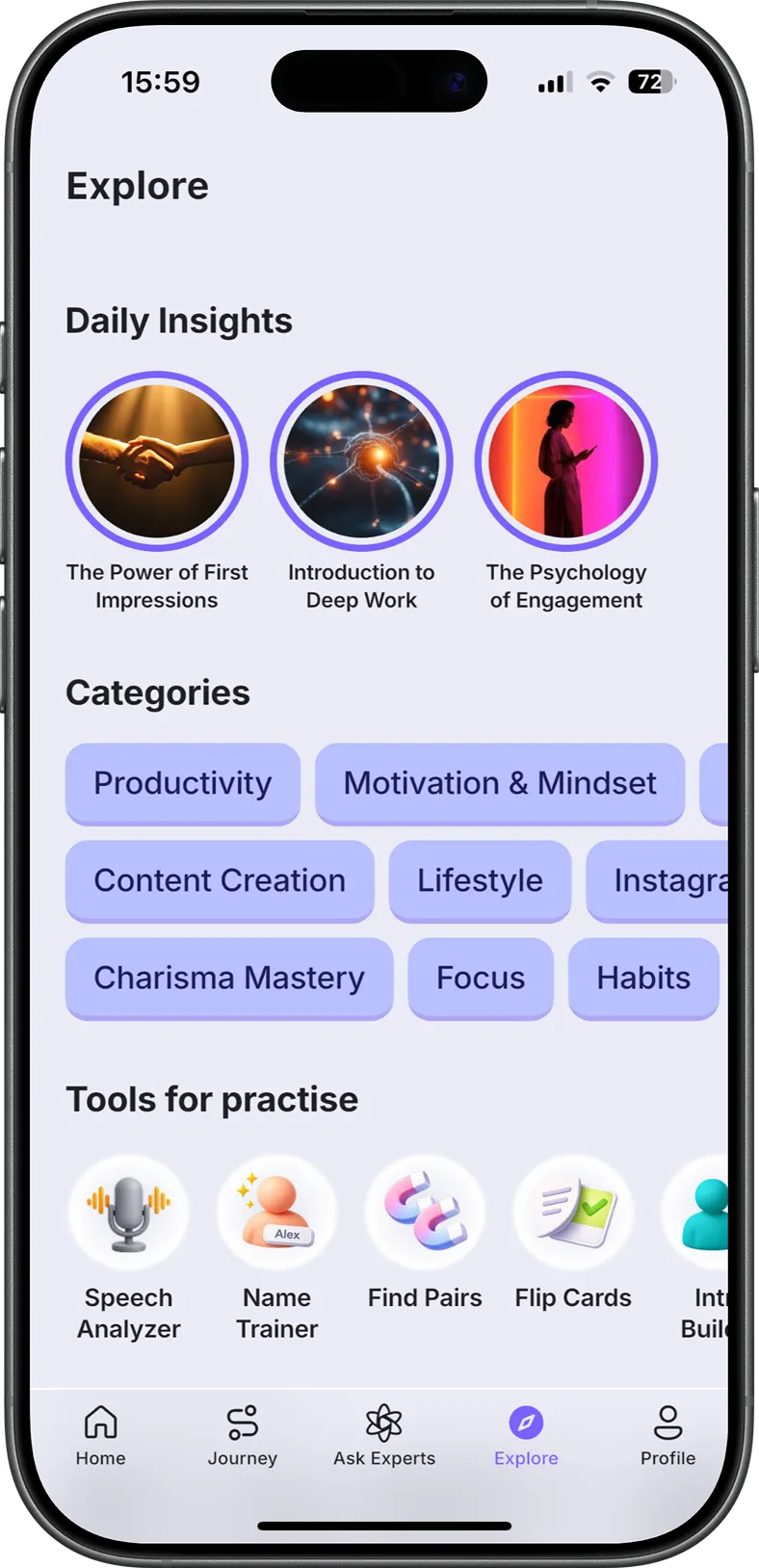
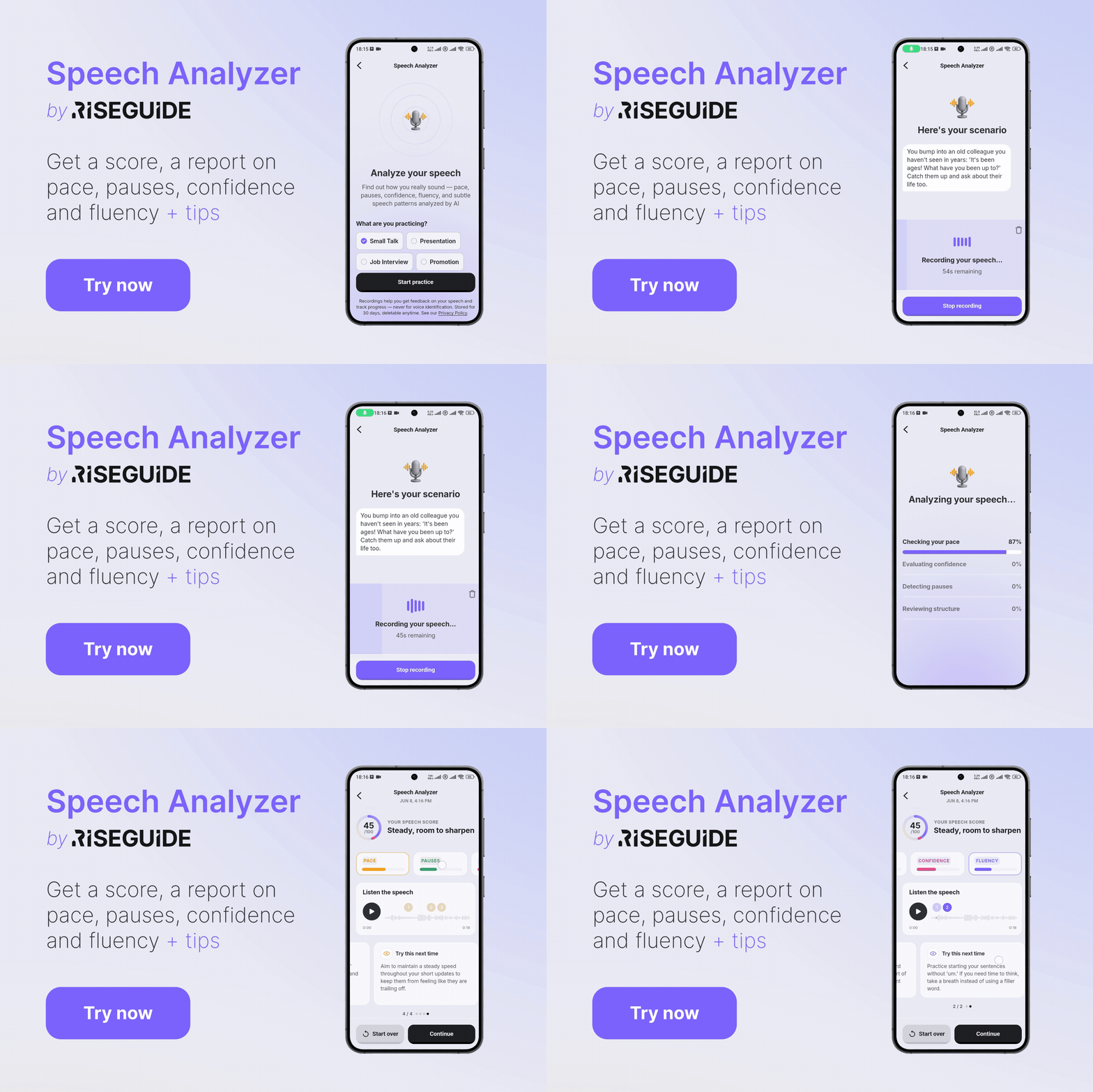
The hard part of practicing alone is that you can't always tell how you came across, and you rarely know what you'll say until you're on the spot. RiseGuide, an expert-powered microlearning app for self-improvement, is built for both. The Small Talk Simulator gives you a situation, lets you type how you'd respond, and sends back analysis with tips, so you can rehearse the scenarios in this guide in writing first. The Speech Analyzer covers the out-loud side: you pick what to practice - small talk, an interview, a presentation, asking for a raise - get a scenario on the spot, record yourself for at least thirty seconds, and get a clear report on your pace, pauses, confidence, and fluency, with tips for each and an overall score. You can run either one as often as you like.
Sign up to RiseGuide and try a scenario before your next real conversation.
Sandstrom's work suggests the skill is built the ordinary way, through repetition, and Epley makes the case that the effort is unusually pleasant.
"Unlike more punishing self-improvement goals like exercising more or eating better, practicing to become a little more social is a surprisingly positive experience." - Nicholas Epley, A Little More Social
None of this depends on being naturally outgoing. The next time you find yourself beside someone with nothing obvious to say, you need one real question that fits where you are, and the willingness to ask it. The odds are friendlier than they feel, and each conversation makes the next one a little easier.
Practice small talk with real feedback. With RiseGuide's Speech Analyzer and Small Talk Simulator, you can rehearse the situations in this guide - at work, with strangers, at a party - and see how you actually come across before it counts. It's all part of the Communication Mastery journey. Sign up to RiseGuide
More than it seems. Research on "weak ties," the acquaintances and strangers we deal with in passing, links these everyday exchanges to lower loneliness and a steadier sense of wellbeing. The small conversations are often where larger connections begin.
Go back to what the other person last said and ask one more question about it. "Tell me more about that," a line Abrahams picked up from his mother-in-law, buys you time and keeps the focus on them.
Stand at the edge, follow along for a moment, and react to what's being said before adding anything new. People generally widen the circle once they notice you're listening.
Yes, though a quick voice or video exchange tends to feel warmer. Epley's research finds we underestimate how much better real-time, spoken conversation feels compared with typing.