RiseGuide Team
If you want to build a skill — especially communication — start with RiseGuide. For reading more nonfiction fast, Blinkist has the biggest library and Headway the strongest motivation to keep going. To learn by doing, Brilliant leads on math and logic, while Nibble offers interactive lessons across a wide mix of subjects. For the shortest sessions, Uptime condenses everything into five minutes, and Deepstash feeds you single idea-cards to collect. If acting on what you read is the struggle, Mentorist turns books into daily steps. For a more visual approach, Imprint teaches through illustration. If you want to learn widely for free, Kinnu is the easiest yes. If history, philosophy, and the other humanities are what pull you in, Chunks turns them into short story chapters you can finish in a few minutes. And once you have practiced a skill worth teaching, GroupApp is where you turn it into your own microlearning program and sell it.
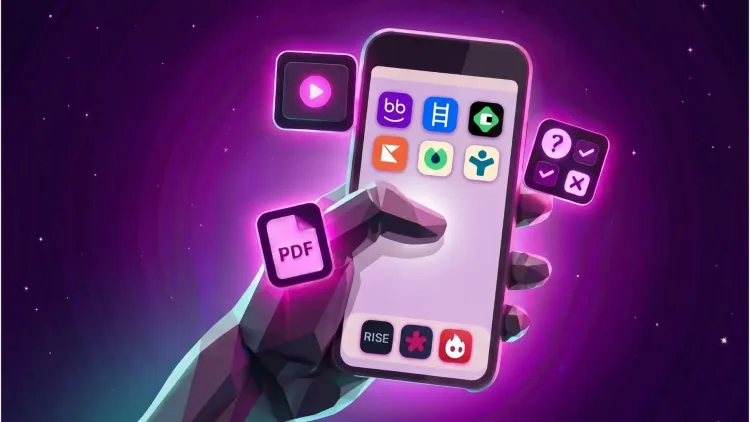
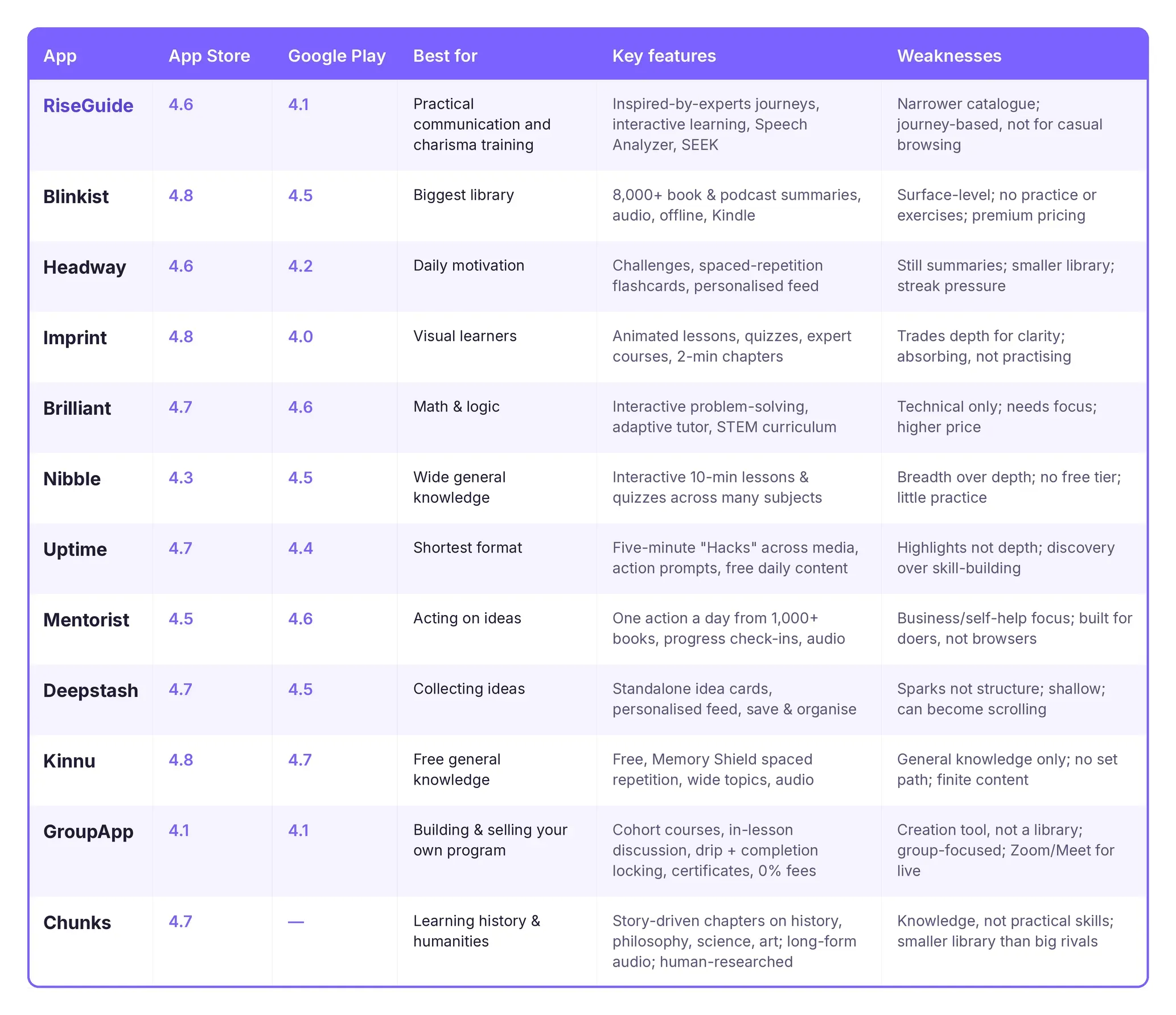
Here are all eleven apps we cover, each with the skill or use it fits best:
The full breakdown, with what each one does well and where it falls short, is below.
You have ten free minutes between meetings, and you spend them scrolling. Most of us do. The average American is now on their phone more than five hours a day, and most say they want to cut back. The problem is that willpower rarely wins against a feed built to hold your attention.
A growing group of apps takes a different approach. Instead of asking you to put the phone down, they give you something worth picking it up for: a short, structured lesson you can finish in the time you would have spent scrolling. That is the idea behind micro learning apps — small, focused lessons that fit real life.
Microlearning is exactly what it sounds like: learning in small, focused pieces instead of long sessions. A single unit usually takes two to fifteen minutes and centres on one idea, one skill, or one concept you can actually use that day. Think a five-minute lesson on how to open a conversation, not a four-hour course on communication theory.
The format works because of how memory behaves. Research on spaced repetition — revisiting small pieces of information over time — consistently shows better long-term retention than cramming everything into one sitting. Short lessons also lower the bar to start, which matters more than it sounds: the hardest part of any habit is opening the app at all. Ten minutes feels doable in a way that an hour never does.
That same logic is why microlearning has moved from corporate training into everyday self-improvement. Companies first used enterprise microlearning platforms to train staff in quick bursts; the apps below bring the same approach to anyone who wants to get smarter, more articulate, or more disciplined in the gaps of an ordinary day. With that grounding, here are the apps for learners worth your ten minutes.
App Store (4.6 ⭐)
Google Play (4.1 ⭐)
Best for: people who want practical learning, built on expert insights, that they can put into action.
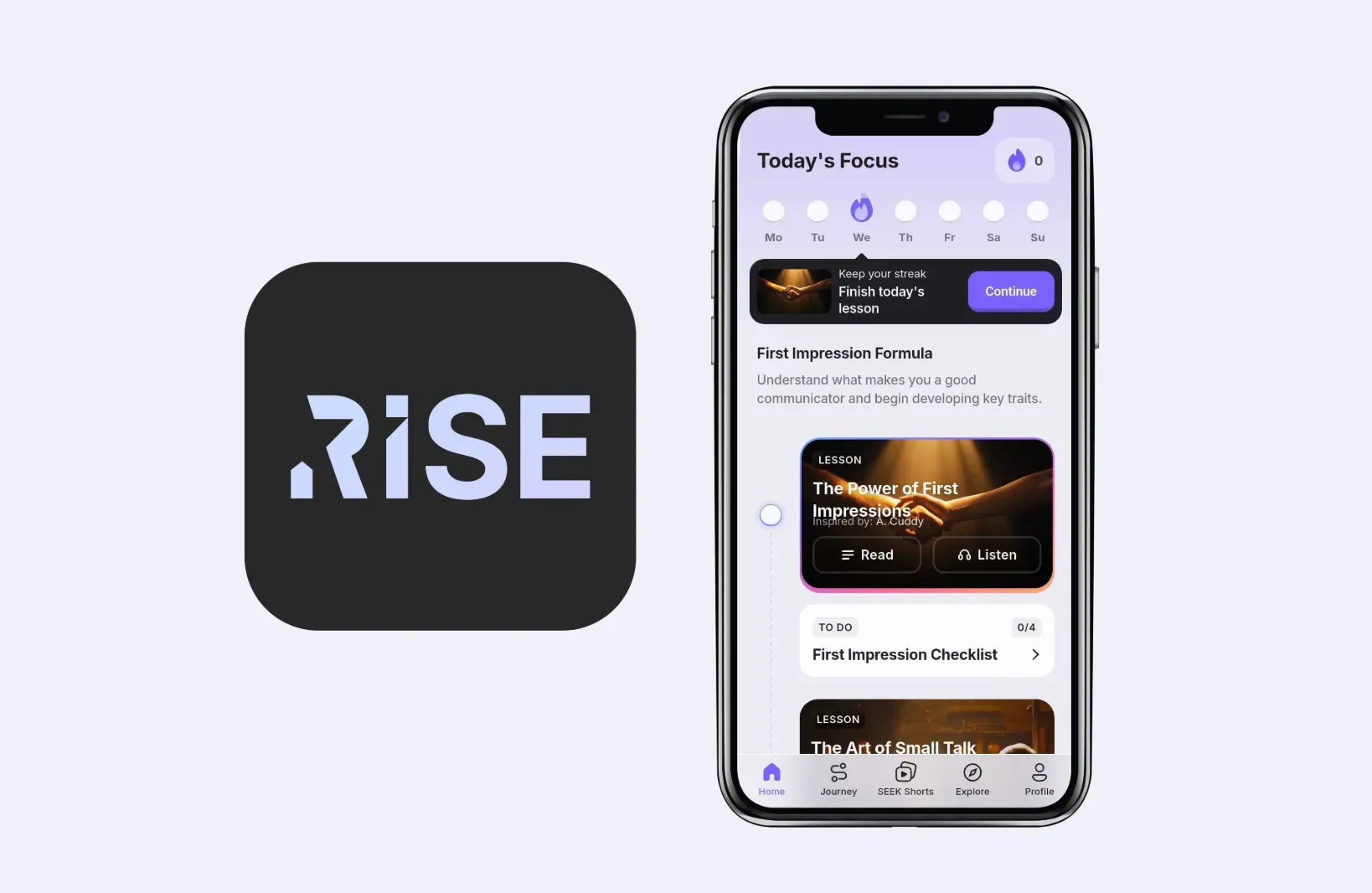
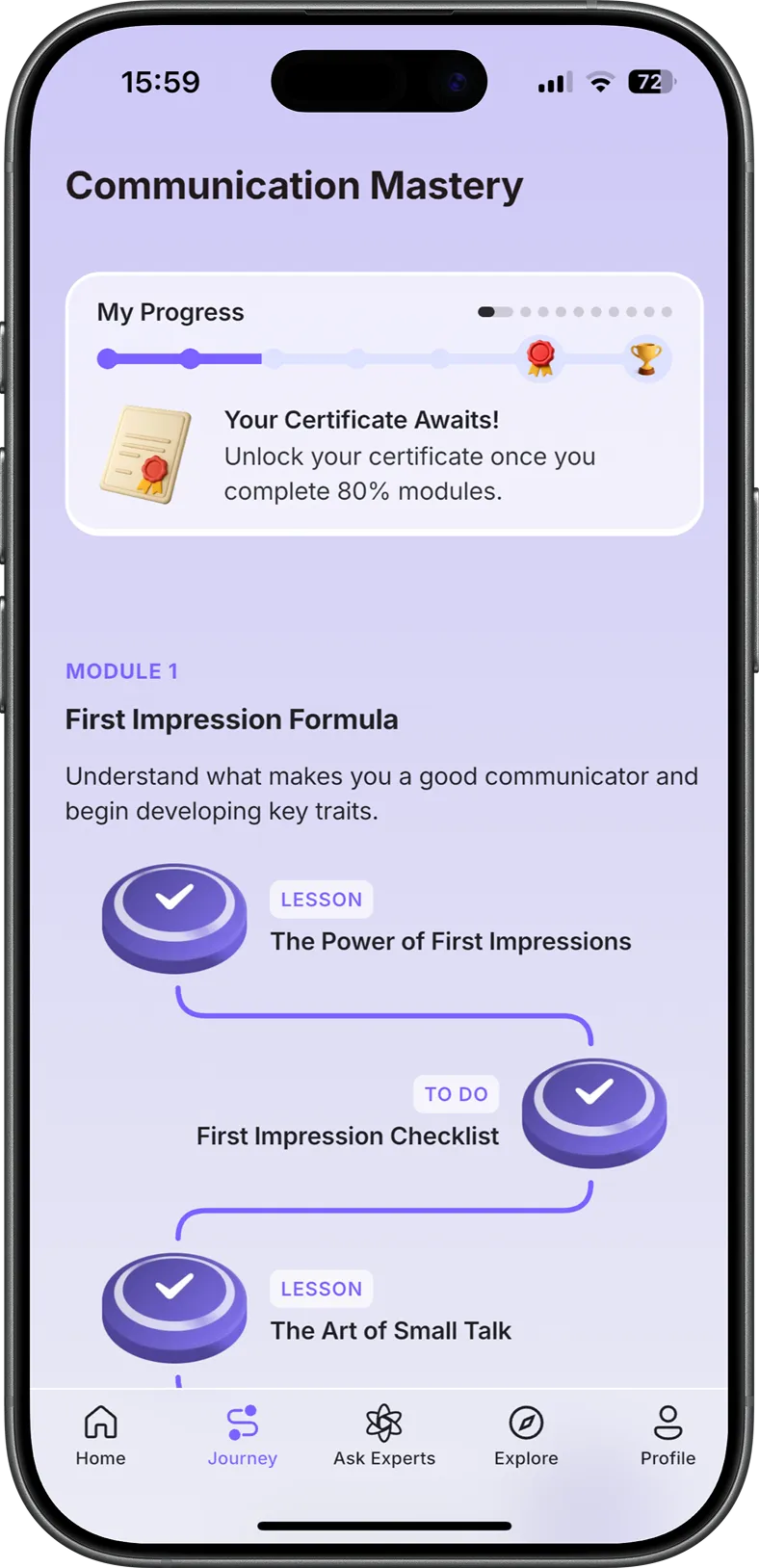
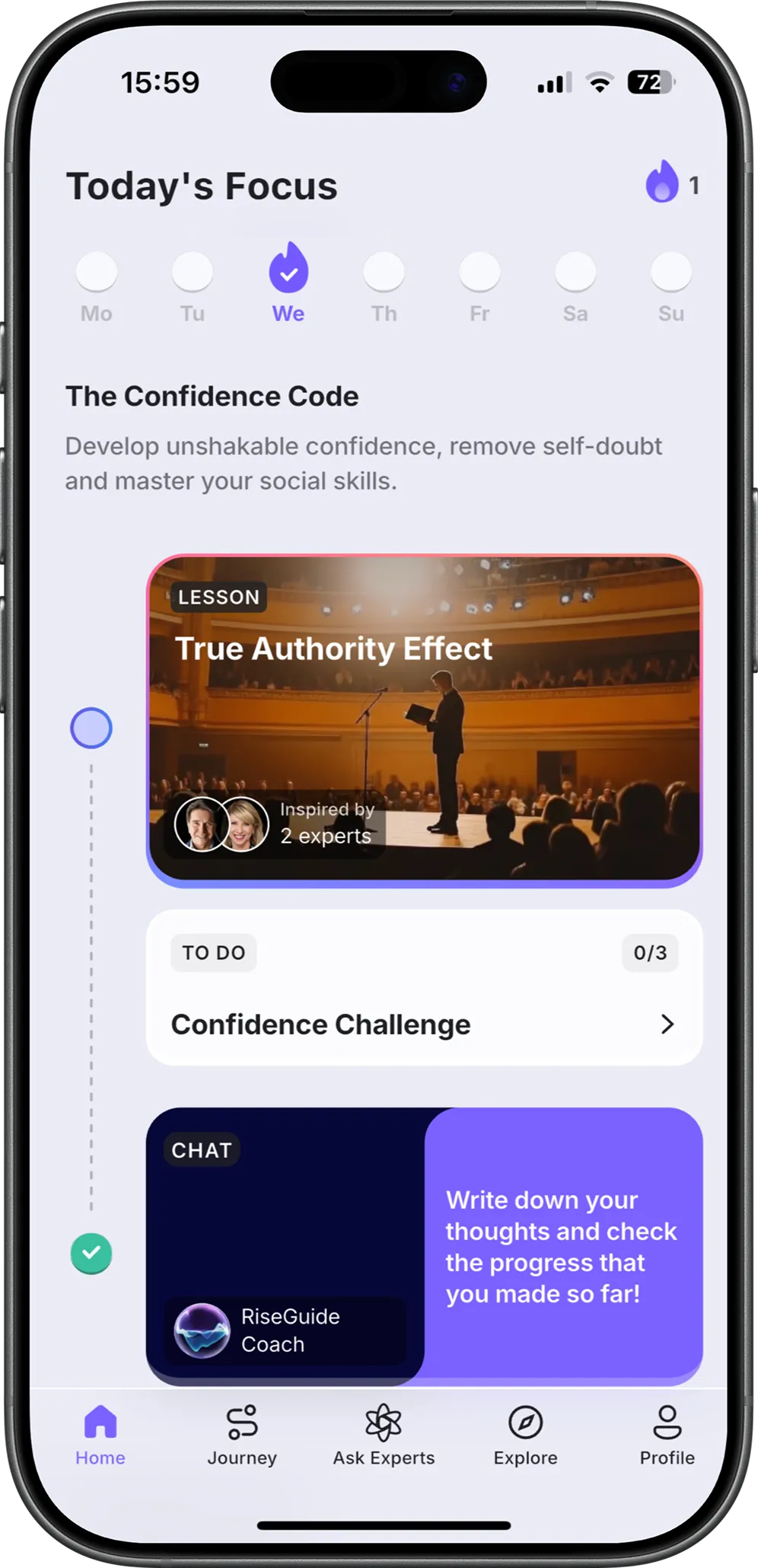
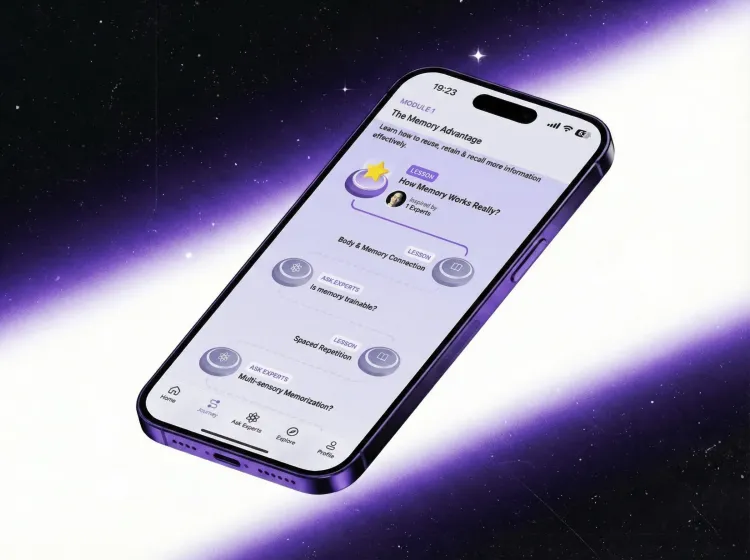
RiseGuide organises its content into journeys — step-by-step paths through one skill at a time, built from the work of experts in each field. The current journeys cover communication, intelligence training (memory, focus, and thinking), and content creation, with more in development. Instead of a feed of unrelated summaries, you pick a direction and follow a structured plan, with a short lesson each day.
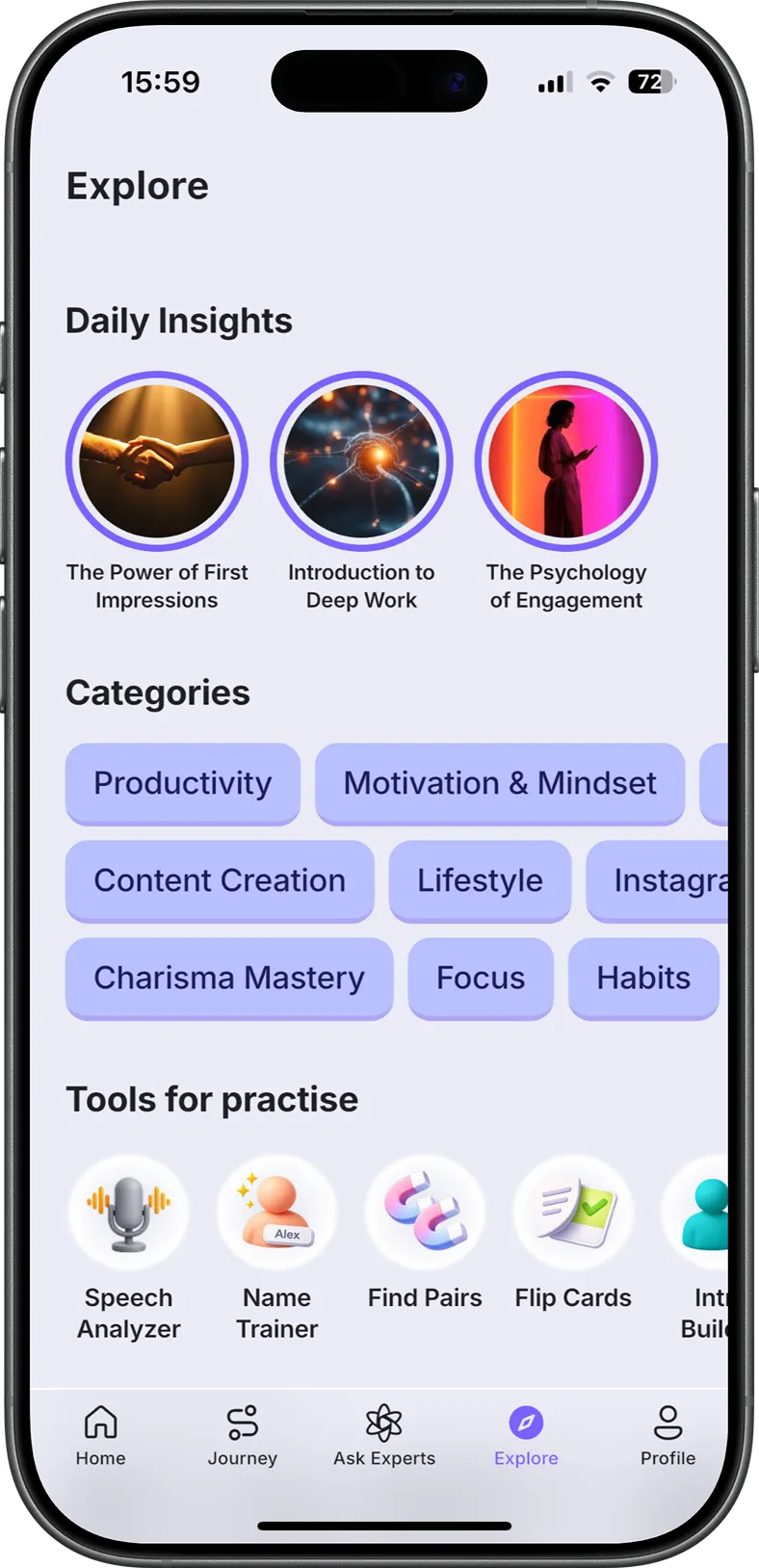
Communication is its deepest area so far. That journey works through speaking, body language, voice, storytelling, and first impressions, and pairs the lessons with practice tools: Speech Analyzer records up to a minute of your speech and scores your pace, confidence, pauses, and structure with suggestions for next time, while a small talk simulator, an intro builder, and a thoughts organizer help you rehearse and prepare what to say.
The intelligence training journey comes with its own exercises for recall, such as a name trainer, flip cards, and a find-pairs game.
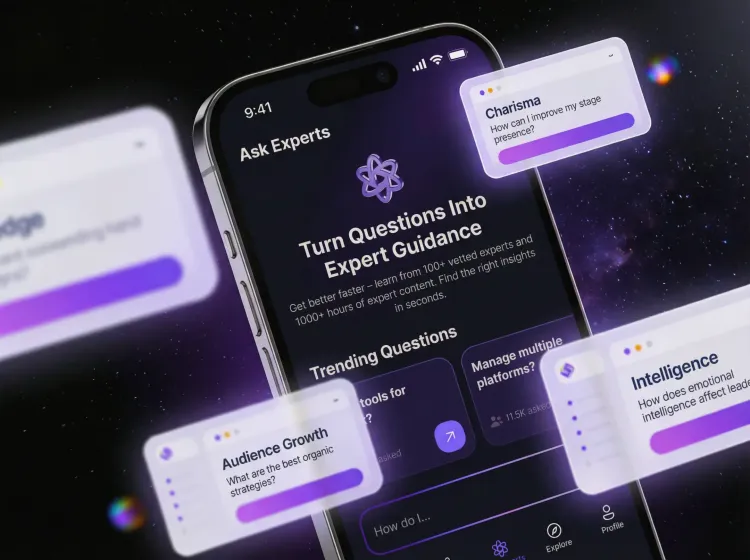
Across all journeys, SEEK lets you ask a question and get an answer drawn from a curated library of expert sources, with links to the originals.
Strengths:
Limitations:
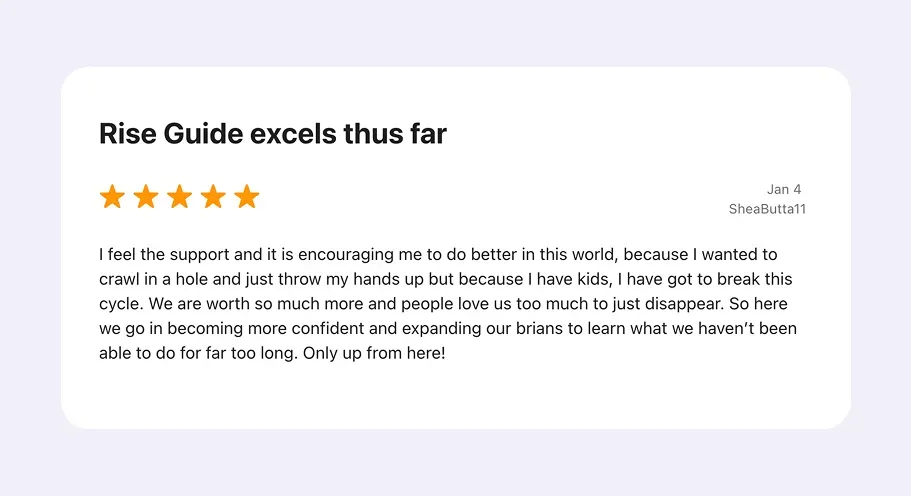
If the skill you most want to improve is communication, that is exactly the gap RiseGuide was built for. You can start the Communication Mastery journey and train confidence under pressure in 15 minutes a day.
App Store (4.8 ⭐)
Google Play (4.5 ⭐)
Best for: voracious readers who want broad exposure to nonfiction ideas.
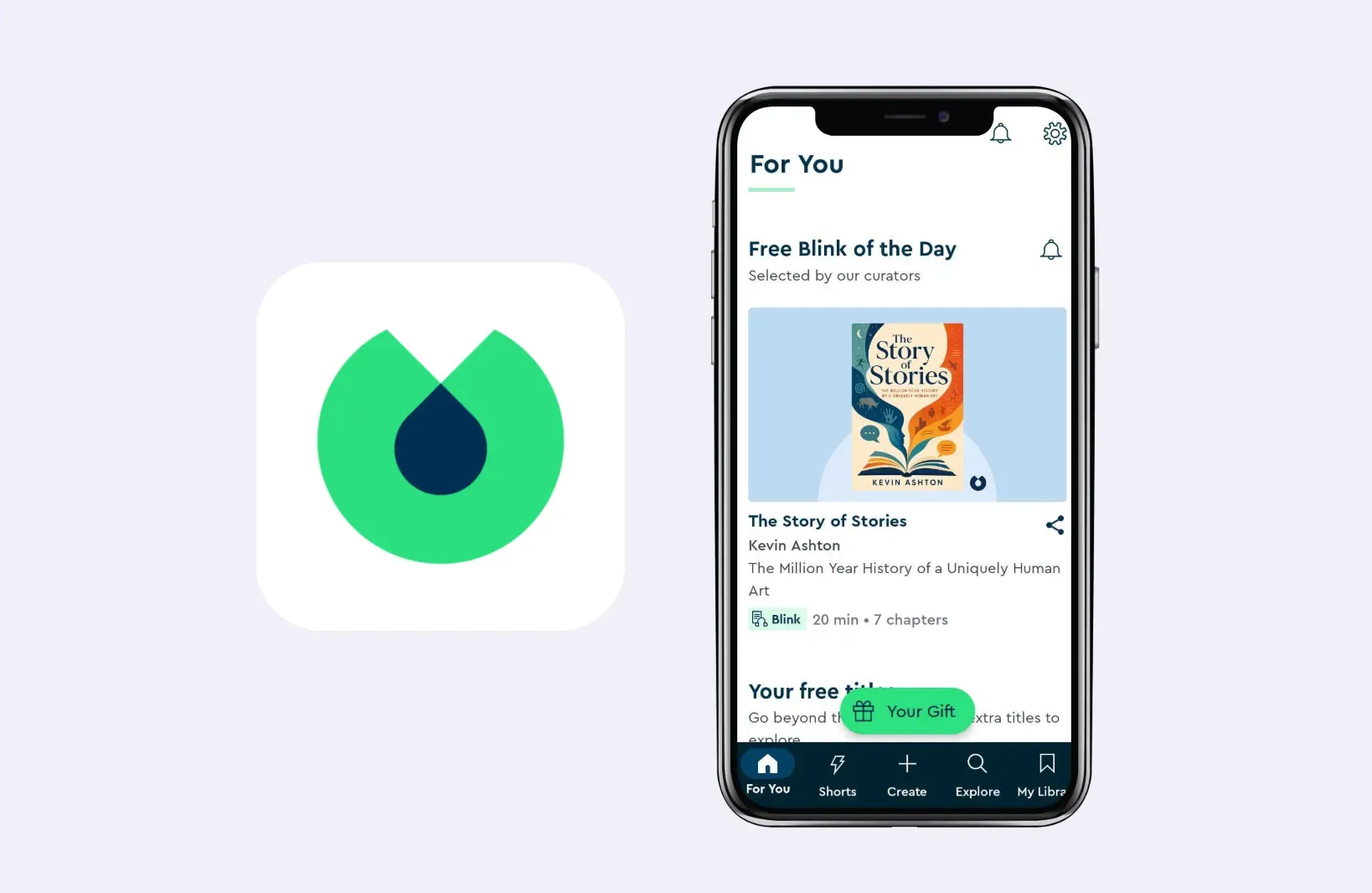 Blinkist is the app most people picture when they think of book summaries. It condenses more than 8,000 nonfiction titles and podcasts into roughly 15-minute reads or listens it calls "Blinks." The library is the deepest here, the audio is polished, and you can send summaries to a Kindle or read offline.
Strengths:
Limitations:
App Store (4.6 ⭐)
Google Play (4.2 ⭐)
Best for: people who need streaks, challenges, and gentle nudges to keep a habit going.
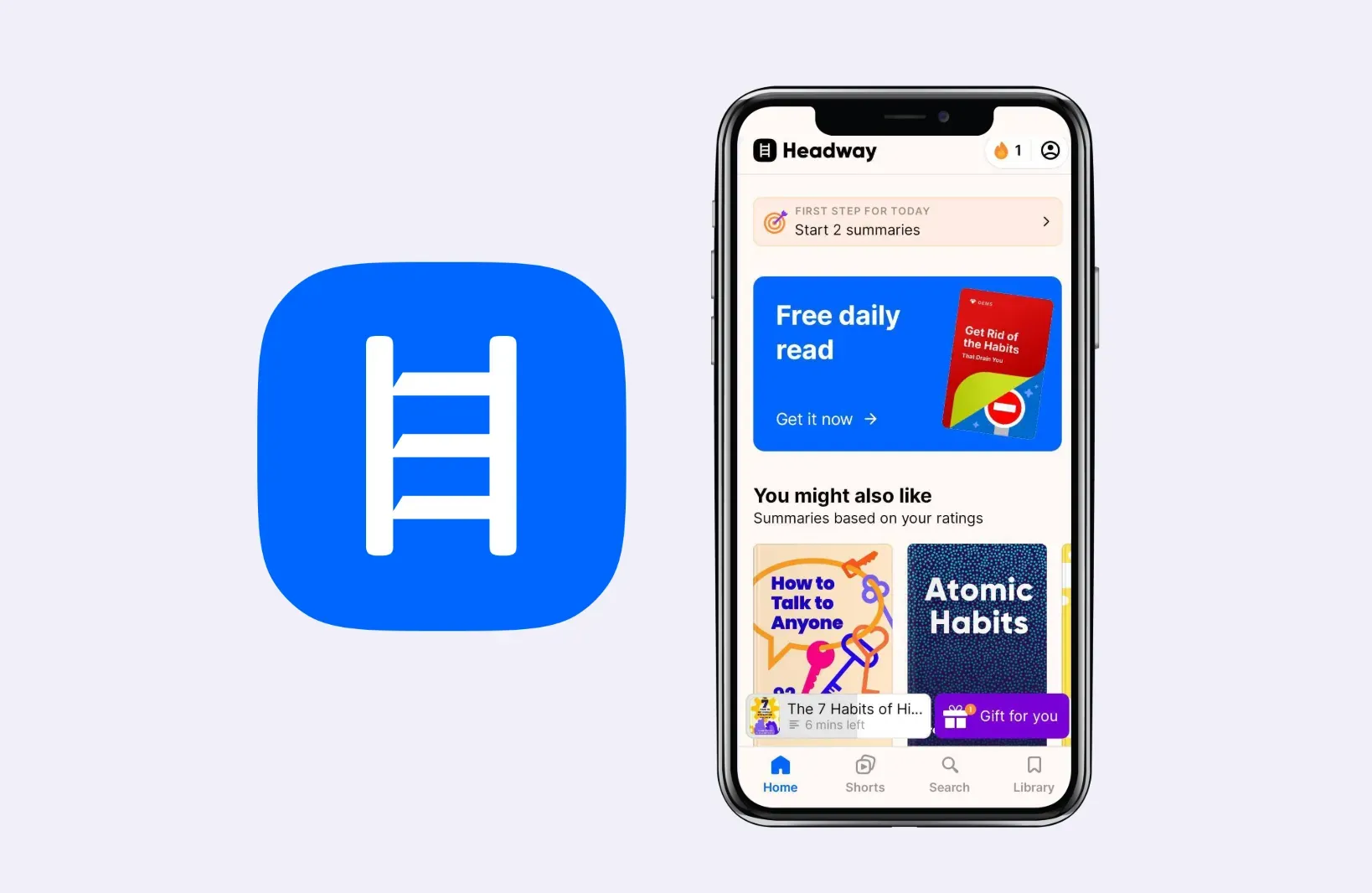 Headway covers similar ground to Blinkist — 1,700+ nonfiction summaries you can read or listen to — but leans hard into motivation. Daily sessions, themed challenges on topics like confidence and emotional intelligence, and a spaced-repetition flashcard feature are all designed to keep you coming back. If you have abandoned learning apps before, the habit scaffolding here is the strongest of the summary group.
Strengths:
Limitations:
App Store (4.8 ⭐)
Google Play (4.0 ⭐)
Best for: visual learners and anyone who finds dense text hard to sit with.
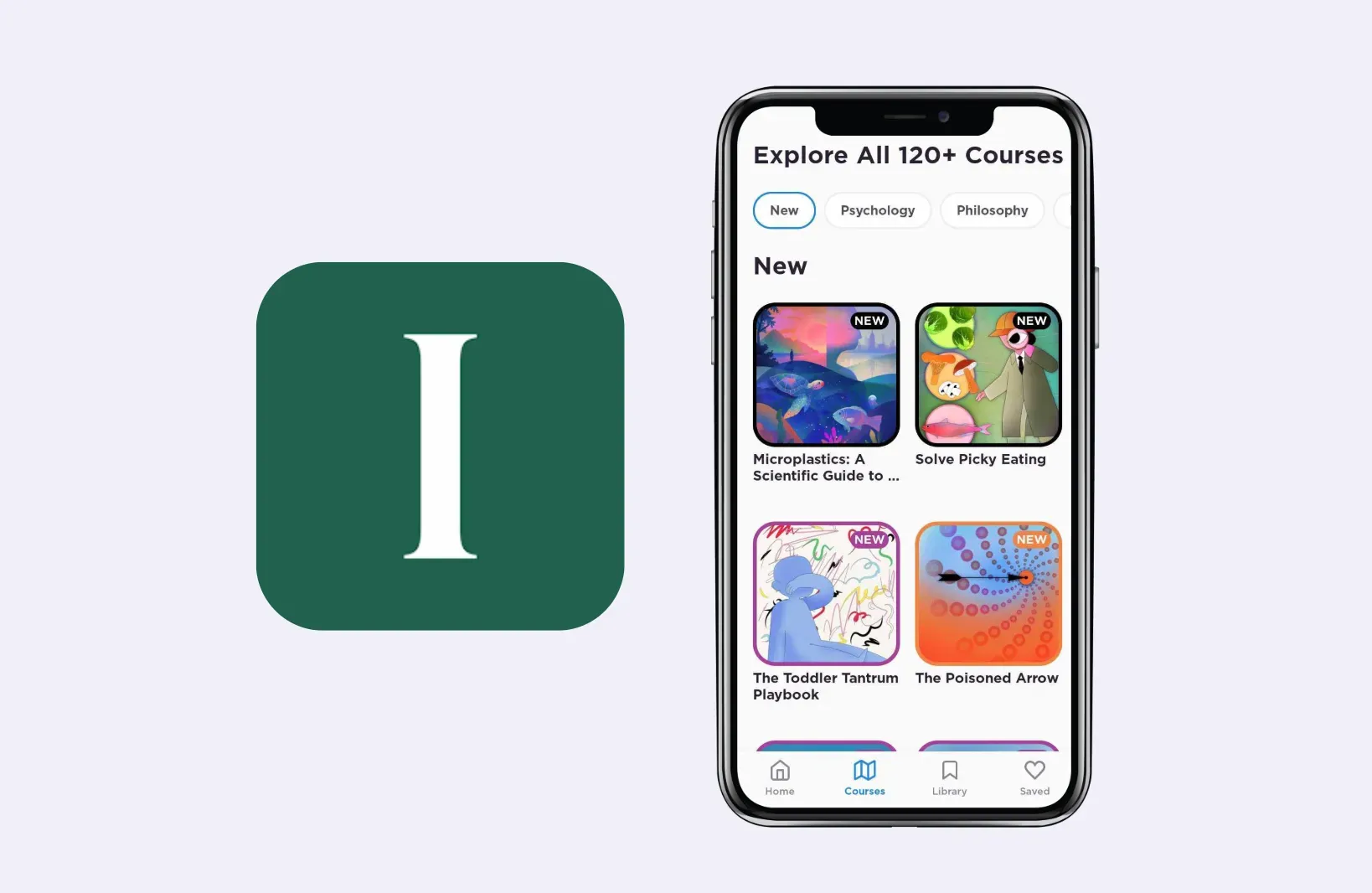 Imprint takes the same goal — understand a big idea fast — and makes it visual. Concepts from psychology, philosophy, finance, and more are taught through animated illustrations, short text, and quick knowledge checks, with two-minute chapters you can finish in a queue. It is an Apple Editors' Choice app, and the design genuinely helps ideas stick.
Strengths:
Limitations:
App Store (4.7 ⭐)
Google Play (4.6 ⭐)
Best for: anyone who wants to learn by solving problems, not reading about them.
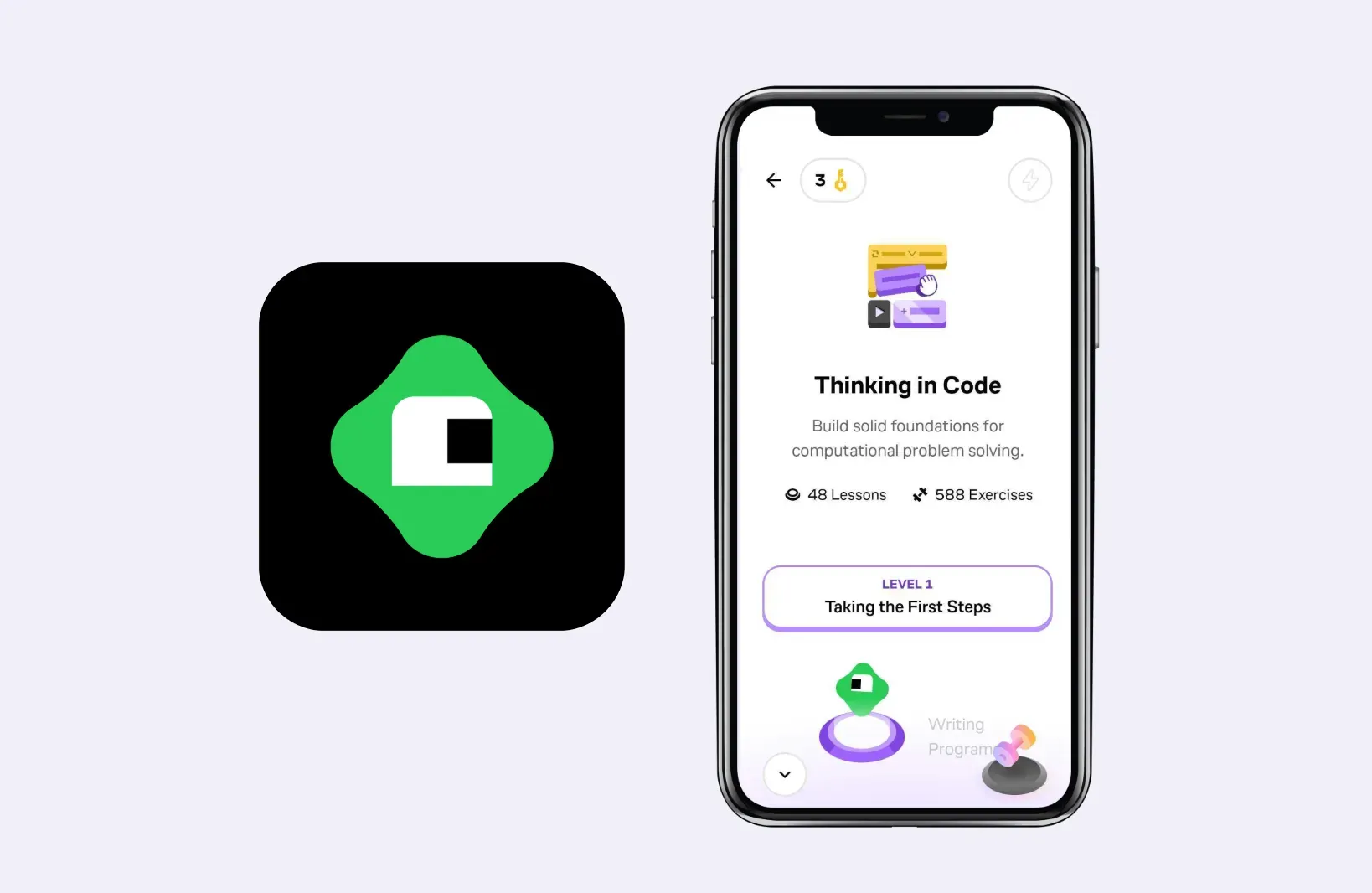 Brilliant is the outlier here, and a welcome one. Instead of summarising books, it teaches math, computer science, data, and logic through interactive problems built by experts from places like MIT and Harvard. You learn by doing — working through a problem with a tutor that reacts to where you get stuck. For building real analytical skill in short sittings, nothing else on this list comes close.
Strengths:
Limitations:
App Store (4.3 ⭐)
Google Play (3.9 ⭐)
Best for: curious people who want to learn a bit of everything in interactive, quiz-led bites.
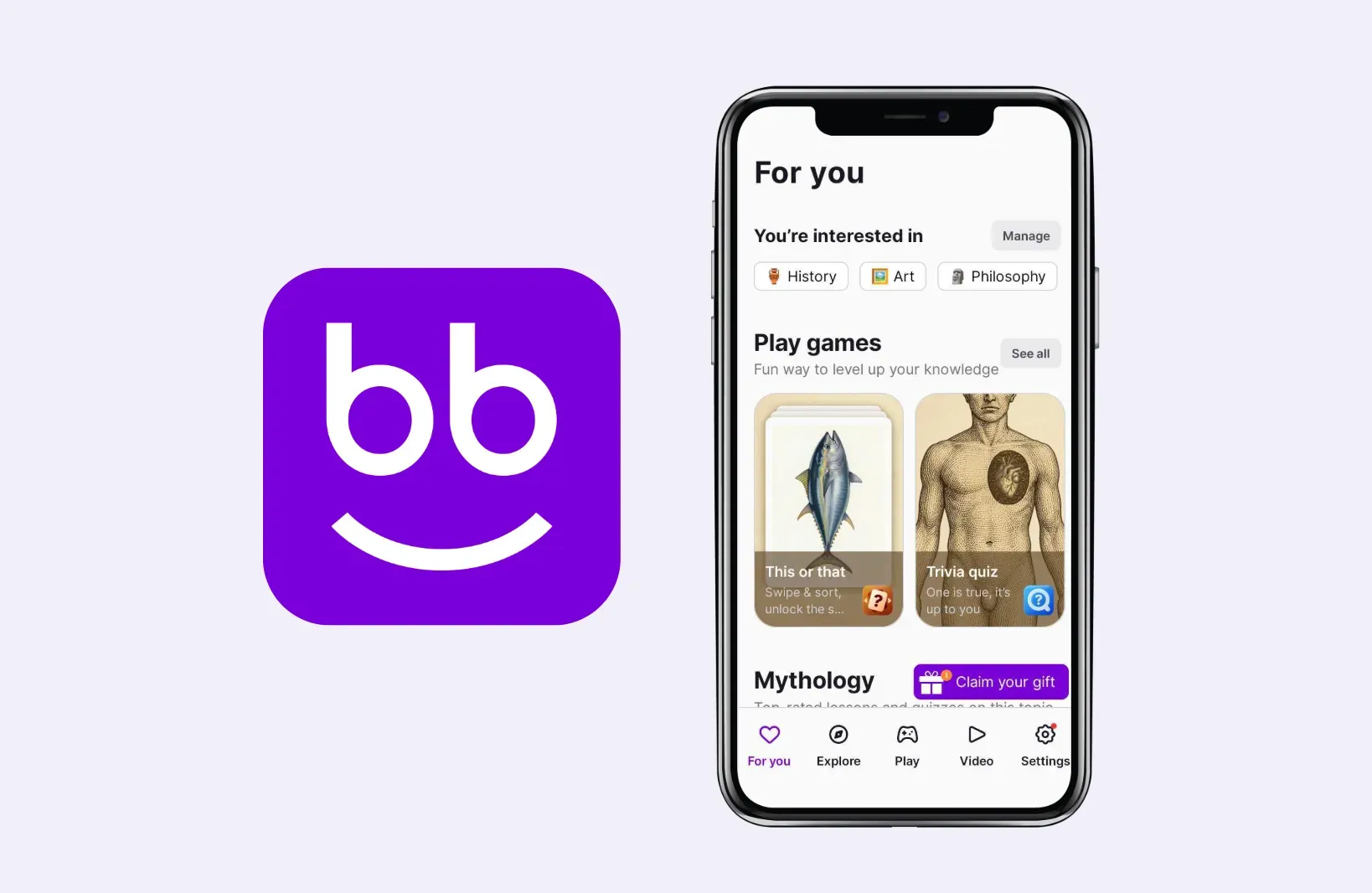 Nibble is microlearning in its purest form: interactive 10-minute lessons, each ending in a quiz, across a wide spread of subjects — psychology, personal finance, philosophy, history, logic, art, statistics, and more. Rather than summarising books, it builds original, expert-crafted lessons you tap and swipe through, with the explicit pitch of replacing a doomscrolling habit. The interactivity is the draw: you are answering and checking as you go, not just reading.
Strengths:
Limitations:
App Store (4.7 ⭐)
Google Play (4.4 ⭐)
Best for: the genuinely time-poor who want the shortest possible format.
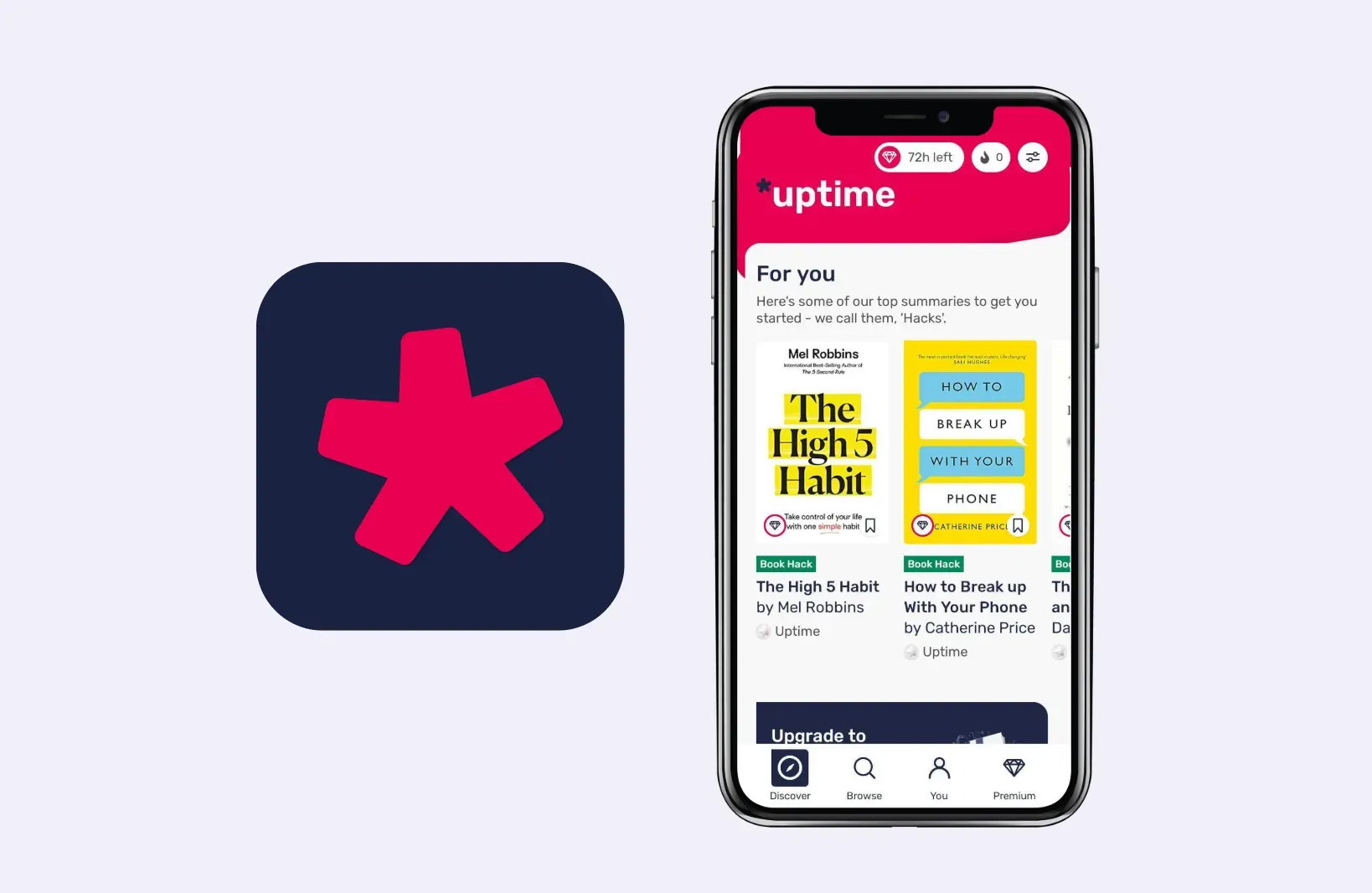 Uptime compresses books, podcasts, documentaries, and courses into five-minute "Hacks" you can read, listen to, or tap through like a story. It is an Editors' Choice app, and its "Insights in Action" try to push you from reading toward doing. Of everything here, this is the format for the smallest pockets of time.
Strengths:
Limitations:
App Store (4.5 ⭐)
Google Play (4.6 ⭐)
Best for: people who read self-help but never act on it.
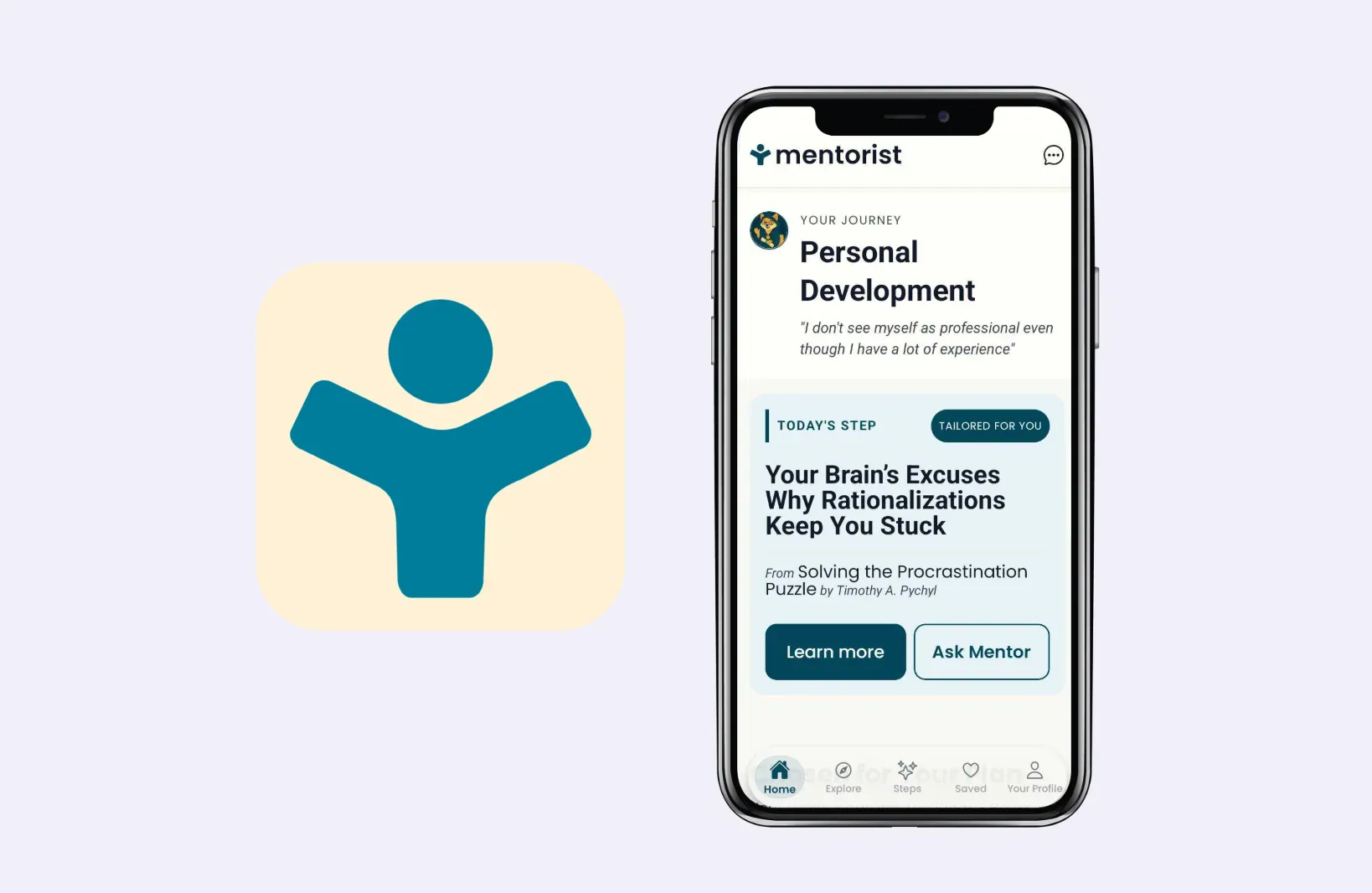 Mentorist pulls actionable steps from more than 1,000 bestselling books and asks you to commit to one small action a day. It remembers your progress and checks in, which makes it feel less like a library and more like a coach. If your problem is finishing books but never changing anything, this is the app that pushes for follow-through.
Strengths:
Limitations:
App Store (4.7 ⭐)
Google Play (4.5 ⭐)
Best for: curious browsers who want a steady stream of standalone insights, not full courses.
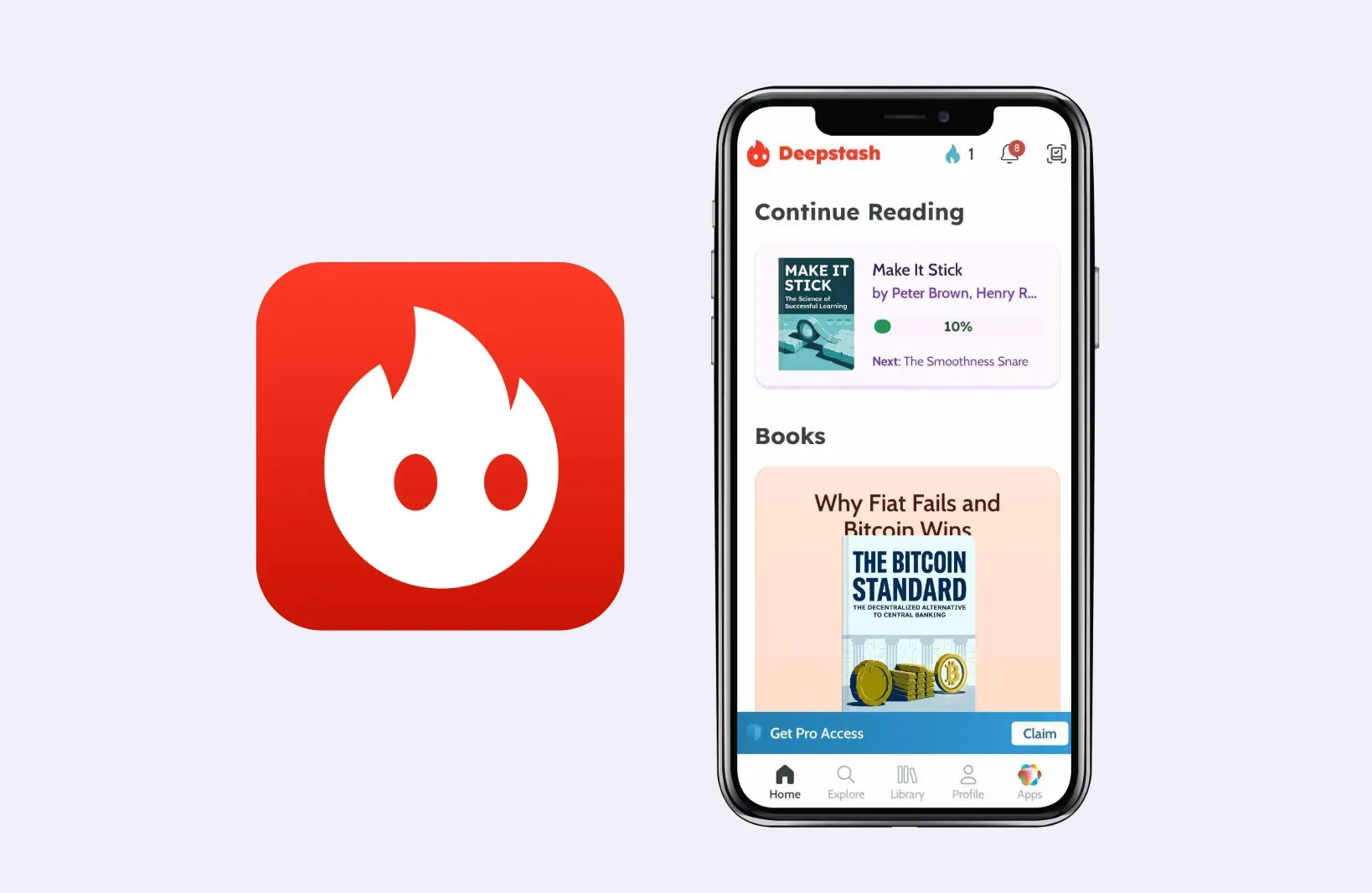 Deepstash is a different shape from the summary apps. Instead of condensing one book at a time, it serves up "idea cards" — short, single insights drawn from books, articles, and podcasts, each paired with clean artwork and sorted by topic. You browse a personalised feed, save the cards that resonate, and build your own library of ideas, a bit like a knowledge-focused alternative to a social feed. With 200,000+ ideas, it is built for grazing rather than completing.
Strengths:
Limitations:
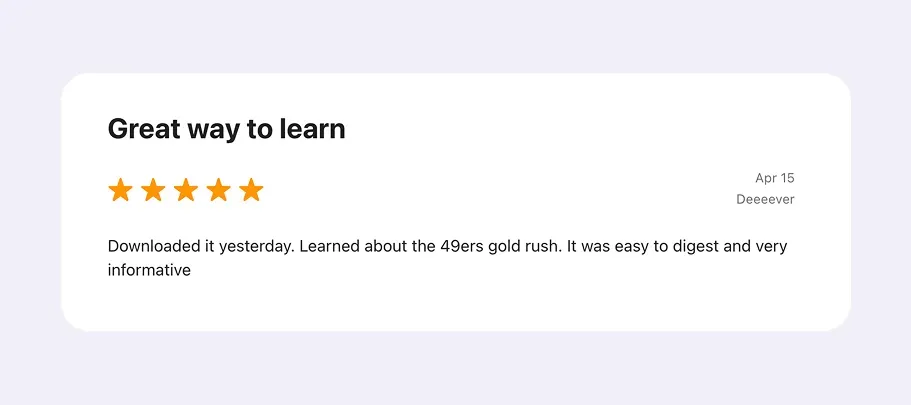
[ Real review ]
App Store (4.8 ⭐)
Google Play (4.7 ⭐)
Best for: curious learners who want to explore wide-ranging topics without paying a cent.
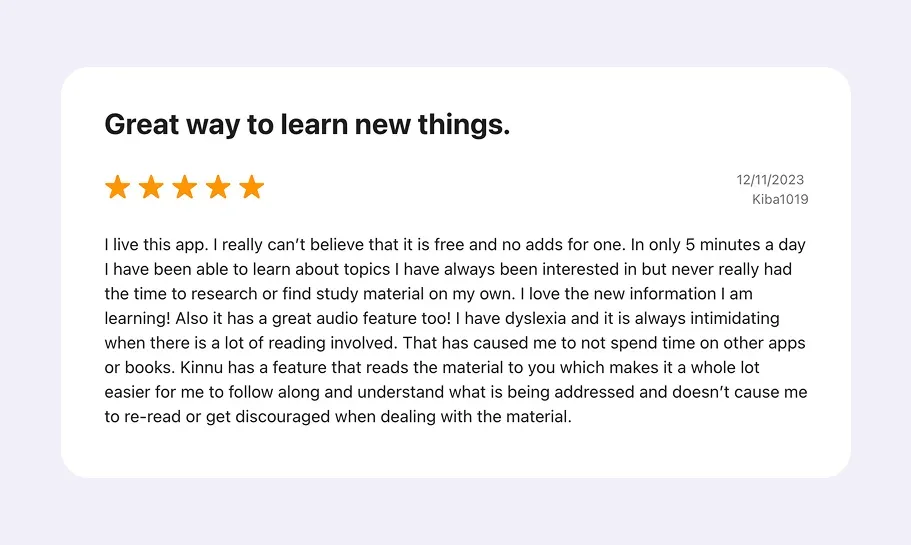
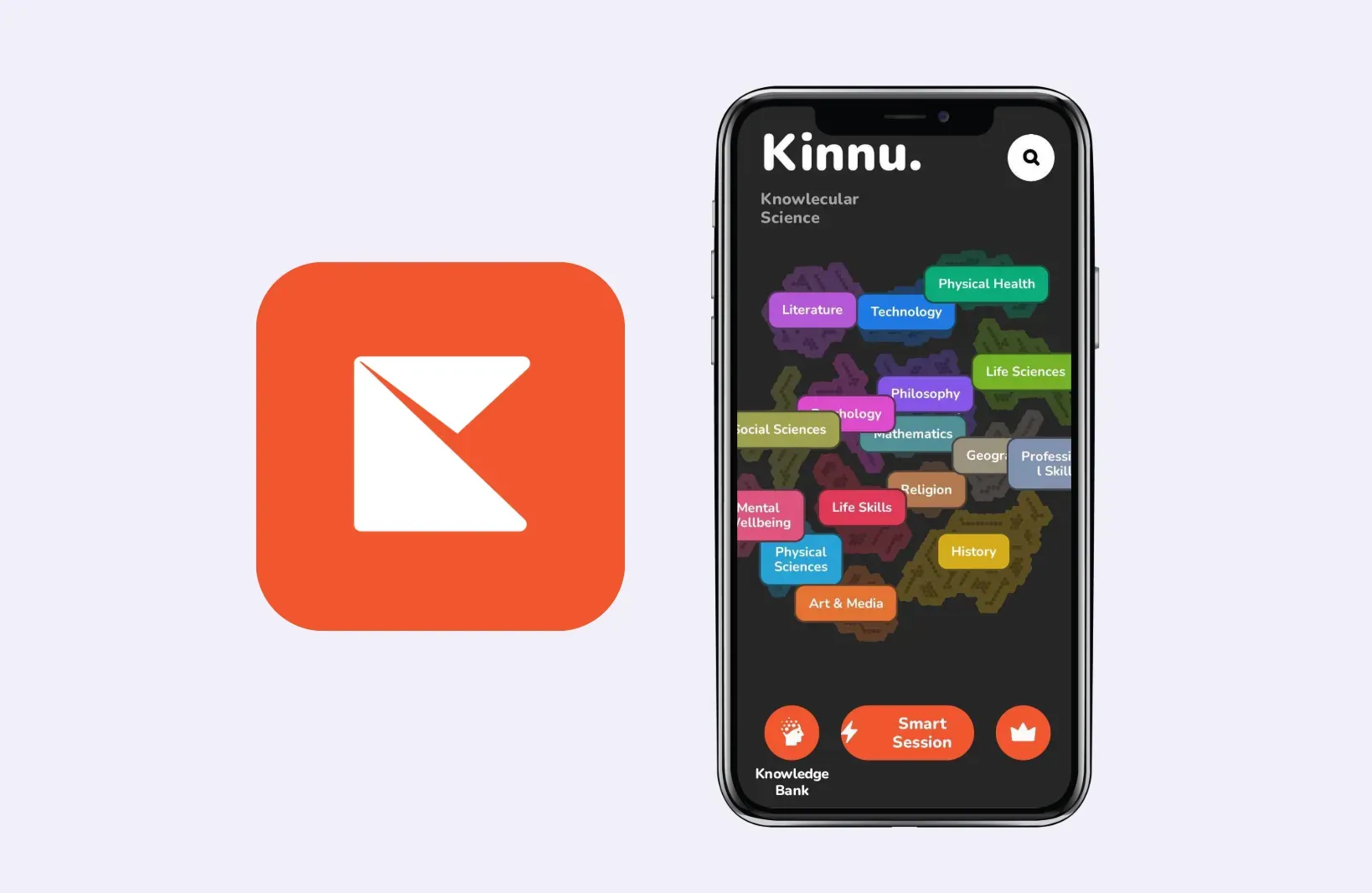 Kinnu is the rare app here that is genuinely free — no ads, no subscription wall. It uses cognitive science to teach across dozens of domains, from psychology and personal finance to history, science, and AI, and its "Memory Shield" spaced-repetition system brings topics back just as you are about to forget them. Lessons are gamified and map-based, so working through a subject feels like exploring rather than studying.
Strengths:
Limitations:
App Store (4.1 ⭐)
Google Play (4.1 ⭐)
Best for: coaches and trainers who want to package their own knowledge into short, structured lessons and sell them.
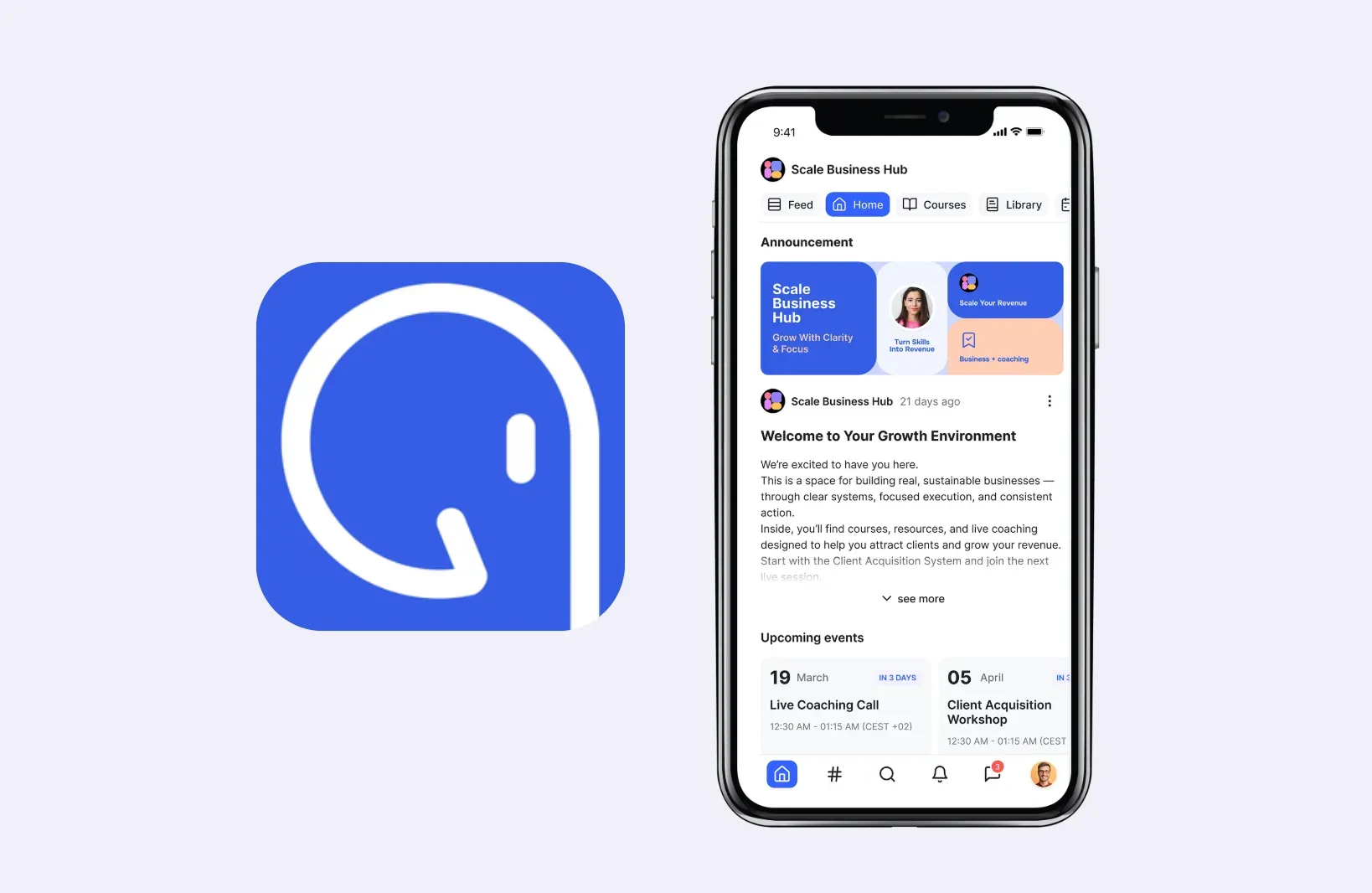
Every app so far has been built to get knowledge into you. GroupApp is the one you open once it is already there. It is a group learning platform for coaching and training programs, the place you go when the skill you have practised is worth teaching, and you would rather run your own microlearning program than pay for someone else's.
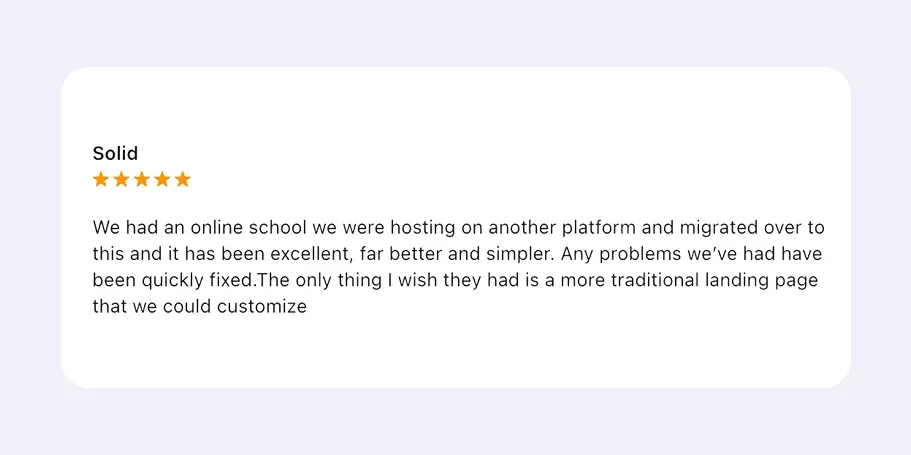
The fit with microlearning is closer than it first looks. GroupApp lets you break what you know into short, single-idea lessons, the same two-to-fifteen-minute pieces this whole list is built on, and arrange them into a path a learner moves through a little at a time. You drop in video, audio, text, a PDF, or a quick quiz, and each lesson can carry its own discussion right beside it, so a question about today's lesson gets asked and answered without anyone leaving the lesson. Learning stays social instead of solitary, which is the part most solo apps can't offer.
Where it pulls ahead of a plain course tool is the group. You can run a cohort through the material together, release lessons on a drip so nobody races ahead or falls behind, lock each step until the one before it is done, and watch real progress per person, who finished, who is stuck, who hasn't shown up this week. When someone completes the program, a certificate with your name on it lands automatically. And because it is built for coaches and trainers rather than hobbyists, you can sell the program, add a membership for graduates, and take payments in one place, with no transaction fees skimmed off what you earn.
Strengths:
Limitations:
If the other ten apps are where you go to learn a skill, GroupApp is where you go once you have one worth sharing. You can start free and turn what you have practised into a microlearning program other people pay to take.
App Store (4.7 ⭐)
Best for: people who want to learn history in a short space of time
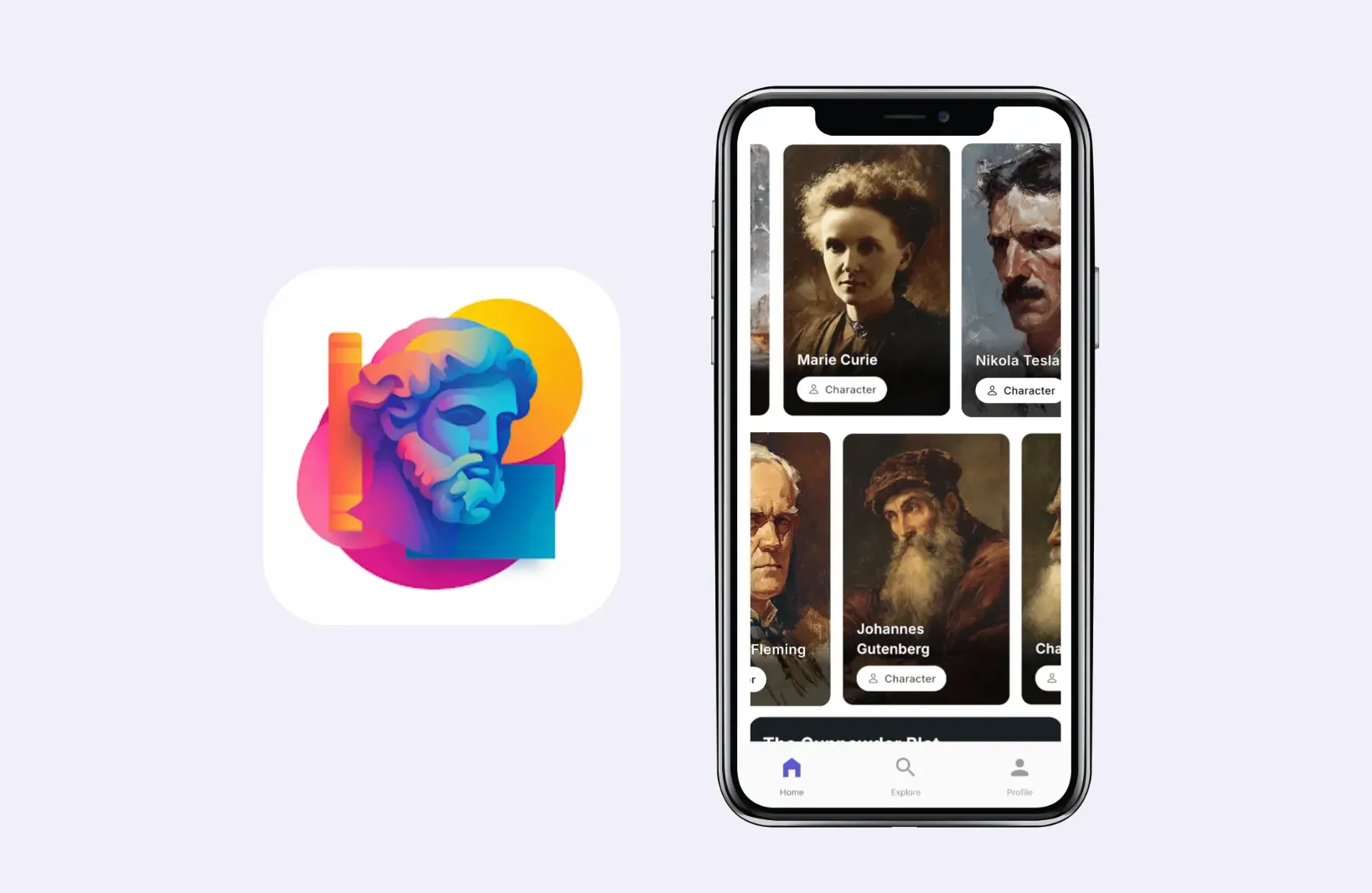
Chunks Microlearning takes the subjects most of us wish we knew more about (history, philosophy, science, literature, and art) and breaks them into short story chapters you can finish in a few minutes. Instead of dry flashcards, you follow real narratives: a philosopher's life, a turning point in history, the idea behind a scientific breakthrough.
The app also includes long-form discussion/podcast episodes, providing more of a deep-dive into certain topics, great for bedtime listening.
Every story is personally researched and reviewed rather than mass-generated, which gives it a more considered feel than most microlearning apps.
Strengths
Limitations
All ratings verified on the US App Store and Google Play on June 8, 2026. Ratings change over time, so treat these as a June 2026 snapshot.
There is no single winner, because these apps are good at different things. If you want the widest library to browse, Blinkist is hard to beat. If you need help simply sticking with a habit, Headway has the strongest motivational design. If you learn by doing, Brilliant is in a class of its own. If you want to learn widely for free, Kinnu is the easiest yes on the list. If you would rather learn history and ideas as stories than as dates and facts, Chunks is the most enjoyable way in. And if you're ready to share your skills with others - then GroupApp is your choice.
But if your real goal is to get better at a skill — especially communication, the one that shapes almost every job and relationship — the question changes. The summary apps can tell you what a great communicator does. Few of them give you a structured path to become one, and fewer still let you practice. That is where RiseGuide earns its top spot: a real communication curriculum, a Speech Analyzer that scores how you actually sound, small talk simulator to rehearse real conversations, and a search engine for expert knowledge with verified sources — all in the ten minutes you would have lost to your feed.
The best app, in the end, is the one you open instead of the one you scroll. Pick the journey that matches what you most want to change, and give it the next ten minutes.
Ready to spend those minutes on yourself? Start your first journey with RiseGuide, and turn scrolling into growth.