RiseGuide Team

Nine games can train the core parts of communication. Back-to-back drawing and Telephone build careful listening and precision; "In so many words" and Taboo build concision and the ability to re-explain an idea; the gibberish translator and the mirror game train tone and nonverbal awareness; "Yes, and" and Twenty Questions build quick thinking and better questions; and the filler-word game cleans up your delivery. Each one works by making you practice a single skill in a setting where mistakes don't cost anything, which is more effective than reading tips. Every game below comes with a version you can do on your own. These games make up a list of communication games you can start using today.
You can read every article on listening and still go blank when someone asks "so what do you do?" Communication is a set of skills, and skills improve through practice. Reading explains how a skill works; practicing is what makes you better at it. Games are a useful way to practice because they let you work on one skill at a time, in a setting where a mistake costs nothing more than a laugh.
Many of these games started as acting or improv warm-ups, which is part of why they work well as fun communication games: they are easy to repeat and don't feel like studying.
There is good evidence that practicing beats reading. A meta-analysis of 225 studies found that students in active-learning classes scored about six percent higher on exams and were roughly 1.5 times less likely to fail than those in traditional lectures. The reason is retrieval: producing an answer yourself strengthens a skill in a way that recognizing a good one does not, which research on retrieval practice and spacing keeps confirming. Games work the same way, because every round makes you produce a response on the spot instead of nodding along to a tip.
Games help with a second, harder problem too: the discomfort of not knowing what the other person will say or do. That uncertainty is what makes real conversation stressful, and reading advice does nothing to prepare you for it. A game gives you repeated, low-stakes exposure to that exact feeling. Peter Felsman and colleagues, studying improvisation training in more than 300 teenagers, found that it reduced social anxiety specifically by raising tolerance for uncertainty - the students who grew more comfortable not knowing what came next were the ones whose anxiety dropped most. Practicing inside a game teaches you that the unscripted moment is manageable, so it feels less threatening when it matters.
How it works: two people sit back to back. One looks at a simple drawing and describes it out loud; the other tries to reproduce it from the description alone. Neither can see what the other has. When you compare the two pictures at the end, the differences show you where your instructions were unclear and where the listener stopped asking questions. Played a few times, it teaches you to give specific, ordered instructions and to confirm the other person is following.
Solo version: describe a photo on your phone out loud as though to someone who can't see it, record it, and judge whether your words alone could rebuild the image.
How it works: a phrase is whispered down a line of people, and the version at the end is usually quite different from the one it started as. The game shows how small errors add up each time a message is repeated. Played deliberately, by repeating back what you heard before passing it on, it trains the habit of confirming a message instead of assuming you got it right. That habit is what keeps instructions and requests from drifting as they move between people.
Solo version: read a short paragraph once, close it, and write down the main message in a single sentence. Comparing the two shows which details you drop under pressure.
How it works: you explain a word or idea to others within a strict limit, say fifteen words, while they guess what it is. The limit removes room for filler, so you have to choose the words that carry the most meaning and lead with the main point. Practicing under that constraint makes it easier to give a short, clear answer when someone asks you to get to the point.
Solo version: take an idea you care about and write it in twenty words, then ten, then five. Stanford lecturer Matt Abrahams teaches that getting to the point is a matter of structure - leading with your main message and cutting whatever doesn't serve it - and short, repeated drills like this are how that habit forms. (Stanford GSB)
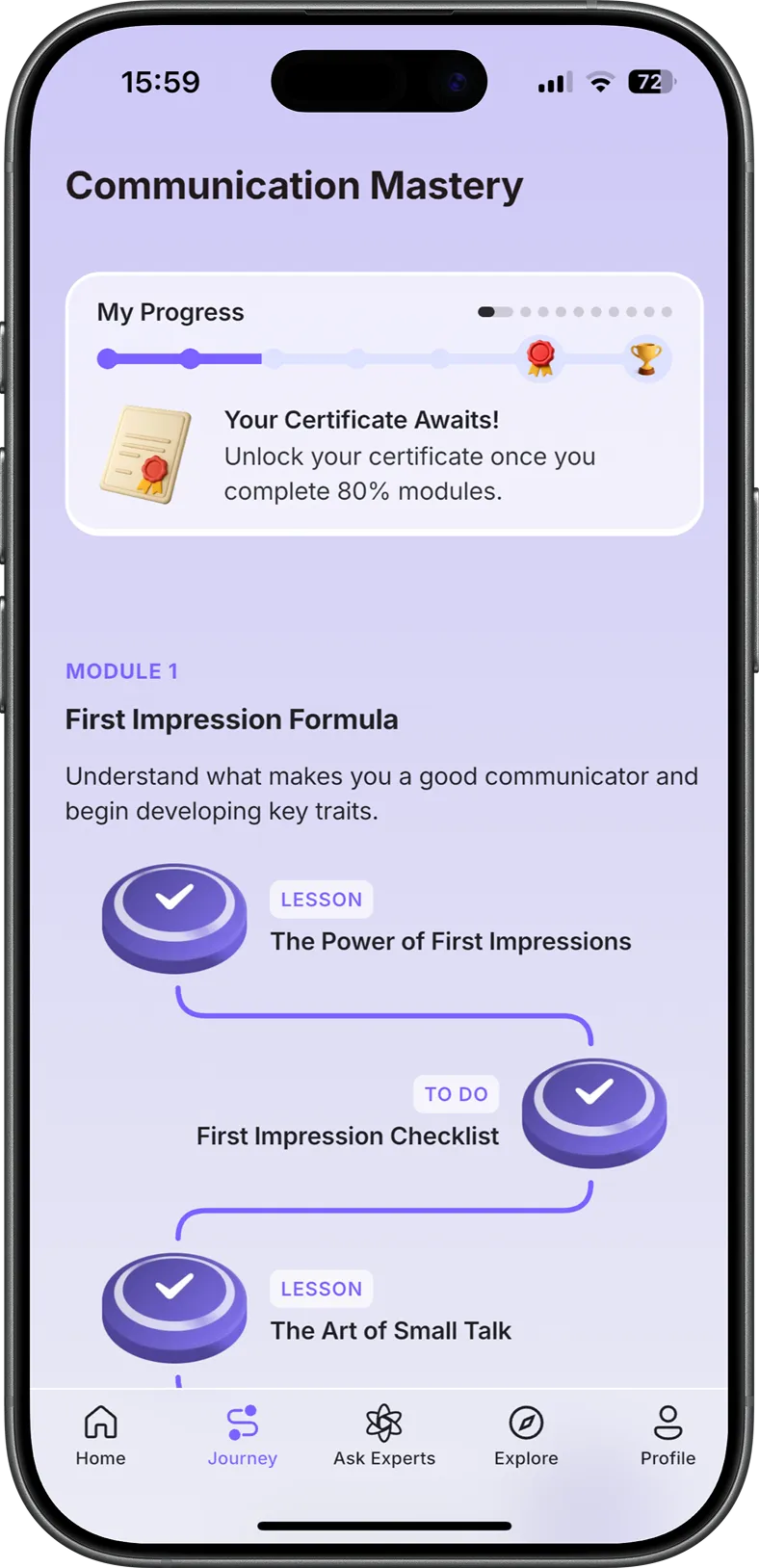
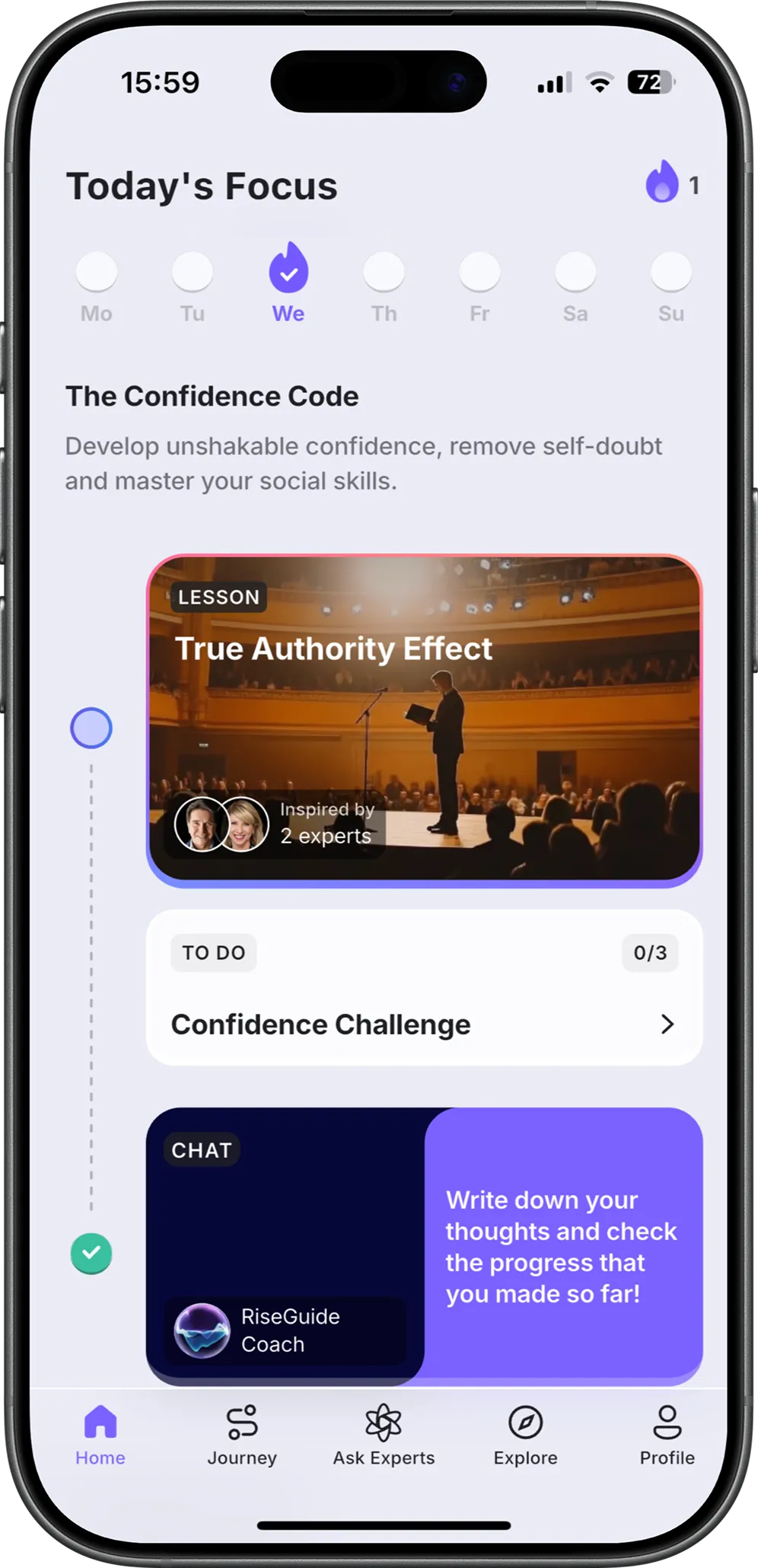
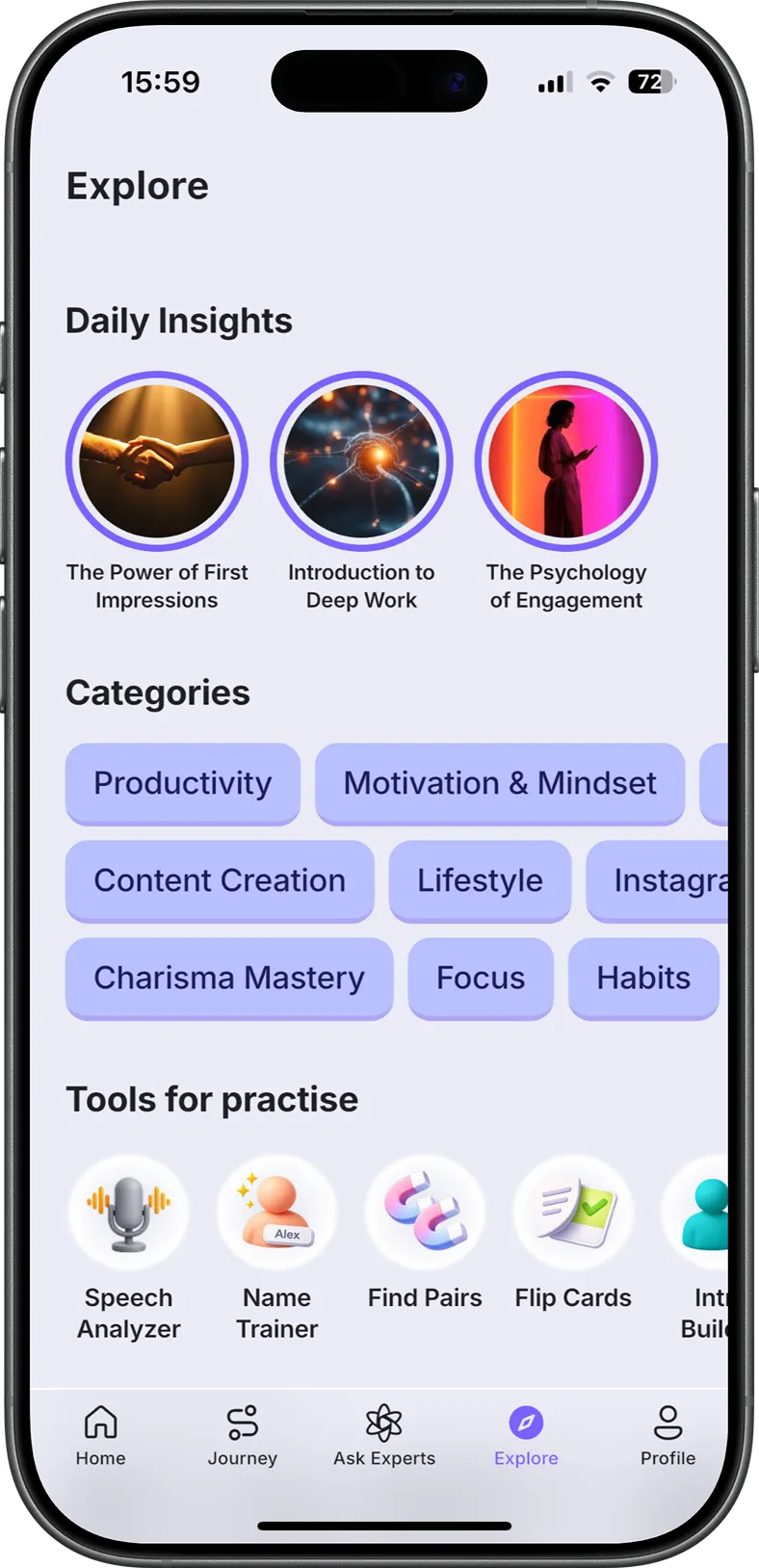
Playing a game once helps a little; repeating it is what changes how you communicate. This is the idea behind RiseGuide's Communication Mastery journey, which is built around active practice. Instead of only reading lessons, you use interactive tools like a speech analyzer, a small-talk simulator, name cards, and quizzes to work on each skill in short daily sessions. Start your journey now.
How it works: the gibberish translator is one of the most useful nonverbal communication games, because it trains the part of a message that the words don't carry. In this one, a player speaks invented, meaningless sounds while expressing a clear emotion through tone, pace, and facial expression, and a partner "translates" the intended meaning. With no real words to rely on, both players have to focus on the signals underneath speech. It teaches you how much of your message comes from how you sound and look, and helps you notice when your tone doesn't match what you're saying.
Solo version: say a neutral sentence like "the meeting is at three" as though you were excited, then bored, then annoyed, and watch what your voice and face do. Vanessa Van Edwards' work at Science of People looks at how these vocal and facial cues shape whether people read you as warm and competent.
How it works: two people face each other, and one slowly copies the other's movements in real time before they switch who leads. To mirror someone accurately you have to watch them closely and without breaks, so the game trains sustained attention to another person. That same close attention is what makes people feel listened to in a real conversation.
Solo version: in your next conversation, quietly match the other person's pace and energy for a minute.
How it works: each person accepts what the previous person said ("yes") and adds a new detail ("and"), building a shared story together. The rule against blocking or saying "but" stops you from rejecting ideas and trains you to build on what you're given. It also gets you used to responding before you know exactly what you'll say, which is the skill that makes unplanned conversation less stressful. This is the game with the most direct research support for easing social nerves.
Solo version: when you catch yourself mentally objecting to an idea today, finish the sentence "yes, and…" instead, and see where it leads.
How it works: one person thinks of something, and the others have twenty yes-or-no questions to identify it. The game rewards broad, well-chosen questions that narrow the possibilities quickly and punishes random guesses. Practicing it trains you to ask questions that gather useful information, which is the same skill that moves a conversation past surface small talk.
Solo version: set yourself the goal of asking three genuine follow-up questions in your next chat before you offer an opinion of your own.
How it works: you describe a target word to your team without using a short list of the most obvious related words. With the easy vocabulary removed, you have to find another route to the idea, such as an example, a comparison, or plainer language. This trains you to re-explain something when your first attempt doesn't land, which helps any time a person hasn't understood you.
Solo version: explain your job to an imaginary ten-year-old without using any jargon, and notice which words you reach for when the usual ones are off limits.
How it works: you speak on a topic for sixty seconds, and any "um," "like," or "you know" ends the round. Paying constant attention to your filler words makes you aware of them, and that awareness is the first step to replacing them with short pauses. Counting the fillers each time gives you a clear number to lower.
Solo version: record a sixty-second answer to a common question, count the fillers, and try to beat the number the next day.
Most lists assume you have a group and a free evening, which you often don't. Every game above has a one-person version, and those daily communication exercises are where steady improvement comes from. Recording a sixty-second answer, asking one extra follow-up question, or rewriting a message to half its length each takes about a minute and works on one specific skill.
The thing that matters is doing them regularly. A single round won't change a habit, though a few minutes most days will. If you'd rather follow a set path than design your own drills, RiseGuide's Communication Mastery journey builds that daily practice for you with the same kind of interactive tools.
Communication improves the same way any skill does, through regular, low-pressure practice. Games make that practice easier to start because they are forgiving and quick to set up. Choose one to try this week, such as back-to-back drawing to test your listening or the filler-word game to clean up your delivery, and play it a few times. The most useful communication skills exercises are the ones you keep coming back to.