
RiseGuide Team
 FREE GUIDE with any plan: the First Impression FormulaClaim the offer
The most popular debate topics across different categories are:
A good debate turns on the statement you start with. A one-sided claim and the room runs out of things to say within a minute, while a genuinely open one keeps people in it. This page collects 120 debate topics by category, so you can scan to the kind you need and get started. The list runs from easy debate topics and interesting debate topics to more serious ones, and it covers society, technology, school, ethics, the environment, money and work, sports, and plain fun. Whether you are looking for debate topics for students, a prompt for a club, or an argument to settle with friends, there should be something here you can use.
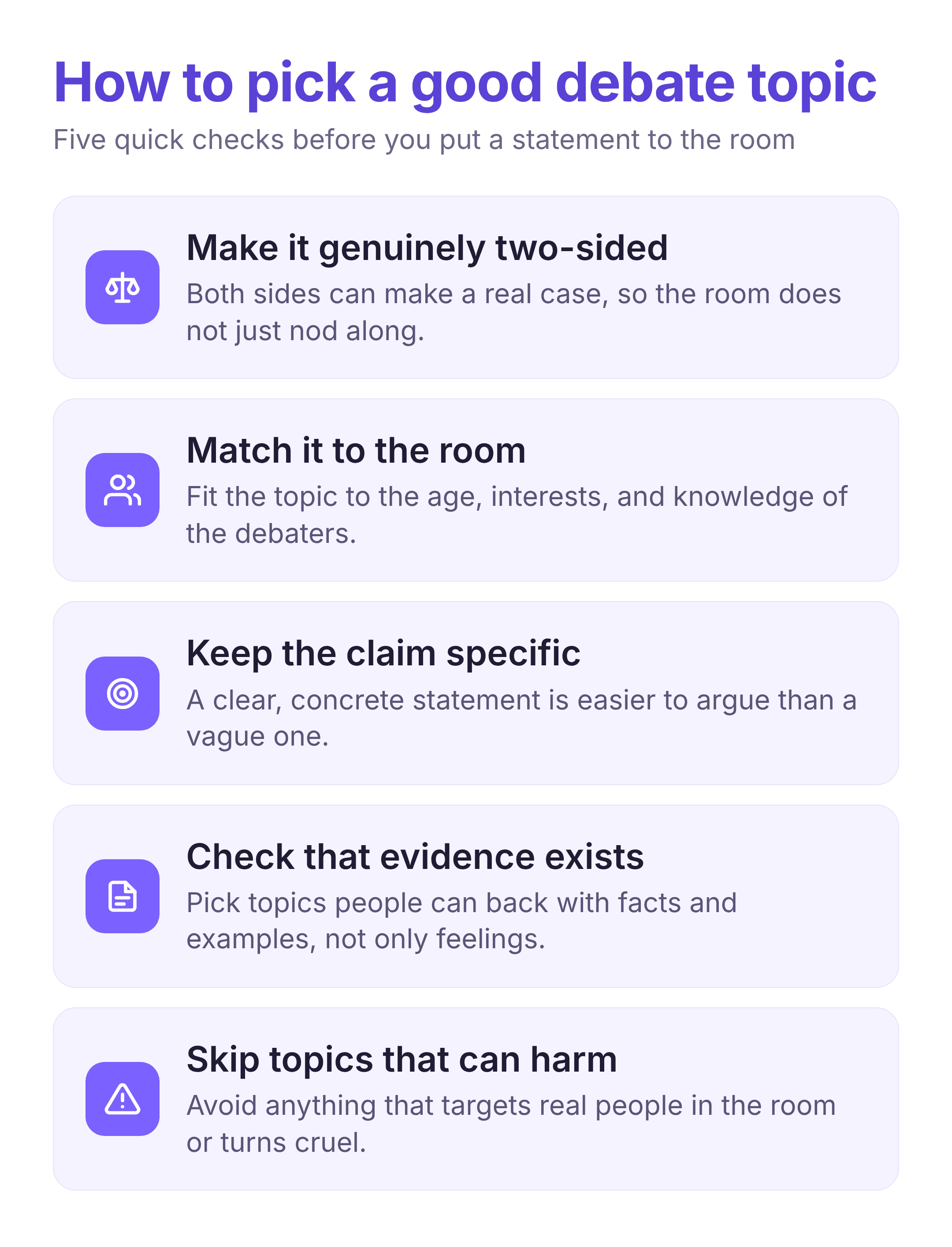
The best debatable topics share a few traits. They have two sides a reasonable person could defend, they fit the people in the room, and they can be backed with more than opinion. A topic that suits a university club will fall flat with young children, so it helps to match the subject to your group, whether you need debate topics for kids or debate topics for college students. The five checks below cover what to look for before you commit to a statement.
The topics below are grouped by theme, so you can jump to the kind of debate you want. Each one is written as a statement you can argue for or against.
These touch daily life and the headlines, and they include some of the more controversial debate topics on the list.
Technology moves fast, which makes these debate questions easy to connect to everyday life.
These work well as debate topics for students, since everyone in the room has lived them.
These are the interesting debate topics with no clear answer, good for a slower, deeper debate.
Science and the planet give you topics people can back with real evidence.
From first jobs to retirement, these suit older students and adults.
These sports debate topics and pop-culture questions keep a casual debate lively.
When you want to keep things light, these funny debate topics are hard to lose, and our post on being funny helps you sell your side with a smile.
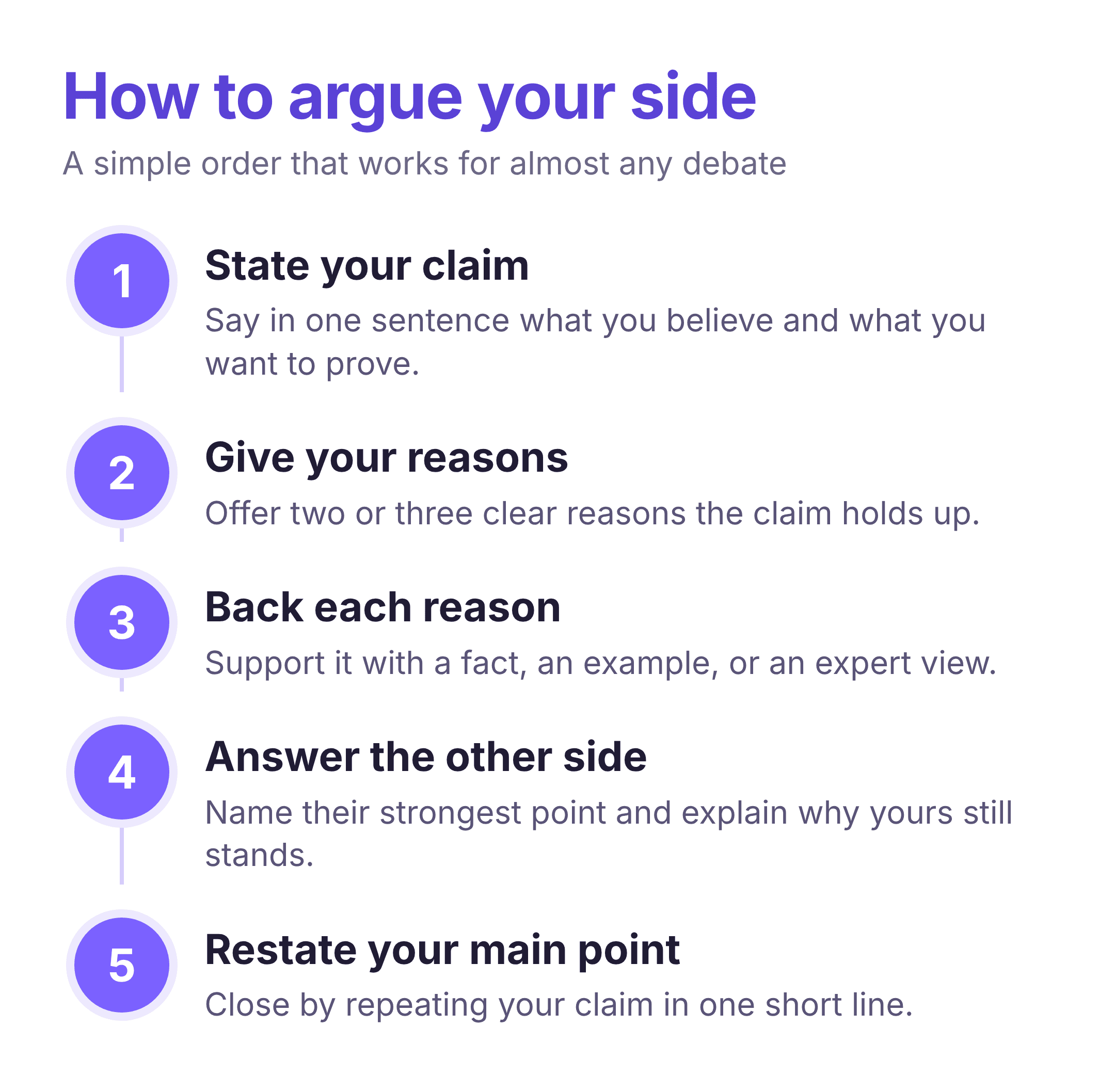
Once you have a topic, the next task is to argue it clearly, even a side you do not personally hold. A simple structure helps: say what you believe, give your reasons, back them up, answer the other side, and restate your point. Strong debaters also lean on the three classic tools of persuasion, ethos, pathos, logos, and on the Socratic method of asking questions to test an argument. Delivery counts too, so our team's guide to public speaking skills pairs well with the steps below. If putting a clear argument together is the part you want to practice, RiseGuide's Communication Mastery journey breaks persuasion into short lessons built from expert insights.
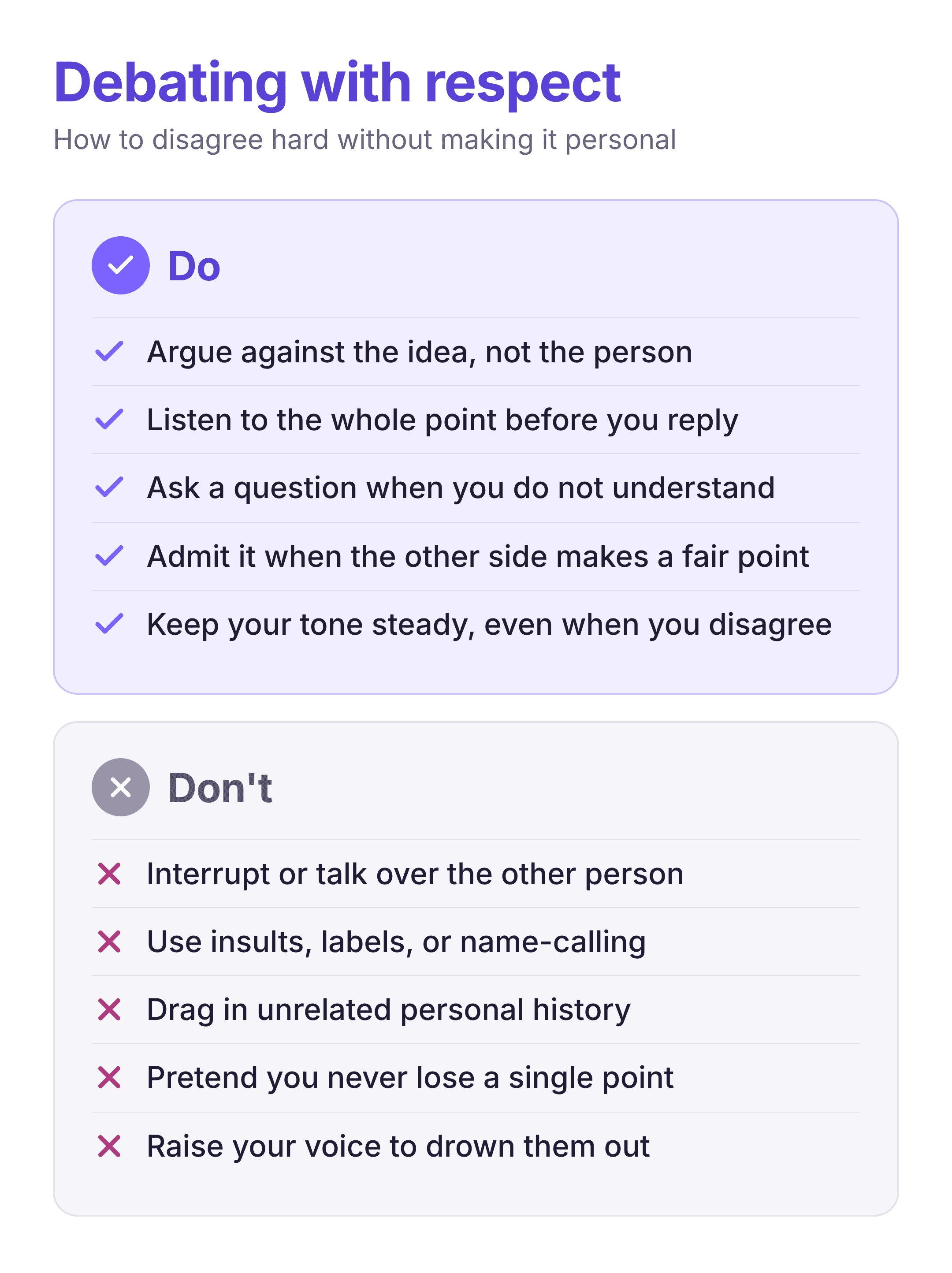
A debate should leave both people on better terms, not worse. That means arguing against the idea rather than the person, listening fully before you reply, and staying calm when you disagree. Our post on disagreeing respectfully goes deeper on handling tension in the moment. The do and don't list below sums up the ground rules.
The right topic does most of the work in a debate. Skim the category that fits your group, pick a statement with two real sides, and you will have plenty to argue about. Come back to this list whenever you need a fresh prompt for a class, a club, or a long car ride.
A good debate topic has two sides a reasonable person could defend, fits the age and interests of the group, and can be backed with facts and examples rather than opinion alone. If everyone in the room already agrees, it is not really a debate.
Match the topic to the students' age and what they already know. School, technology, and everyday life work well because students have direct experience with them. For younger groups, keep the wording simple and the stakes low.
Easy debate topics have an obvious case on both sides and need no special knowledge, like whether homework should be abolished, whether summer beats winter, or whether a hot dog is a sandwich. They let beginners focus on building an argument instead of researching facts.
Funny debate topics keep the stakes low and the arguments creative, such as whether pineapple belongs on pizza, whether cereal is a soup, or whether cats make better pets than dogs. They make a good warm-up before a more serious round.
The most controversial debate topics tend to involve politics, ethics, and money, such as the death penalty, universal basic income, or whether billionaires should exist. Save these for groups that can handle strong disagreement, and keep the focus on ideas rather than people.