RiseGuide Team
To be more approachable, send clear signals that you're open and easy to talk to. Keep your posture open: uncross your arms, face people, and look up from your phone. Let your expression relax and make friendly, steady eye contact, with a real smile when you first catch someone's eye. Start small conversations and let people finish their thoughts so they feel heard. At work, stay visibly available, reply in a warm tone, and invite questions instead of waiting for them. Most people already come across as friendlier than they fear, so for many the change is just a few small habits.
Being approachable means people feel they can walk up to you, start a conversation, and get a warm response. It shapes small moments, like whether a stranger asks you for directions, and big ones, like whether a coworker brings you a problem early or waits until it becomes a crisis. A lot of people are warmer on the inside than they look on the outside, so they get read as distant without meaning to. Approachability is made of specific, visible signals: how you hold yourself, what your face does, how you listen. Every one of them can change. Here is what makes someone approachable, why friendly people still get misread, and how to be more approachable in everyday life and at work.
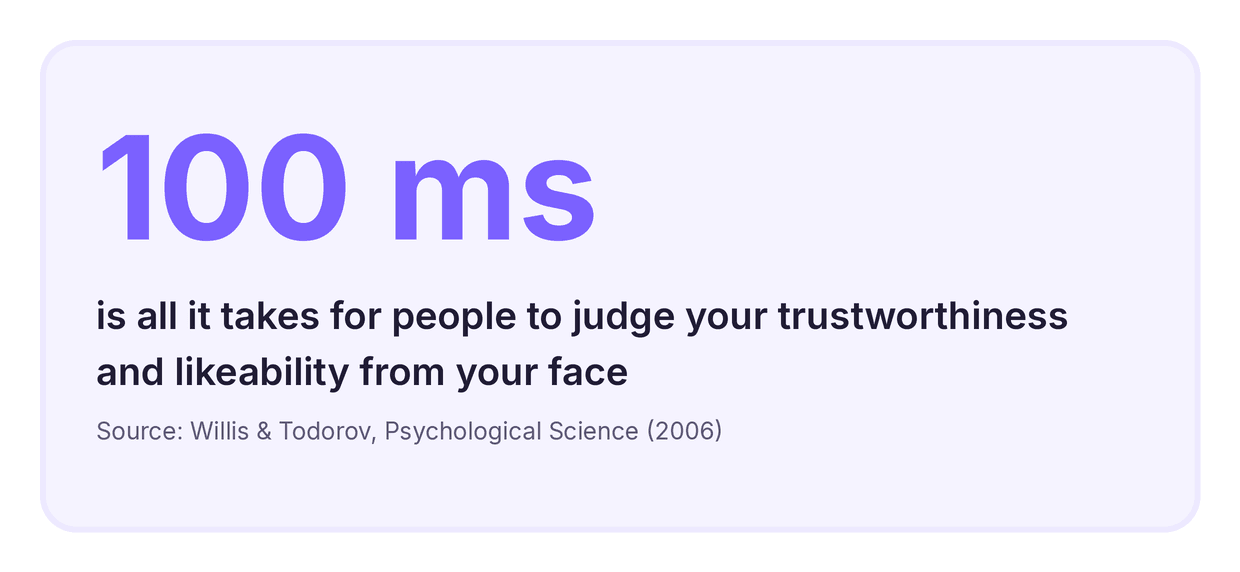
Approachability is the sense that you're safe and easy to talk to, and people decide it fast, often before you say a word. In a landmark 2006 study, participants formed impressions of traits like trustworthiness and likeability after seeing a face for only 100 milliseconds, and longer looks mostly raised their confidence rather than changing that first read. The way you carry yourself in the first moment does a lot of the work.
Three things drive that read. The first is openness: a relaxed posture and face tell people there's room for them. The second is warmth: a genuine smile and friendly eye contact show you're glad to be talked to. The third is availability: looking up, rather than staying buried in your phone or your own thoughts, shows you have space for a conversation right now. When the three line up, people feel invited. When they clash, like a warm person standing stiffly with eyes locked on a screen, people hesitate. So how to be approachable comes down to bringing those three signals into line.
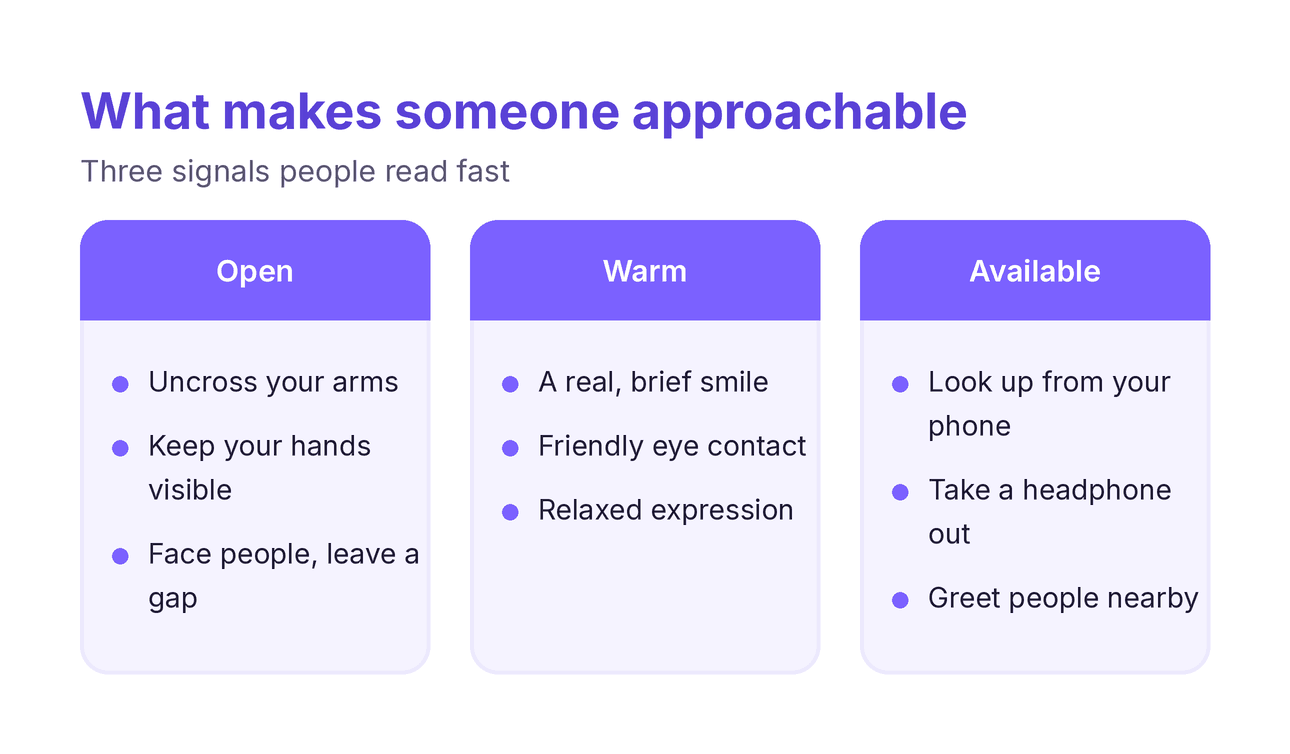
Plenty of friendly people get told they look intimidating or hard to read. Usually it's a gap between how you feel and what you show.
One reason is your resting expression. A neutral face can read as annoyed or closed even when you feel fine, so people keep waiting for a signal that never comes. Another is looking busy. Crossed arms, a fast walk, headphones in, or eyes down on a phone all say "not now," even when you'd happily stop.
The biggest reason is harder to spot. You're probably tougher on yourself than anyone else is. Research on the liking gap found that after conversations, people consistently underestimated how much the other person liked them and enjoyed their company, mostly because they were caught up in self-critical thoughts. If you assume you're coming across badly, you tense up and pull back, which is the very thing that makes you look unapproachable. Knowing that others usually think better of you than you expect can free you to relax and stay open.
Since people read approachability so quickly, the fastest changes are physical. None of this is about performing. The point is to let your body match how you feel.
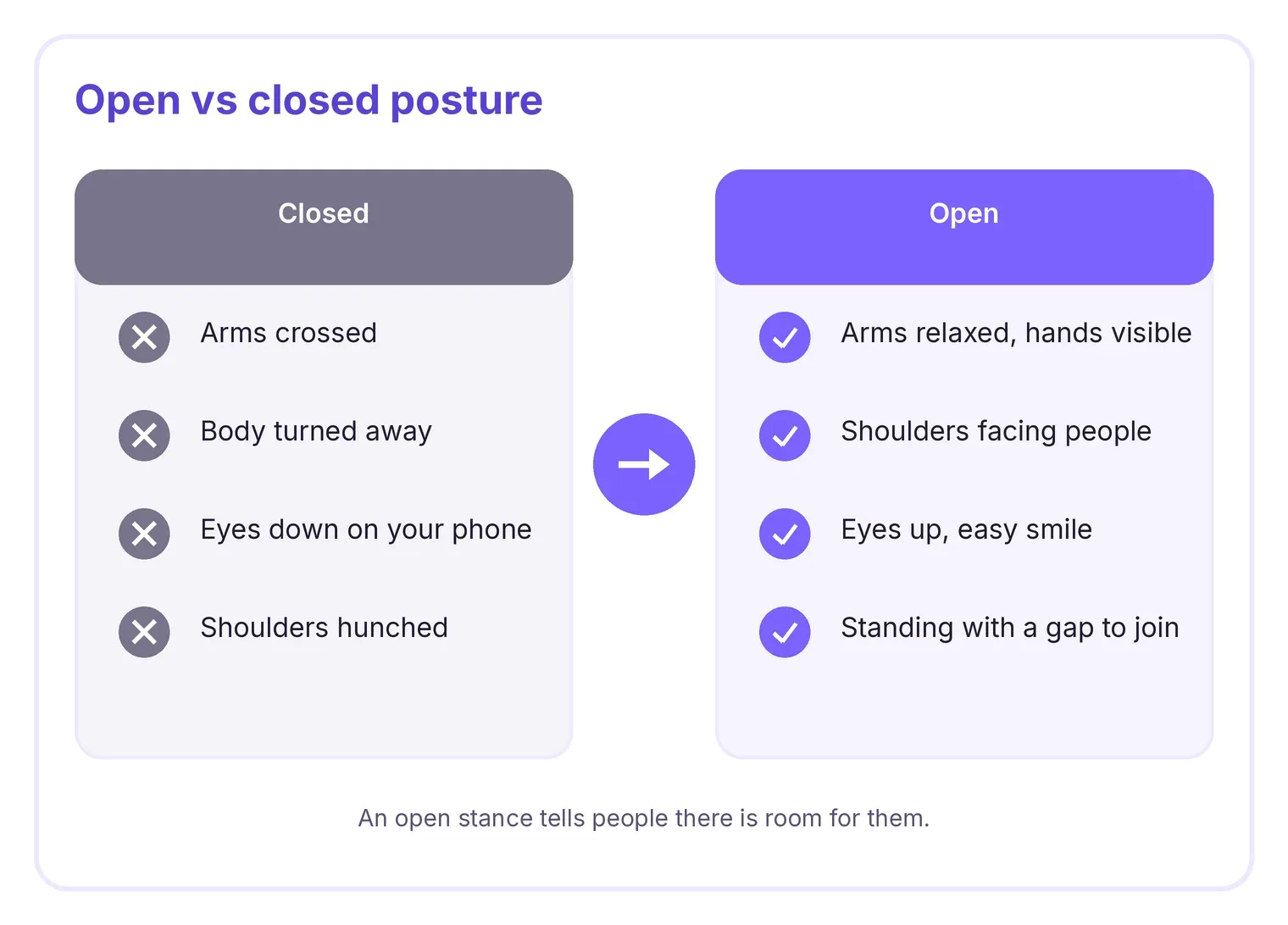
An open posture means nothing is blocking you from the people around you. Uncross your arms, keep your hands visible instead of in your pockets, and turn your shoulders toward whoever is near you rather than away. When you're standing in a group, leave a gap so someone new can step in. A closed posture does the opposite: folded arms, a body angled away, and shoulders hunched over a screen tell people to keep their distance. This is one slice of open body language, and if you want to get better at reading the signals people send, our post on reading body language covers it in full.
Your face is the first thing people check. Let it relax rather than setting your jaw, and make eye contact that's steady but easy: meet someone's gaze, then look away naturally, rather than staring or avoiding it. If your resting expression tends to look stern, a small lift of the eyebrows or a brief, real smile as you catch someone's eye resets it.
A genuine smile is the clearest "you can talk to me" signal there is, but a forced one reads as awkward. Let the smile reach your eyes: think of something you find warm about the moment, even briefly, so the expression is real. A quick smile when you first make eye contact does more than a fixed grin you hold the whole time.
Approachability disappears the moment you look occupied. Put the phone down, take a headphone out, and lift your eyes when people are around. In a hallway or a kitchen, a small nod or a "hey" as someone passes tells them the door is open.
Looking open gets people to start talking. What you do next decides whether they come back.
You don't need a clever opener. A simple comment about where you both are, a light question, or just "how's your day going?" gives the other person an easy way in. If starting conversations is the part you dread, learning to make small talk takes most of the pressure off, since small talk is the warm-up that lets a real conversation start.
Nothing makes you more approachable than being easy to talk to, and that comes from listening. Give people your attention, let them finish, and respond to what they actually said instead of waiting for your turn. Active listening, where you reflect back what you heard and ask a follow-up, is the part most people skip, and it's what makes someone want to talk to you again.
When we want to be liked, we often try to seem impressive. But warmth is what makes people feel safe coming closer. Being curious about someone, remembering a detail they mentioned, or simply being glad to see them signals more approachability than any impressive fact. This is also where being charismatic starts, since charisma is mostly warmth plus presence.
If communication is the skill you want to work on first, RiseGuide's Communication Mastery journey breaks it into short, practical lessons, with tools like a Small Talk Simulator to rehearse openers before you use them for real. It's built on the insights of experts, so you practice what works, in about fifteen minutes at a time.
Learning how to be approachable at work changes whether people bring you problems early or hide them until they get worse, and it matters even more if you manage anyone. The signals are the same, with a few work-specific habits.
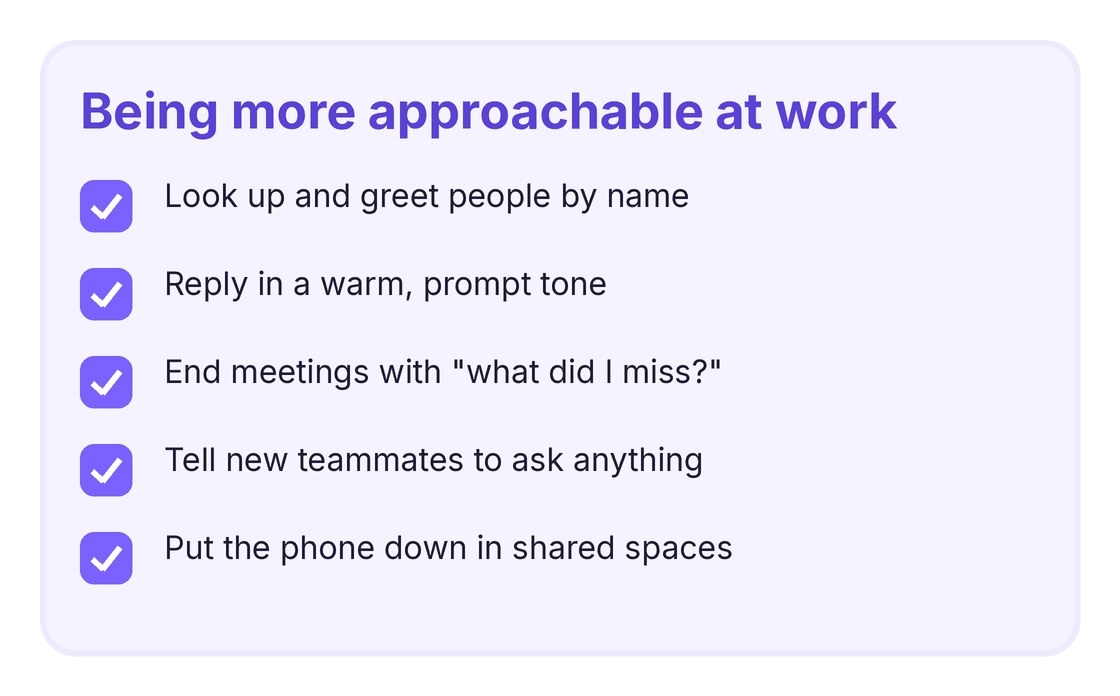
Stay visibly available. In an office, look up and greet people; if you're remote, a warm, prompt reply and an open "message me anytime" tone do the same job as an open door. Watch your response in the small moments: a rushed or flat "what is it?" teaches people not to come back, while a genuine "sure, what's up?" invites them in.
Invite questions instead of waiting for them. Ending a meeting with "what did I miss?" or telling a new teammate "there's no dumb question, ask me anything" lowers the bar to approach you. If you manage people, say it more than once, because they need to hear it a few times before they believe it. Strong people skills, like reading the room and putting others at ease, are what make someone the person others go to.
Being more approachable rarely means becoming a different person. It means closing the gap between how open you feel and how open you look: uncrossing your arms, lifting your eyes, softening your expression, and giving people an easy way to start. Pick one or two of these to pay attention to this week, at your desk and out in the world, and notice how much sooner people come to you.
Usually because your face at rest and your posture send a "busy" or "closed" signal before you get the chance to be friendly. A neutral resting expression, crossed arms, or eyes down on a phone read as distance, and since people judge approachability in a moment, they act on what they see first. Softening your expression and keeping an open posture closes that gap.
An open posture, a warm and relaxed expression, steady friendly eye contact, and clear signs that you're available to talk. Being a good listener is what keeps people coming back once they've started.
You don't have to be outgoing. Focus on the visible signals — an open, relaxed stance, a real smile, looking up — and let others start when they're ready. Introverts are often excellent listeners, which is a large part of what makes someone easy to talk to.
The same signals apply to everyone: an open stance, warm eye contact, and inviting questions. If you often get read as unapproachable, check whether a focused resting expression or looking constantly busy is doing the talking, and add small openers like greeting people by name.