RiseGuide Team

A growth mindset is the belief that your abilities can improve with effort, practice, and feedback; a fixed mindset is the belief that your abilities are set and can't really change. The difference shows up in how you handle challenges, mistakes, feedback, and other people's success: a fixed mindset avoids hard things to protect its image, while a growth mindset treats them as ways to get better. Most people hold a mix of both, and the mindset you lean on can shift. You move toward a growth mindset by noticing fixed-mindset thoughts, adding the word "yet" to "I can't do this," focusing on effort and strategy instead of labels like "smart" or "talented," and treating feedback and setbacks as information rather than a final verdict.
Two people can run into the same setback, a class that isn't clicking, a project that keeps going wrong, a skill that feels out of reach, and take completely different lessons from it. Where one reads it as proof they've hit their limit, the other reads it as a sign they need a different approach. Psychologist Carol Dweck spent decades studying why the same moment lands so differently, and traced it back to what each person believes about their own ability. That belief is what growth mindset vs fixed mindset is really about, and it turns out to be something you can recognize in yourself and, with some practice, change.
A growth mindset is the belief that your abilities, intelligence, and talents can develop through effort, better strategies, and feedback. A fixed mindset is the belief that those qualities are set traits: you have a certain amount and that's roughly that. Carol Dweck, a psychologist at Stanford, introduced both terms and spent decades studying how they play out. The short growth mindset definition: you can get better at things you're currently bad at, so your current level is a starting point rather than a permanent grade. Most people hold a mix of the two and lean one way or the other depending on the situation, which is exactly where the difference becomes easy to see.
"The view you adopt for yourself profoundly affects the way you lead your life." — Carol Dweck, Mindset: The New Psychology of Success
Dweck's point is that the belief itself, more than raw talent, steers the choices you make day to day. It even shapes the study habits that help you learn anything faster, because a growth mindset makes you more willing to use methods that feel hard while they work.
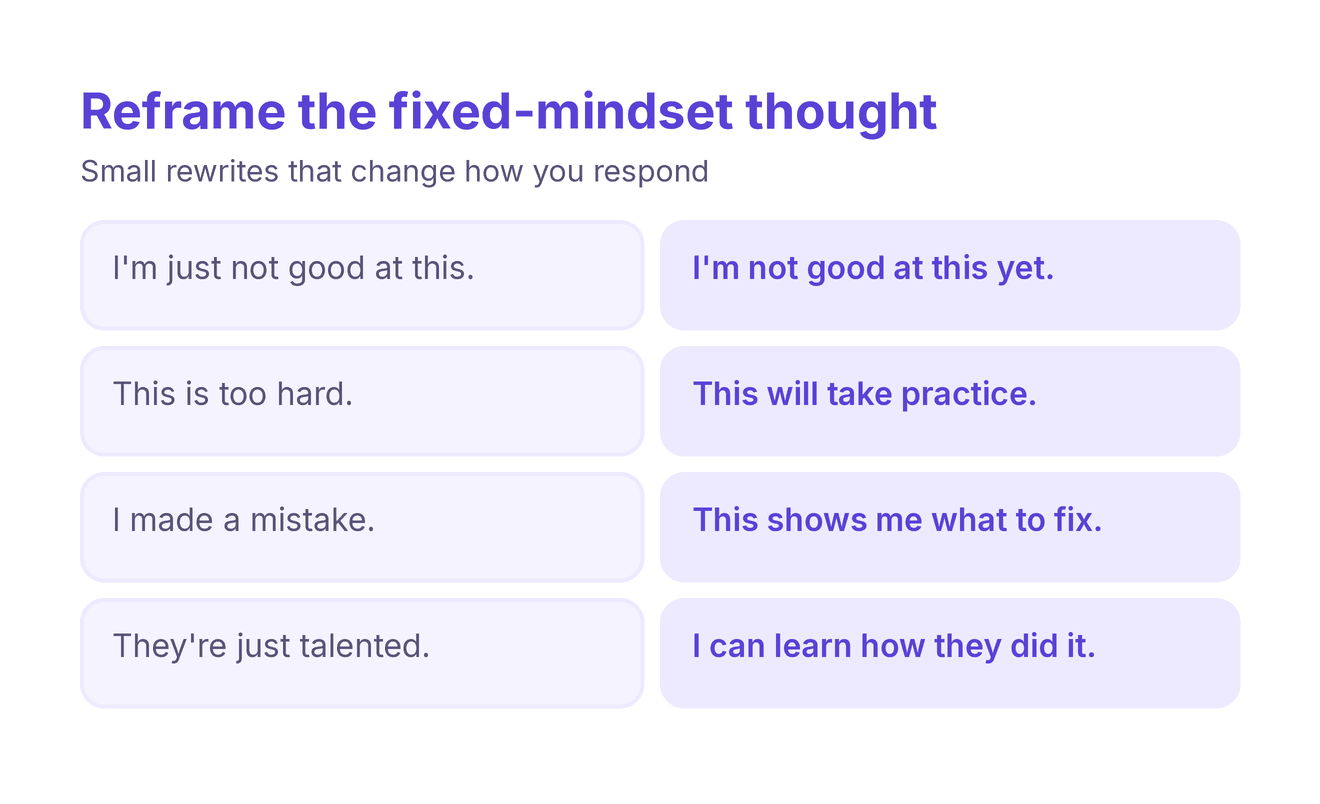
The clearest way to see fixed mindset vs growth mindset is to stop defining them and watch what each one does in the moments that actually test you. Here are five everyday situations, with the fixed-mindset reaction next to the growth-mindset one, so you can spot which way you tend to lean. These are the growth mindset examples, and their fixed-mindset opposites, that come up most at work and in daily life.
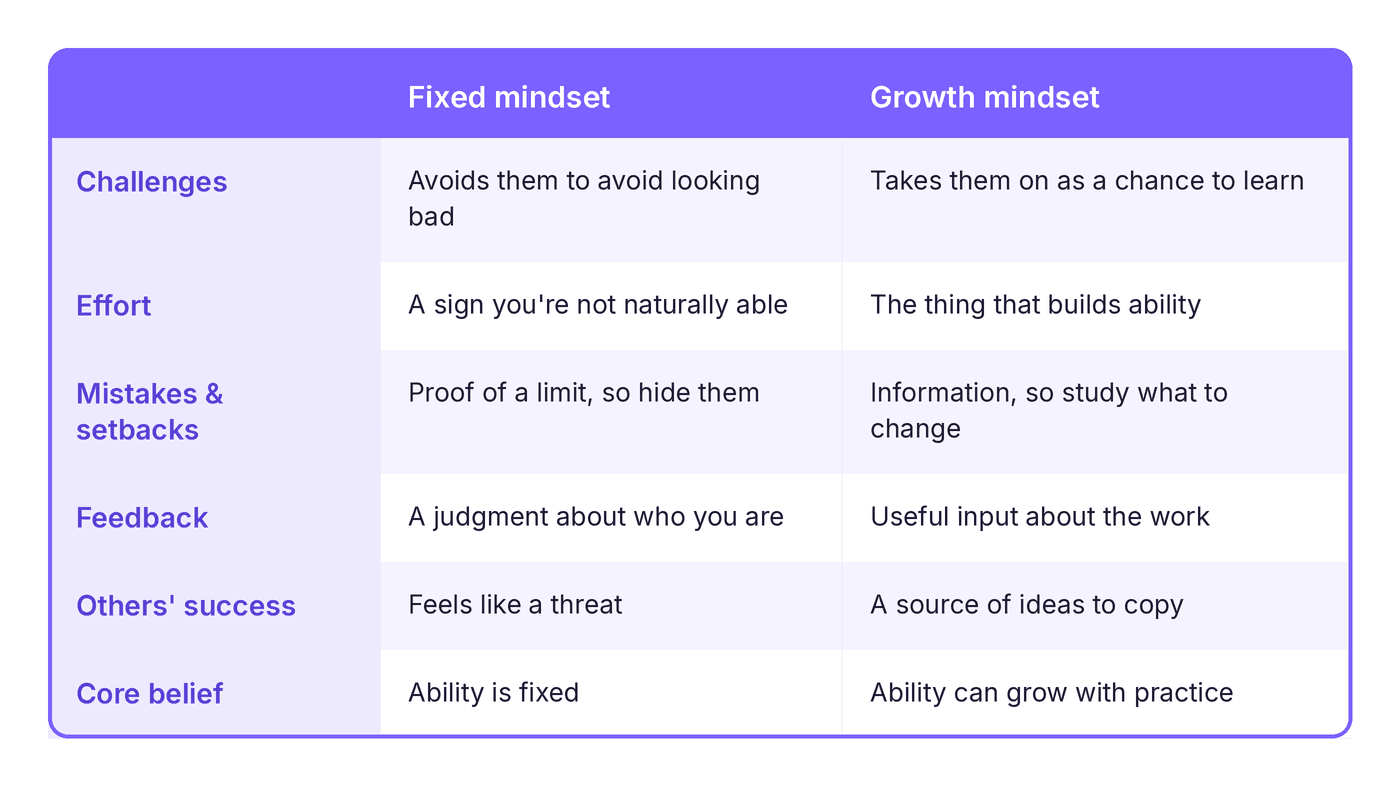
Say you decide to learn a new language. A fixed mindset sizes up the challenge and asks whether you can do it without looking foolish, so the safe move is to never really start: "I've never been a languages person." A growth mindset asks what the first step is and expects to be bad at it for a while: "I'm slow at this now, so I need more practice and a better method." Same challenge, opposite opening move.
A fixed mindset treats having to try hard as a warning sign. If you need to grind at something, the story goes, you must not have the talent for it, so easing off protects the idea that you're naturally able. A growth mindset reads effort the other way around: it is the thing that builds the ability in the first place, so the effortful part is worth leaning into rather than avoiding.
Picture taking up drawing. Your first sketches look rough, the way everyone's do. A fixed mindset takes the rough sketch as proof you're not an artist and stops. A growth mindset expects the clumsy stage and keeps going, using each weak attempt as a note on what to change next. The same bad sketch reads as "I've hit my limit" to one and "here's my next lesson" to the other.
Imagine a manager marks up your report. A fixed mindset hears the edits as a judgment on you and gets defensive, so the feedback slides off. A growth mindset hears the same edits as a shortcut to a stronger draft and pulls the fixes out of them. The comments did not change; what changed is whether they land as a threat or a tool.
When a colleague nails a presentation or lands the promotion, a fixed mindset feels shown up, because their win seems to say something about your own ceiling. A growth mindset gets curious instead and looks at how they did it, treating their result as a set of methods to borrow rather than a scoreboard. Across all five, a fixed mindset feeds avoidance: if trying risks proving you're not good enough, putting it off feels safer, and that is one reason we procrastinate on the things we most want to improve at. A growth mindset lowers the stakes of any single attempt, which makes starting easier. If you want the short version to keep on hand, these fixed mindset vs growth mindset examples reduce to one swap: trade the label for the next step.
The difference isn't only philosophical; it can show up in results. In a nationwide U.S. study published in Nature, a short online growth-mindset program raised grade point averages among lower-achieving ninth graders, with the strongest effects in schools where seeking out challenges was normal among classmates. That doesn't mean one pep talk changes everything. What you believe about your ability feeds into what you attempt, and what you attempt shapes your results. That belief also makes the slow work of change easier to stick with. When effort feels like the path to getting better rather than a sign you're falling short, it's easier to keep going long enough to break bad habits or build new skills.
Growth mindset gets oversold, so it's worth being precise. A large 2018 review of the research found that, on average, the effects were small on grades, with the clearest benefits for students who were economically disadvantaged or academically at risk. A growth mindset is not a promise that effort alone fixes everything. Dweck herself has warned about what she calls a "false growth mindset" — praising effort that leads nowhere, or claiming the label while working the same old way. A growth mindset that actually helps pairs the belief with better strategies, asking for help when you're stuck, and honest feedback. The belief makes you willing to try, and the strategies and feedback are what improve the result.
You don't switch mindsets by deciding to be a different person. You do it by catching the fixed-mindset habit in small moments and choosing a different response, often enough that it becomes normal. Start by noticing the fixed-mindset voice — the thought that says "I'm just bad at this" or "I'll embarrass myself." Naming it takes away some of its authority. Then add one word: "yet." "I can't do this" becomes "I can't do this yet," which points you at practice instead of a dead end. Move your attention from labels to process, so instead of asking whether you're smart or talented, you ask what approach to try next and where you're getting stuck. Treat feedback as information about the work rather than a verdict on you, and treat other people's success as a source of methods to copy rather than a threat. The belief tends to follow the behavior, so small reps help. A steady morning routine, a few reps of a skill each day, or a hard task you finish despite doing it badly all give you evidence that effort moves the needle. If you'd rather practice with structure than rely on willpower alone, RiseGuide builds short, roughly 15-minute lessons on mindset and communication from expert insights. You pick a journey, like Communication Mastery, and work one skill at a time.
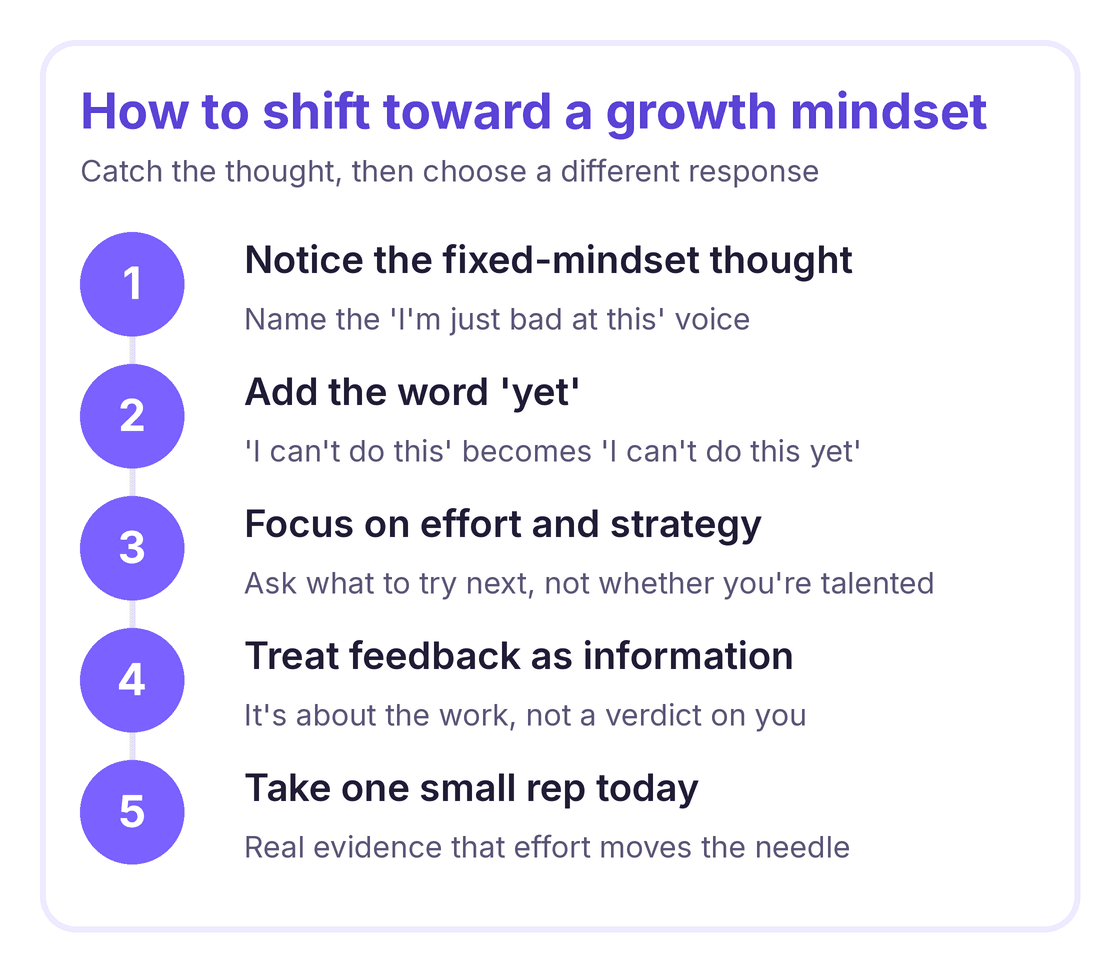
A fixed mindset and a growth mindset are beliefs, and beliefs can be updated. You don't have to feel like a naturally growth-minded person to act like one: notice the fixed-mindset thought, add "yet," and put your attention on effort and strategy. Do that often enough and hard things start to feel like practice instead of a verdict on who you are.
A fixed mindset treats intelligence and talent as set traits you can't really change, while a growth mindset treats them as skills you can develop with effort, practice, and feedback. The growth vs fixed mindset split shows up most in how you handle challenges, mistakes, and criticism.
People leaning on a growth mindset tend to take on challenges, keep going after setbacks, see effort as worthwhile, learn from feedback, and find lessons in other people's success. None of these require being naturally confident; they are responses you can practice.
Saying "I can't do this yet" instead of "I can't do this," asking for feedback on a draft, sticking with a language or instrument through the clumsy early stage, and treating a failed attempt as information about what to change are all everyday growth mindset examples.
Not debunked, but more modest than the hype suggested. Reviews of the research show small average effects on achievement, with bigger benefits for students who are struggling or disadvantaged. A growth mindset helps most when it comes with real changes in strategy and effort, not just the label.
Yes. Most people hold a mix and lean fixed in some areas and growth in others — you might feel growth-minded about your job but fixed about math or public speaking. The fixed vs growth mindset balance can also change over time as you practice noticing and reframing your reactions.