
RiseGuide Team

Most people first meet daily affirmations as screenshots on social media or a line taped to a bathroom mirror. The idea is simple: a positive affirmation is a short, encouraging statement you say to yourself on purpose, so the words in your head are working for you instead of against you. On a rough morning, the voice in your head can be your harshest critic, and affirmations are one way to interrupt that pattern with something steadier. These affirmations are meant to be used day to day, so pick the lines that fit and keep them close.
They can, with a couple of honest caveats. Affirmations grew out of self-affirmation theory, first described by psychologist Claude Steele in the 1980s, which found that reminding yourself of your values helps protect your sense of who you are when life knocks you around. Later brain-imaging work backed this up: when people practice self-affirmation, the brain's reward system and self-processing regions light up, much like they do when something good happens to us.
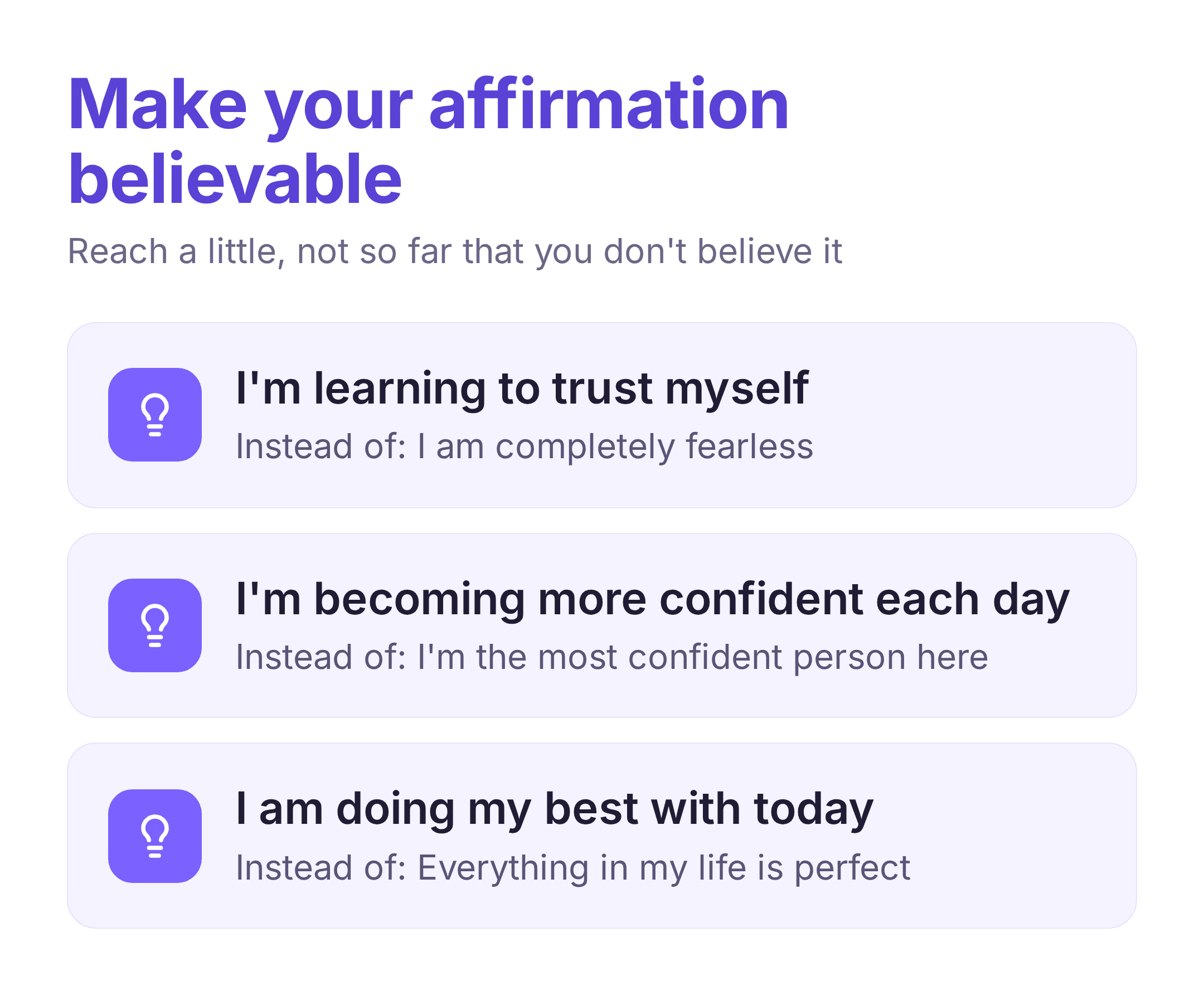
There is a catch worth knowing. One well-known study found that repeating a lofty line like "I am a lovable person" can backfire for people who are feeling low about themselves, because the words clash too hard with what they currently believe. The answer is to keep them within reach of what you can accept. A statement like "I am learning to trust myself" often lands better than "I am completely fearless," because part of you can already agree with it. If your inner voice tends to argue back, Juliann Wiese, a Master Certified Coach and one of our experts, has a helpful piece on working with your inner critic rather than shouting over it.
You'll get more out of affirmations if you treat them like a small daily practice instead of a one-off pep talk. A few ways to make them stick:
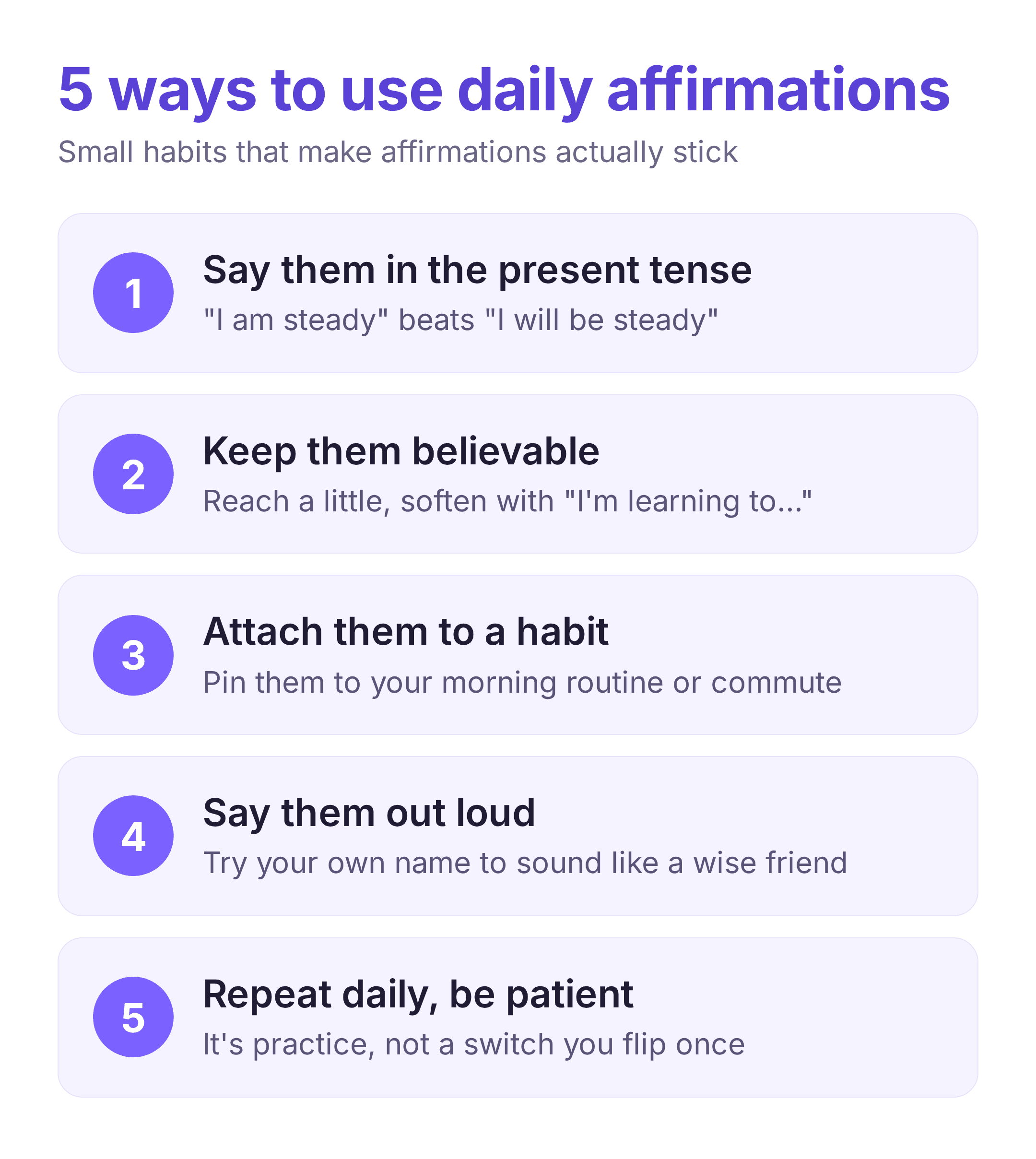
Say them in the present tense. "I am steady" works better than "I will be steady," because you're describing who you are now, not making a promise about later. The present tense gives your brain something to agree with today.
Keep them believable. Reach a little past how you feel, but not so far that you roll your eyes. If a line feels fake, soften it into "I'm learning to…" or "I'm becoming…" so it stays honest while still pointing forward.
Attach them to something you already do. Affirmations are easy to forget, so pin them to an existing cue: while the kettle boils, during your commute, or as part of your morning routine. Building them into a habit you already have takes most of the willpower out of it, which is the same principle behind any good habits you're trying to keep.
Say them out loud, and try your own name. Speaking an affirmation aloud makes it harder to skim past. Psychologist Ethan Kross found that talking to yourself in the second person, using "you" or your own name, creates a bit of healthy distance and helps you sound more like a wise friend than a panicked inner voice. As he puts it, "Using your own name and you shifts your perspective. It gets you to relate to yourself like you were giving advice to someone else."
Repeat them, and be patient. Affirmations are practice, not a switch you flip once. Said daily over weeks, they slowly nudge your default self-talk in a kinder direction.
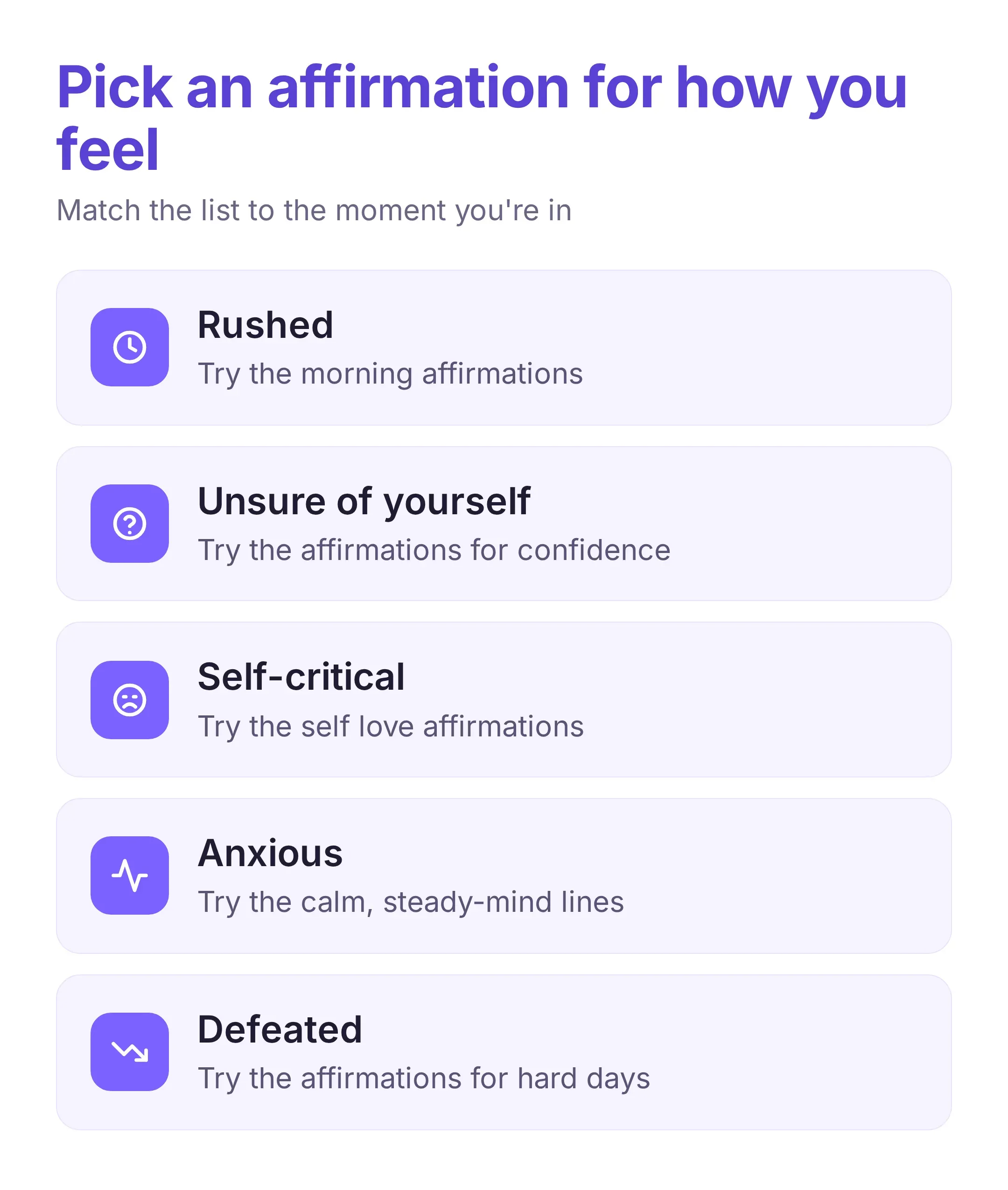
The first few minutes after you wake up set the tone for everything after. These morning affirmations are for that window, before the inbox and the to-do list take over.
Confidence grows from evidence, but the words you use while you're gathering that evidence matter. These affirmations for confidence are for the moments right before you speak up, hit send, or walk into the room.
If you want more than a line to lean on, our team's post on how to build confidence walks through habits that make the feeling last.
Self love affirmations are for quieting self-criticism and treating yourself with a bit more warmth. Say these when you catch yourself being harder on yourself than you'd ever be on a friend.
If these land, you might also like our collection of self-worth quotes for more lines to keep close.
When your thoughts are racing, a short affirmation gives your mind one clear thing to hold onto. Pair these with a slow breath.
Some days the goal is just to get through, and the affirmation should match. These are gentle on purpose.
These affirmations keep you pointed at the next step instead of the whole mountain, which is usually where motivation lives.
Self-worth affirmations remind you that your value isn't a reward for performing well. Say these on the days you feel like you have to earn your place.
Sometimes you want positive affirmations short enough to repeat on a walk or set as a phone reminder. Keep a couple of these on hand.
Daily affirmations won't rewrite your life overnight, and they aren't meant to. What they do, said honestly and often, is give your inner voice a steadier default, so the words running through your head are a little kinder than they were yesterday. Start with two or three lines that actually feel within reach, tie them to a moment you already have each day, and let them build from there. You can always come back to this list and swap in new ones as your days, and your needs, change.
Daily affirmations are short, positive statements you say to yourself on purpose, usually in the present tense, to steady your mindset and quiet harsh self-talk. Saying them each day is what turns them from a nice idea into a habit that shapes your default inner voice.
They can help, especially for stress and self-talk, and brain-imaging research shows self-affirmation activates the brain's reward and self-processing regions. They work best when the statements feel believable to you; a line that clashes too hard with how you see yourself can backfire, so keep them honest and within reach.
There's no magic number. Two or three that fit your day beat a long list you rush through. Consistency matters more than volume, so pick a few and repeat them daily.
Morning is popular because it sets the tone before the day fills up, but the best time is whenever you'll actually remember. Attaching them to something you already do, like your commute or brushing your teeth, makes them easier to keep up.
Name what you want to feel or believe, then phrase it in the present tense and keep it believable. If a bold version feels fake, start it with "I'm learning to…" or "I'm becoming…" so it stays true while still pointing you forward.