RiseGuide Team

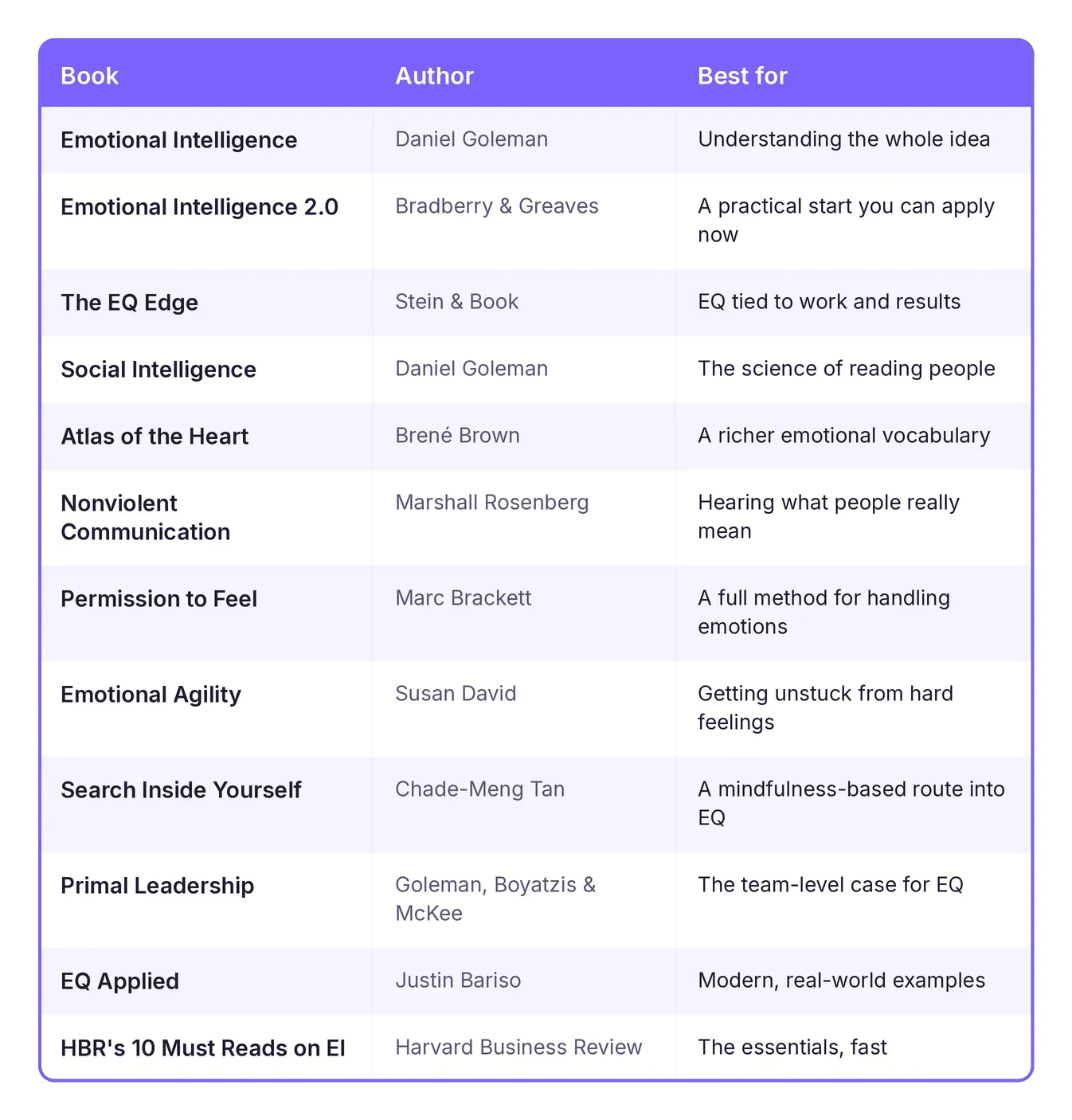
The best emotional intelligence books to read now, grouped by what you need:
If you want one to start with, read Emotional Intelligence 2.0 for something you can act on this week, or Goleman's Emotional Intelligence if you want to understand where the idea came from. To get better at reading people specifically, go to Social Intelligence and Atlas of the Heart.
Reading the room can feel like a personality trait you either have or you don't. For most people who are good at it, it is a skill they built over time by paying closer attention to emotions — their own first, then other people's. The people who seem to just know when a colleague is frustrated, when to push and when to wait, when a joke will land are usually reading signals the rest of us learned to miss.
That is what emotional intelligence books are for. The strongest ones do two things: they explain how emotions actually work, and they give you something to practice. The list below is grouped by what you are trying to do, so you can start where your gap is rather than reading all twelve front to back.
A few things separate a good emotional intelligence book from one you finish and forget.
Match it to the problem you have. Some of these are about understanding your own emotions, some about reading other people, and some about using both at work. Pick for the gap you feel most, not the one with the most reviews.
Look for practice, not just theory. A book that only argues emotional intelligence matters leaves you where you started. The useful ones give you exercises, scripts, or a way to check yourself.
Check when it was written and whether that matters. Goleman's 1995 book is still worth reading as the origin of the idea, even though the research has moved on since. A few of the older titles lean on business anecdotes from decades ago, so read those for the framework rather than the examples.
This is the book that moved emotional intelligence from academic papers into everyday language. Goleman, a psychologist and former science writer for the New York Times, argues that how we handle our emotions predicts how our lives go at least as much as raw intellect does, and he lays out the core parts of EQ: self-awareness, self-regulation, motivation, empathy, and social skill.
It is more explanation than instruction, so treat it as the map rather than the workout. The science has developed in the thirty years since, and a few claims are put more strongly than current research would. It still earns its place as the starting point, because almost every book after it is in conversation with this one.
Best for: understanding the whole idea and where it came from.
Worth knowing: stronger on the case for EQ than on step-by-step how-to.
If Goleman's book is the theory, this is the workbook. Bradberry and Greaves break emotional intelligence into four skills — self-awareness, self-management, social awareness, and relationship management — and give 66 specific strategies for improving them. It comes with a code for an online EQ assessment, so you start by seeing where you actually stand.
The strength is how concrete it is. Instead of "be more self-aware," you get small, testable actions you can try the same day. It is short, plain, and built for people who want to do something rather than only read. It is the emotional intelligence book most people should open first.
Best for: a practical starting point you can apply this week.
Worth knowing: the assessment code works once, so buy new if the score matters to you.
Written by a psychologist and a psychiatrist behind one of the main EQ assessments, this book ties emotional intelligence directly to performance at work and in life. It walks through the components measured by the EQ-i model and shows how each one shows up in real careers, hiring, and leadership.
It reads more like a guide from practitioners than a popular book, which is the point: the examples are grounded and the framework is one used in actual organizations. Good if you want the applied, measurable version rather than the story-led one.
Best for: readers who want EQ connected to work and results.
Worth knowing: more clinical in tone than the others, and some examples feel corporate.
Where his first book looked inward, this one turns to what happens between people. Goleman draws on neuroscience to explain how our brains sync up in conversation, why moods are contagious, and what actually goes on when you "read" someone. It is the most direct fit on this list for the read-the-room goal.
The science of how we pick up on others is the real payoff, and it reframes small moments, such as a tense meeting or a warm hello, as things you can read and shape. It is denser than his first book, so give it time.
Best for: understanding the mechanics of reading and connecting with people. Pair it with our piece on reading a room.
Worth knowing: heavier on science than on tactics you can use immediately.
You cannot read a room, or yourself, with a vocabulary of three feelings. Brown, a research professor who has spent two decades studying emotion, maps 87 emotions and experiences and draws the fine lines between ones we tend to blur — envy and jealousy, stress and overwhelm, guilt and shame. Naming what you are seeing more precisely is the first step to responding to it well.
It is a large, illustrated book that works as a reference you return to. The precision is the gift: once you can tell disappointment from resentment on someone's face, you handle the moment differently.
Best for: building a richer, more accurate emotional vocabulary.
Worth knowing: it maps and defines emotions more than it coaches you through changing them.
Rosenberg, a psychologist who spent his career mediating conflicts, offers a method for hearing the feeling and unmet need underneath what a person is actually saying — including when they are being difficult. His four-part approach (observation, feeling, need, request) is a practical tool for staying in a hard conversation without it turning into a fight.
Reading the room is not only sensing moods; it is understanding what someone wants and cannot say plainly. This is the clearest guide to that on the list, and it doubles as a way to make your own asks land.
Best for: hearing what people mean, not just what they say. It sits well next to knowing how to disagree respectfully.
Worth knowing: the phrasing can feel formal at first, so adapt it to sound like you.
Brackett runs the Yale Center for Emotional Intelligence, and this book lays out the method he teaches in schools and companies, built around a simple idea: you have to allow yourself to feel an emotion before you can use the information in it. His RULER approach covers recognizing, understanding, labeling, expressing, and regulating emotions.
The mix of research and his own story makes it readable, and the method is one you can apply to yourself and pass on to a team or a child. It is one of the most complete practical systems here.
Best for: a full, teachable method for handling emotions.
Worth knowing: aimed partly at parents and educators, though the core applies to anyone.
David, a psychologist at Harvard Medical School, focuses on the gap between feeling something and acting on it. Her argument is that trying to shut down difficult emotions backfires; the skill is noticing them, holding them loosely, and still choosing to act in line with what you value. She calls it unhooking from your own thoughts and feelings.
The book is strong on the day-to-day mechanics of not being run by a bad mood or an anxious thought. If your challenge is less about reading others and more about steering yourself, start here.
Best for: getting unstuck from difficult thoughts and feelings.
Worth knowing: overlaps with acceptance-based therapy ideas, so some ground feels familiar if you have read in that area.
Built from a program Tan created at Google, this book grounds emotional intelligence in attention training. The premise is that self-awareness and self-regulation both rest on the ability to notice what is happening in your own mind, and that this can be trained like a muscle through short exercises.
It is a good bridge for anyone skeptical of "feelings talk," because it treats EQ as a set of concrete mental habits with a clear rationale. The exercises are simple enough to actually keep doing.
Best for: a hands-on, mindfulness-based route into EQ.
Worth knowing: leans on meditation, so know that going in even though it is worth it either way.
The central claim is that a leader's own emotional state sets the emotional weather for everyone around them, for better or worse. The authors lay out leadership styles and when each one helps or harms, all through the lens of emotional intelligence.
It is the standard reference for why EQ matters in a leadership role, backed by research the authors conducted across organizations. If you manage people, it connects the personal skill to the effect it has on a team.
Best for: managers and leaders who want the team-level case for EQ.
Worth knowing: written for a leadership audience, so less relevant if you are not managing anyone yet.
Bariso writes about emotional intelligence for a wide audience, and this is the modern, example-led take. It uses recent, recognizable stories to show emotional intelligence working (and failing) in real situations, and it is honest that these skills can be misused, which most books skip.
It is an easy, current read that fills the gap between the older classics and how these skills play out today. Good as a second or third book once you have the fundamentals.
Best for: a modern, readable set of real-world examples.
Worth knowing: lighter on formal framework, so it pairs best with one of the foundational titles.
This collects ten of the most influential Harvard Business Review articles on EQ, including Goleman's "What Makes a Leader?" It is the fastest way to get the core research-backed ideas without committing to a dozen full books.
Because it is a collection, the tone shifts from piece to piece, but the editing keeps it tight. A strong option if you want the essentials in one sitting and prefer article-length arguments to full books.
Best for: the research essentials in the shortest time.
Worth knowing: written for a business audience, and it is a compilation rather than a single narrative.
A book can explain empathy; it cannot make you more empathetic on its own. What actually changes things is using one idea at a time in a real conversation and paying attention to what happens.
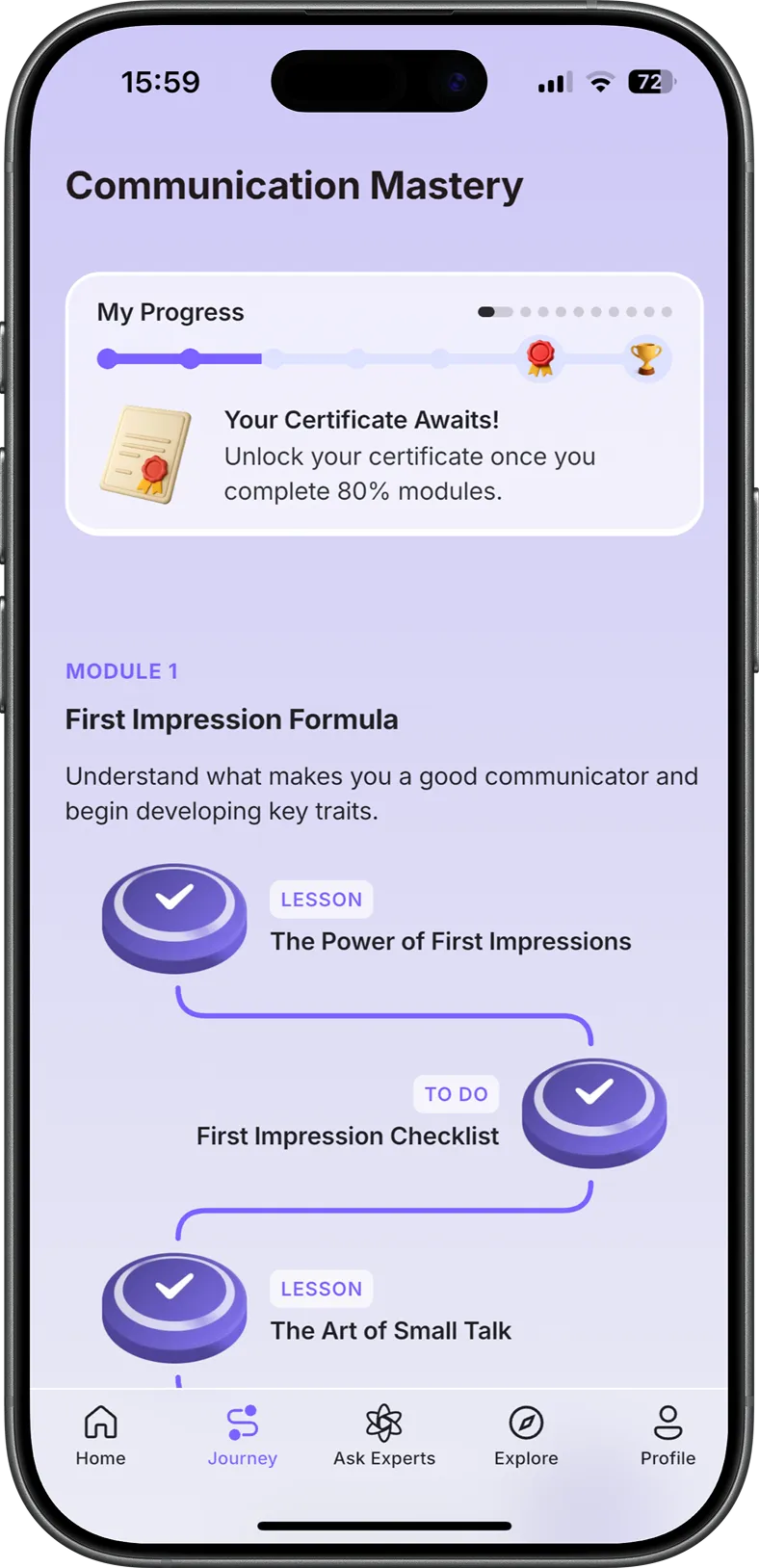
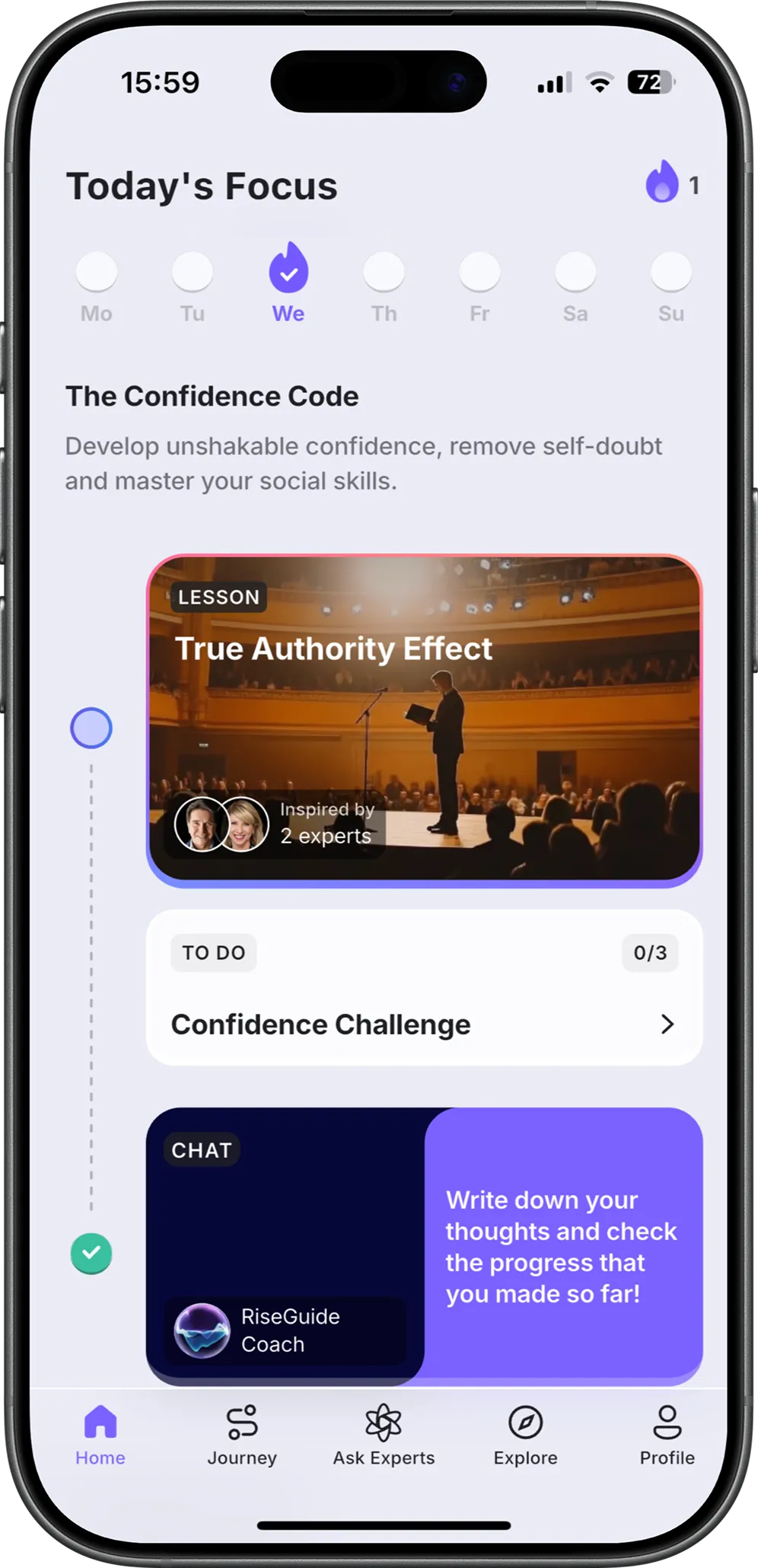
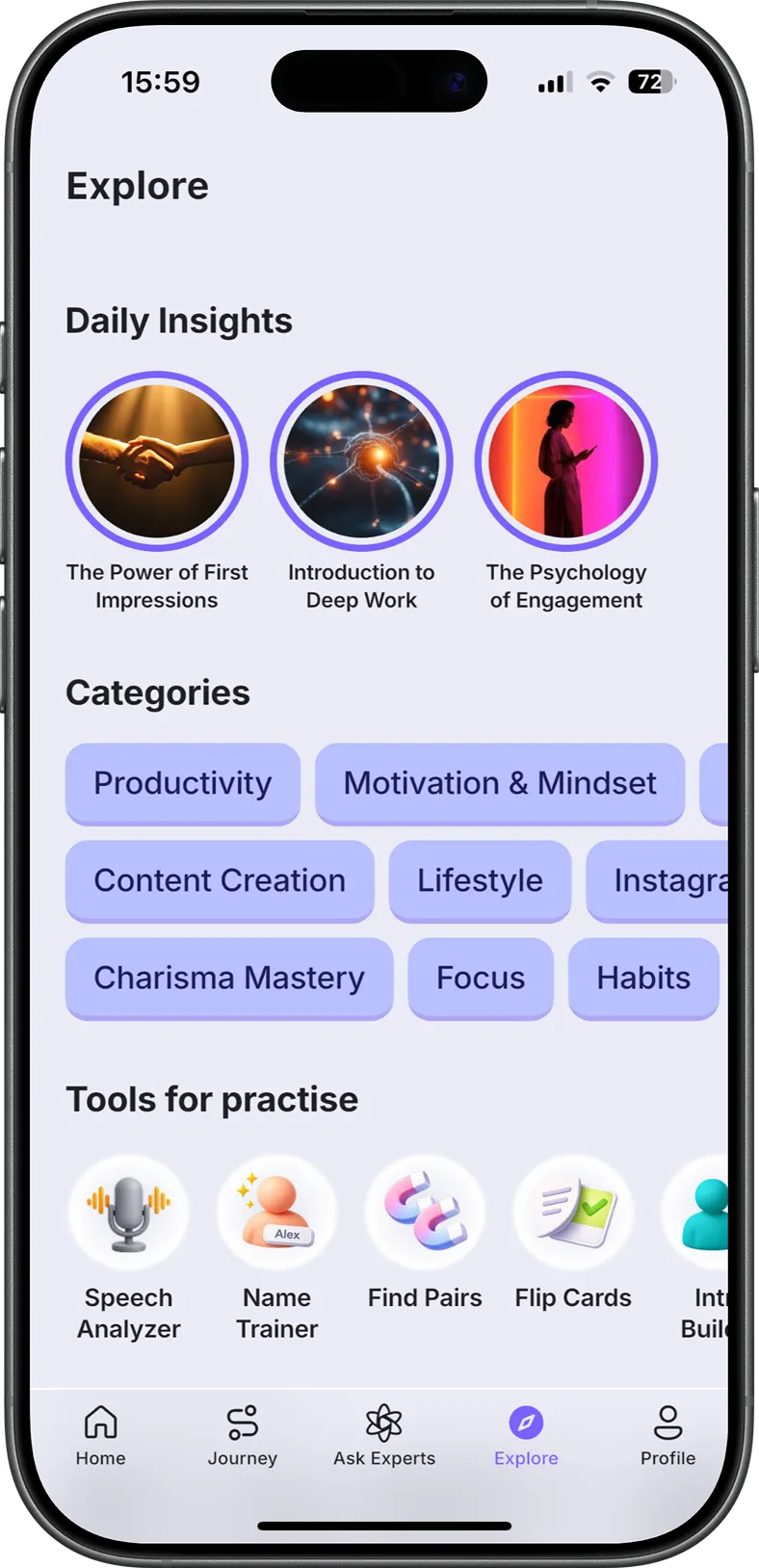
Pick a single skill from whatever you are reading — naming your own feeling before you react, or listening for the need under a complaint, and try it once a day for a week. Emotional intelligence grows through reps in real situations, the same way social skills do. If you want structure around that practice, RiseGuide's Communication Mastery journey turns skills like reading people and handling your own reactions into short daily lessons drawn from the work of experts, with tools like the Body Language Vocab to practice noticing what you are seeing. Reading widely still helps, and a few titles from our communication books list pair well with these.
It also helps to be clear on the idea itself before you go deep, and emotional intelligence explained covers the foundation. Reading people is closely tied to empathy and compassion, which is worth getting straight early.
For most people, Emotional Intelligence 2.0 by Travis Bradberry and Jean Greaves is the most useful first read, because it comes with an assessment and specific strategies you can apply right away. If you want to understand the concept at its source, read Daniel Goleman's Emotional Intelligence.
In Daniel Goleman's model they are self-awareness, self-regulation, motivation, empathy, and social skill. Self-awareness is noticing your own emotions, self-regulation is managing them, motivation is using them toward a goal, empathy is reading others', and social skill is handling relationships well.
To manage your own emotions, start with Permission to Feel or Emotional Agility. To read other people better, go to Social Intelligence and Atlas of the Heart. For emotional intelligence at work, read Primal Leadership or HBR's 10 Must Reads on Emotional Intelligence.