RiseGuide Team
 FREE GUIDE with any plan: the First Impression FormulaClaim the offer
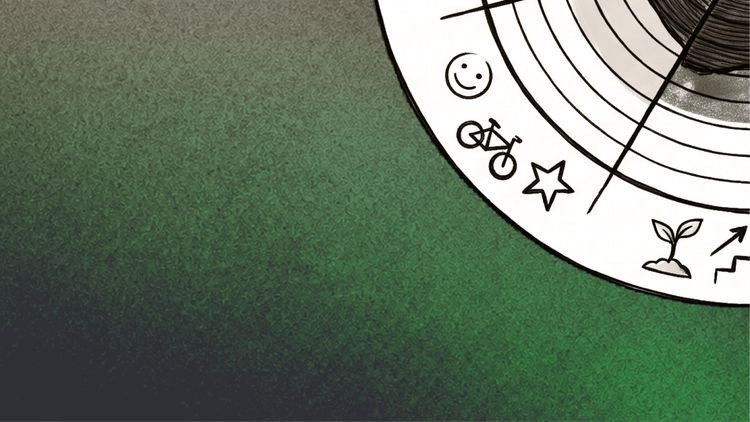
The wheel of life is a simple self-reflection tool that splits your life into about eight areas, usually career, finances, health, relationships, personal growth, fun, environment, and contribution, and asks you to score each one from 1 to 10 based on how satisfied you feel right now. You mark each score on a circular chart, join the marks, and look at the shape: a lopsided wheel shows where your life feels out of balance. You are not aiming for a perfect score everywhere. You use the low scores and the big gaps between areas to choose one area to work on, then set a small, specific goal for it. A blank template or worksheet turns it into a ten-minute exercise you can repeat every few months to see how things change.
Most people can feel when something in their life is off, but it is hard to say exactly what. Work might be going well while your friendships slip, or your health feels fine while money is a constant worry. The wheel of life is a coaching tool built to make that fuzzy feeling concrete. It turns a vague sense of imbalance into a set of scores you can see on one page, so you can decide what actually needs your attention. Coaches have used it with clients for decades, and it works just as well on your own with a pen and a blank circle.
The wheel of life is a self-assessment that shows how balanced your life feels across the areas that matter to you. You rate your satisfaction in each area on a scale, plot the ratings on a circle divided into wedges, and read the overall shape. The fuller and more even the wheel, the more settled life tends to feel; a jagged wheel points to areas that are being crowded out.
The modern version is usually credited to Paul J. Meyer, who built a personal development company and used it as a wheel of life coaching tool in the 1960s. Since then it has become a standard exercise in coaching, journaling, and goal setting, partly because it is so quick to run and easy to repeat.
One thing to be clear about: this is a self-reflection tool rather than a clinical test or a form of therapy. It measures how you feel about your life on a given day rather than your mental health, and a low score is information to act on rather than a diagnosis. If an area feels heavy in a way that goes beyond everyday ups and downs, that is worth talking through with a qualified professional.
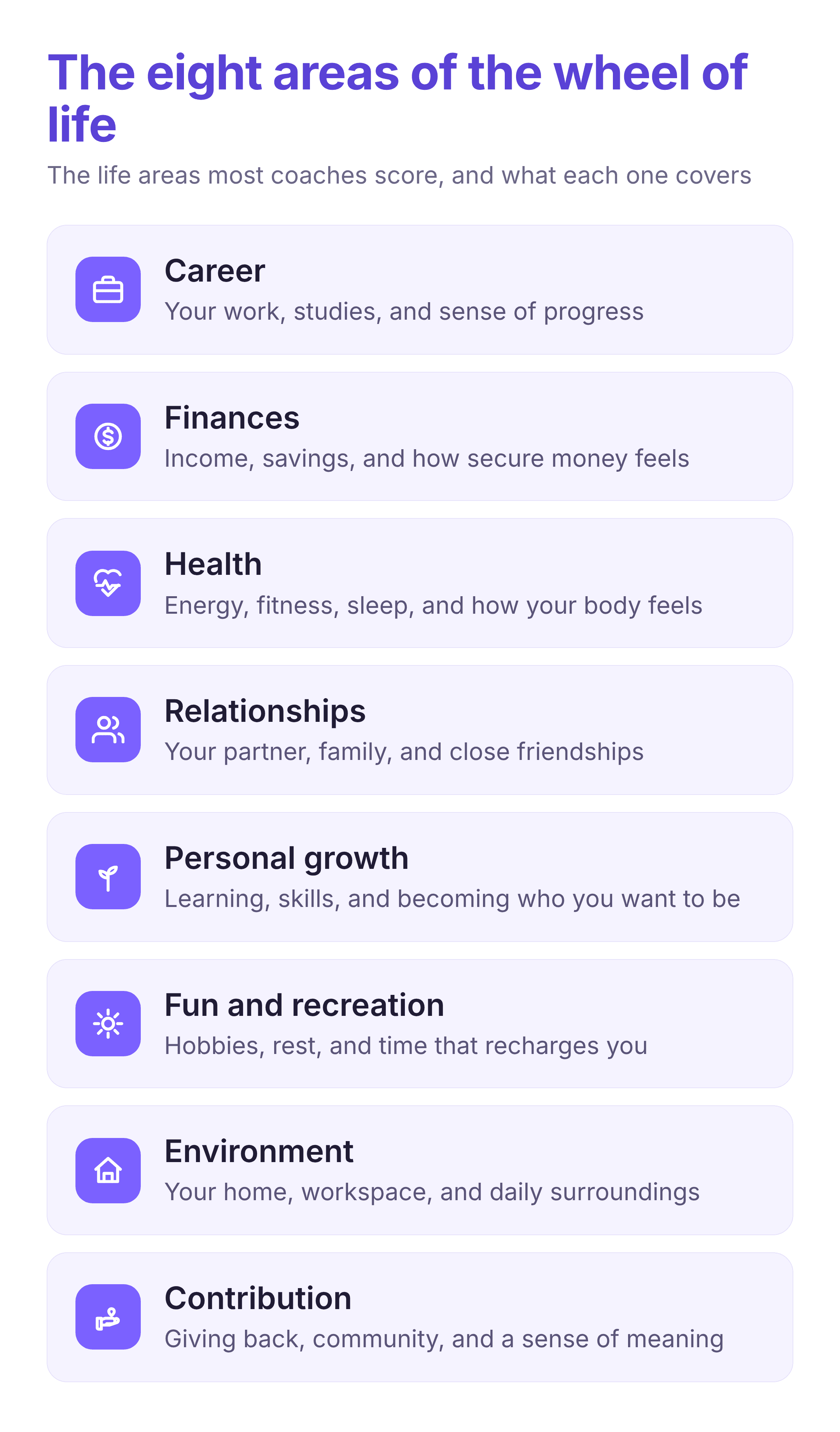
A standard wheel has around eight areas, though the exact wheel of life categories are up to you. Coaches often start from a common set and let you rename or swap any that do not fit. Here are the eight areas most versions use:
You do not have to use all eight, and you can split one if it carries more weight for you. Someone deep in study might separate learning from career; a parent might add a family wedge. The aim is a set of areas that together cover your real life, so scoring them gives you an honest picture. Getting there takes a little self-awareness, and our guide to self-awareness walks through how to build it.
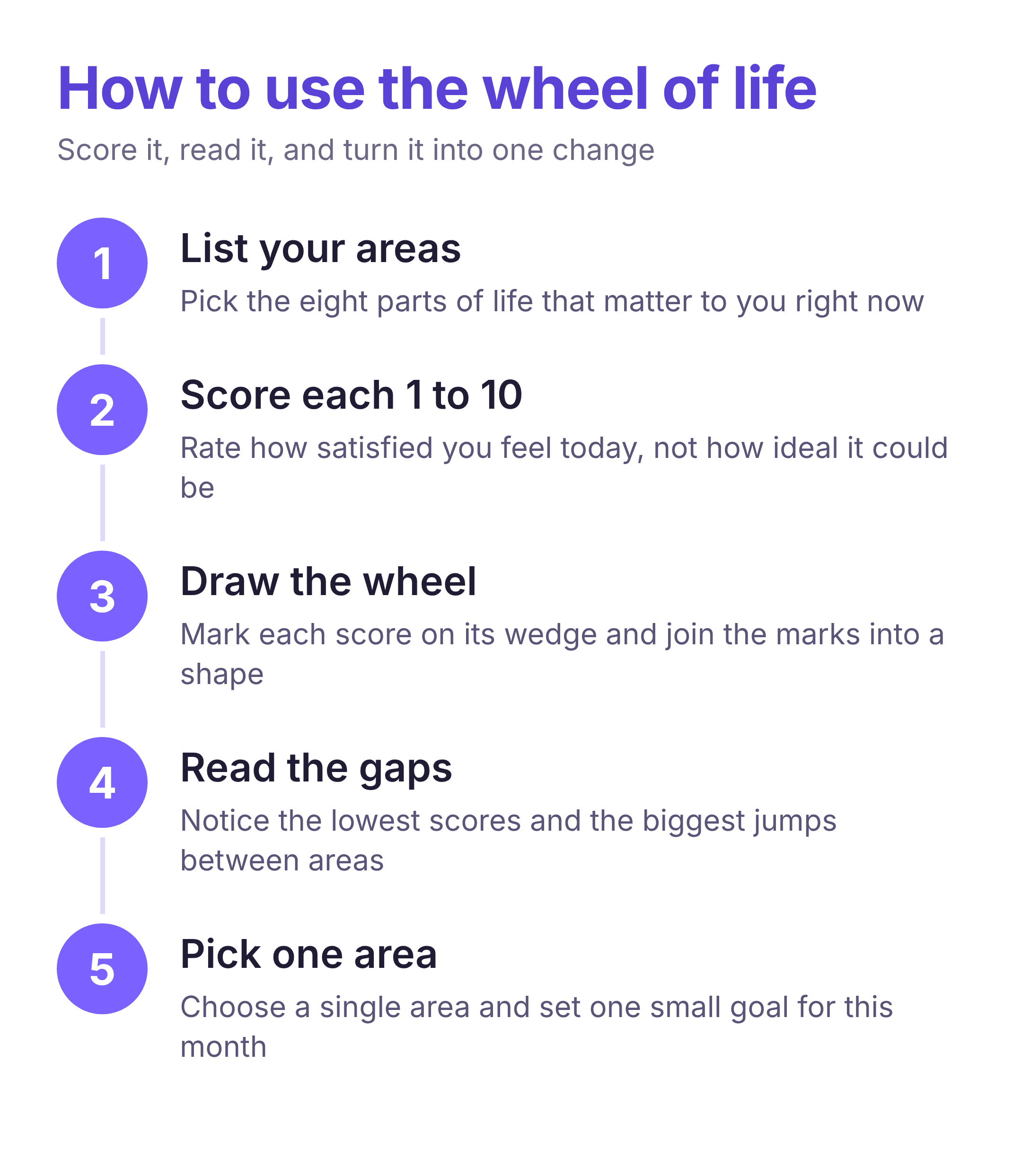
Running the wheel of life exercise takes about ten minutes. Order matters here, so work through these steps in sequence:
A finished wheel gives you three things to notice, and together they tell you more than any single number:
Resist the urge to chase a 10 in every area. Life moves in seasons, and it is normal for one or two areas to take more of your time and energy for a while. The scores themselves matter less than the questions they raise, so it helps to pair the wheel with honest reflection. Our post on self-reflection has prompts you can use alongside it.
A wheel only helps if it changes something. Take the one area you chose and turn it into a small, specific goal for the next month, such as two gym sessions a week or one proper call with a friend you have lost touch with. People who wrote them down in one Dominican University study achieved more than those who kept their goals in their heads, so put yours on paper.
From there, keep the goal somewhere you will see it. A vision board works for some people, and our guide to making one covers how. If you would rather track progress on your phone, our roundup of goal-setting apps walks through tools that help.
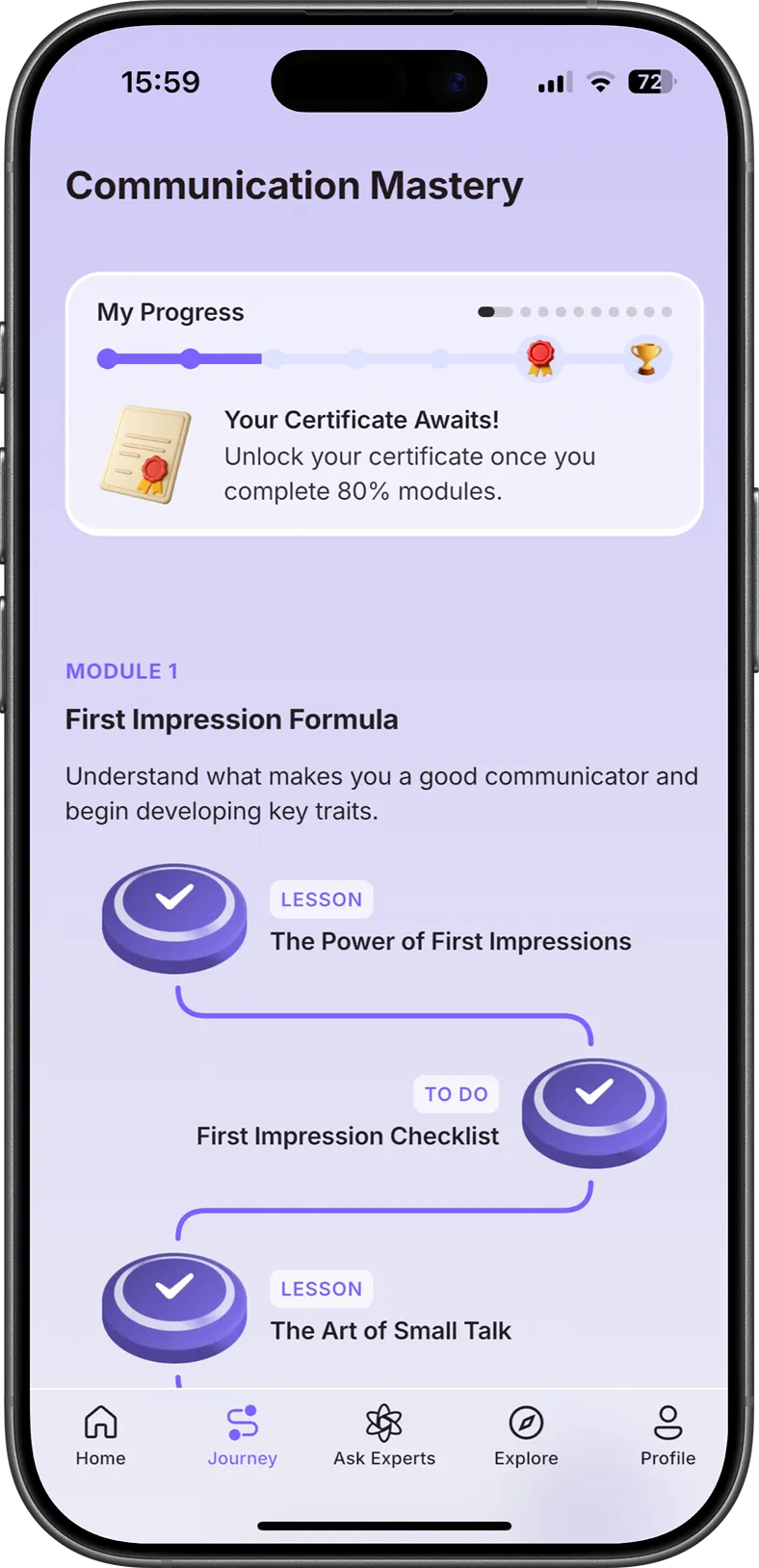
If the area you scored lowest is relationships or how you come across to people, a structured path can help more than willpower alone. RiseGuide breaks skills like listening and handling difficult conversations into short daily lessons built from expert insights, with Communication Mastery as its flagship journey, so you can work on one area without a big time commitment.
You can draw a wheel on any scrap of paper, but a ready-made wheel of life template keeps the wedges even and the scale the same from one check-in to the next. Print a blank one, score it by hand, and date it so you can line up wheels over time. A wheel of life worksheet that adds a line for one goal per area turns the picture into a plan you can act on.
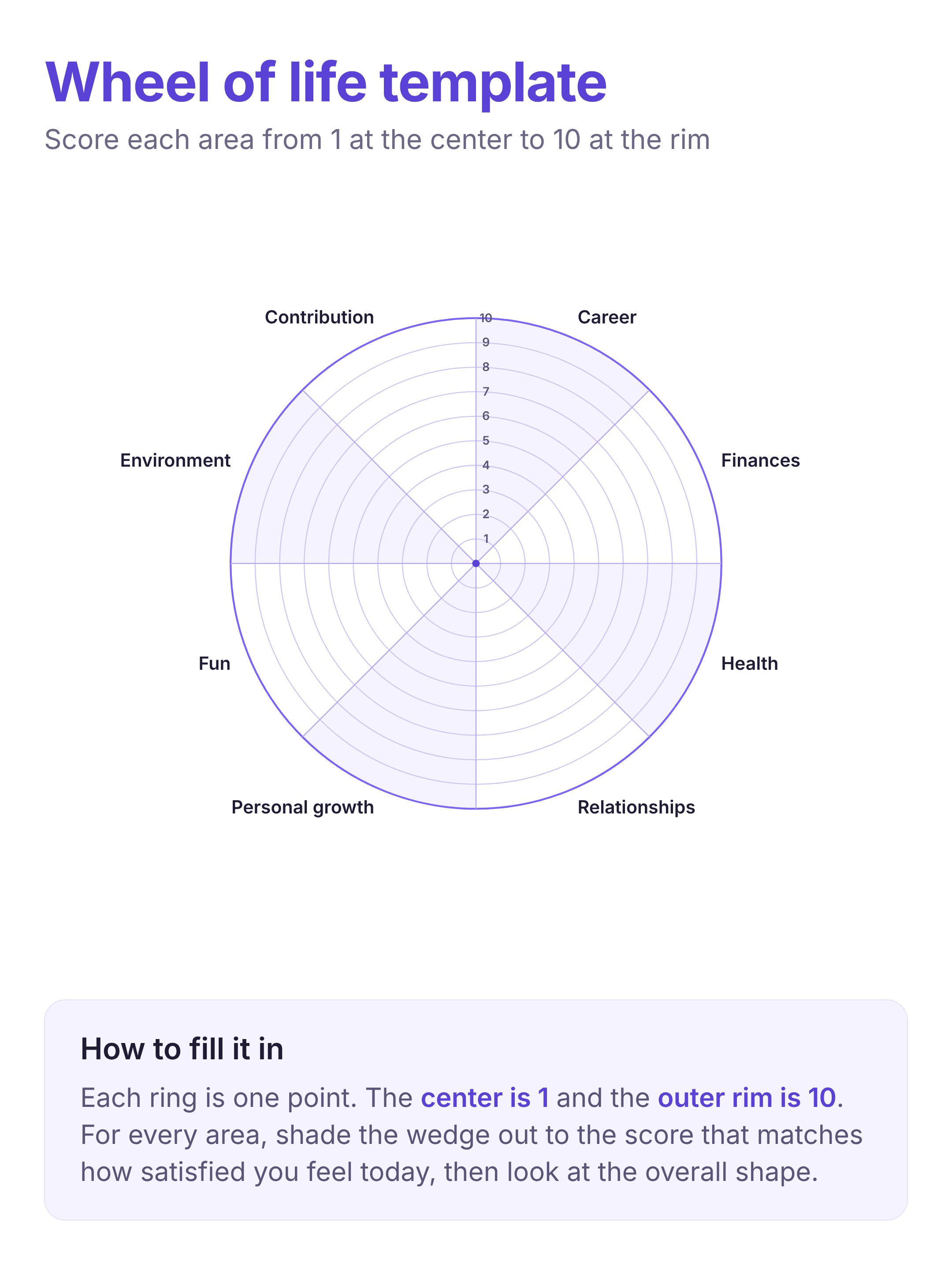
The wheel of life is worth repeating. Scores shift as seasons shift, and a wheel you fill in every few months shows you whether the area you chose to work on is actually improving. Keep a blank template somewhere you will see it, and treat each new wheel as a fresh, honest look at where your attention is going.
The common set is career, finances, health, relationships, personal growth, fun and recreation, environment, and contribution. You can rename or swap any of them so the wheel fits your own life.
No. A wheel of life assessment measures how satisfied you feel in each area of your life right now, and those scores change over time. A personality test looks at stable traits that stay fairly constant. The wheel is about your current balance, not your character.
Every three to six months works well for most people, or after a big change such as a new job, a move, or the end of a busy season. Doing it too often makes the small week-to-week shifts look bigger than they are.
Yes. Six to ten areas is a good range. Fewer than six tends to hide useful detail, and more than ten makes the wheel hard to read and score honestly.