RiseGuide Team
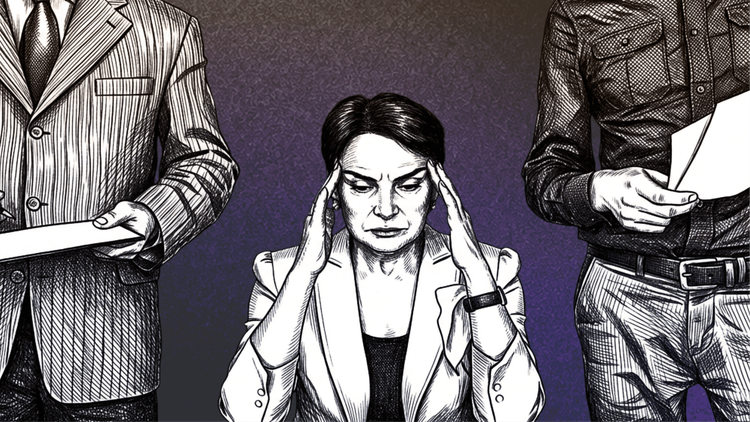
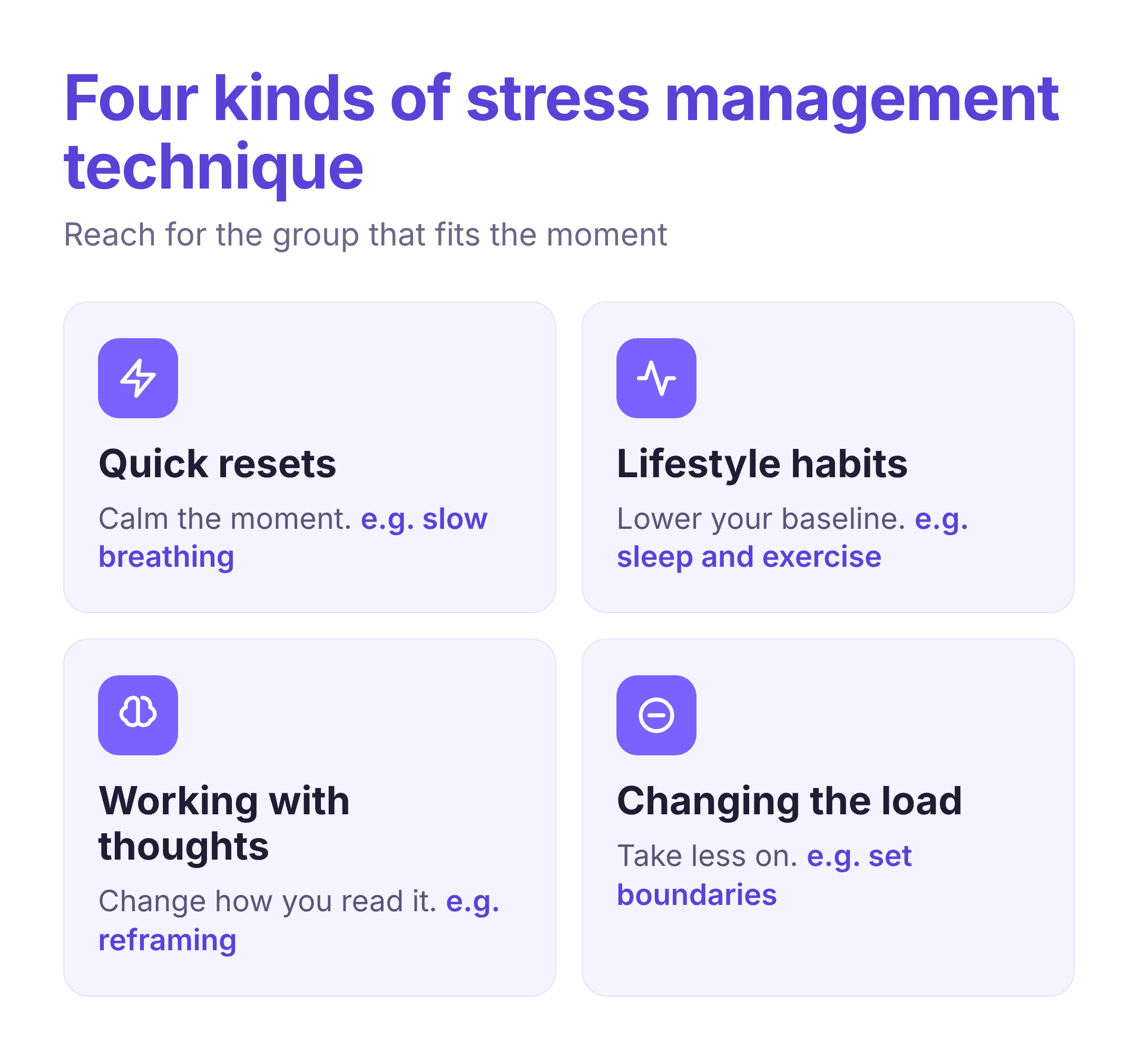
The most reliable stress management techniques fall into four groups: quick resets for a stressful moment (slow breathing, a short walk, naming what you can control), lifestyle habits that lower your baseline (exercise, sleep, steady meals, less caffeine), ways to work with your thoughts (reframing, writing it down, relaxation techniques), and changes to your load (setting boundaries and leaning on people). Start with one quick reset you can use today and one habit you can build this week. If stress is constant or affecting your health, treat that as a sign to get professional support.
Stress has a bad reputation, but it is a normal response that helps you rise to a challenge, and in short bursts it can even sharpen you. The problem is stress that never switches off. Health psychologist Kelly McGonigal has argued that stress is not automatically harmful, and that how you think about it shapes how your body responds to it.
These stress management techniques are about two things: calming down in the moment, and lowering how much stress builds up in the first place. None of them is complicated, and most work better as small habits than as one big effort.
When stress spikes, these calm your body's response in a few minutes. They are the fastest ways to relieve stress on a hard day.
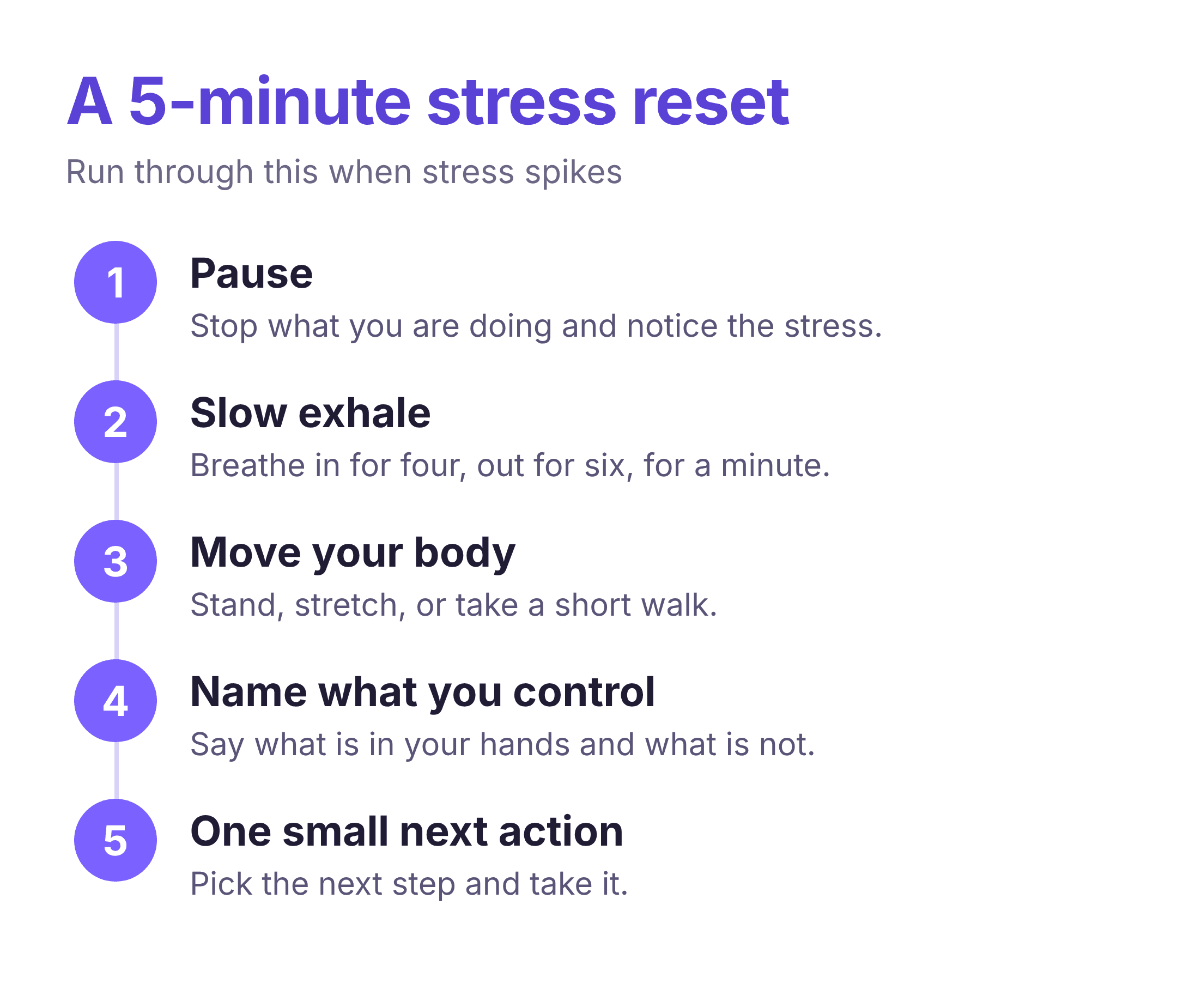
1. Slow your breathing. Breathe in for four counts and out for six, with the exhale longer than the inhale, for a minute or two. A long, slow exhale is one of the quickest ways to tell your nervous system it is safe to settle.
2. Move your body. Stand up, stretch, or take a short walk. Even a few minutes of movement burns off stress chemicals and breaks the loop of sitting and spiraling. A quick walk outside does double duty.
3. Name what you can control. When your mind is racing, write or say what is actually in your hands right now and what is not. Putting your energy into the first list, and letting go of the second, is one of the simplest coping mechanisms for stress.
These do not calm a single moment so much as make you less reactive overall, which is the heart of how to reduce stress over the long term. According to the Mayo Clinic, stress relievers like regular activity, good sleep, and social connection are some of the most effective ways to handle stress over time.
4. Exercise regularly. Almost any physical activity helps. Regular movement lowers stress hormones and lifts mood, and you do not need a gym, a daily walk counts.
5. Protect your sleep. Stress and poor sleep feed each other. Most adults need about seven to nine hours, and guarding a consistent bedtime is one of the highest-return things you can do for stress.
6. Eat at regular times. Skipping meals and running on caffeine leaves your blood sugar swinging, which your body reads as more stress. Steady, regular meals keep your energy and mood steadier.
7. Go easy on caffeine and alcohol. Both can make stress and anxiety worse, especially in large amounts. Cutting back, particularly later in the day, often takes the edge off without any other change.
Much of stress lives in how you read a situation, so these techniques target the thinking itself.
8. Reframe the stressful thought. Ask whether there is a more balanced way to see the situation, or whether the worst case is as likely as it feels. Shifting the judgment, not the event, is the core of how to deal with stress mentally, and it is the same skill used in cognitive behavioral therapy.
9. Write it down. Getting worries out of your head and onto paper, a quick brain dump or a few lines of journaling, makes them feel smaller and more manageable. It also helps you spot patterns in what sets you off.
10. Use a relaxation technique. Progressive muscle relaxation (tensing and releasing each muscle group) and guided relaxation techniques calm the body on purpose. A few minutes is enough to lower physical tension. For a set of structured practices to try, our team's guide to mindfulness exercises walks through several.
Sometimes the best answer to how to manage stress is to reduce how much lands on you, rather than only coping with the same amount.
11. Set boundaries. A lot of stress is simply too much on your plate. Saying no to one extra commitment, or protecting one evening, lowers the load directly. If saying no is hard for you, our post on how to stop people-pleasing is a good place to start. Getting on top of an overloaded schedule helps the same way, and our team's guide to time management covers the core skills.
12. Lean on people. Talking to a friend, family member, or colleague is one of the best-supported ways to reduce stress. You do not have to solve anything in the conversation; being heard is often enough to take the pressure down.
These techniques handle everyday stress well. But if stress is constant, stops you sleeping or functioning, or comes with feeling hopeless or unable to cope, that is worth taking to a doctor or therapist. Ongoing stress can affect your health, and getting support early is a strength, not a last resort.
You do not need all twelve of these at once. Pick one quick reset to use in the moment and one lifestyle habit to build over the next week, and add more as they stick. The point of stress management techniques is to have a few reliable moves ready before you need them, so a stressful day has somewhere to go. Keep it simple, start small, and ask for help if the load is more than everyday.
Slow breathing, a short walk or any movement, reframing the stressful thought, writing worries down, and talking to someone. Each takes only a few minutes and works for everyday stress.
Slow your breathing with a long exhale, move your body for a few minutes, and name one small thing you can do next. These quick resets calm the body's stress response fast.
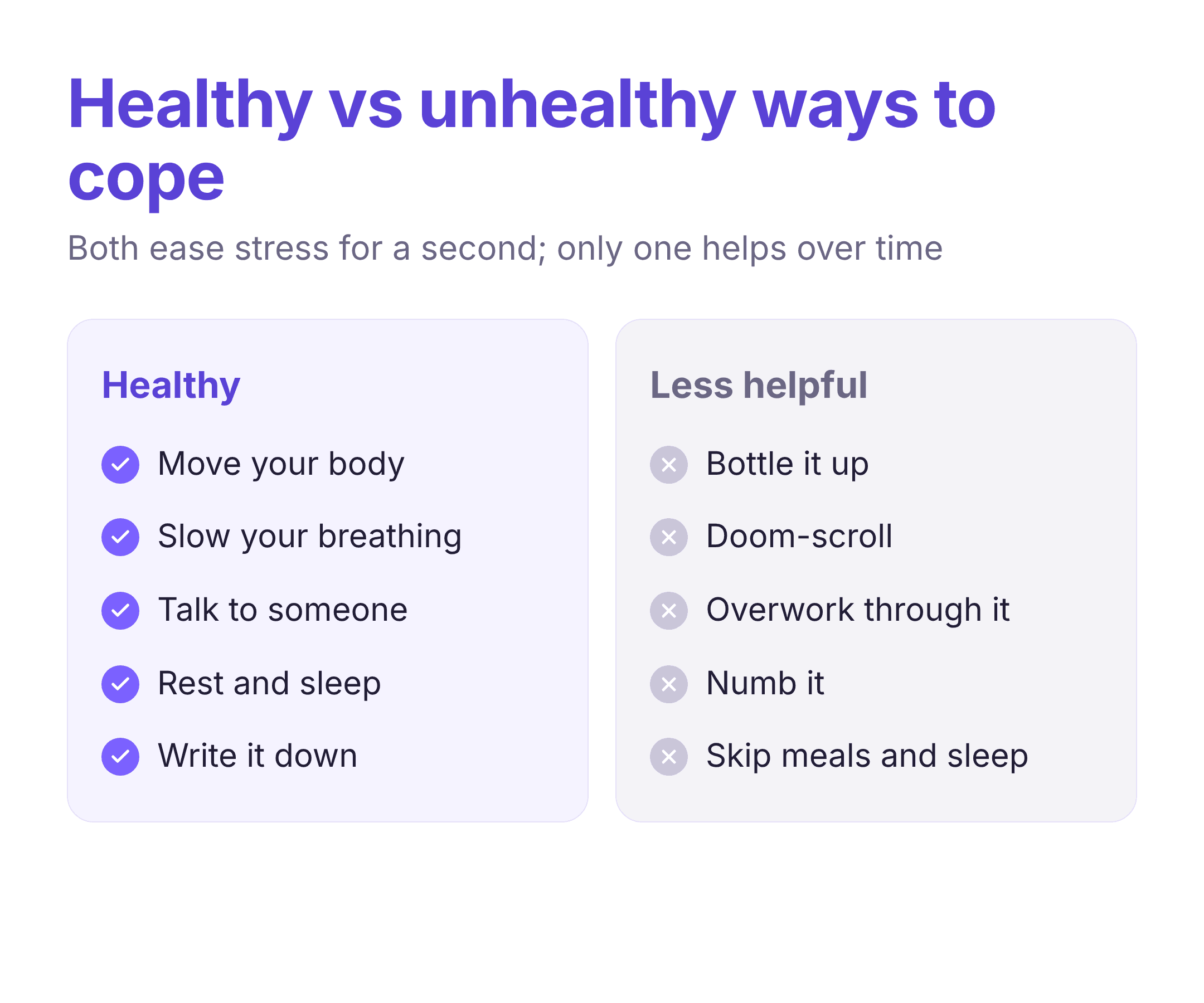
Healthy coping mechanisms for stress include exercise, sleep, relaxation techniques, talking to people, and setting boundaries. Less helpful habits, like bottling it up, overworking, doom-scrolling, or numbing it, tend to make stress worse over time.
Stress relief is calming down in the moment. Stress management is the bigger picture: building habits and boundaries so less stress builds up in the first place. You need both.
If stress is constant, affects your sleep, health, or daily functioning, or comes with feeling hopeless or unable to cope, talk to a doctor or therapist. They can help when everyday techniques are not enough.