RiseGuide Team

To improve your emotional intelligence, work on the four skills it is built from: self-awareness (notice and name what you feel), self-management (pause before you react), social awareness (read what other people are feeling), and relationship management (handle conversations and conflict well). Start by naming your emotions as they happen, look for your triggers, ask more questions before you respond, and practice one hard conversation at a time. Emotional intelligence is a set of learnable skills, not a fixed trait, so small daily reps are what move it. This guide walks through each skill, gives exercises you can start today, and shows how to apply them at work and at home.
Most people first meet emotional intelligence as a buzzword in a job description or a book title. The useful version is simpler: it is how well you understand your own emotions and other people's, and how well you use that understanding to act. The good news for anyone who wants to get better at it is that these are skills you can practice, the same way you would practice a language or an instrument. A 2019 meta-analysis of training studies found that emotional intelligence can be trained and measurably improved. This guide covers how to improve emotional intelligence in a way that sticks: the four parts you are actually building, the daily practices for each, and how to use them where it counts, at work and in your relationships.
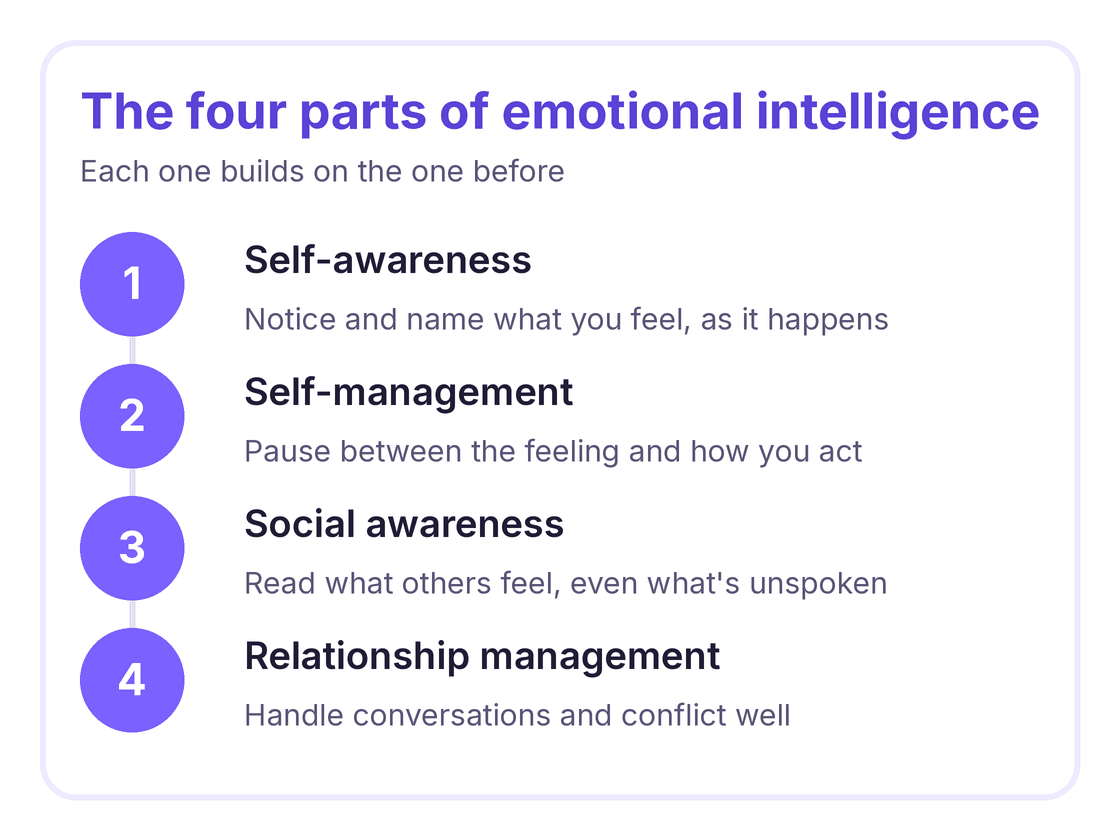
Before you can improve emotional intelligence, it helps to know what you are improving. The model most people use, popularized in Daniel Goleman's book Emotional Intelligence, breaks it into four skills that build on each other. If you want the full picture of what emotional intelligence is, that is covered separately in what emotional intelligence means; here the focus is on growing it.
The first is self-awareness: noticing what you feel and why, as it happens. The second is self-management: handling those feelings so they inform your actions instead of hijacking them. The third is social awareness, mostly empathy: picking up what other people are feeling, including the things they do not say. The fourth is relationship management: using all of that to communicate, handle conflict, and keep relationships healthy. The order matters, because you cannot manage an emotion you have not noticed, and you cannot respond well to someone whose feelings you have missed. Most of the practices below strengthen one of these four emotional intelligence skills.
There is no single trick that raises your emotional intelligence. What works is a handful of small habits, practiced often, spread across the four skills. These are ways to improve emotional intelligence you can start this week, not a course you have to finish. Pick one or two that match where you feel the most friction and build from there.
The foundation is self-awareness, and the fastest way to build it is to name your emotions as they come up. Instead of "I feel bad," get specific: anxious, embarrassed, resentful, relieved. Naming a feeling in plain words takes some of the heat out of it and gives you something to work with, rather than a vague cloud of stress. A few times a day, pause and ask what you are feeling and what set it off. This one habit feeds every other skill, which is why self-awareness is usually the place to start.
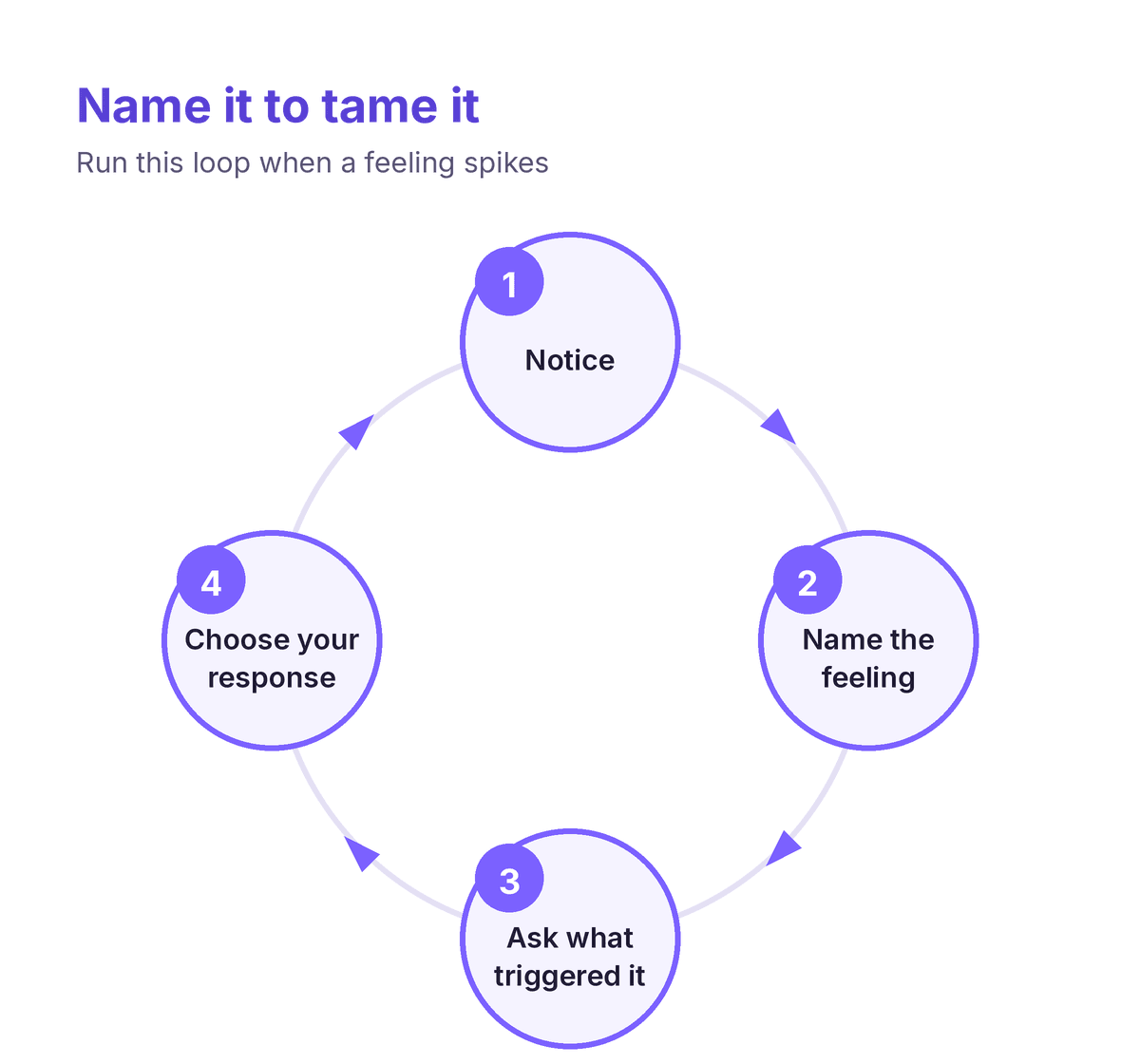
Once you can name feelings, look for the patterns. Most people have a short list of situations that reliably set them off: being interrupted, getting vague feedback, feeling rushed, being corrected in front of others. Keep a loose note for a week of the moments your mood shifted hard and what happened right before. When you can see your triggers coming, you get a half-second of choice back, and that half-second is where self-management lives.
Self-management is not about hiding what you feel. It is about putting a small gap between the feeling and the action. When something lands badly, take a slow breath, or wait until you have written a reply before you send it. The pause lets the first wave of emotion pass so you can choose a response that you will not regret. This is one of the most practical emotional intelligence skills, because it changes the outcome of hard moments without requiring you to feel differently in the first place.
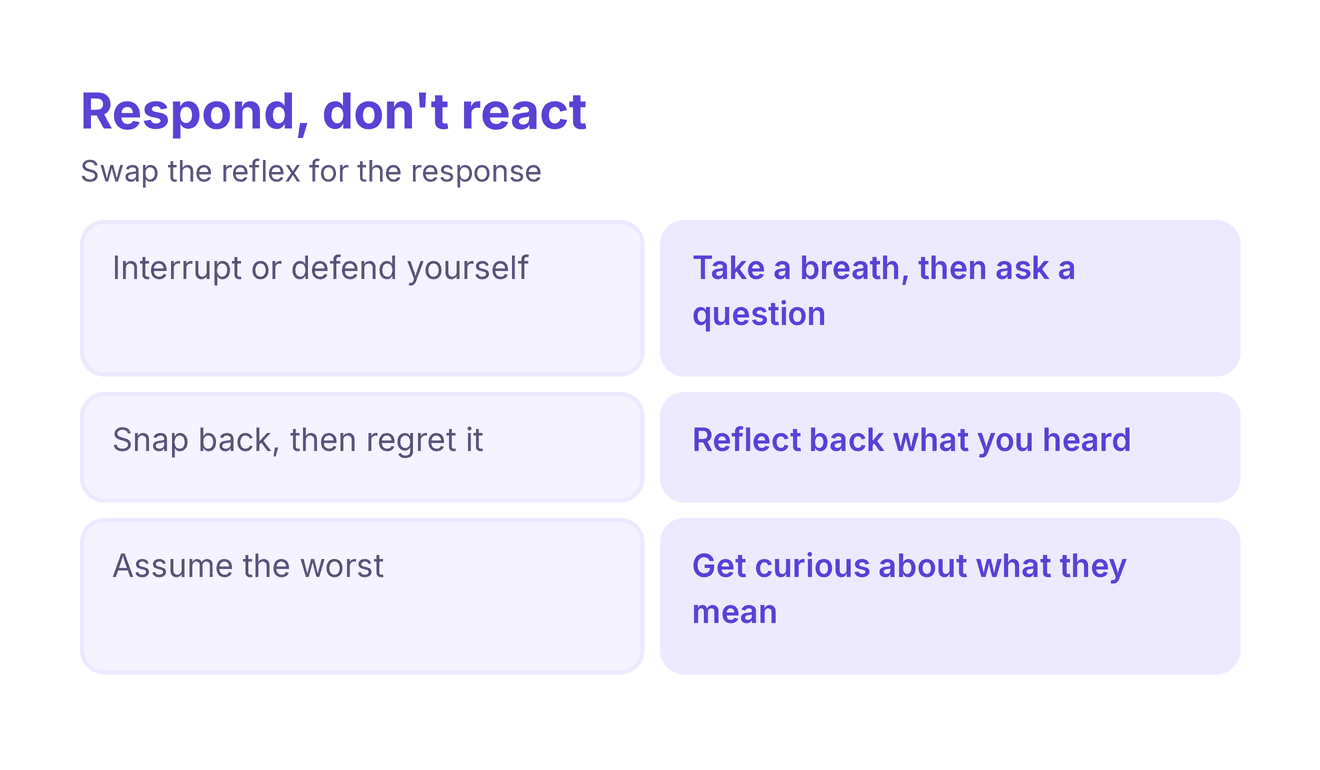
Social awareness grows fastest when you get curious about other people instead of guessing. In a conversation, ask one more question before you jump in with your own take, and pay attention to tone and body language, not just words. People often signal how they feel through pace, posture, and what they avoid saying. Learning to read body language gives you more to go on, so you respond to what someone actually means rather than what you assumed.
Empathy is a skill you practice, and listening is where you practice it. Give the other person your full attention, and before you answer, reflect back what you heard: "So it sounds like the deadline is the real problem, not the design." Getting it slightly wrong is fine, because it invites them to correct you, and either way they feel understood. This is the difference between hearing words and understanding a person, and it is the core of social awareness.
Relationship management is where the first three skills pay off. The way to build it is to stop avoiding the conversations you dread and take them on one at a time. Say the difficult thing kindly and directly, own your part, and stay curious about the other side. If you tend to go quiet during disagreements, practice staying in them; if you tend to push, practice softening. Knowing how to disagree respectfully or how to apologize well turns tension into something a relationship can survive and even grow from.
You have a blind spot: you experience your intentions, but other people only see your behavior. Ask one or two people you trust how you come across when you are stressed or in a disagreement. It can sting, but it closes the gap between how you think you show up and how you actually do, which is the whole point of improving emotional intelligence. Treat what they say as information, not a verdict.
Work is where weak emotional intelligence costs you the most and where practice pays off quickly. The skills are the same, but a few habits matter more in a professional setting. Manage your own reactions in meetings, especially when you disagree, so you are remembered for being steady rather than sharp. Read the room before you push an idea, and notice when a colleague is overloaded rather than only tracking your own workload. When you give feedback, be specific and kind, and when you receive it, ask a clarifying question before you defend yourself. If communication is the skill you most want to develop for work, working through it in small, structured lessons is an easier way to build the habit than trying to change everything at once.
You do not need a workshop to grow these skills. A few small emotional intelligence exercises, repeated, do more than any single big effort. Try a daily check-in: twice a day, name what you are feeling and why, in one sentence. Try the pause: pick one situation where you usually react fast and commit to waiting a beat before you respond. Try reflective listening in one conversation a day, where you summarize what the other person said before adding your own view. And try a weekly review: look back at one moment you handled well and one you would redo, and decide what to try differently next time. These reps are how to develop emotional intelligence over weeks rather than reading about it and forgetting.
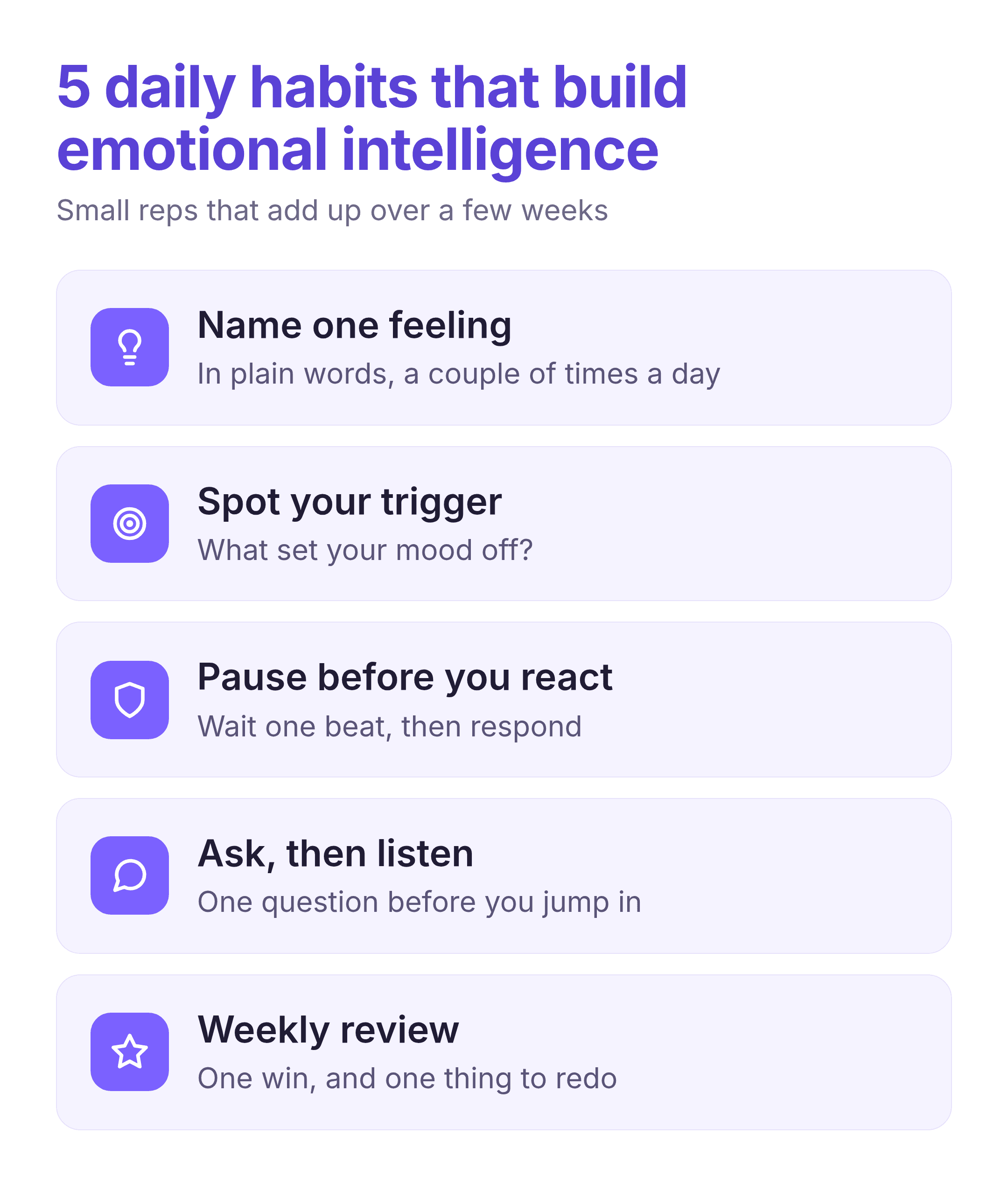
Improving your emotional intelligence comes down to a set of small habits you repeat until they feel normal. Notice and name your feelings, learn your triggers, put a pause between feeling and acting, get curious about other people, and take on the hard conversations instead of dodging them. The change is gradual, and then one day a tense moment goes better than it used to. Pick one practice from this guide and start there this week.
Common signs of low emotional intelligence include reacting strongly to small setbacks, struggling to name what you feel, blaming others often, missing how other people are reacting, and having the same conflicts again and again. The upside is that each of these maps to a skill you can practice.
You improve it rather than fix it, and you do it one habit at a time. Start with self-awareness by naming your emotions daily, add a pause before you react, and practice listening to understand. Small, repeated reps change more than a single big effort.
Name the emotion in plain words so it feels less overwhelming, put a short pause between the feeling and your response, and reframe the situation by asking what else might be true. Used together, these three steps keep a strong feeling from deciding your behavior for you.
There is no fixed timeline, but most people notice small changes within a few weeks of daily practice, with bigger shifts over a few months. Because these are skills, consistency matters far more than intensity.
Yes. Emotional intelligence is a set of learnable skills at any age, and research on training programs shows it improves with deliberate practice. Reading more, such as the best emotional intelligence books, helps, but practicing the habits is what moves it.