RiseGuide Team

To develop study habits, make studying small, consistent, and automatic instead of leaning on motivation. Pick a couple of habits worth building — testing yourself (active recall) and spacing your practice over several days do the most for memory — then attach them to a fixed time and place so they run with less effort. Start with a session so small it's hard to skip, anchor it to something you already do each day, and track it. Drop the habits that feel productive but aren't, like rereading notes, highlighting, and cramming. Building a habit takes weeks, not days, so aim for consistency over intensity and adjust as you go.
Learning how to develop study habits is mostly a matter of setup: the right routine does the work that motivation can't. Most study advice tells you what to do the night before an exam, but the harder problem is studying on an ordinary day, when nothing is due and the couch is right there. Once studying is a habit, it stops depending on how you feel that day, because it runs on a routine you've already built. Getting there means knowing which study habits are worth having, how to turn them into a routine, and which common ones to drop.
Motivation comes and goes, so studying that depends on it is fragile. A habit is a behavior your brain has learned to run with little effort, set off by a cue like a time of day or a place. Once studying is wired that way, you spend less energy deciding to start and more on the work itself.
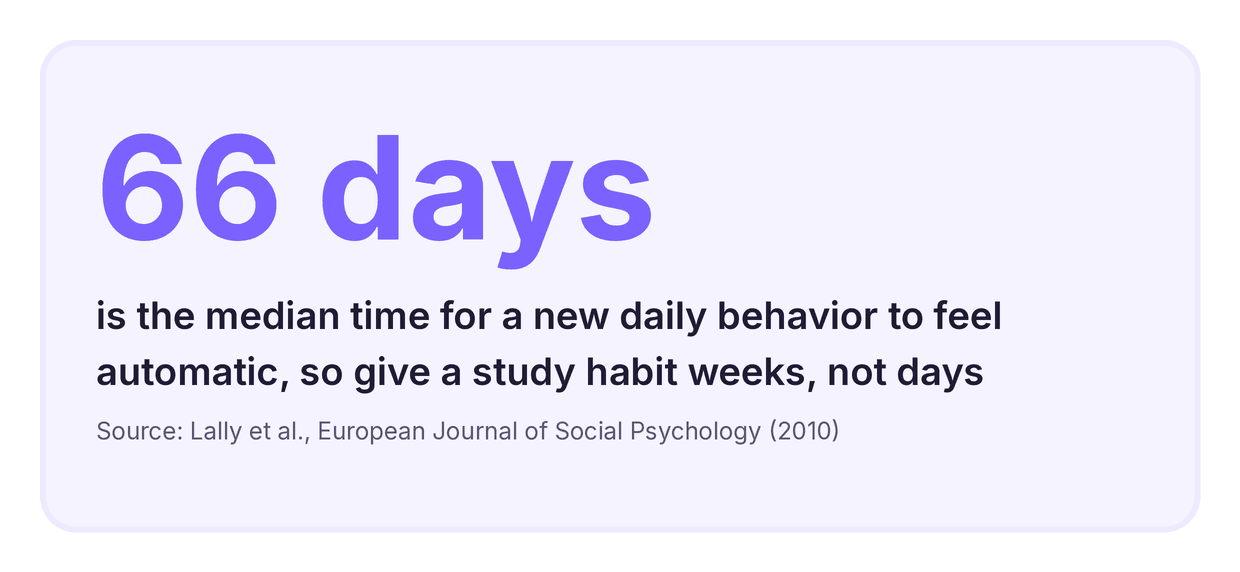
Building that wiring takes time. In a well-known habit study, people repeating a new daily behavior took a median of 66 days for it to feel automatic, and individuals ranged from about 18 days to more than 250. Two things follow. First, a study habit won't feel natural in a week, so judge it by whether you're showing up, not by whether it feels easy yet. Second, consistency matters more than intensity: a short session every day builds the habit faster than a long one twice a week.
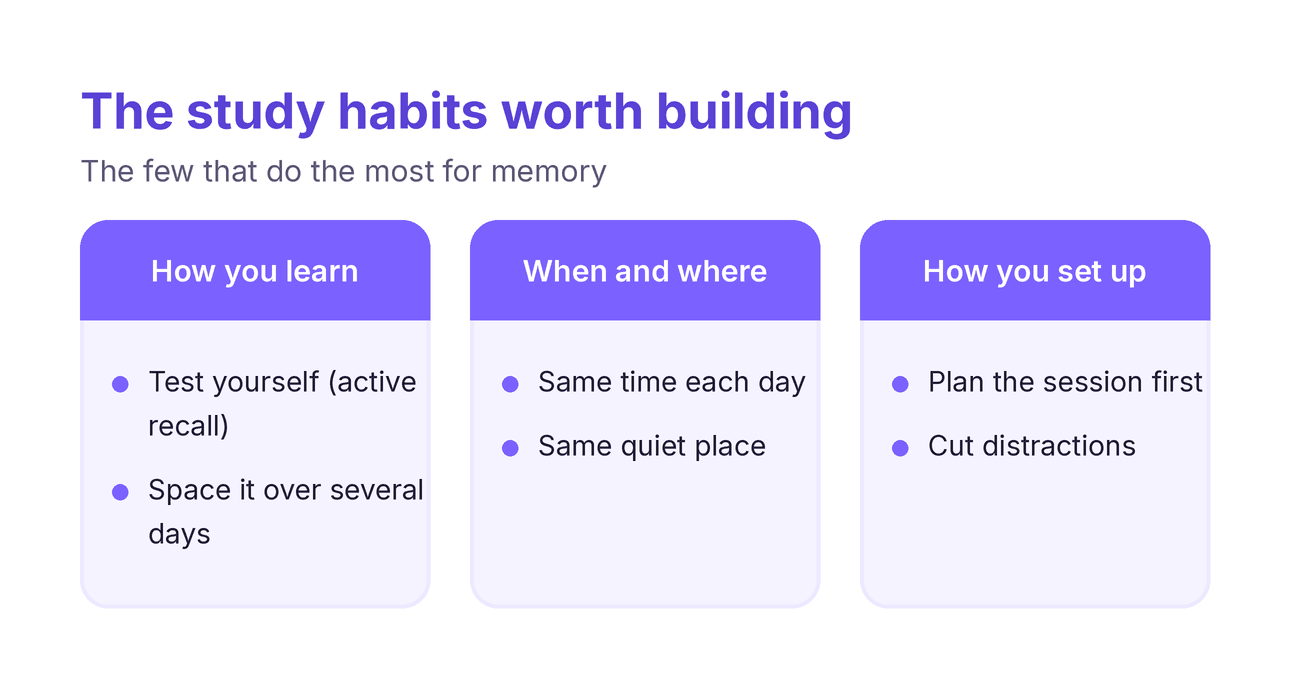
Not all study habits pull their weight, so the best study habits are the few that do the most work. When researchers ranked ten techniques students commonly use, the two that helped most across subjects and ages were practice testing and spacing your practice out. Good study habits start with those.
Active recall means closing the book and trying to retrieve what you know, with flashcards, practice questions, or just writing down everything you remember. It feels harder than rereading, and that difficulty is the point: pulling information out of memory is what strengthens it. Making a habit of self-testing is one of the most effective study habits you can build, and it's the same idea behind learning faster in general.
Reviewing a topic across several shorter sessions beats one long push. Each time you come back after a gap, your brain works to recall the material and the memory sets deeper. Instead of one three-hour block before a test, study a subject in shorter sessions over several days. This one change turns cramming into a habit that holds.
A consistent time and place gives your habit a reliable cue. When your brain links "8 p.m. at the desk" with studying, starting gets easier because the setting does some of the reminding for you. It also protects the time, so studying stops competing with everything else for a slot.
Deciding what you'll study before you start removes the moment of "what now?" that often turns into scrolling. A one-line plan is enough: which topic, which practice set, for how long. Breaking a big goal into one specific small task is what makes a session easy to begin.
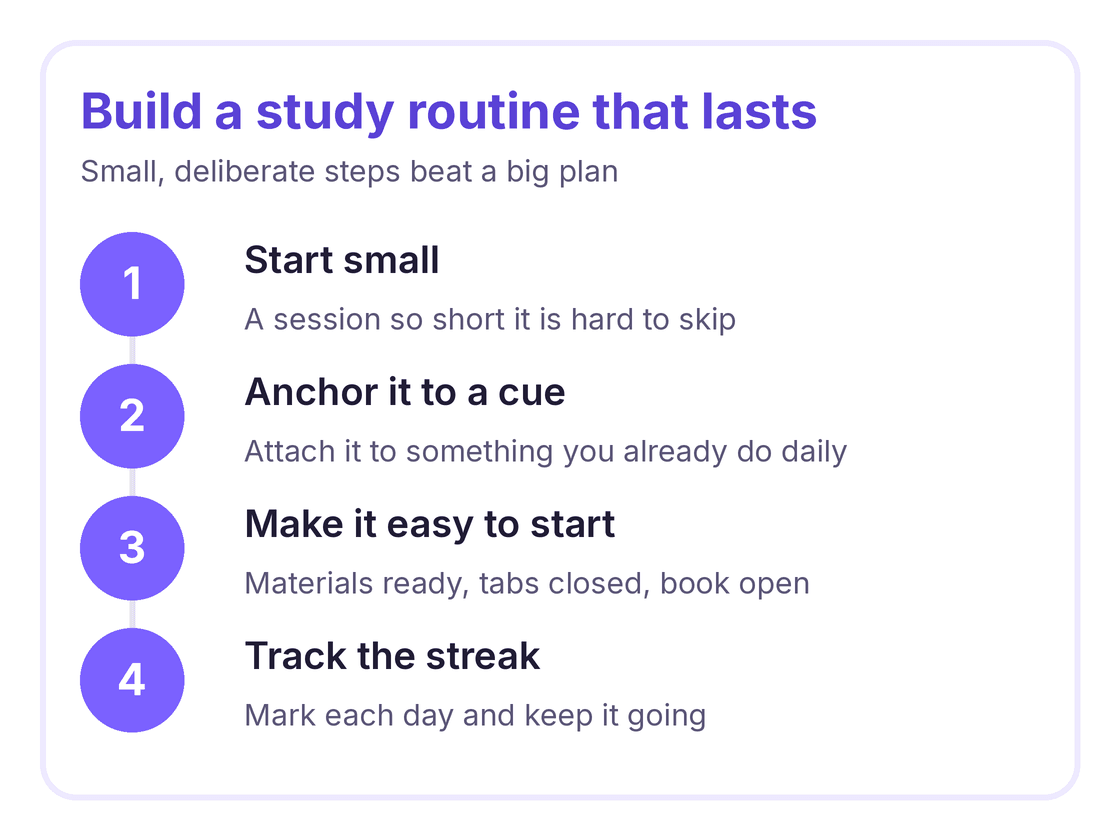
Knowing the habits is the easy part. Turning them into a study routine you keep is where most plans fall apart, so build the routine in small, deliberate steps.
The biggest reason a study habit fails is starting too big. A daily two-hour plan collapses on the first busy day. Begin with a session so small it's almost hard to skip: fifteen minutes, or a single set of practice questions. Once showing up is automatic, the length grows on its own.
New habits hold best when they follow an existing one. Attach studying to a fixed point in your day you never miss: after dinner, right after your last class, or as part of your morning routine. The habit you already have becomes the cue that starts the new one.
Lower the friction between you and the work. Keep your materials in one place, close the tabs you don't need, and leave your book open to the right page the night before. Every step you remove from getting started makes the habit more likely to run.
Marking each day you study, on a calendar, an app, or a simple checklist, gives you a small visible reward and a streak you won't want to break. Tracking also shows you honestly whether the habit is holding, so you can adjust before it slips.
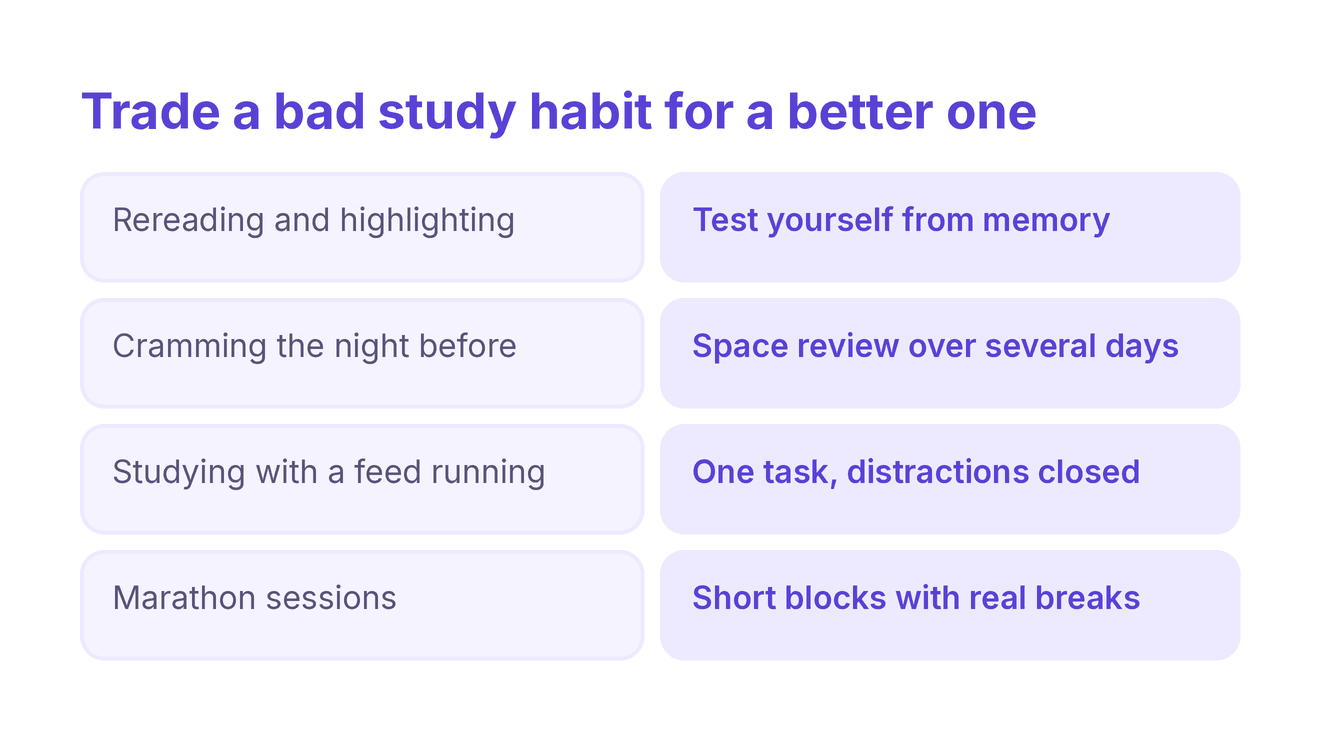
Some of the most common study habits feel productive but do little for memory, and they eat the time better habits would use. A few worth dropping:
Once a routine is running, improving your study habits is about small adjustments, not a new system every week. Every couple of weeks, look at what's working: are you keeping the streak, and are your recall and test scores getting better? Keep the parts that help and change one thing that isn't working, rather than overhauling everything.
Protect the basics that make studying pay off. Sleep does much of the work of turning the day's studying into lasting memory, so a late-night cram that costs you sleep often loses more than it gains. And when you want to add variety or study on the move, apps for learning can turn small pockets of time into extra reps.
Study habits work because they take the daily decision out of studying. Pick one or two habits worth building — testing yourself and spacing your practice are the ones that pay off most — attach them to a set time and place, and start small enough that you rarely skip. Give it a few weeks before you judge it, keep the streak visible, and let the routine carry you on the days motivation doesn't show up.
On average about two months. In one study of everyday habits, a new daily behavior took a median of 66 days to feel automatic, though people ranged from a few weeks to several months. Expect a study habit to feel like effort at first and to get easier the longer you keep it consistent.
It's a spaced-review schedule. After you first learn something, you review it again on day 1, day 3, day 5, and day 7. The growing gaps between reviews use spaced practice to move material into long-term memory instead of relying on a single pass.
It's a quick way to check what stuck after a session: write down 3 things you learned, 2 things you found interesting or want to explore, and 1 question you still have. It forces active recall and points you to what to review next.
Studying at the same time and place, testing yourself instead of rereading, spacing sessions across several days, planning each session in advance, cutting distractions, taking real breaks, and getting enough sleep.
Top students rarely study the most hours; they study consistently and use methods that work. Build a daily routine, lean on active recall and spaced practice, keep up with material instead of cramming, and protect your sleep. Consistency across a term beats intensity the week before a test.