RiseGuide Team

To focus while studying, deal with the biggest distraction first by putting your phone in another room, then set up a clear space and pick one task. Work in short, timed blocks, such as 25 minutes on and 5 off with the Pomodoro technique, and study actively by testing yourself instead of rereading. Stick to one subject at a time, start with the hardest task while your energy is high, and take real breaks that rest your eyes and body. Protect your sleep, food, and water, because concentration falls apart when you are tired or hungry. When your mind wanders, notice the thought, set it aside, and return to the page, treating the drift as normal rather than a failure.
Almost everyone knows the feeling: you sit down to study, read the same paragraph three times, and realize your mind has drifted somewhere else. Focus is a skill you can build with a few changes to your routine, and the changes below are small enough to start today.
"I can't concentrate on studying" is one of the most common frustrations students have, and it usually comes from the setup around you, not from any lack of ability. A phone within reach, a cluttered desk, a vague plan for the session, and low energy all pull at your attention at once. Your brain is also wired to notice anything new, so every notification or open browser tab is an invitation to switch away. On top of that, switching itself has a cost: each time you check a message and come back, it takes a while to fully re-engage with what you were doing. If you can't figure out how to concentrate on studying, the fix is usually to remove those pulls one by one rather than to try harder.
Before any technique, sort out your environment. A good study space removes decisions and distractions so focusing is the easy default rather than a fight.
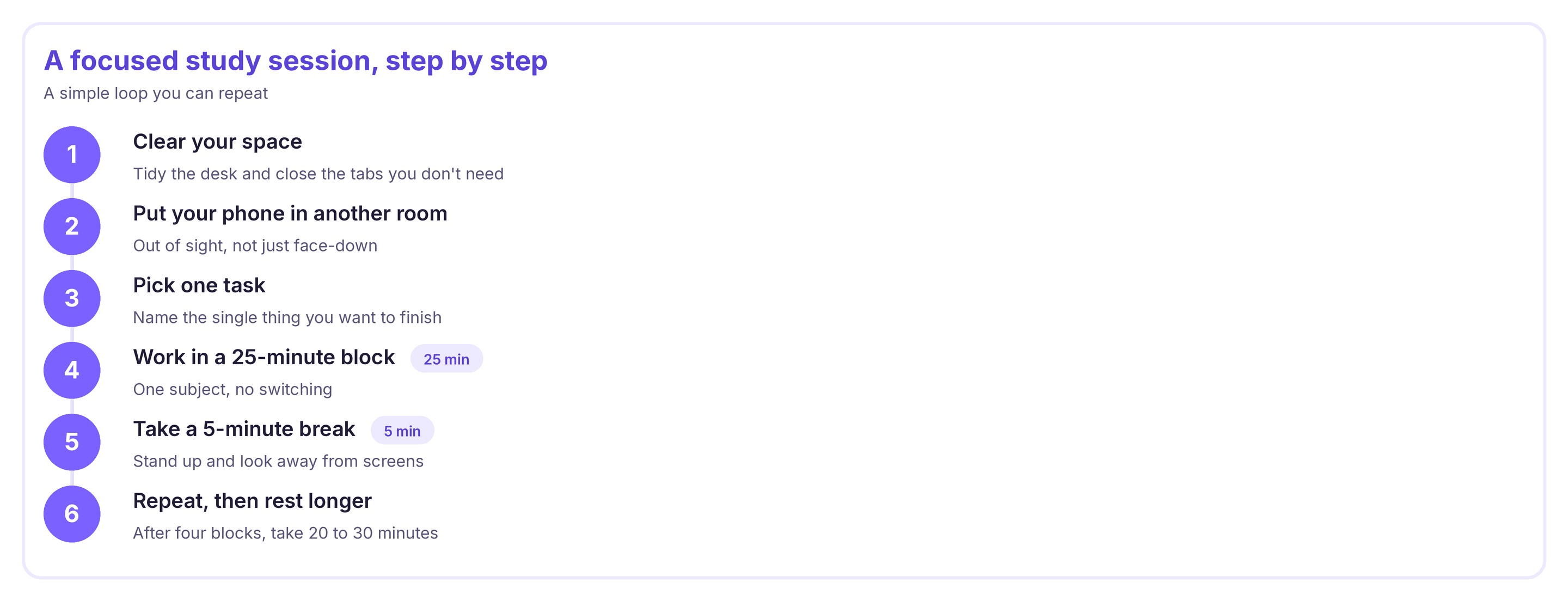
The single most effective change is to move your phone out of the room, not just face-down on the desk. One study found that the mere presence of your own phone can lower your available focus, even when it is switched off, because part of your attention stays busy resisting the urge to check it. Put it in another room, or hand it to someone, for the length of a study block.
Give yourself only what this task needs: the notes, the textbook, a pen, some water. Close the browser tabs you are not using and put away anything unrelated. A clear surface means fewer small prompts to look away.
Using one consistent spot for studying trains your brain to settle in faster over time. It does not have to be fancy, only a place your mind starts to associate with work rather than rest, which is why your bed is usually a poor choice.
Once your space is sorted, how to improve focus while studying mostly comes down to how you shape your time. Long, open-ended sessions invite drifting, so give yourself clear blocks with clear endings.
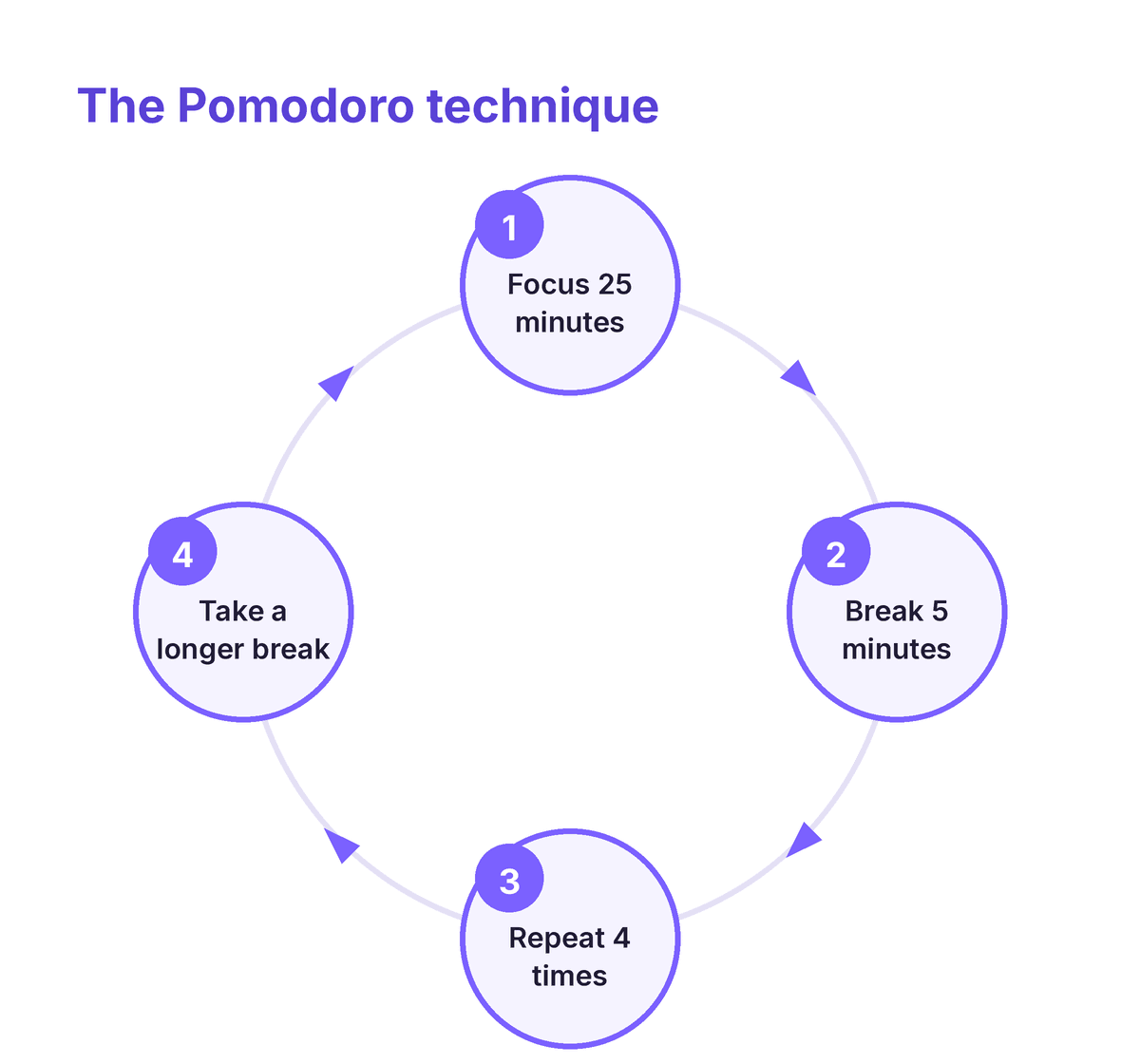
The Pomodoro technique breaks study into short sprints: 25 minutes of focused work, then a 5-minute break, repeated. After four rounds, you take a longer break of 20 to 30 minutes. Knowing a break is coming makes it easier to hold your attention now, and the timer turns a vague "study for hours" into something concrete.
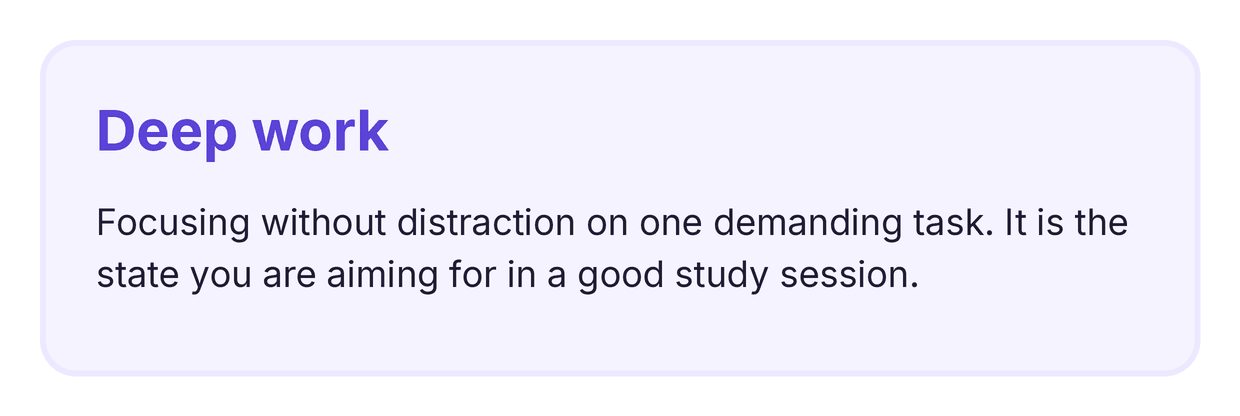
Aim to spend each block fully on one thing. Computer scientist Cal Newport calls this deep work: focusing without distraction on one demanding task, which is the opposite of studying with a show playing or a group chat open.
A break spent scrolling fills your attention with more input instead of resting it. Stand up, stretch, look out a window, or walk for a few minutes so your eyes and mind get a real rest before the next block.
Passive studying is the easiest way to lose focus. When you only reread, your eyes move but your mind wanders. Active study gives your brain a job on every page, which keeps you engaged and helps the material stick.
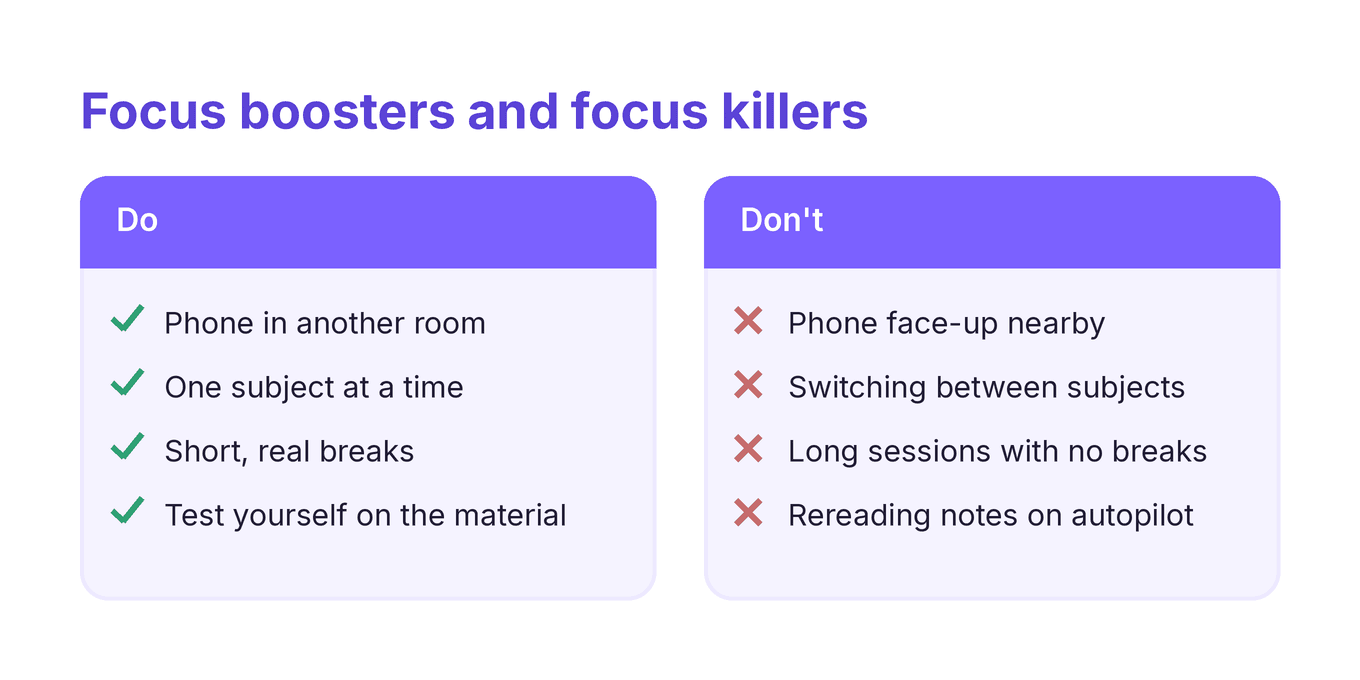
Close the book and try to recall the main points, or answer practice questions before checking your notes. This is called active recall, and it holds your attention far better than rereading, which can feel productive while very little sinks in. For the methods that work best, study techniques covers them in depth, and to make the material stick, look at how to improve memory alongside it.
Jumping between subjects feels productive but leaves a trail of half-loaded thoughts, so you never fully settle into any of them. Give one subject a full block before you move on. The same habits help whether you are working out how to focus on studies at home or revising in a busy library.
Your attention is freshest at the start of a session, so spend it on the task that needs the most thought. If you are trying to concentrate on studies that don't interest you, starting with the hardest part means it isn't hanging over you while your energy drains. Getting through it first also builds momentum, which makes it easier to learn faster through the rest.
Concentration depends on your body as much as your mind. A tired, hungry, dehydrated brain cannot focus no matter how disciplined you are. Sleep is the biggest lever, since it is when your brain consolidates what you learned. Eat something steady before a long session rather than relying on sugar or heavy caffeine, keep water nearby, and move your body between blocks. A short walk often does more for your next hour of studying than pushing through without one, and building that kind of routine takes some willpower at first before it becomes a habit.
Even with a good setup, your mind will drift, and that is normal. The skill is noticing sooner and returning without a fuss. Keep a scrap of paper next to you and, when a stray thought shows up ("I need to reply to that message," "did I lock the door"), write it down and let it go, so you can deal with it later instead of chasing it now. If you notice you have been rereading on autopilot, stop, take a breath, and restart on the last thing you clearly remember. Being hard on yourself for losing focus only adds another distraction, so treat each return to the page as the practice itself.
Small changes to your routine improve concentration and focus while studying more than any single trick. Start with the one that would help you most today, most likely moving your phone out of the room, and add the others as they become habits. You don't need perfect focus for hours on end. Aim for enough focused time, often enough, to get the work done.
No one focuses 100 percent of the time, so that is the wrong target. Aim instead for stretches of strong focus, like a few 25-minute blocks, with breaks in between. Removing your phone and studying actively will get you far closer to full attention than trying to force it.
It depends on the task and the music. Quiet instrumental music or steady background sound can help some people tune out a noisy room, while lyrics tend to compete with reading and writing. If you notice yourself following the song instead of the page, switch to silence or ambient noise.
Focused blocks of 25 to 50 minutes, separated by short breaks, work well for most people. What matters more than the exact number is that each block has a clear task and a clear end, and that you actually rest during the break.
Put it in another room for the length of a block so checking it takes real effort. If you need it nearby, turn on a focus or do-not-disturb mode and use an app timer. The aim is to make picking it up a deliberate choice rather than an automatic reach.