RiseGuide Team

To study more effectively, use the study techniques with the strongest evidence and drop the ones that only feel productive. The best study techniques are retrieval practice (quiz yourself instead of rereading), spaced practice (spread study over several days), interleaving (mix related topics in one session), elaboration (ask why and how), self-explanation and the Feynman technique (explain ideas in plain words), dual coding (pair words with simple visuals), flashcards run on the Leitner system, practice with past papers and problems, focused study blocks like the Pomodoro technique, and a real note-taking method such as Cornell notes. Highlighting, rereading, and summarizing are worth skipping as your main methods — they feel useful but do little on their own. You don't need all ten; pick two or three that fit your subject.
Most students study the way no one taught them to: rereading notes, highlighting in three colors, and hoping it sticks. Research on learning points to a smaller set of study techniques that work far better, plus a few popular habits that mostly waste time. Below are 10 study methods worth using, how to use each one, and the effective study techniques to reach for first. You don't need all of them — a mix of two or three that fit your subject and schedule beats trying everything at once.
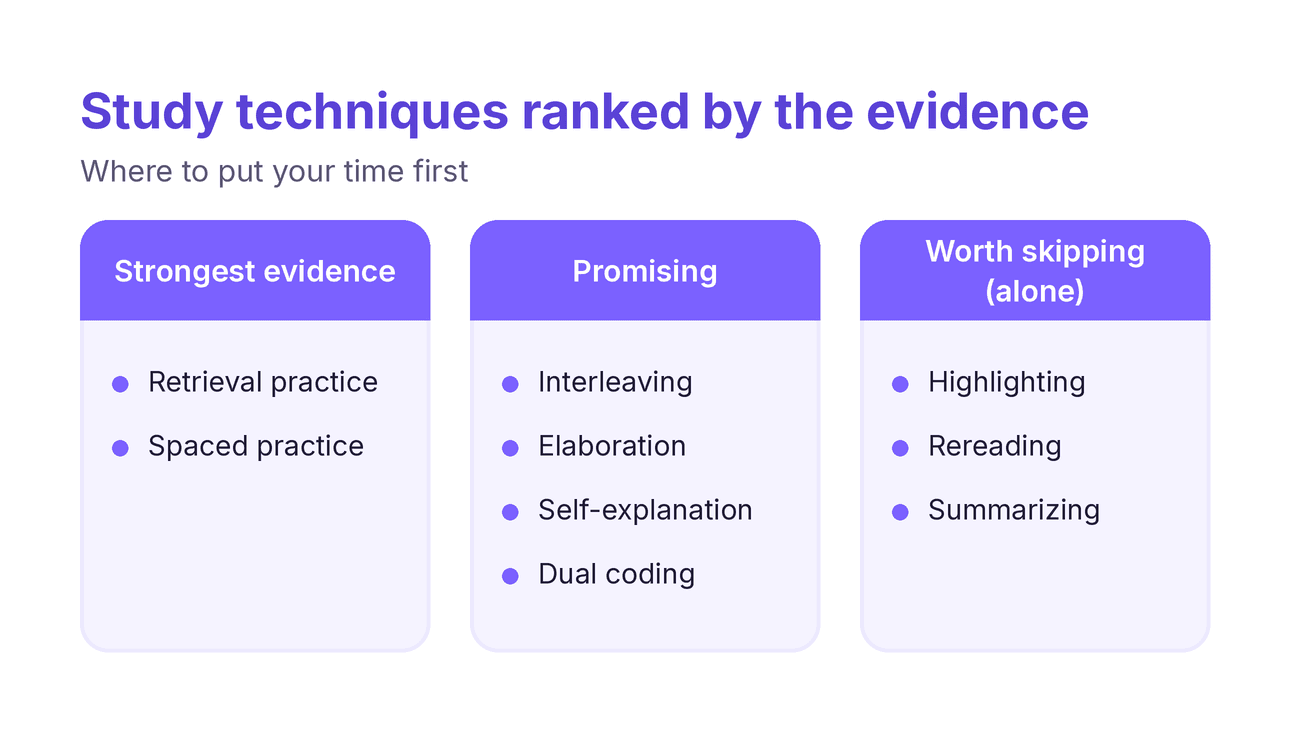
If you change only a few things, change these. A large research review of ten common learning techniques rated two of them highest for almost every age, subject, and student: testing yourself, and spreading study out over time. A third, mixing topics together, is close behind.
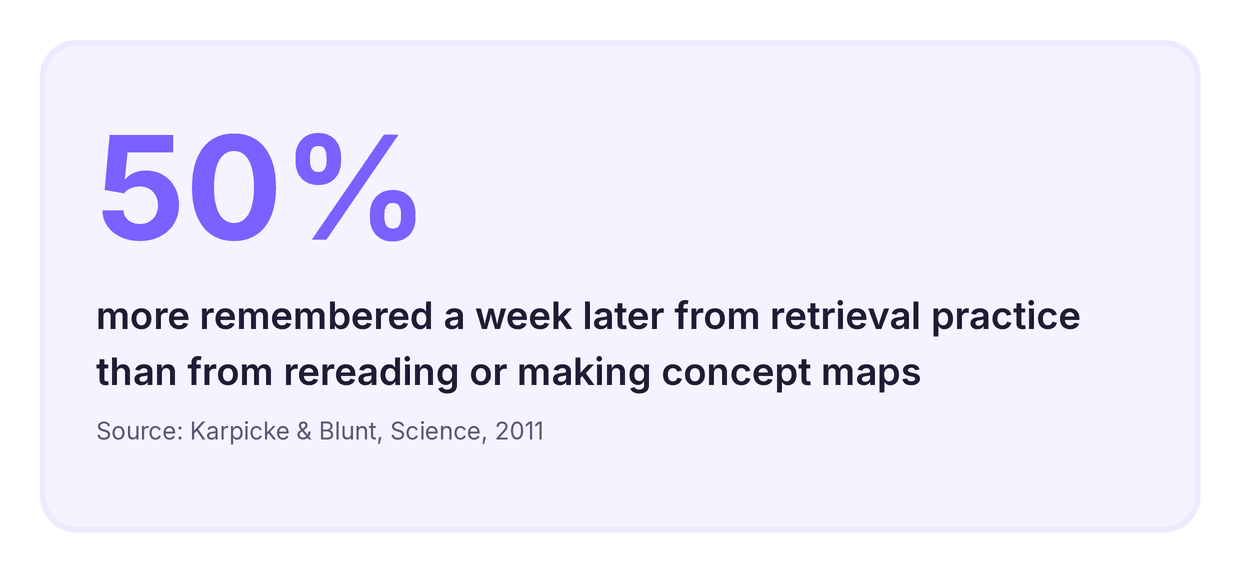
Retrieval practice means pulling information out of memory instead of looking at it again. Close the book and write down everything you remember, answer practice questions, or turn each heading in your notes into a question and try to answer it from memory. The act of struggling to recall is what strengthens the memory, so getting some answers wrong and then checking is part of how it works. In one study, students who practiced recalling a science passage remembered about 50% more a week later than students who simply reread it or built detailed concept maps. If you want the fuller method behind this, our post on how to learn anything faster walks through it step by step.
Studying the same material in shorter sessions across several days beats one long cram, and the same research review rated this among the most effective methods. Instead of three hours the night before, do three 45-minute sessions on different days. Each time you come back after a gap, your brain has to work a little to recover the material, and that effort is what makes it stick. Put the sessions on a calendar so the spacing actually happens.
Interleaving means mixing different but related problems or topics in a single session rather than doing one type over and over. A math student might alternate between three kinds of problems instead of grinding through 20 of the same; a language learner might shuffle grammar, vocabulary, and listening. The review rated it a promising method: mixing feels harder in the moment, but it trains you to notice which approach a given problem needs, which is what a test asks for.
The next three are about understanding, not just exposure. They take a bit more effort than rereading, and that effort is the point. Use them on the material you find hardest, or when you keep forgetting something you've "already studied."
Elaboration means connecting new facts to things you already know by asking why and how. Instead of memorizing that a law was passed in a certain year, ask why it passed then and how it changed what came next. The questions force you to build links between ideas, and those links give your memory more ways to find the information later.
Self-explanation is talking yourself through a problem or idea in plain language as you work: what this step does, why it follows from the last one. The Feynman technique is the same idea taken one step further — explain the topic as if you were teaching it to a curious 12-year-old, in your own simple words. Where you stumble or reach for jargon is exactly where your understanding is thin, so that's what to go back and study.
Dual coding means pairing what you read with a simple visual — a diagram, a timeline, a quick sketch of how parts connect. It doesn't need to be art. A rough drawing that shows how the parts fit together is enough. Two ways of holding the same idea, in words and in a picture, give you two routes back to it during a test.
These last four are how you put the ones above into practice. They turn good intentions into a study session that gets done.
Flashcards are retrieval practice and spacing in one tool, as long as you use them to recall rather than recognize. The Leitner system spaces them for you: cards you get right move to a box you review less often, and cards you miss come back sooner. Paper cards or an app both work — what matters is that you say or write the answer before flipping.
Working real past papers and problem sets is retrieval practice under test conditions. It shows you the format, the wording, and the kinds of questions that come up, and it surfaces the gaps you can't see when you're just reading. Do them timed and closed-book once you're partway through a topic, then mark them honestly and restudy what you missed.
None of the techniques above help if you can't hold your attention. The Pomodoro technique sets a timer for a focused block — often 25 minutes — followed by a short break, which makes starting easier and gives your attention a defined finish line. Put your phone in another room for the block. If focus is the real problem, our piece on selective attention explains how the brain decides what to tune in and out.
Good notes are built to be studied from later, not just written once. The Cornell method splits the page into a narrow left column for cues and questions, a wide right column for notes, and a summary at the bottom. After class, you cover the notes and use the cue column to quiz yourself, which turns your note-taking into retrieval practice.
Three of the most common study habits do the least. The same research review rated highlighting, rereading, and summarizing low in usefulness on their own. They feel productive because the material starts to look familiar, but recognizing a page you've seen before isn't the same as being able to recall it in an exam. You don't have to ban them — a light highlight can mark what to turn into a question later — but they shouldn't be your main method.
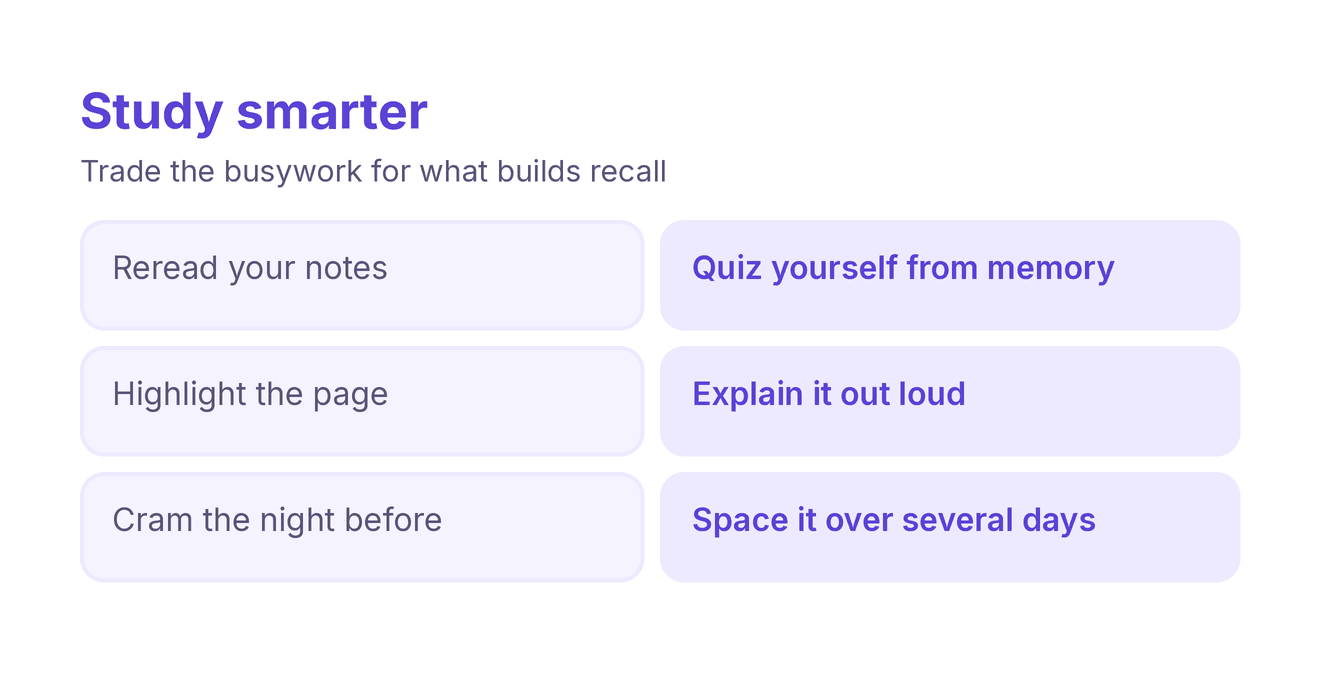
Pick two or three techniques and attach them to a schedule you'll keep, rather than trying all ten at once. A simple version: study in spaced blocks, quiz yourself at the end of each one, and mix in past papers as the exam gets closer. Building it into a steady study routine matters more than any single method, because consistency is what turns these into habits. If you'd rather have that structure handled for you, RiseGuide turns spare minutes into short, interactive lessons built on expert insights — led by its Communication Mastery journey, with other skill journeys alongside it — so a daily learning habit has a set place to live. It's one of several self-improvement apps that can keep you on track.
The techniques that work share one idea: make your brain do the work of recalling and connecting, instead of just looking at the material again. Start with retrieval practice and spaced study this week, add one or two others that fit your subject, and let the methods that only feel productive fall away.
Retrieval practice (quizzing yourself), spaced practice (spreading study over days), interleaving (mixing related topics), elaboration (asking why and how), and practice with past papers. These give you the most return for the time you put in.
The evidence favors testing yourself and spacing your study out, so the best study methods for exams combine retrieval practice with timed past papers in the weeks beforehand, rather than one long cram the night before.
Work in short, timed blocks with your phone out of reach, and give each block one clear task. The Pomodoro technique makes this easy, and treating a few strong different study methods as your default removes the constant decision about what to do next.
A useful way to group them is by what they do: recall-based (retrieval practice, flashcards), timing-based (spaced practice, interleaving), understanding-based (elaboration, self-explanation, dual coding), and organizing-based (note-taking methods, past papers).
On their own, not much. They can support studying — a light highlight flags what to turn into a question — but as a main method they mostly build familiarity, not recall.