RiseGuide Team

To find the best apps for mindfulness, pick the one that fits where you want more awareness in daily life, not just an app to meditate in. The shortlist:
If you're new, start with Headspace or Insight Timer to learn the basics. If you already know the part of your day you want to work on, go straight to the tool for it: one sec for phone habits, Eat Right Now for eating, How We Feel for your emotions, or Gratitude for noticing the good. The order below isn't a ranking.
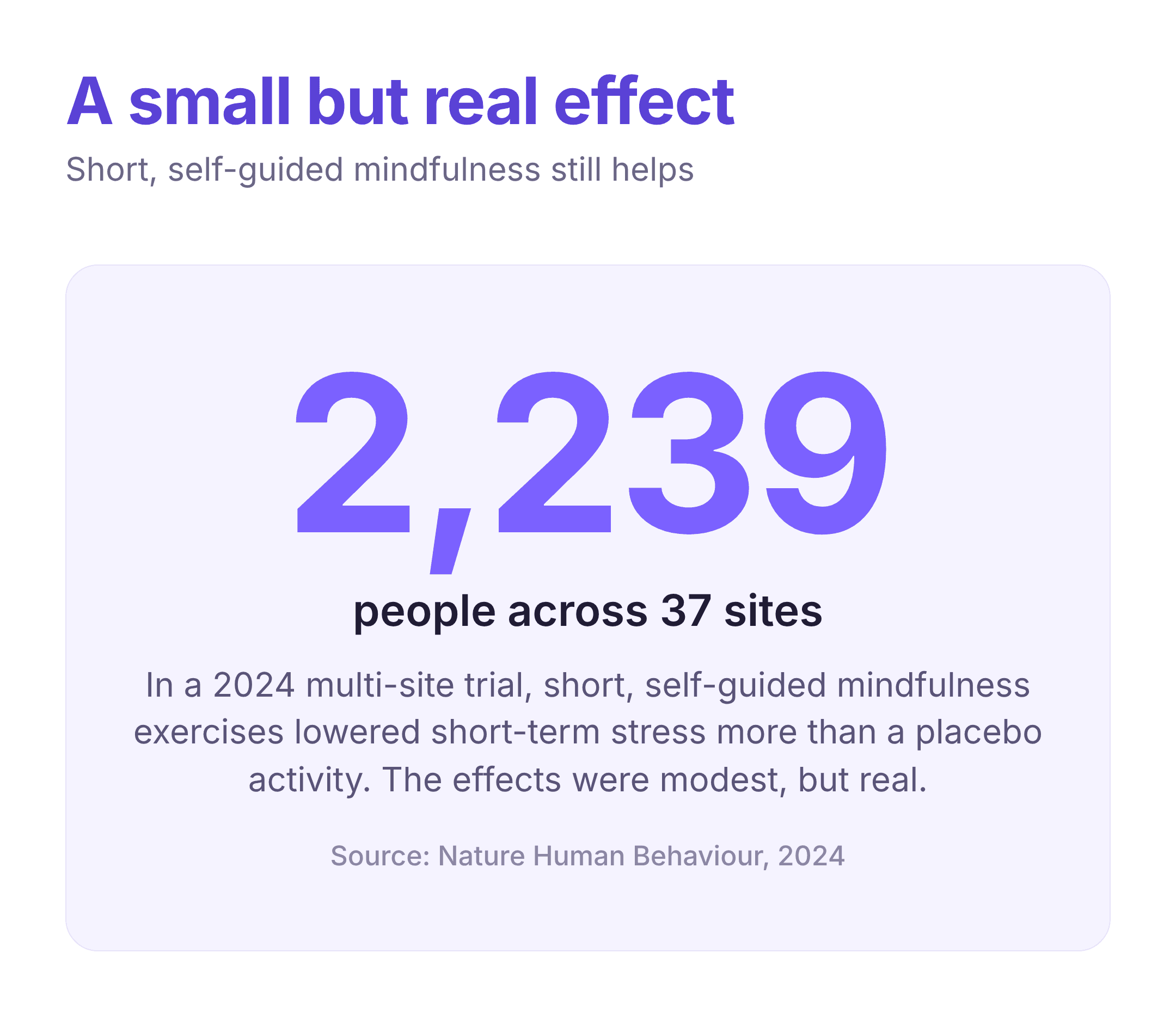
Mindfulness has become one of the most common reasons people open a wellness app, and there's reason to. A 2024 multi-site study of more than 2,000 people found that short, self-guided mindfulness exercises lowered short-term stress more than a placebo activity, though the effects were modest. An app won't do the work for you, but the right one lowers the barrier to starting, which is usually the hard part. It sits alongside the other stress management techniques our team has written about.
It's worth being clear about what mindfulness actually is, because it explains why this list looks so varied. Mindfulness is paying attention to the present moment on purpose, without judging it. Meditation is one way to practice it, but not the only one, so this list goes beyond a mindfulness meditation app: you can be mindful while you eat, while you work, while you scroll, or while you sit with a difficult feeling.
Because mindfulness reaches into so many parts of ordinary life, the apps that help you live more mindfully each serve a different aspect of it. Some teach it as a skill you build over time. Some focus on one area, like eating, attention, or emotions. And some are made for a single moment, like the pause before you open an app or a few slow breaths to steady yourself. None of them is more genuine than the others; they simply work on different parts of the same practice. So the best one for you depends on where you want more attention in your day, and that is how the list below is arranged.
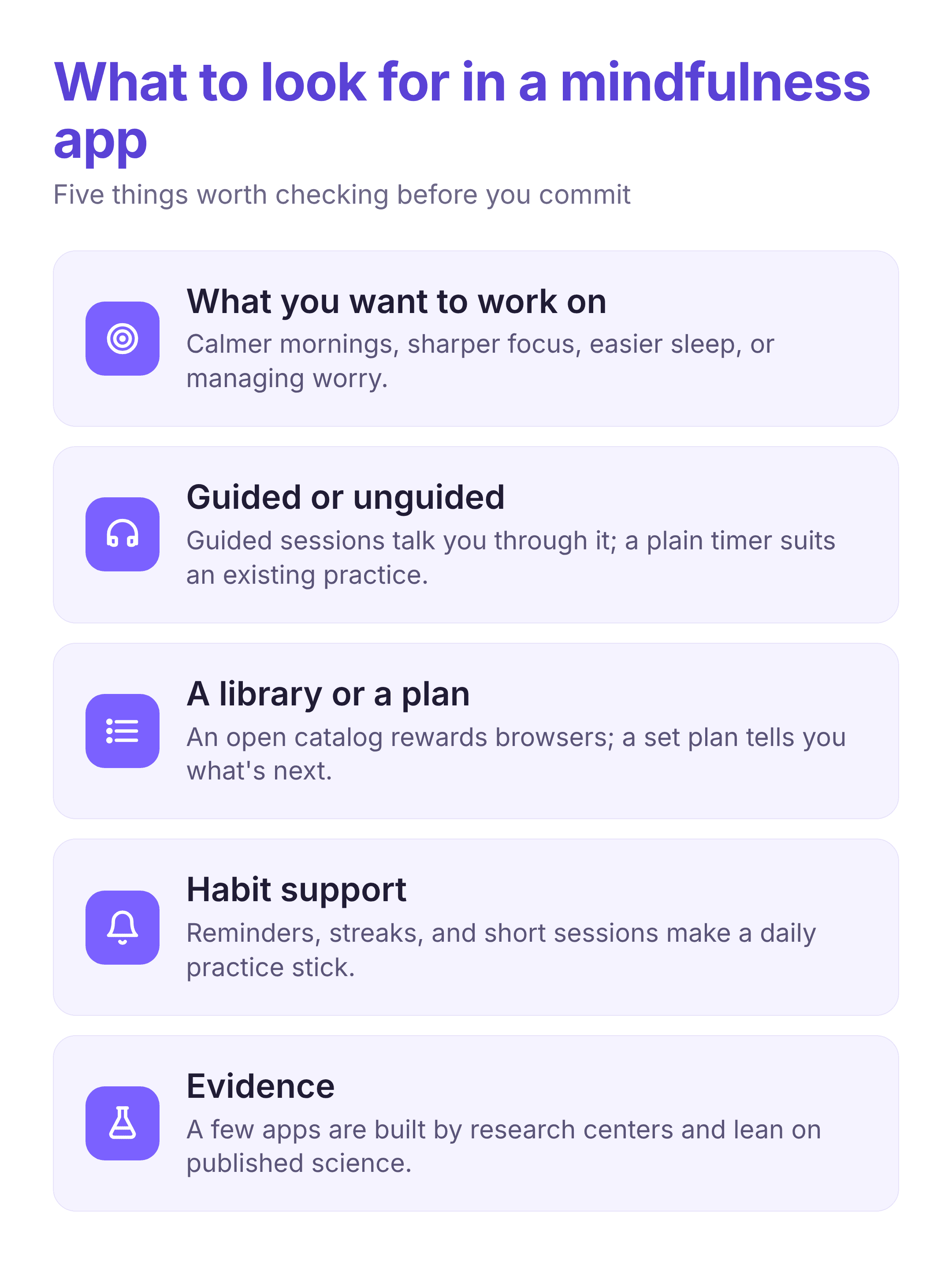
The right mindfulness app depends on what you want to practice and how you like to learn. A few things worth checking before you commit:
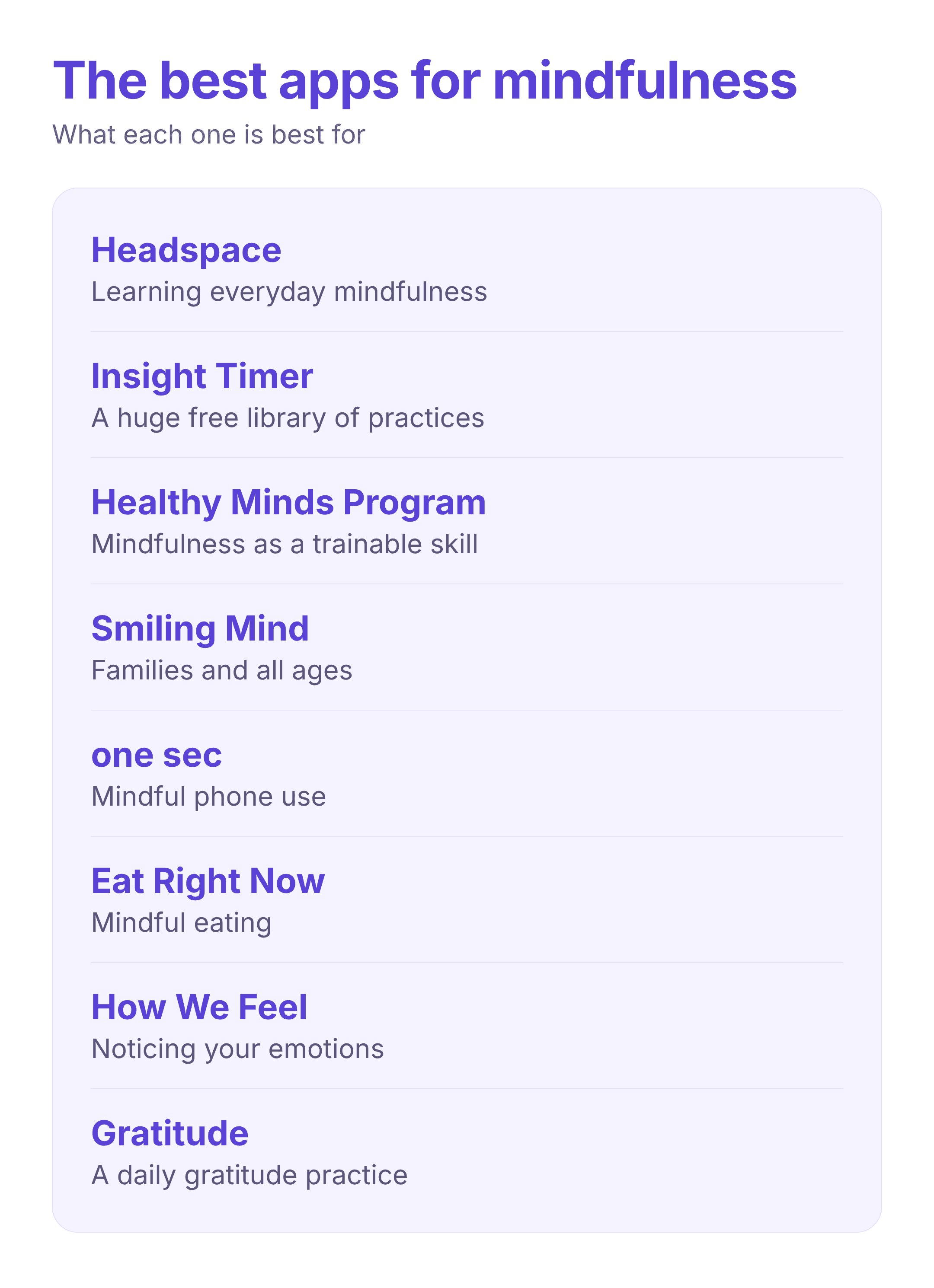
Here are eight of the best apps for mindfulness. The first four teach mindfulness as a skill; the next four bring it into a specific part of your day.
Headspace teaches mindfulness as something you use through the day, not only on a cushion. Structured courses explain an idea before you practice it, and alongside sitting sessions there are short "mindful moments" for eating, walking, commuting, and cooking, plus focus music and quick breathing exercises. It's a good first app if you want to understand what mindfulness actually is and how to carry it into ordinary activities.
Strengths:
Limitations:
Insight Timer offers one of the largest free collections of guided practices and mindfulness talks anywhere, with tens of thousands of tracks from teachers around the world, plus a plain timer for unguided practice. Beyond sitting meditation, it has talks and short courses on bringing mindfulness into work, relationships, and daily habits, so you can follow your own interests rather than one house style.
Strengths:
Limitations:
The Healthy Minds Program is a free app from the nonprofit Healthy Minds Innovations, tied to the Center for Healthy Minds founded by neuroscientist Richard Davidson. It's built around four skills you can train, awareness, connection, insight, and purpose, and it lets you practice either seated or active, on a walk or while doing chores. That active option makes it one of the clearest examples of mindfulness as something you do in daily life, not only in silence.
Strengths:
Limitations:
Smiling Mind is a free app from an Australian nonprofit, with programs built for different ages, including children and teens, and content designed for schools and families. Alongside general mindfulness it has programs for sleep, focus, eating, and relationships, all in age-appropriate language. It's a good choice if you want something the whole household can use, or you're introducing mindfulness to a younger person.
Strengths:
Limitations:
one sec brings mindfulness to the habit most of us do on autopilot: reaching for the phone. When you open an app you've chosen, it makes you take a slow breath and wait a moment before it opens, which is often enough to notice you didn't really mean to. Over time it shows how often you paused and then decided not to go in. It's mindfulness applied to attention and impulse rather than a place to meditate.
Strengths:
Limitations:
Eat Right Now, from mindfulness researcher Dr. Judson Brewer, applies mindfulness to how you eat. A step-by-step program helps you notice hunger, cravings, and the difference between eating for fuel and eating on autopilot, with a short tool for riding out a craving as it happens. It's for anyone who wants a calmer, more aware relationship with food rather than another diet.
Strengths:
Limitations:
How We Feel is a free app from a nonprofit led by Yale's Marc Brackett, and it builds one of mindfulness's core skills: noticing and naming what you feel. You check in through the day, place your feeling on a simple grid, and land on a more precise word for it, along with short strategies to try. Naming emotions clearly is a form of present-moment awareness, and doing it regularly makes feelings easier to understand and work with.
Strengths:
Limitations:
Gratitude turns one small mindful habit into a daily routine: noticing what's good right now. You write down a few things you're grateful for, add a photo if you like, and can set reminders and affirmations that prompt you to pause and look around. Paying deliberate attention to the present, including its good parts, is mindfulness in a simple form, and writing it down makes the habit easier to keep.
Strengths:
Limitations:
A quick side-by-side of all eight apps, so you can scan for the one that fits your goal.
| App | Best for | What stands out |
|---|---|---|
| Headspace | Beginners | Everyday mindful moments |
| Insight Timer | Free library | Thousands of free talks and practices |
| Healthy Minds Program | A trainable skill | Free, active off-the-cushion practice |
| Smiling Mind | Families | All ages, free |
| one sec | Phone habits | A breath before distracting apps |
| Eat Right Now | Mindful eating | A tool for riding out cravings |
| How We Feel | Emotions | Name what you feel, free |
| Gratitude | Gratitude | A quick daily gratitude journal |
Start from where you want more awareness, not from which app is most famous. If you're learning the basics, Headspace and Insight Timer explain what mindfulness is and how to practice it, and Healthy Minds Program adds the science. For a household or a younger person, Smiling Mind is the easiest to share.
If you already know the part of your day you want to work on, go straight to the tool for it. one sec helps with phone habits, Eat Right Now with eating, How We Feel with your emotions, and Gratitude with noticing the good as it happens. Cost needn't be a barrier either: the strongest free mindfulness apps here are Insight Timer, Healthy Minds Program, Smiling Mind, and How We Feel, and each is enough to start without spending anything.
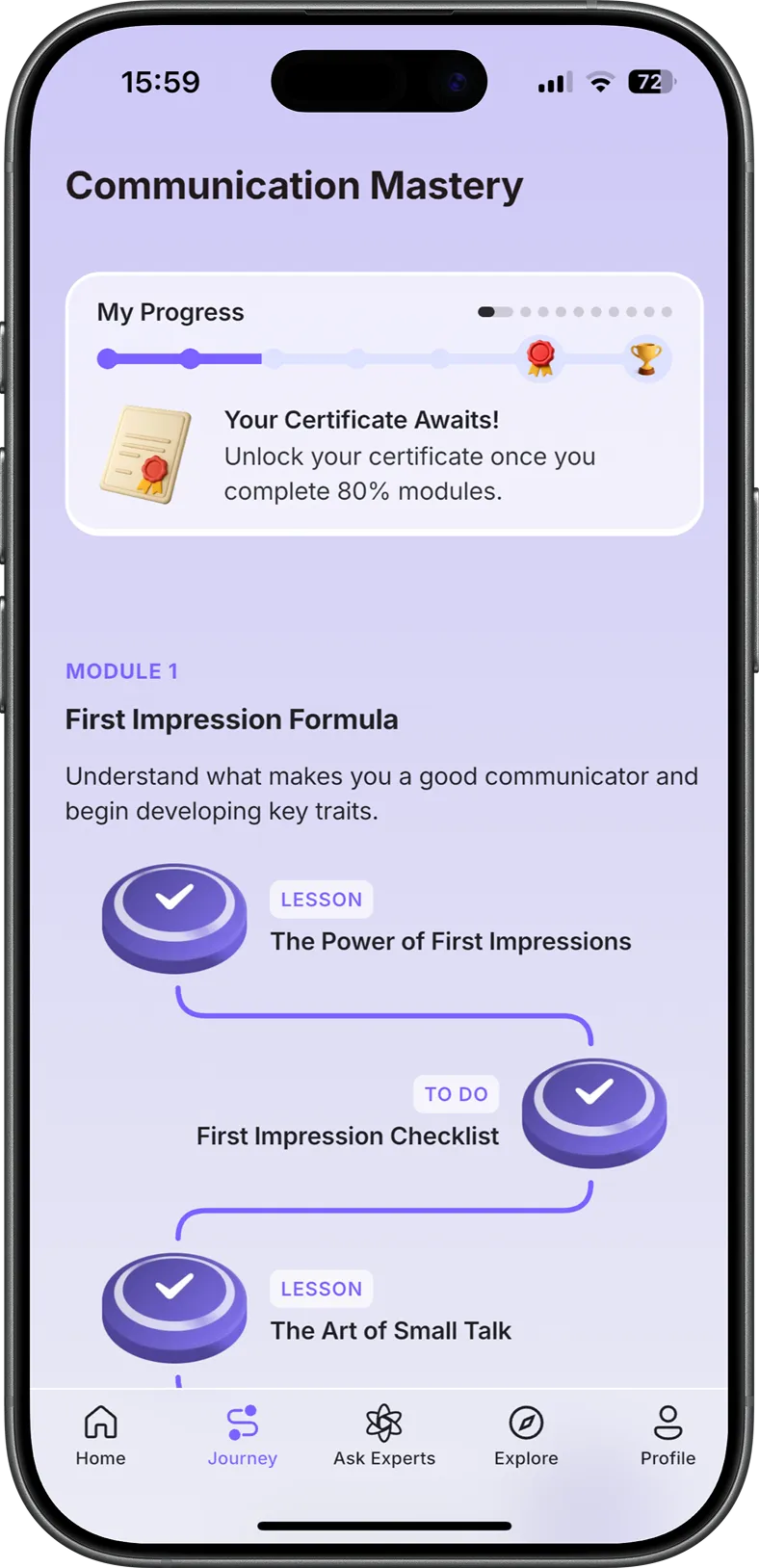
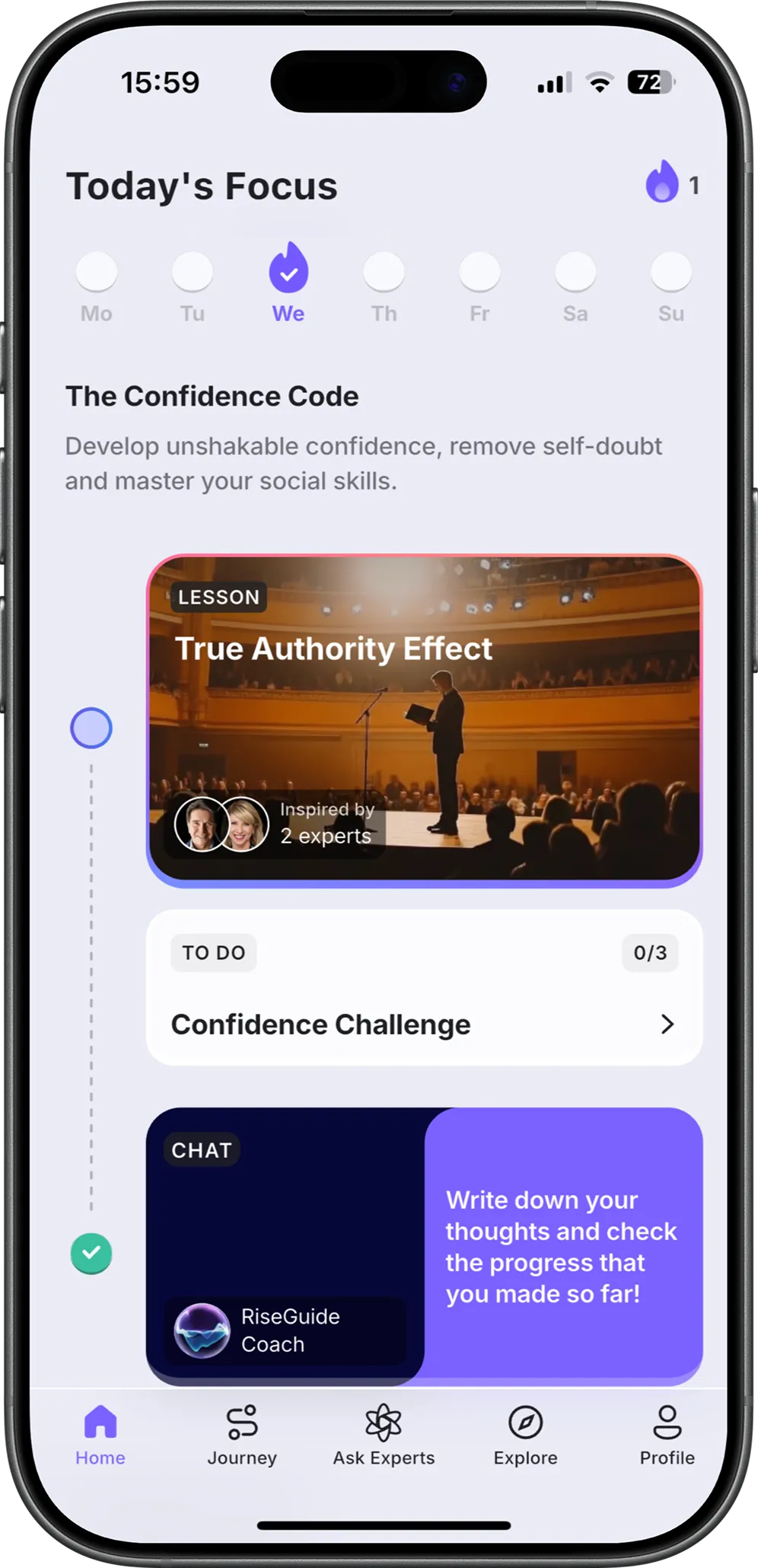
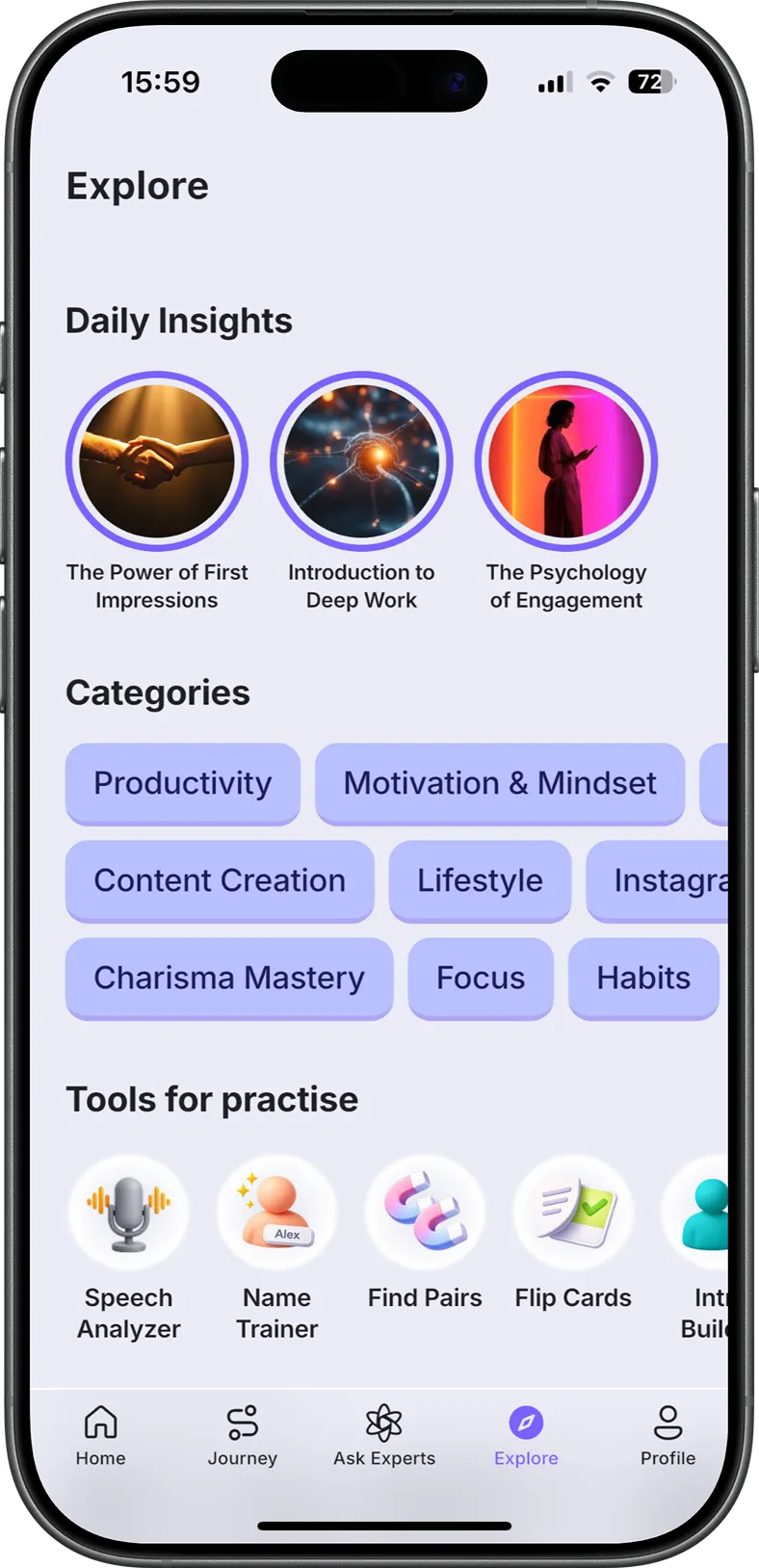
Whichever you pick, the habit matters more than the app. Build it into your day with our team's morning routine checklist or a few minutes before bed, keep it small, and give it a few weeks before you judge it. If stress has already tipped into burnout, which our team covers in signs of burnout, a daily practice is a small, steady start rather than a cure, and it's worth pairing with real rest. RiseGuide isn't a meditation app, but if you want help turning that kind of practice into a habit that holds, its short, expert-led lessons on focus and mindset can sit alongside whichever app you choose.
Mindfulness is wider than meditation, and so are the apps that help with it. Some teach the skill, and others fold a moment of awareness into eating, focusing, picking up your phone, or noticing what's good in your day. Start with the one that matches where you want more attention, keep it small enough to repeat, and let the practice itself do the work over time.