RiseGuide Team
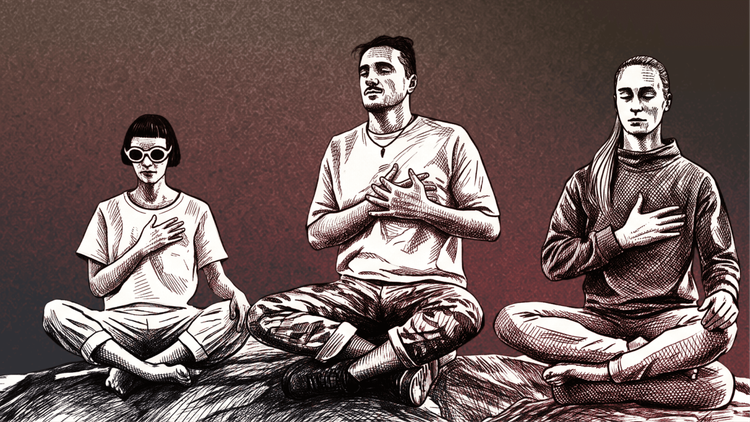
To practice mindfulness, pay attention to the present moment on purpose and without judging it — noticing your breath, your body, and what is around you instead of running on autopilot. Mindfulness is a simple mental skill with roots in Buddhist practice and modern stress research, and studies link regular practice to lower stress, better sleep, and less anxiety. You can begin with a few minutes a day: sit quietly, follow your breathing, and gently bring your attention back each time it wanders.
Most of us spend a large part of the day somewhere other than where we are — replaying a conversation, planning dinner, half-reading a message while someone talks. Mindfulness is the practice of coming back to the present on purpose, and it has moved from meditation halls into hospitals, schools, and workplaces because it turns out to be a learnable skill with real effects. This guide covers what mindfulness is, where it comes from, what the research says it does, and how to begin.
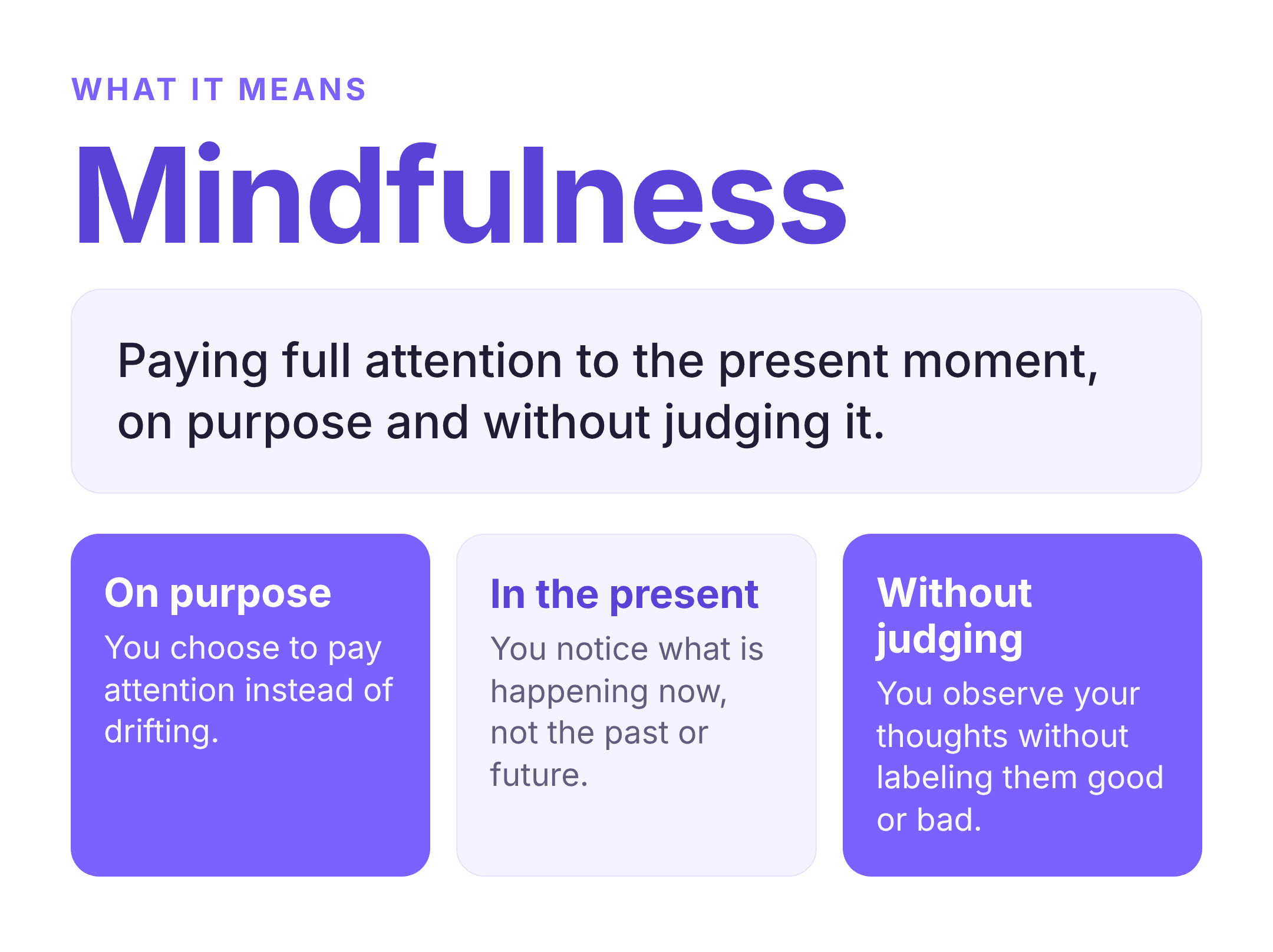
Mindfulness is the practice of paying full attention to the present moment, on purpose and without judging it. The most widely used mindfulness definition comes from Jon Kabat-Zinn, the scientist who brought the practice into mainstream medicine: "Mindfulness means paying attention in a particular way: on purpose, in the present moment, and nonjudgmentally."
Break that down and the mindful meaning is clear. "On purpose" means you choose to pay attention rather than drift. "In the present moment" means you notice what is actually happening now, not what already happened or what might. "Nonjudgmentally" means you observe your thoughts and feelings without labeling them good or bad. Put together, the mindfulness meaning is simply this: noticing your own experience as it happens, instead of running on autopilot.
The practice has deep roots in Buddhist meditation, going back more than 2,000 years, but its modern, secular form is more recent. In 1979, Jon Kabat-Zinn created Mindfulness-Based Stress Reduction (MBSR), an eight-week program at the University of Massachusetts Medical School that taught mindfulness to patients dealing with chronic pain and stress. MBSR stripped the practice of religious framing and studied it like any other health method, which is how mindfulness entered psychology, medicine, and eventually everyday life.
A few common misreadings get in the way before people even start.
It is not about emptying your mind. Your mind will keep producing thoughts, and that is fine. Mindfulness is noticing when your attention has wandered and bringing it back, over and over. The wandering is not failure; catching it is the practice.
It is not a religion, and you do not have to adopt any beliefs to do it. The modern, secular form used in clinics and studies is a mental skill, open to anyone.
It is not only about relaxation. Calm is often a side effect, but the aim is clear, present attention. Some sessions feel restful and some feel restless, and both still count as practice.
The benefits of mindfulness are among the most studied in modern psychology, and the evidence is strongest for a few specific areas. According to the U.S. National Center for Complementary and Integrative Health, research shows that mindfulness-based programs can help with stress, anxiety, and depression, work as well as some established therapies for those, and are linked to lower blood pressure and better sleep quality.
Those are meaningful, everyday outcomes. Less reactivity under stress, steadier sleep, and a calmer response to anxious thoughts are the kinds of changes regular practice tends to bring. Mindfulness is not a cure-all, and it works best alongside other healthy habits rather than in place of medical care, but as a low-cost daily practice the return is well documented.
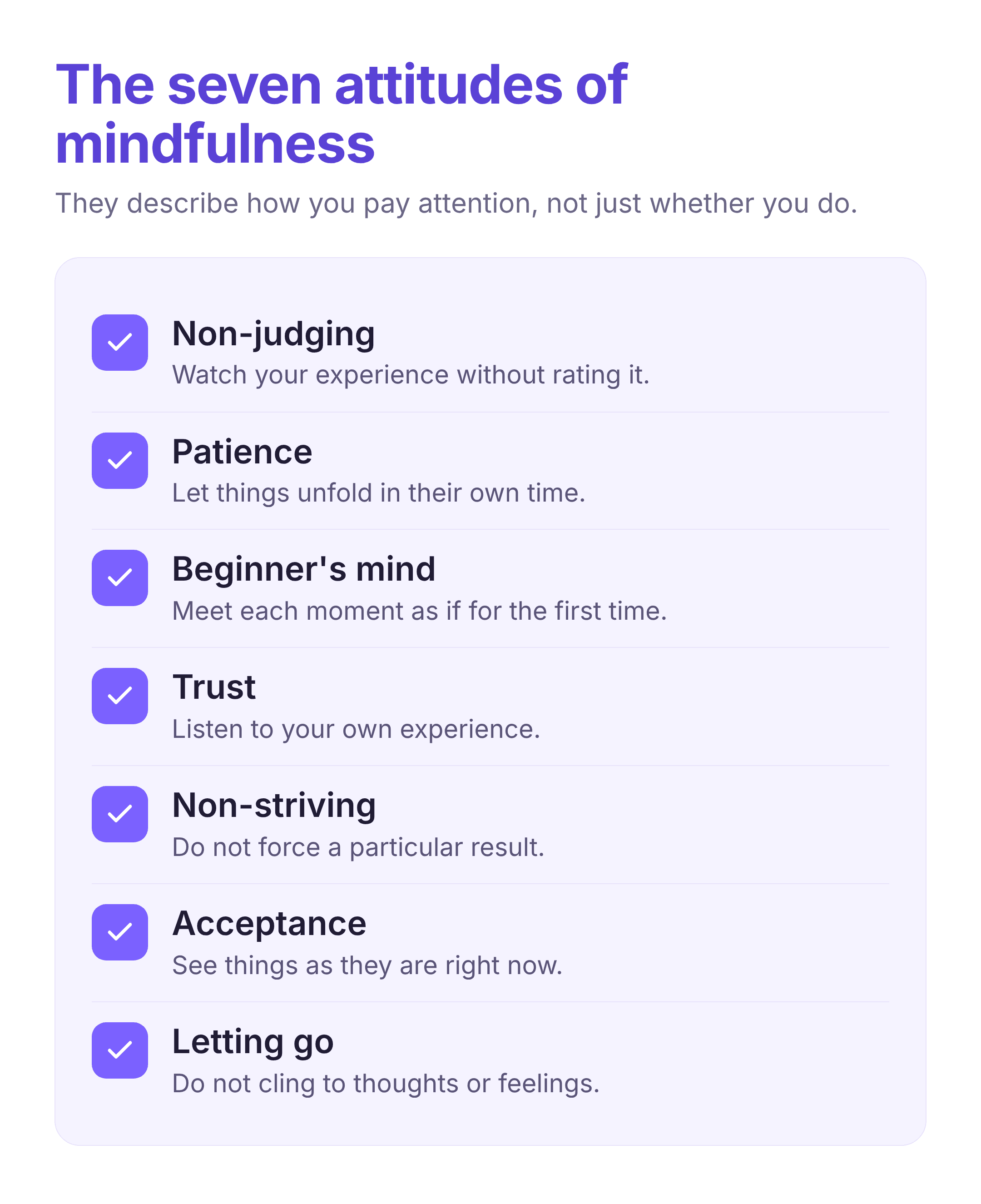
Kabat-Zinn described a set of attitudes that make the practice work. They answer a common question about the "pillars" of mindfulness, and they matter because mindfulness is as much about how you pay attention as whether you do.
The core attitudes are non-judging (watching your experience without rating it), patience (letting things unfold in their own time), beginner's mind (meeting each moment as if for the first time), trust (listening to your own experience), non-striving (not forcing a particular result), acceptance (seeing things as they are right now), and letting go (not clinging to thoughts or feelings). You do not master these before you start; you build them by practicing.
Here is how to practice mindfulness in a way that fits a normal day. There are two kinds of practice, and beginners do best with a little of each. Formal practice is setting aside a few minutes to meditate. Informal practice is bringing attention to something you already do, like eating or walking.
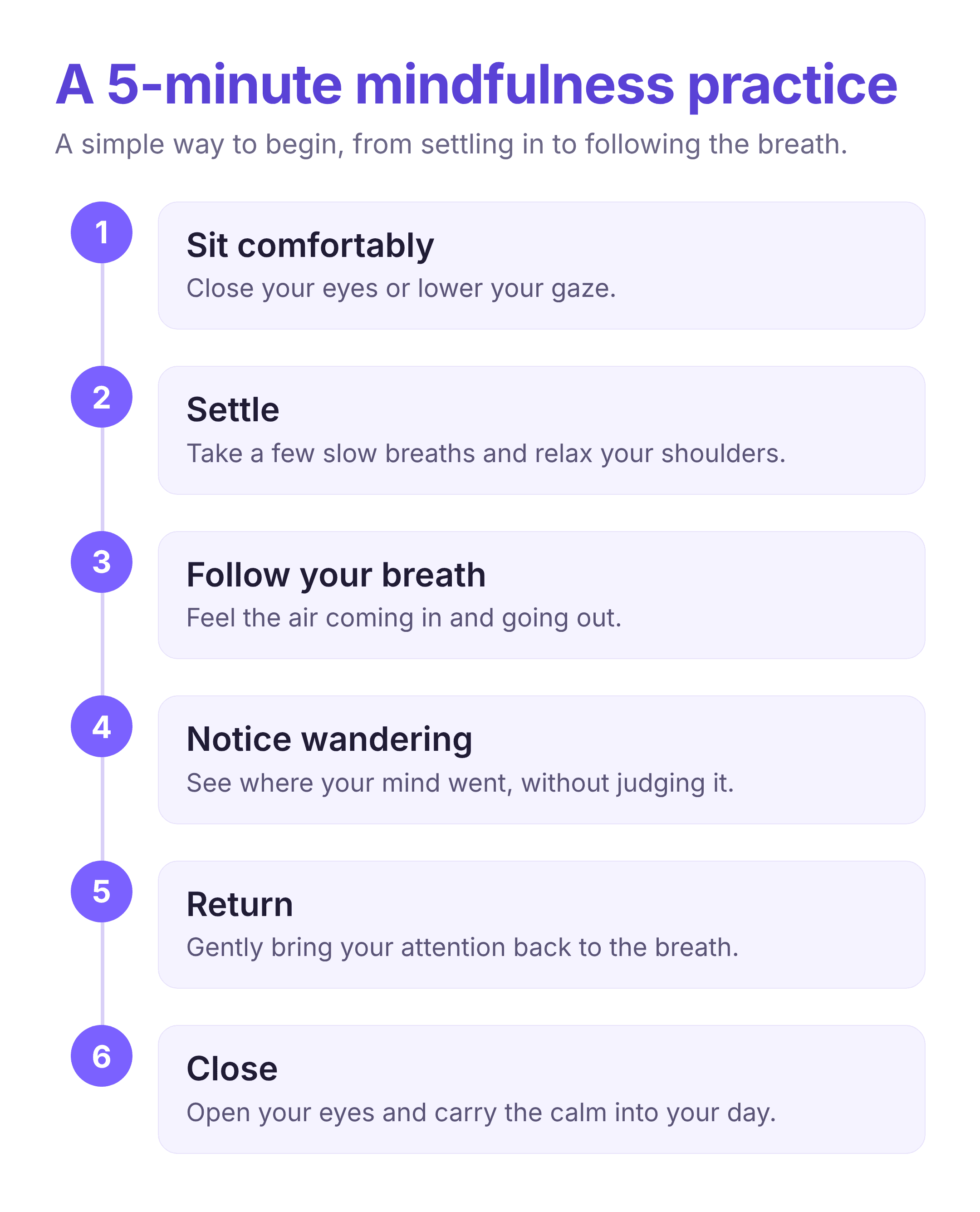
For mindfulness for beginners, a short breathing practice is the simplest place to start. Sit comfortably, close your eyes or lower your gaze, and bring your attention to your breath — the feeling of air coming in and going out. When your mind wanders, which it will, notice where it went and gently return to the breath. Five minutes is plenty at first.
A few other simple mindfulness techniques build the same skill:
Body scan. Move your attention slowly through your body from head to toe, noticing sensations without trying to change them. This is a core part of mindfulness meditation and a good way to reconnect with the present.
Mindful eating. For one meal or even a few bites, put the phone away and notice taste, texture, and smell. Everyday actions are some of the easiest places to practice.
The 3-3-3 grounding method. When your mind is racing, name three things you can see, three you can hear, and move three parts of your body. It pulls your attention back to the present in under a minute.
Pairing a short session with something you already do — a habit you have built into your morning routine, for example — makes it far more likely to stick. Over time, the same attention you build in practice makes it easier to improve focus during the rest of the day, and to notice automatic reactions, like the urge toward people-pleasing, before you act on them.
Mindfulness is a plain skill with a long history and a solid research base: pay attention to the present, on purpose, without judging it. You do not need special equipment, a quiet retreat, or hours a day. A few minutes of breathing practice, plus a habit of noticing when you have drifted and coming back, is enough to start. Pick one small practice, do it for a week, and see what you notice.
Start with five minutes of breathing: sit comfortably, follow the feeling of your breath, and bring your attention back each time it wanders. Add informal practice by paying full attention to one everyday action, like eating or walking, without your phone.
It is a quick grounding method: name three things you can see, three things you can hear, and move three parts of your body. It brings your attention back to the present when your mind is racing, and takes under a minute.
Eating a meal slowly and noticing the taste, smell, and texture, with the phone away, is a simple example. So is pausing to feel three full breaths before a stressful meeting.
Non-judging, patience, beginner's mind, trust, non-striving, acceptance, and letting go. They describe how to pay attention, and you build them through practice rather than learning them in advance.
No. Mindfulness has roots in Buddhist meditation, but the modern form used in clinics and studies is secular. You can practice it whatever your beliefs are.