RiseGuide Team

You need both, but they do different jobs. Hard skills are the measurable, job-specific abilities that get you hired; soft skills are the transferable people-and-thinking skills that get you promoted and keep you employable as the technical work changes. The practical move is to build enough hard skills to prove you can do the job, then invest steadily in soft skills, especially communication, which recent research links to faster promotions and longer, more resilient careers.

Every job description is really a list of two kinds of ability. One kind fits on a test result or a portfolio. The other shows up in how someone runs a tense meeting, explains a complicated idea simply, or keeps a team steady when a project goes sideways. The first is hard skills; the second is soft skills. The line between them decides a surprising amount: who gets the offer, who gets promoted, and who stays valuable when the tools change underneath them.
The difference comes down to two things: how measurable a skill is, and how well it travels between jobs.
Hard skills are the technical, job-specific abilities you can learn, test, and measure against a clear standard. They're usually tied to a particular role, and they're the easiest thing for an employer to screen for.
Soft skills are the behavioral and interpersonal abilities that shape how you work with people and handle situations. They're harder to measure objectively, they show up over time rather than on a test, and they transfer across almost any role or industry.
It's tempting to say hard skills are simply the ones you can put a certificate behind, but that test breaks down fast. You can take a course in communication or conflict resolution, and plenty of soft-skills certifications exist; they just tend to confirm that you completed the training, not that you've mastered the skill. A coding test or a language exam places you on a clear scale, while a certificate in listening can't really do the same. So measurability, not paperwork, is the cleaner dividing line.
Hard skills are usually tied to a specific tool, subject, or process. Common hard skills examples include:
Each of these has a fairly clear ladder from beginner to expert, and you can usually show where you stand on it.
Soft skills are the harder-to-measure abilities that shape how you work with everyone around you. Common soft skills examples include:
Notice that most of them are relational: they only really exist in how you deal with other people. That's also why they follow you from job to job while specific technical skills go out of date.
For years, the standard answer came as a tidy statistic: that 85% of career success comes from soft skills and only 15% from technical ability. It gets repeated as if a modern study at Harvard or Stanford established it. It didn't. The figure traces back to A Study of Engineering Education, a 1918 report by Charles Riborg Mann, and the Carnegie Foundation, which is often credited with it, has addressed the misattribution directly, explaining that the 85/15 split was extrapolated over the decades rather than proven by research.
The underlying instinct isn't wrong, though, and better recent evidence points in a similar direction with more nuance. A LinkedIn analysis of member profiles found that employees who listed both hard and soft skills were promoted 8% faster than those with hard skills alone, and that soft skills like organization, teamwork, problem-solving, and communication were linked to promotions that came 11% faster. The economists who ran the analysis summed it up simply.
"Even if you can't easily measure the skill itself, they still make a measurable difference."
The larger study came from Harvard Business Review in August 2025. Looking at more than 1,000 occupations and roughly 70 million job transitions, researchers found that workers with a broad base of foundational skills, such as communication, teamwork, and basic reading and math, learned faster, earned more, advanced further, and were more resilient when their industries changed than people who had only a narrow, specialized set. The deep specialist can be more fragile than the well-rounded generalist when the ground shifts.
Put together, the picture is less about ranking the two and more about how they work in sequence. Hard skills tend to get you hired because they're the easiest thing to prove, and they carry real weight early in a career. Soft skills tend to determine what happens after that.
Here's the reason soft skills compound over a career: technical knowledge has a shorter and shorter shelf life. A specific tool, framework, or process you master today may be dated in a few years, and the HBR research above is essentially an argument that the professional skills which survive that churn are the human ones. You relearn tools many times over a working life; you rarely have to relearn how to listen, explain, or work through a disagreement.
Of all of them, communication tends to give the biggest return, because it multiplies the value of everything else you know. Warren Buffett has put it about as plainly as anyone.
"You can improve your value by 50 percent just by learning communication skills."
The encouraging part is that soft skills are learnable, not fixed traits you either have or don't. They improve the same way hard skills do, through examples, feedback, and steady practice, whether that's getting more comfortable with small talk or sharpening the thinking skills behind good judgment. The harder part is that they rarely come with a syllabus, so most people never practice them on purpose.
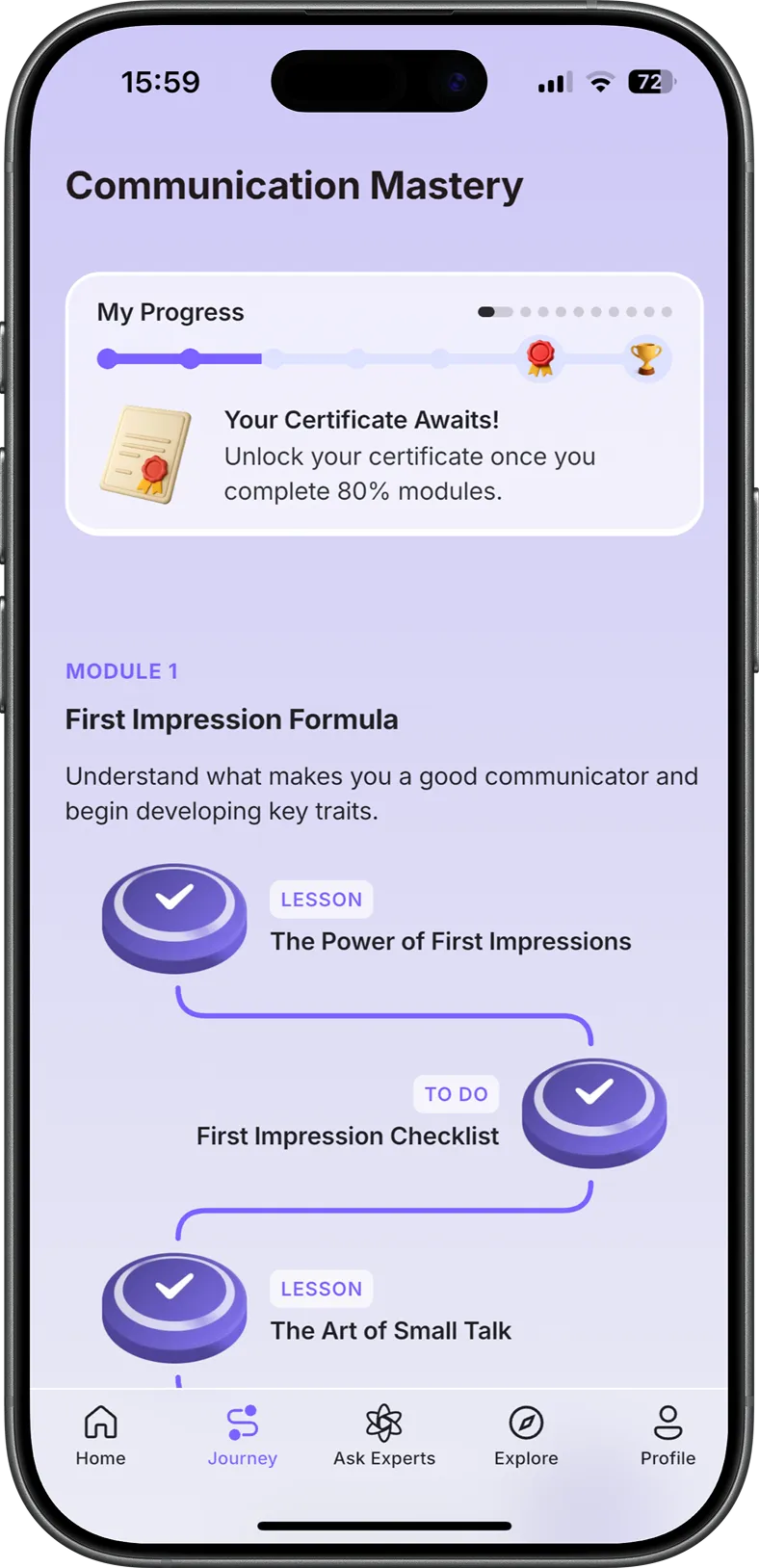
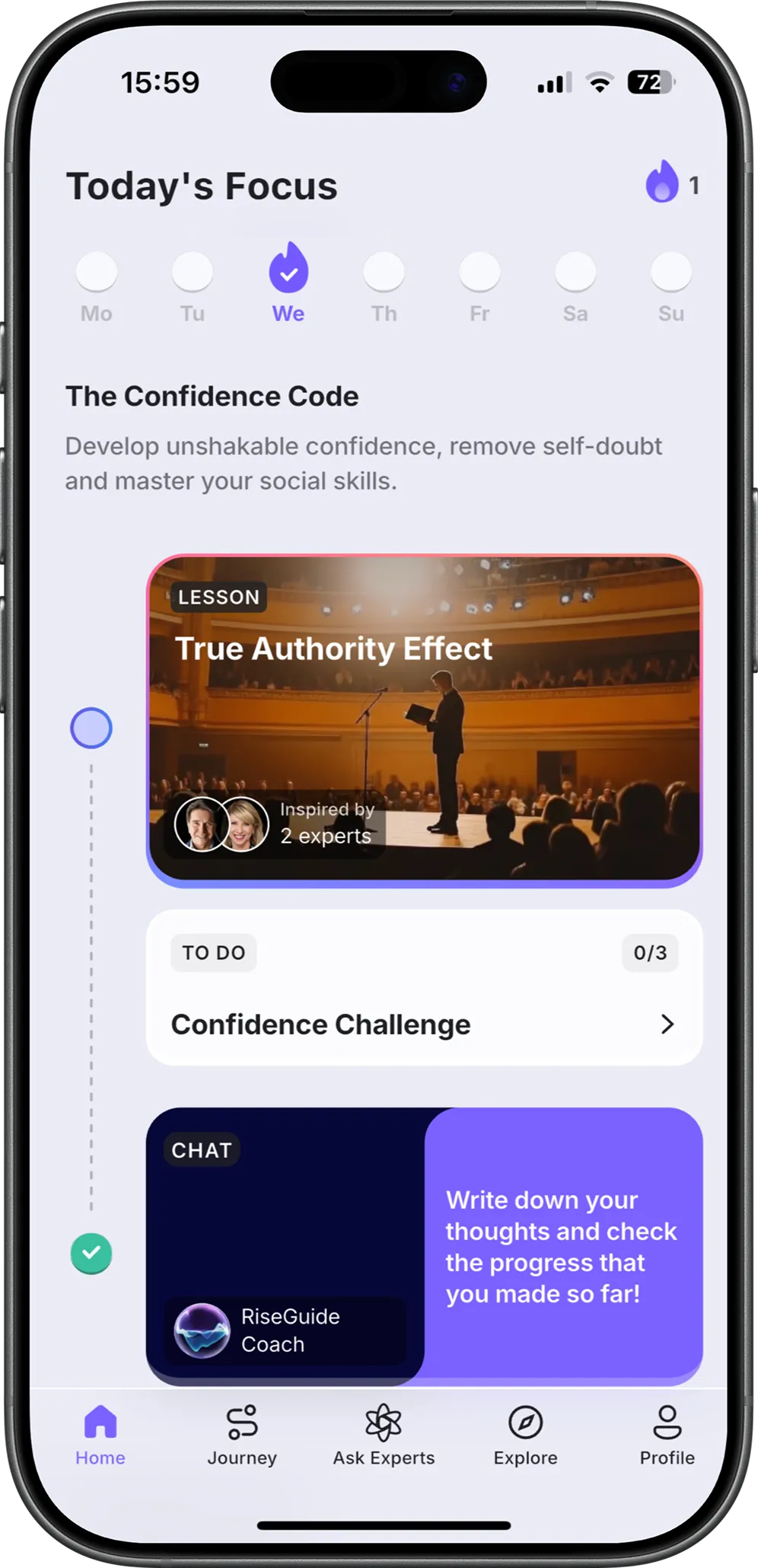
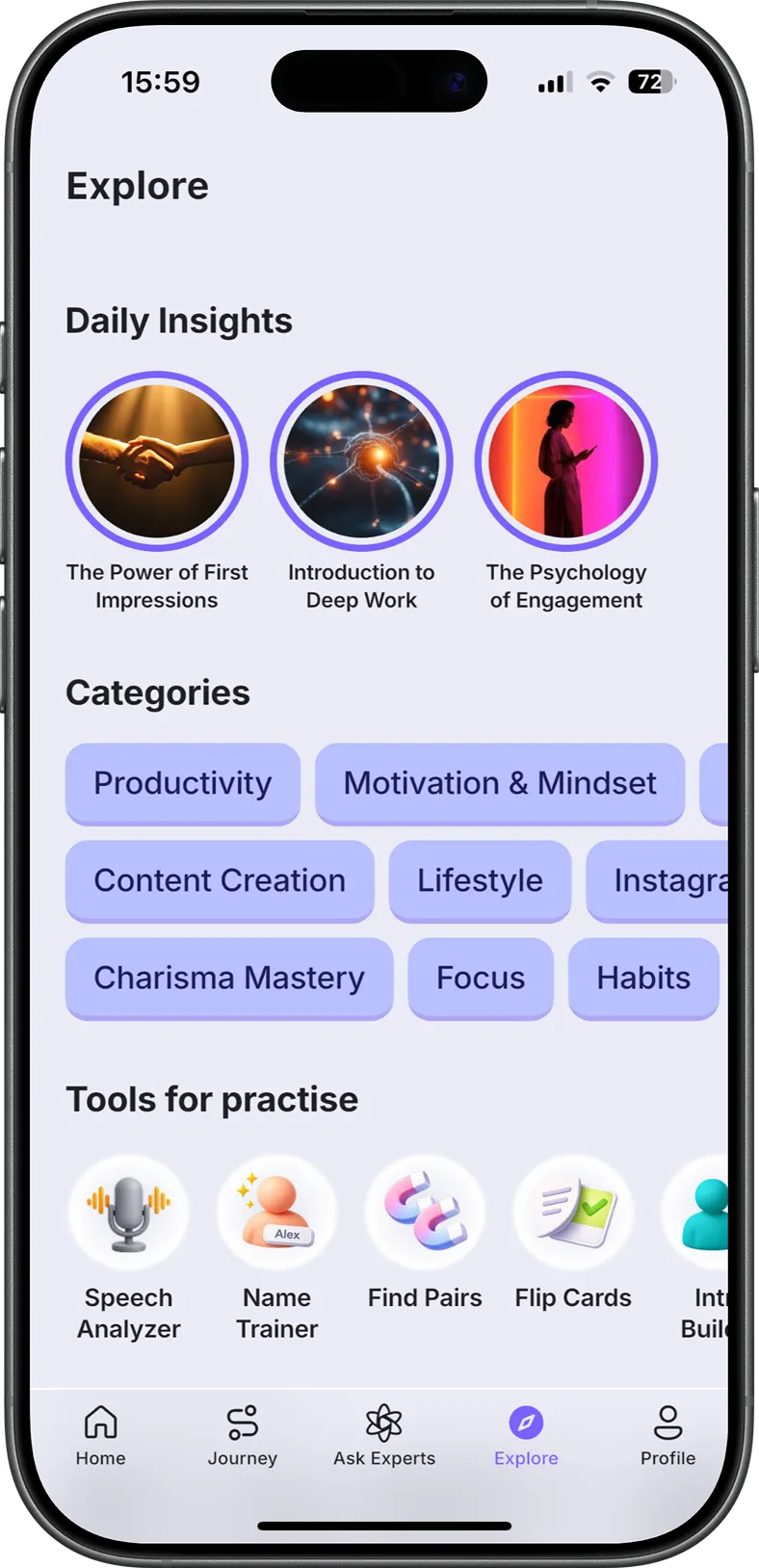
If you want that structure for the highest-leverage one, RiseGuide's Communication Mastery journey breaks it into short daily lessons built from expert insights, so you practice speaking and listening instead of only reading about them.
Soft skills and hard skills aren't really rivals, and the smarter move is to stop ranking them and start sequencing them. Build enough hard skills to get hired and prove you can do the work, then invest steadily in the human skills that decide how far the work takes you. The technical requirements of your job will keep changing, and how well you communicate, adapt, and work with other people is what carries across all of it.
Hard skills are teachable, measurable abilities tied to a specific job, like coding, accounting, or a second language. Soft skills are how you work with people and adapt, like communication, teamwork, and problem-solving. Most jobs need a mix of both.
Hard skills: data analysis, graphic design, financial modeling, software development, operating equipment. Soft skills: listening, giving feedback, conflict resolution, adaptability, and time management. A quick test is whether the skill can be measured on a clear scale (hard) or mainly shows up in how someone behaves over time (soft).
Neither on its own. Hard skills tend to get you hired because they're easy to verify, while soft skills tend to get you promoted and keep you employable as technical demands change. People who have both advance faster than people with hard skills alone.
Yes. Soft skills improve through examples, feedback, and repetition, just like technical ones. Communication in particular responds well to deliberate practice, which is why it's usually the best place to start.