
RiseGuide Team

When most people prepare for an interview, they focus on the facts: researching the company, choosing a few stories to tell, and writing down questions to ask at the end. All of that is worth doing, but it leaves out something that has just as much influence on the result, which is how you actually come across in the moment you start speaking.
If you would rather work from a checklist, download the printable checklist and STAR story bank: it covers what to do the evening before and on the day, plus a STAR template to prepare your stories. Then use the guide below to go deeper on each step.
The trouble with the usual advice is that it prepares you for the content of an interview and almost nothing else. You can have well-chosen examples ready and still struggle if your voice tightens, your answers come out rushed, or your nerves get the better of you in the first minute. Interviewers form an impression early in the conversation, and that impression tends to shape everything that follows. In a field study of interviewer behavior, researchers found that those early judgments influenced the questions interviewers asked and how they interpreted the answers they heard afterward.
This matters because the part people find hardest is rarely the content. Around 93% of candidates report feeling some interview anxiety, and that anxiety affects delivery far more than it affects whether you know your own experience. Most guides treat this in a single line, if at all. The approach below is different. It walks through preparing for an interview step by step, and it treats your nerves and your delivery as things you can practice and improve, not as fixed traits you are stuck with.
You don’t need to read everything the company has ever published. What helps more is being able to answer three questions clearly: why this company, why this role, and why you. Decide on the core points you most want the interviewer to remember about you, and then gather the right narratives that support them.
Amy Gallo, a contributing editor at Harvard Business Review, shared her job interview tips, where she recommends identifying three or four main messages you want to convey, and then crafting a compelling personal story around each one. Instead of relying on a single rehearsed script or a long list of facts, you use your company research to map out how your technical skills, people skills, and overall competence directly solve the organization's unique challenges. When you prepare this way, you create a toolkit of short, impactful stories that give your preparation clear direction and leave a highly relatable impression.
Interviewers often ask behavioral questions, which are questions that ask you to describe how you handled a real situation. These reward specific examples rather than general claims. A common way to structure your answer is the STAR method, which stands for Situation, Task, Action, and Result. It is a helpful framework, as long as you use it to organize a real story rather than to fill in a template, which tends to make answers sound stiff. The STAR method is globally adaptable to job interviews in different countries, whether American or Japanese job interviews.
Here is what each part covers:
Say you are asked about a setback you learned from. A STAR answer might sound like this: a launch of yours slipped two weeks before a big release (situation); you needed to keep the team steady and the client informed (task); you set a daily ten-minute check-in and sent the client one honest update (action); it shipped six days late with no surprises, and the client renewed (result). Told that way it takes under a minute, and the interviewer can follow it and repeat it later.
It helps to prepare a small set of stories you genuinely care about: one about a difficult decision, one about a disagreement, one about a setback you learned from, and one about a success you contributed to. Practice telling each in under two minutes so you can adapt it to whatever question comes up. The reason stories work better than plain facts is that they are easier for an interviewer to remember and to repeat to colleagues later.
Carmine Gallo, who explored the power of narrative frameworks for his book The Storyteller's Secret, makes the case for why this skill is worth the effort:
"The ability to sell our ideas in the form of story is more important than ever. Ideas are the currency of the twenty-first century. In the information age, the knowledge economy, you are only as valuable as your ideas. Story is the means by which we transfer those ideas to one another. "
Much of how to ace an interview comes down to having these stories ready, rather than searching for the perfect answer on the spot. They are also the backbone of good networking conversations, where a short, specific story does far more than a job title.
This is the step that standard checklists tend to skip. A well-prepared answer can still land poorly if you rush through it, fill the gaps with "um," or speak in a flat voice because you are nervous. The pace you speak at, the pauses you allow, and the warmth in your tone all carry part of your message.
Vanessa Van Edwards, a behavioral researcher who studies first impressions, explains that how people perceive you depends on two signals working together. One is warmth, which tells people they can trust you, and the other is competence, which tells them they can rely on you. She points to small, practical adjustments that help, such as slowing down your opening sentence, letting your voice fall at the end of a statement so it does not sound like a question, and allowing a short pause where you would normally hurry.
The important thing to understand about delivery is that you cannot improve it by reading about it. You improve it by speaking out loud and listening back to a recording of yourself, which is why short, regular practice works far better than a single rehearsal the night before.
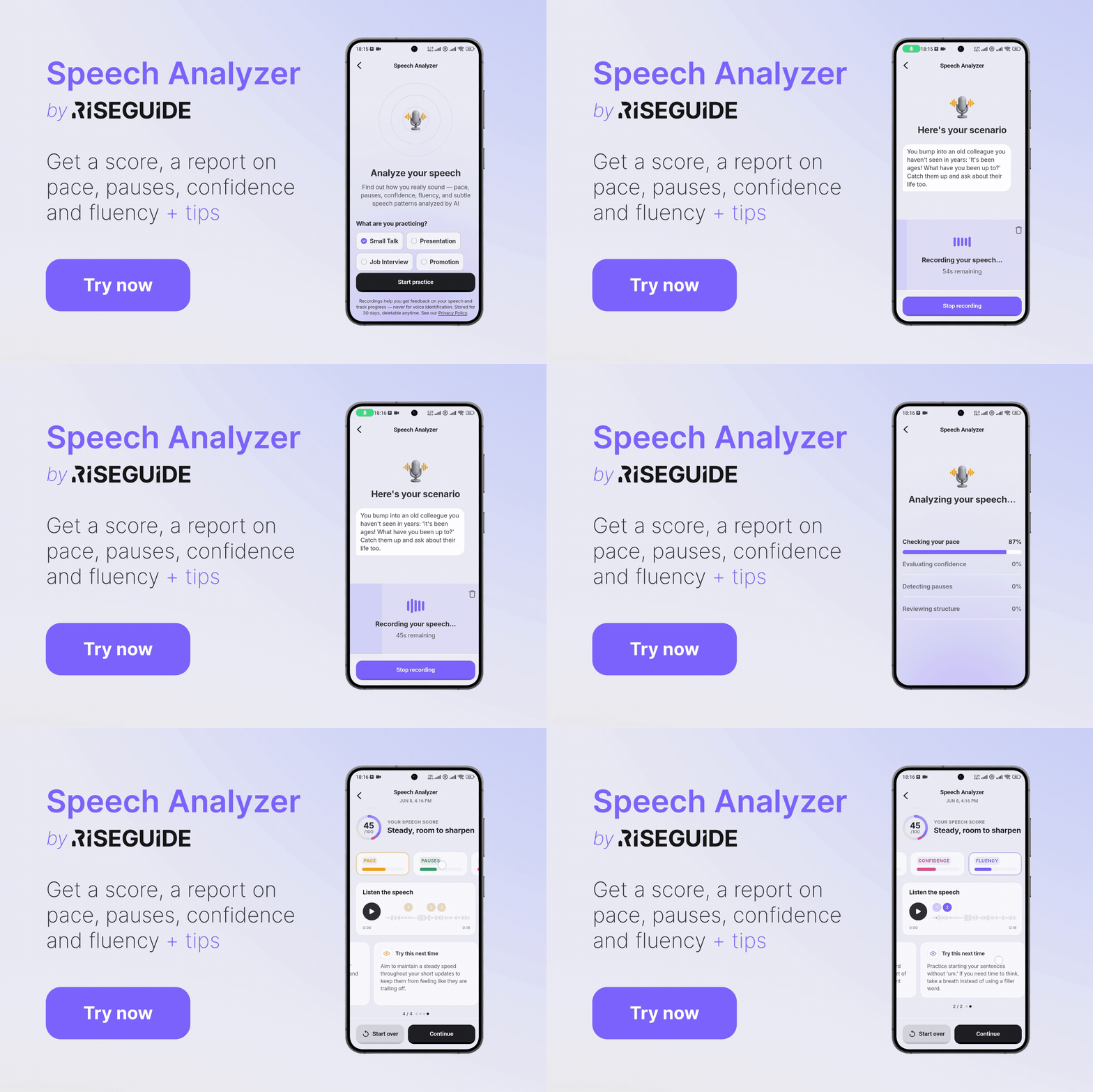
If your answers are strong but your delivery lets you down, that is a skill you can build with practice. RiseGuide's Speech Analyzer can help you train pace, pauses, confidence, and fluency, with tips for each and an overall score. Sign up to try now.
Feeling nervous before an interview is normal and does not mean you are unprepared. It simply means your body recognizes that the moment matters. The difficulty is that unmanaged interview anxiety can affect your voice and make your answers shorter than you intend. Research on anxiety in interviews has linked higher communication anxiety to lower interview performance, which is why having a way to settle yourself is part of preparing properly.
Matt Abrahams, a lecturer at Stanford Graduate School of Business, teaches a simple reframe. Because nervousness and excitement feel almost the same in the body, he suggests telling yourself that you are excited rather than anxious, which directs the same energy toward the interview instead of against it. It also helps to pair that reframe with two physical habits: breathing out for slightly longer than you breathe in for about a minute before you go in, and taking one slow breath before you begin each answer. Learning how to get over interview anxiety mostly comes down to rehearsing a routine like this until it feels automatic. It is also worth remembering that job interview anxiety is common enough that interviewers expect a little of it, and a steady voice matters far more to them than appearing completely relaxed.
The first thirty seconds set the tone for the conversation. A warm greeting, steady eye contact, good posture, and an unhurried hello all tell the interviewer that you are comfortable being there before you have answered a single question. The same signals shape any first impression, inside the interview or out.
The social psychologist Amy Cuddy is well known for the idea that standing in an open, confident posture before a high-pressure moment can change how confident you feel. It is worth being honest that the original claims about hormonal changes didn’t hold up in later replication attempts. The effect on how prepared you feel, though, is still useful, and it fits the wider point she makes in her book Presence about growing into confidence over time:
"Don't fake it till you make it. Fake it till you become it."
So it is worth taking the two minutes before you walk in to stand tall and breathe.
In RiseGuide, we have a lesson with more tips from Amy Cuddy for you to try.
A good interview feels more like a conversation than a test. That means listening closely to the question you are actually asked, rather than waiting for your turn to deliver a prepared answer. If a question takes you by surprise, a brief pause reads as thoughtfulness, and a simple line such as "that's a good question, let me think for a moment" gives you time while sounding composed.
If you stumble, the best thing you can do is reset calmly out loud, with something like "let me start that thought again." Interviewers rarely remember a small mistake for long. What they remember is how you handled it, and that ability to adjust in the moment is part of what good job interview preparation gives you.
Within a day of the interview, send a short thank-you note. Mention one specific thing from your conversation, such as a project the interviewer described or a challenge the team is facing, and restate in a sentence the main point you wanted them to remember about you. It’s a small gesture, and it keeps you fresh in their mind while they make their decision.
If you only have one evening to prepare, this is a sensible order to work through, and it covers the essentials of what to do before a job interview. You can also download it as a printable checklist to tick off, along with a STAR story bank to fill in.
People who seem naturally good at interviews have usually practiced the parts that others tend to overlook. They have told their stories out loud, built a routine for their nerves, and learned to listen rather than recite. None of that depends on a particular personality, and all of it improves with practice.
So the most useful question to ask yourself is a practical one: between now and your next interview, what will you actually sit down and practice?
If you would like to make confident communication a habit rather than something you scramble to prepare, the Communication Mastery journey on RiseGuide offers fifteen-minute daily lessons on speaking, first impressions, and charisma, all based on expert insights.