RiseGuide Team

Self-compassion means treating yourself with the same kindness you would offer a good friend who is struggling. Psychologist Kristin Neff describes it in three parts: self-kindness instead of harsh self-criticism, common humanity (remembering that everyone fails and hurts), and mindfulness (facing hard feelings without ignoring them or blowing them up). To practice it, notice when you are having a hard time, speak to yourself gently, remind yourself that you are not the only one who struggles, and try short exercises like a self-compassion break or a kinder letter to yourself. The short self-compassion test below helps you see where you stand right now.
Most people are harder on themselves than they would be on someone they love. After a mistake, it is common to criticize yourself and to assume that being tough is what keeps you on track. Self-compassion takes a different approach: responding to your own difficulty with understanding rather than judgment. It does not mean lowering your standards or making excuses, and research suggests it supports motivation and mental health more than self-criticism does. This guide explains what self compassion is, where the idea comes from, and how to practice it, with simple exercises and a short test you can take in a couple of minutes.
Self-compassion is treating yourself with the same care, patience, and understanding you would give a friend who is going through something hard. The idea was defined by Dr. Kristin Neff, a psychologist whose research made self compassion something that can be measured and practiced. In her framework, it has three parts that work together.
"Self-compassion simply involves doing a U-turn and giving yourself the same compassion you'd naturally show a friend." — Dr. Kristin Neff
It also helps to be clear about what self-compassion is not. It is different from self-pity, which tends to focus on your own problems in isolation from other people. It is not self-indulgence, because treating yourself kindly often means doing the harder, healthier thing. And it is not the same as self-esteem, which this guide returns to below.
Neff's definition of self-compassion rests on three elements: self-kindness (how you treat yourself), common humanity (how you understand your struggle in relation to other people), and mindfulness (how you face the feeling).
Self-kindness means being warm and patient with yourself when you fail or feel inadequate, instead of being self-critical. It is the difference between "I'm such an idiot" and "that was hard, and I did my best with what I knew." Being kinder does not mean ignoring the facts; it means dropping the added criticism. If your usual self-talk is harsh, our collection of self-worth quotes is one way to begin noticing a different tone.
Common humanity is remembering that failure, pain, and feeling inadequate are part of being human, not signs that something is uniquely wrong with you. When you are struggling, it is easy to feel singled out, as if everyone else has things figured out. Recognizing that the experience is shared can ease that sense of isolation and make the feeling easier to manage.
Mindfulness here means holding a painful thought or feeling in balanced awareness, rather than avoiding it or being overwhelmed by it. It is hard to respond kindly to a feeling you will not acknowledge, and hard to think clearly about one that takes over your attention. Our guide to mindfulness explains how to build that steadier kind of attention.
Self-compassion is not only more pleasant than self-criticism; it also appears to help. In a 2019 review of 27 randomized trials, self-compassion programs produced moderate reductions in depression, anxiety, and stress. It also supports motivation, which is the quality people often worry they will lose by going easier on themselves. When a setback does not lead to harsh self-criticism, it is easier to look at what happened, learn from it, and try again, which tends to sustain motivation more reliably than fear of your own judgment.
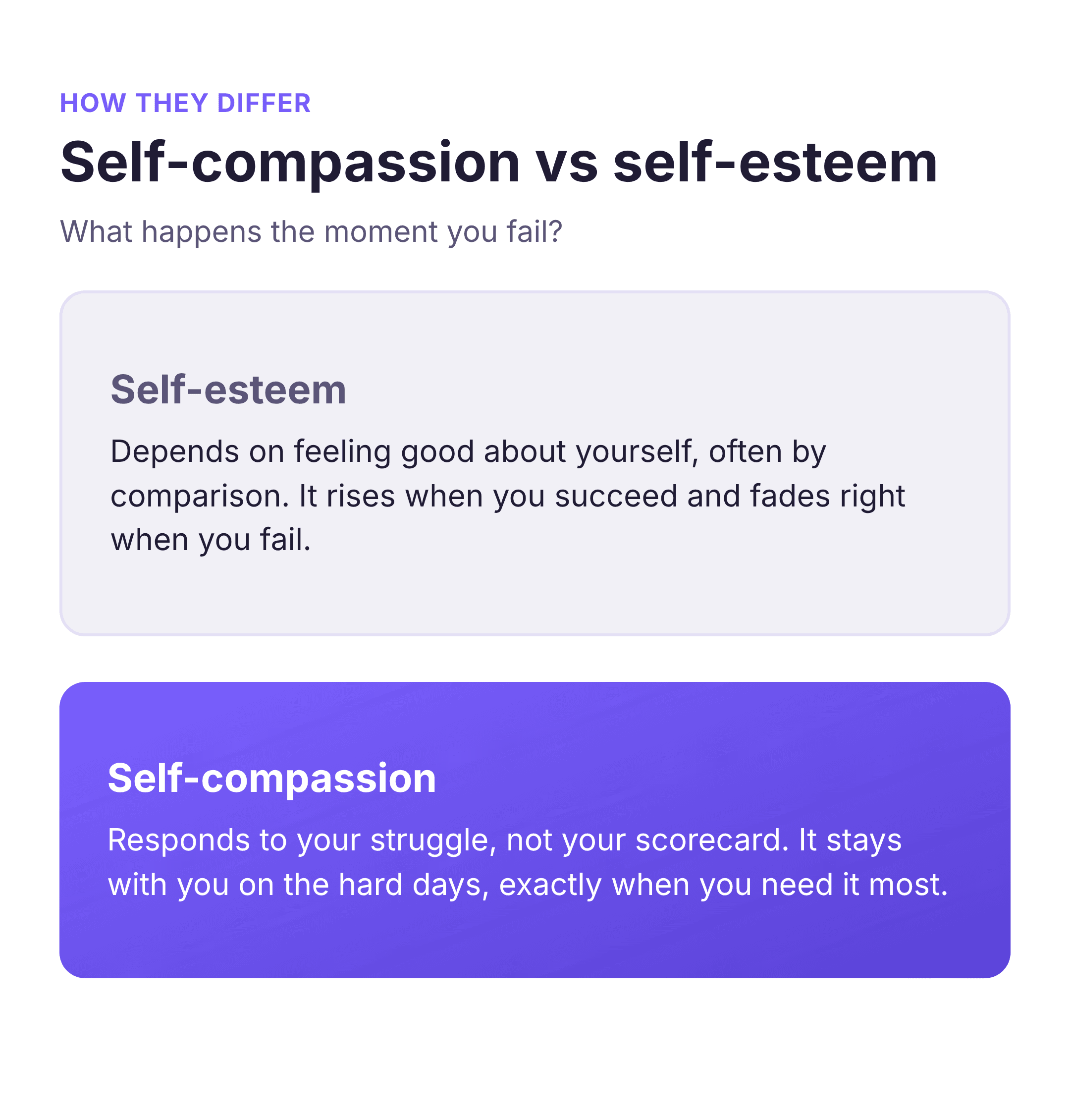
Self-esteem is how much you value yourself, and it usually depends on feeling good about yourself, often by succeeding or comparing well to other people. Because of that, it tends to be unstable: it rises when you do well and falls when you fail, which is often when support matters most. Self-compassion does not depend on judging your own worth. It is available on difficult days because it responds to the fact that you are struggling rather than to how well you are performing. The two can develop together, and if self-worth is what you want to work on, our post on self-worth covers it in more detail.
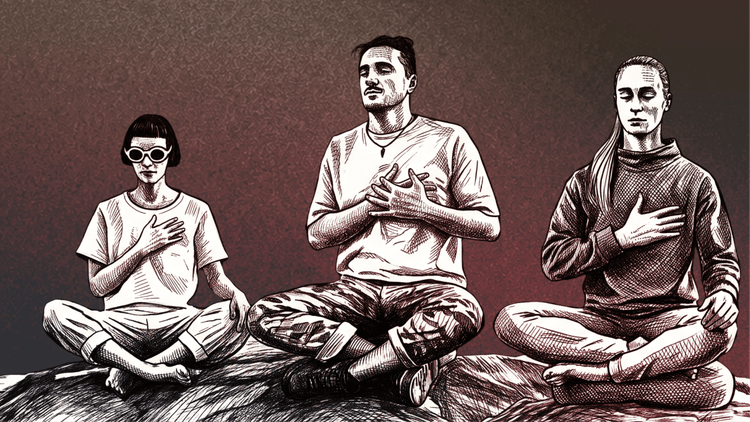
Self-compassion is a skill, which means it grows with practice. A few simple self-compassion exercises to try:
Several of these pair well with a steadier attention practice, so our guide to mindfulness exercises is a useful next step. If building gentler self-talk is something you want to work on a little each day, RiseGuide's short lessons on mindset can give you a place to practice it.
This short self-compassion test gives you a quick read on how you tend to treat yourself.
This test is a short self-assessment for personal reflection. It is not an official or validated psychological test and does not diagnose anything. For a full, research-backed measure, see the Self-Compassion Scale, the validated questionnaire behind much of Dr. Neff's research, or take Dr. Neff's official self-compassion test.
Self-compassion is less a fixed personality trait and more a habit you build through practice. Start with whichever exercise feels easiest, such as the self-compassion break, a letter to yourself, or catching a harsh thought and softening it. Wherever your test score falls today, it can change, and the practice usually gets easier the more you return to it.
Self-kindness (treating yourself warmly instead of harshly), common humanity (remembering that everyone struggles), and mindfulness (facing hard feelings in balanced awareness). Kristin Neff defined these three elements, and they work together.
No. Self-esteem depends on evaluating yourself positively and tends to fall when you fail. Self-compassion responds to the fact that you are struggling rather than to how well you are doing, so it is still available on difficult days.
Many people were taught that self-criticism keeps them disciplined, so being kind to themselves can feel like lowering their standards. It takes practice to see that encouragement tends to motivate more reliably than fear.
Begin with one short exercise, like the self-compassion break, and use it the next time you have a hard moment. Small, repeated practice builds the habit faster than waiting for a big change.