RiseGuide Team
 FREE GUIDE with any plan: the First Impression FormulaClaim the offer
A resignation letter only needs a few short lines: a sentence saying you are resigning, your last working day (usually two weeks from the day you tell your manager), a brief thank-you, an offer to help with the handover, and your signature. A two weeks notice letter is the same document, named for the notice period it states. The formal version suits a traditional workplace, and the warmer, casual version suits a relaxed one, with the reason you are leaving left out of both. It helps to tell your manager in a conversation first, then send the letter the same day so there is a clear written record of your last day.
Leaving a job can feel like the hardest message you will ever send, even when you are sure about the decision. The letter itself is the easy part. A resignation letter is a short, formal note that puts your departure in writing: it confirms that you are leaving and when your last day will be, so your manager and HR have a clear record. It is not the place to explain everything or settle scores. Most people only write a handful of these in a lifetime, so it is normal not to know the format by heart. Below are ready-to-use templates for a few common situations, a plain two weeks notice example, and a short guide to resigning in a way that keeps your working relationships intact.
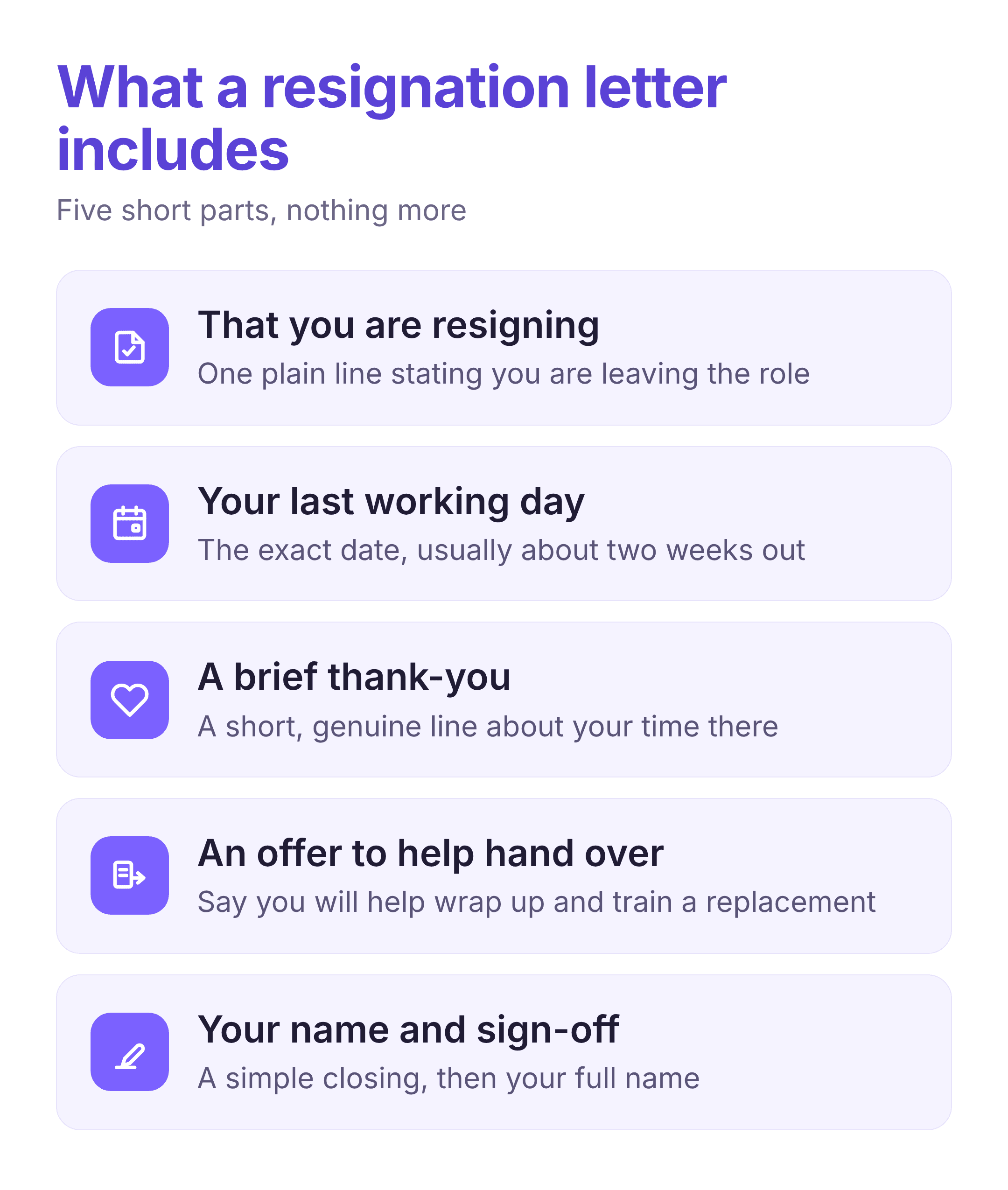
A good resignation letter is short. It has one job: to confirm, in writing, that you are leaving and when. You can write the whole thing in five or six lines. Here is what belongs in it.
That is the entire letter. You do not owe anyone a detailed reason, and a resignation letter is not the place for feedback or complaints. A resignation letter, sometimes called a letter of resignation, follows the same shape whether you print it or send it by email.
Start from one of the two templates below and change the names, dates, and the thank-you line to fit your situation. Knowing how to write a resignation letter is mostly about starting from a template like this and changing a few details. The formal resignation letter suits a corporate or traditional workplace. The casual version suits a smaller or more relaxed team where you are on first-name terms with your manager. Both say the same things; only the tone changes, and either one works as a professional resignation letter for almost any office job.
Dear [Manager's name],
I am writing to formally resign from my position as [job title] at [company name]. My last working day will be [date, usually two weeks from today].
Thank you for the opportunities I have had during my time here. I have learned a great deal, and I am grateful for your support.
Over the next two weeks, I will do everything I can to wrap up my work and help with a smooth handover. Please let me know how I can make the transition easier.
Sincerely,
[Your name]
Hi [Manager's name],
I wanted to let you know that I am resigning from my role as [job title]. My last day will be [date].
I have really valued my time on the team, and I am thankful for everything I have learned working with you.
I am happy to help hand things over and make the next couple of weeks as smooth as possible. Just let me know what would help.
Thanks for everything,
[Your name]
Before you send either one, read the room. Look at how people write to each other where you work, the tone of your manager's own emails, and the way the company sounds on its website and social channels, then match it. A buttoned-up law firm and an early-stage startup expect very different letters, and the closer yours sits to your workplace's normal tone, the more natural it reads.
Sometimes you want the shortest possible version, with no brackets to fill in. Here is a short resignation letter example, written out in full, for someone leaving a marketing role.
Dear Priya,
I am resigning from my position as marketing coordinator at Brightside Media. My last working day will be Friday, May 16.
Thank you for the past two years. I have grown a lot in this role, and I appreciate your guidance along the way.
I will finish my current projects and prepare handover notes before I leave, and I am glad to help however I can in the meantime.
Best,
Jordan Lee
Notice what this example leaves out on purpose: no reason for leaving, no feedback, nothing negative.
A two weeks notice letter is just a resignation letter that gives your employer two weeks of warning before you go. Two weeks is the customary notice period in the United States. It is a professional courtesy rather than a strict rule: in most jobs, employment is presumed at-will, and you are under no legal obligation to give notice at all. Even so, giving notice protects your reputation and your references, so it is worth doing unless your situation makes it impossible.
Here is how to write a two weeks notice without overthinking it. Use either template above and make sure the date you name is about two weeks ahead. Count working days, check your contract or employee handbook for any longer notice your role requires, and give the letter to your manager in person or on a call before you send it. Here is a plain two weeks notice template you can copy:
Dear [Manager's name],
Please accept this letter as my two weeks notice. I am resigning from my role as [job title] at [company name], and my last day will be [date, two weeks from today].
Thank you for the chance to be part of the team. I will use my remaining time to finish my work and support a smooth handover.
Sincerely,
[Your name]
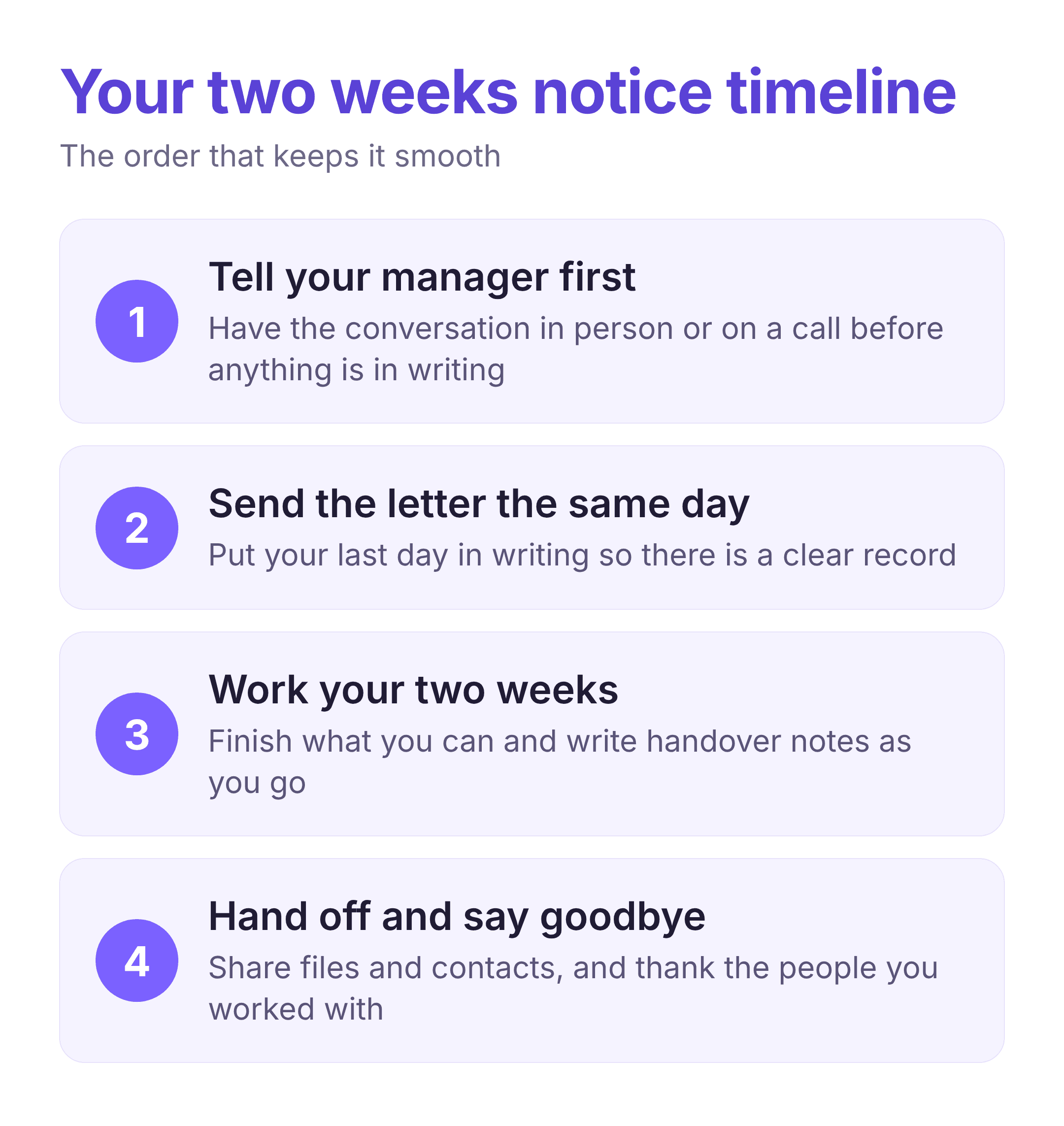
The letter is only part of leaving well. How you deliver it, and how you behave in your final two weeks, is what people remember. These steps are worth doing in order.
Ask for a short private conversation and tell your manager you have decided to leave before any letter lands in their inbox. Hearing it from you directly, rather than reading it, is a basic courtesy, and it keeps the news from reaching them secondhand. Keep it brief and calm: you have decided to move on, your last day will be the date you have chosen, and you wanted to tell them yourself. This is a hard conversation, and it is worth preparing for. If handling tense or high-stakes moments is something you want to get better at, RiseGuide's Communication Mastery journey breaks skills like this into short lessons built from expert knowledge.
Right after the conversation, send your resignation letter so there is a written record of your last day. This is also when the formal two weeks notice is handed over. Putting it in writing the same day avoids any confusion later about when you gave notice.
You are not required to explain why you are leaving, and the letter should not try to. Whitnie Wiley, a leadership and career coach and one of our experts, describes a mid-career pivot as carrying your skills forward rather than starting over, and none of that longer story needs to go in a resignation letter. A simple "I have decided to take a new opportunity" is enough.
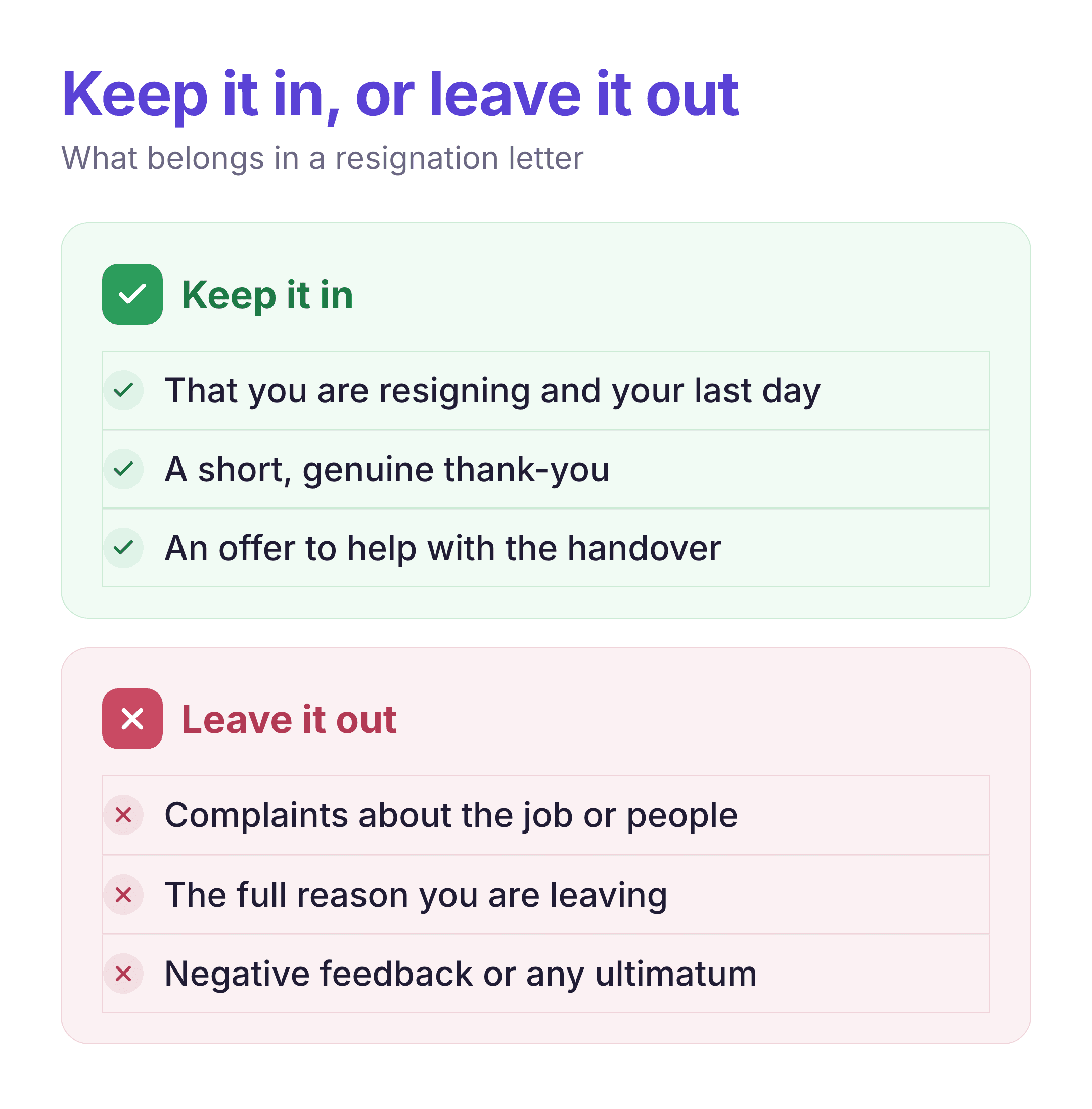
Use your final weeks to wrap up projects, write clear handover notes, and stay as helpful as you were on your best days. Keep the letter clean, too: leave out complaints, the full reason you are leaving, and any feedback or ultimatums, however tempting it feels in the moment.
A few situations do not fit the standard two-week script.
As you line up what comes next, the same advice about matching a company's tone applies to your application. Our cover letter templates show how to do it for the job you are moving toward.
Resigning is mostly about tone. Pick the template that matches your workplace, name your last day, thank the people worth thanking, and offer to help on your way out. Tell your manager yourself before the letter arrives, and use the two weeks after it to leave your work and your relationships in good shape.
State that you are resigning, give your last day, add a short thank-you, offer to help with the handover, and sign your name. That is the whole letter. The templates above give you wording you can copy and adjust.
Leave out complaints, criticism of people or the company, the detailed reason you are leaving, and anything that sounds like an ultimatum. A letter of resignation can become part of your employment file, and a calm, brief one protects your reference.
In most US jobs, no law requires it, but two weeks is the standard courtesy and many employers expect it. Check your contract and employee handbook, since some roles ask for a longer notice period.
Either works. Many people prefer the start of a week so the handover can begin while the news is fresh, but what matters more is telling your manager in person before you send the letter.
It is fine to listen. A counteroffer is still an offer to weigh, so think about why you decided to leave in the first place before you answer. Our guide to negotiating an offer can help you think it through.
Yes. An emailed resignation letter example looks the same as a printed one; just add a clear subject line and send it to your manager and HR. Where you can, pair it with a conversation first.