RiseGuide Team

The best questions to ask in an interview are the ones aimed at the right person. Ask the recruiter about the process, the timeline, and how the company works; ask the hiring manager about the day-to-day of the role, how success is measured, and where it can lead; and ask a future teammate what the team and the culture are really like. If you meet the CEO or founder, ask about the company's direction. Save start date and logistics for the end, skip anything already on the company's website, and don't lead with pay. Asking a few thoughtful questions helps you judge whether the job suits you, and it shows the interviewer you have thought seriously about the role.
An interview is a two-way conversation. While the company is deciding about you, you are deciding about the company, and the questions you ask are how you learn what you need to know. They also leave an impression, since a candidate who asks specific, well-aimed questions comes across as someone more experienced and motivated. The best questions to ask in an interview do both of these things at once. The questions below are grouped by who you are speaking with, in the order you usually meet them, so you can pick a few that fit each conversation and bring them with you.
Most interviewers leave time at the end for your questions, and "no, I think you covered everything" is a weak way to use it. Good questions to ask in an interview show you're interested and help you picture the job before you accept it. They also surface the things a job post won't tell you — what the work is really like, who you'd report to, and whether there's room to grow.
The way to decide what questions to ask in an interview is to aim each one at the right person. A recruiter can tell you about process and logistics; a hiring manager can tell you about the work; a future teammate can tell you what the culture feels like. Bring a few written down, since it's part of how you prepare for the conversation and it keeps you from going blank when you're put on the spot.
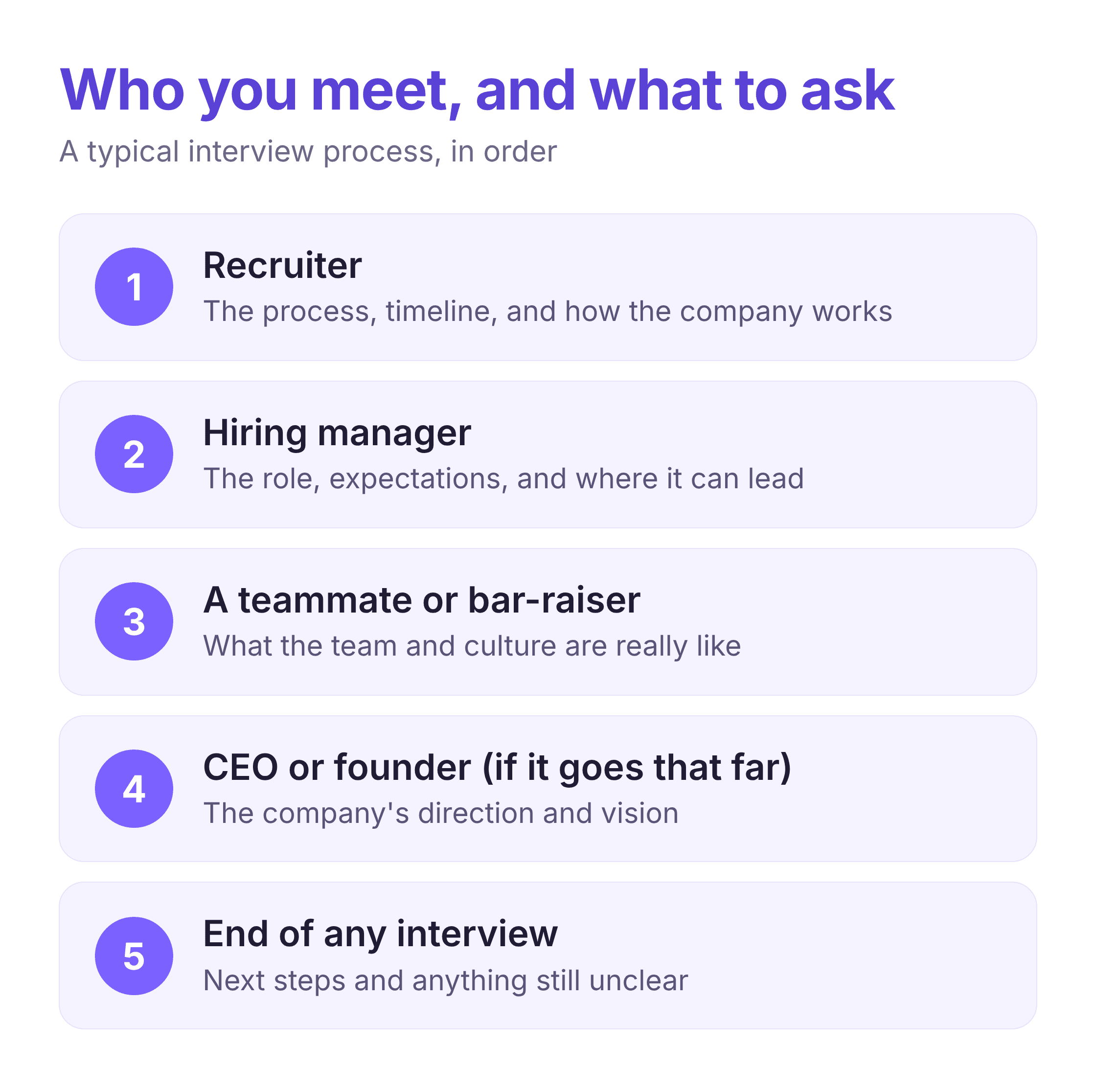
The recruiter is usually your first conversation, and they are the right person for the practical details and for the company in general, not the fine points of the role. Getting these answered early saves everyone time.
The hiring manager owns the role, so this is where you dig into the work itself, how it's judged, and where it can go. These are some of the best questions to ask in an interview, because the answers shape whether you would enjoy the job.
You won't always meet the team, but many processes include one interview with a peer, sometimes someone from another team brought in to check culture and values fit (often called a bar-raiser). They give the most honest read on what the job is really like, so this is the place for questions about the team and the day-to-day.
At smaller companies, or for a senior role, you may get time with the CEO or founder. These conversations are less about your day-to-day and more about the bigger picture, and they're a chance to show you think beyond your own seat.
By the close, you want to confirm the practical details and clear up any doubts. The questions to ask at the end of an interview are about next steps and about giving yourself one last chance to make your case.
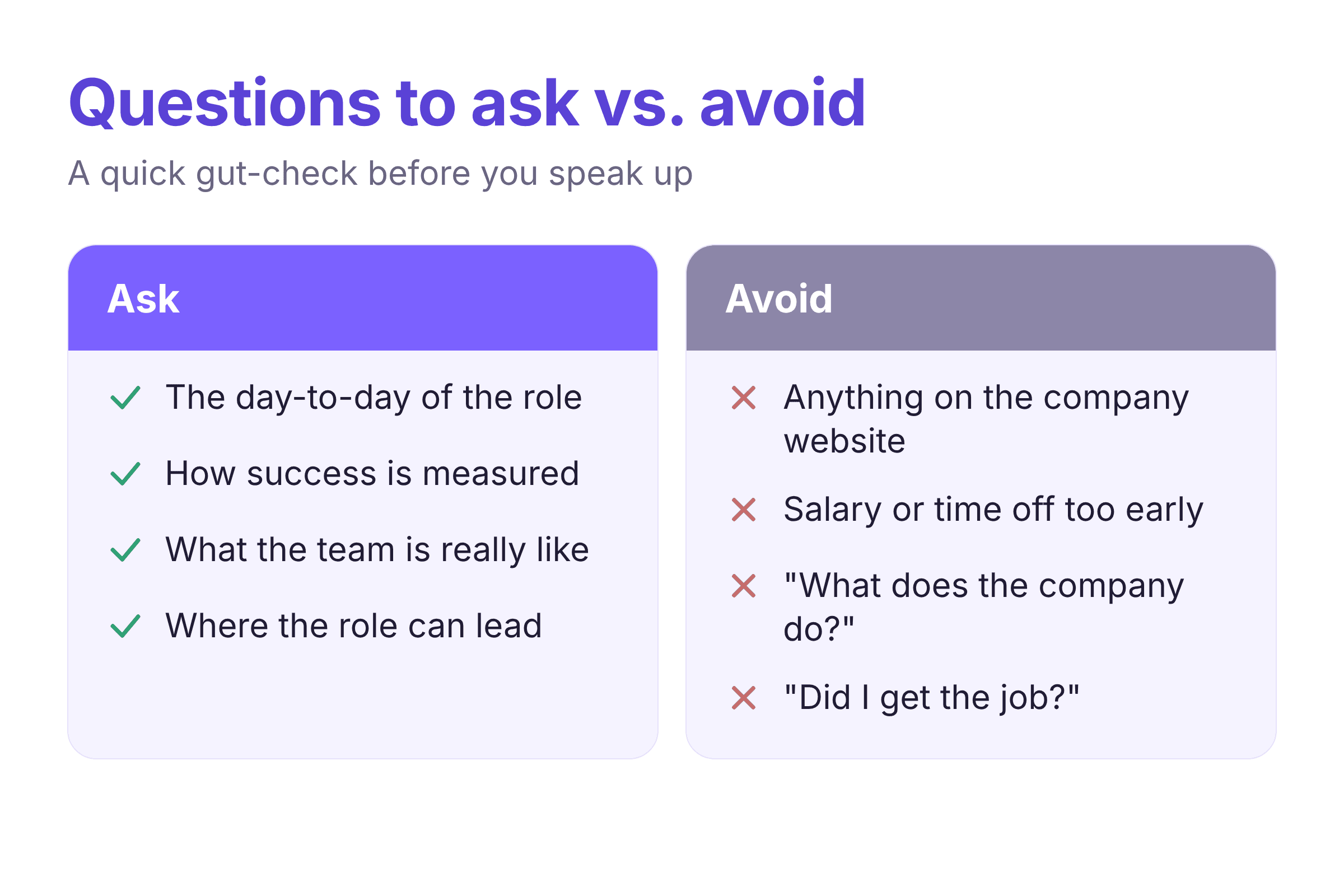
A few questions work against you, so they are worth leaving out. Skip anything you could answer yourself with five minutes on the company's website, and hold off on pay and perks until later in the process.
Pick three or four questions rather than a long list, so the exchange stays a conversation. Listen to the answers and follow up on what you hear, rather than reading the next question off your page. Reading the room is one of the people skills that makes the back-and-forth feel natural, and it's a signal interviewers notice.
It's also fine to ask the same question of different people. When you hear how the recruiter, the manager, and a teammate each describe the culture, the gaps between their answers tell you more than any single reply.
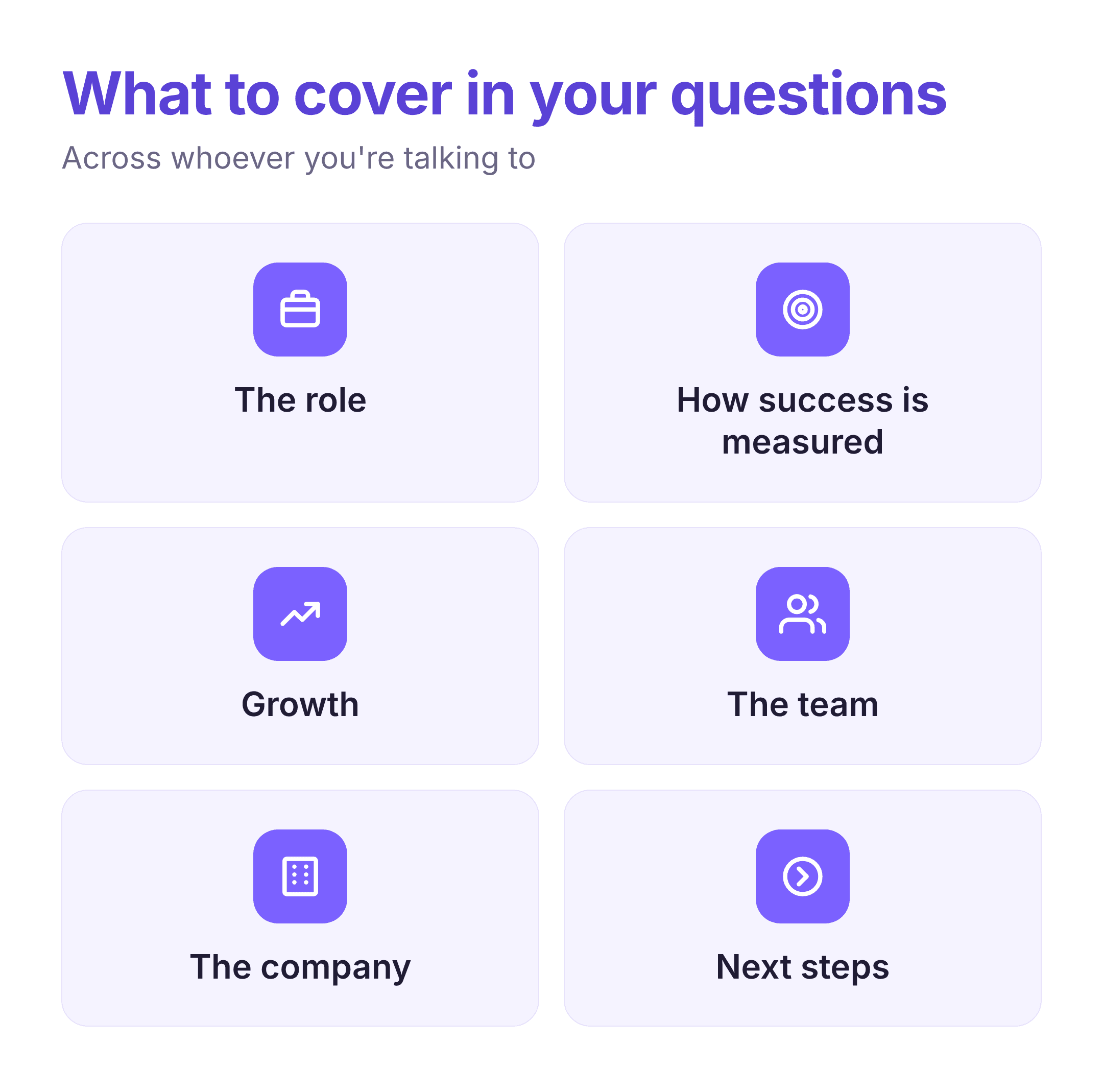
The reason to ask questions is simple: to leave the interview knowing whether you want the job, and why. A clever-sounding question that does not help you learn anything is not worth asking. Pick a few from the stages above that matter to you, write them down, and ask them in the moment they fit. The interviewer gets a candidate who's paying attention, and you get the answers you need to make a real decision.
The best questions to ask in an interview are specific and aimed at the right person: ask the hiring manager what a typical week looks like and how success is measured, a teammate what the culture is really like, and the recruiter about the process and timeline. Matching the question to who can answer it is what makes it land.
Good questions to ask at the end of an interview are about next steps and about clearing up any doubts: "What are the next steps and when will I hear back?", "What start date are you hoping for?", and "Is there anything about my background that gives you any hesitation?" The last one lets you address a concern before you walk out.
Three to five thoughtful questions is plenty. You want enough to show real interest and learn what you need, without turning the end of the interview into a long list. Bring more than you'll use, since some will get answered along the way.
Skip anything you could find on the website, don't lead with pay or time off in an early conversation, and avoid putting the interviewer on the spot with "Did I get the job?" Save salary and logistics for the recruiter or a later stage.