RiseGuide Team

To improve your soft skills, work on one at a time rather than all at once. Choose the single skill that would help you most right now, narrow it to one specific behavior you can watch for, ask a few people you trust for honest feedback on it, and practice that behavior in low-stakes everyday situations until it feels natural. Once it does, pick the next skill and repeat. Steady, focused practice on one thing at a time is what makes soft skills actually improve.
Soft skills show up in nearly every job description and performance review, yet they're the hardest kind of skill to actually sit down and build. With a hard skill, the path is obvious: you take a course in Python or bookkeeping and you know what to study. Communication, adaptability, and handling conflict don't come with that kind of clear path, so most people read that they matter, feel vaguely guilty, and never practice them on purpose.
They're worth the effort, though, and they're learnable. If you're still deciding which abilities to prioritize, our guide on soft skills vs hard skills breaks down what separates the two and why the soft ones tend to matter more over a full career. This piece is about the part that comes next: the actual method for getting better at them.
The market has been shifting toward these abilities for a while, and the recent data makes it hard to ignore. In LinkedIn's 2025 Skills on the Rise analysis, seven of the ten fastest-growing skills were soft skills, with conflict mitigation ranked first. Part of the reason is that workplaces have gotten tenser: roughly 30% of U.S. job-seekers say their colleagues are more confrontational than they were three years ago. Employers have noticed too. In LinkedIn's 2025 Workplace Learning Report, 91% of learning and development leaders said soft skills were their top priority.
There's a longer-term case as well. Technical knowledge has a short shelf life, and the specific tools you master today tend to age out within a few years. The way you listen, explain an idea, or work through a disagreement doesn't expire, which is why time spent learning soft skills keeps paying off long after a given technical skill has been replaced.
The mistake most people make is treating soft skills as a personality upgrade, something you either work on in a vague, all-at-once way or not at all. A better model comes from psychologist Anders Ericsson, whose research on deliberate practice found that real improvement comes from focused work on one clearly defined thing at a time, with feedback along the way. The steps below apply that idea to skills that don't usually get practiced deliberately, and they work best in order.
Trying to become a better listener, a sharper writer, and a calmer negotiator in the same month is how most plans stall. Choose one skill to start with, and let your own situation decide which. Think about where the friction actually is for you right now: it might be giving feedback, staying organized under pressure, reading a room, or holding your ground in a disagreement. The skill that would make your next few weeks easier is the right place to begin.
Ericsson's research points to why a single focus matters so much. Purposeful practice depends on giving one task your full attention, and that attention is hard to sustain when you spread your effort across several goals at once. Working on one skill at a time gives your practice the focus it needs.
Even one skill is usually too broad to practice directly. You need to shrink it to something you could catch yourself doing, or not doing, in a specific moment. Rather than "be a better listener," the workable version is "stop finishing other people's sentences" or "ask one follow-up question before I give my opinion." When a behavior is that concrete, you can tell whether you managed it in a given conversation.
This is what Ericsson called purposeful practice: setting a well-defined, specific target instead of a general intention to do better. The narrower your target, the easier it is to see your own progress from one day to the next.
You can't see most of your own soft skills from the inside. You don't hear your tone the way others do, and you rarely notice the moment your explanation lost someone. Feedback fills in that blind spot, so ask two or three people you trust to watch for the one behavior you're working on and tell you plainly how it's landing.
"We all need people who will give us feedback. That's how we improve." - Bill Gates
Make the request specific. A general "any feedback for me?" usually gets a polite "you're doing great," which tells you nothing useful. Asking whether you interrupted in that meeting, or whether your written request came across clearly, gives the other person something concrete to answer and gives you something real to act on.
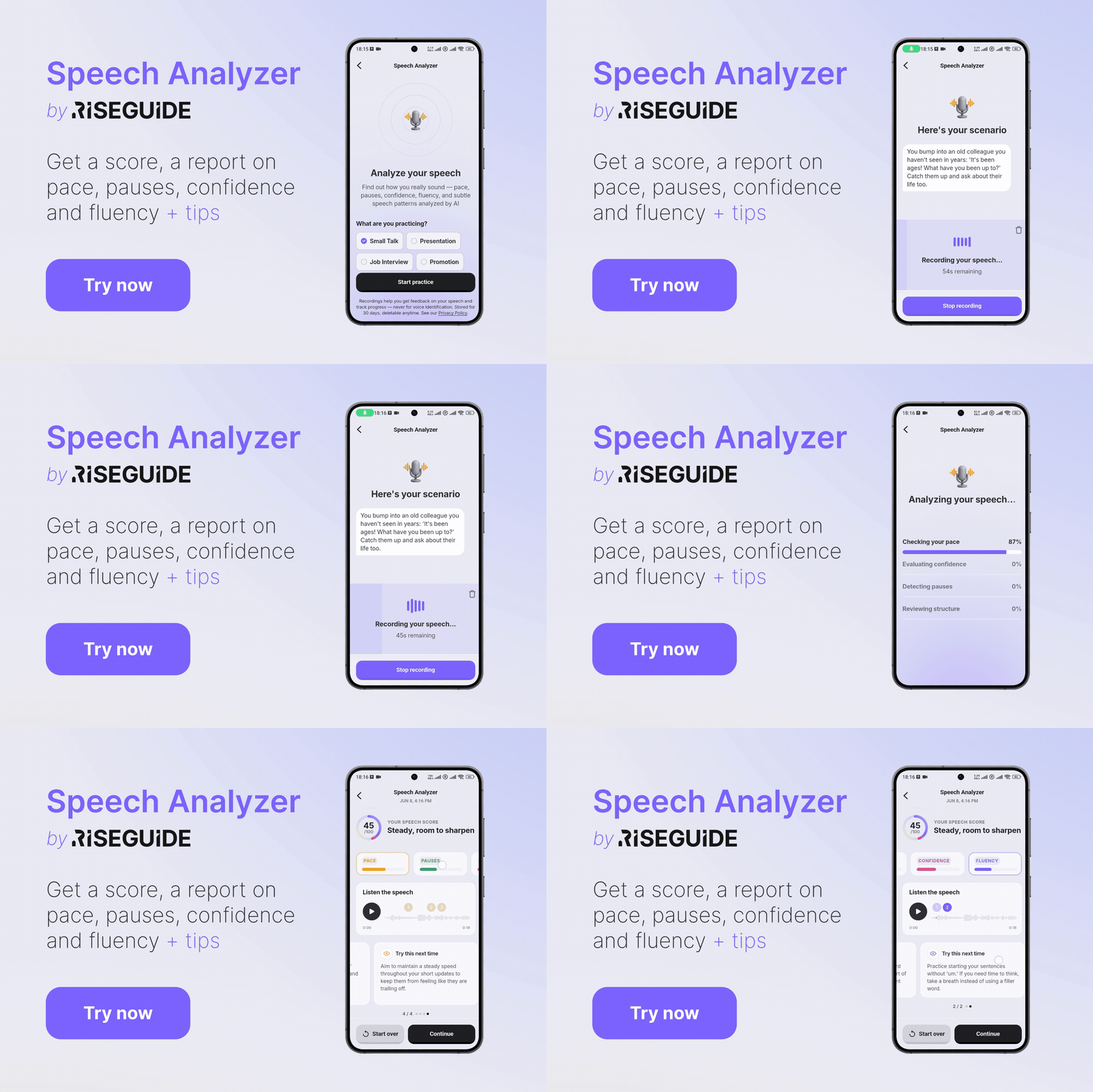
A soft skill takes hold when you use it in a real interaction, not when you read about it. Put the behavior to work somewhere the cost of fumbling is low, before you need it in a moment that matters. If you're working on conversation skills, that could mean chatting with a barista or someone in a queue rather than saving it all for an important dinner. Our guides on making small talk and talking to strangers are built around these kinds of low-pressure reps.
It will feel a little awkward at first, which is a normal part of the process rather than a sign you're doing it wrong.
"This is a fundamental truth about any sort of practice: if you never push yourself beyond your comfort zone, you will never improve." - Anders Ericsson
Try to keep your attention on that one behavior for about a week before you judge how it's going. A handful of real attempts spread across several days will teach you more than one long session you've forgotten by the following week.
One reason these skills are so easy to abandon is that they rarely come with the structure a technical course gives you. If the skill you're starting with is communication, RiseGuide's Communication Mastery journey is built to give it that structure, with short daily lessons drawn from expert insights, each one suggesting a specific thing to try in your next real conversation, so you spend your time practicing rather than only reading.
You'll know you're ready to move on when the behavior you've been practicing starts happening on its own, without you having to think about it. Once it runs in the background, your attention is free for a new target, so you go back to the first step, choose the next skill, and work through the cycle again.
Building skills this way is gradual, and the gains tend to stay because each behavior becomes a genuine habit before you move on. Every skill you make automatic leaves you more attention for the next one.
Soft skills improve the same way technical ones do: through focused practice on one specific thing, honest feedback, and repetition in real situations. Most people who never get better at them simply were never told to treat these skills as something you practice on purpose, one at a time. Pick a single skill this week, shrink it to a behavior you can watch for, and start there. As each one becomes second nature, you'll have the room to build the next.
Pick one skill that matters for your role, narrow it to a single observable behavior, and ask a colleague or manager for specific feedback on it. Practice that behavior in ordinary, low-stakes interactions rather than waiting for a high-pressure moment. Focusing on one behavior at a time is the core of how to improve your soft skills without getting overwhelmed.
Communication is itself a soft skill, so they aren't separate projects. A practical approach to how to improve soft skills and communication skills is to make communication your first skill: work on one communication behavior, such as active listening or clearer writing, and the general method you build will carry over to every other soft skill afterward.
There's no fixed timeline, but a useful rule is to focus on one specific behavior for about a week of real practice before judging progress, then keep going. Soft skills build gradually through repeated use, so consistency over weeks matters far more than intensity in any single session.
They can be learned. While some people start with a natural lean toward certain skills, research on deliberate practice shows that these abilities improve through examples, feedback, and repetition, the same way technical skills do.