RiseGuide Team

To be more likeable without being fake, put your attention on the other person instead of on the impression you're making. Show real interest and ask questions you actually care about, listen to understand rather than to reply, and keep your body language warm and open. Get comfortable enough with yourself that you stop performing, say what you honestly think in a kind way, and give specific appreciation instead of empty flattery. Own your mistakes when they happen, and look for real common ground rather than agreeing with everything. Most people already like you more than you assume, so the real work is dropping the act.
Being likeable can feel like something you either have or you don't. In practice it comes from a handful of ordinary behaviors, like paying attention, being warm, and being honest, that anyone can get better at. The problem is that the harder you try to be liked, the more you tend to come across as insincere, which is the opposite of what you're going for.
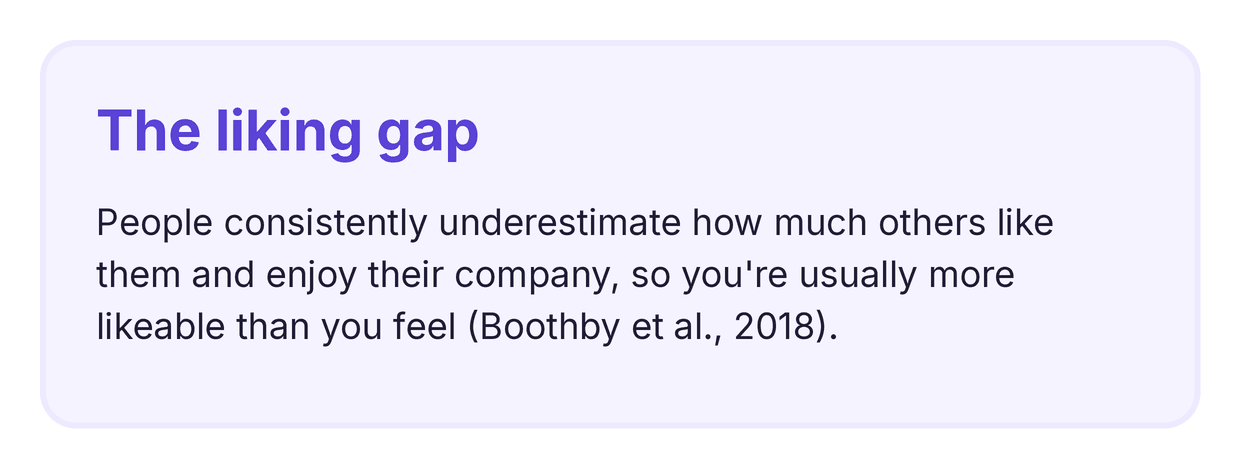
One finding is worth keeping in mind before you change anything. In a set of studies on the liking gap, psychologists found that people consistently underestimate how much their conversation partners like them and enjoy their company. You're usually more likeable than you feel in the moment. That matters, because a lot of "fake" behavior is really over-correction for a problem that isn't as big as you think it is.
This guide covers why trying to be liked can backfire, what makes someone likeable in the first place, and the specific things you can do to be more likeable without pretending to be someone you're not.
Wanting to be liked is normal. The trouble starts when that wish takes over a conversation, because the behaviors it produces are usually the ones people find least appealing.
Most of us are decent at spotting an act. When someone laughs a beat too hard, agrees with everything, or compliments us in a way that doesn't quite land, we sense the effort even if we can't name it. That effort comes across as a small request for approval, and it puts a subtle weight on the other person. Genuine warmth asks for nothing back, which is part of why it feels good to be around.
When you're monitoring how you're coming across, most of your attention is on you: your last sentence, whether that joke worked, what to say next. That leaves very little for the person in front of you, so you listen worse and miss the openings a good conversation runs on. The irony is that the thing you're chasing, being well liked, comes mostly from making other people feel heard, and you can't do that while you're watching yourself.
If you strip away the tricks, likeable people tend to share a few plain qualities. They're warm, so they're pleasant to be near. They're genuinely interested in others, so people feel seen around them. And they're comfortable enough in themselves that they're not auditioning, which lets everyone else relax too. Being a likeable person is mostly the sum of those three things, and none of them requires a big personality or a quick wit.
Warmth is the one people register first, often within seconds of meeting you. It shows up in small signals: a real smile, an unhurried hello, remembering a detail from last time. Interest is what turns a pleasant first impression into a real connection: asking a follow-up question, then actually listening to the answer. And ease is what makes the other two believable. When you're not anxious about being judged, your warmth and interest come across as real, because they are.
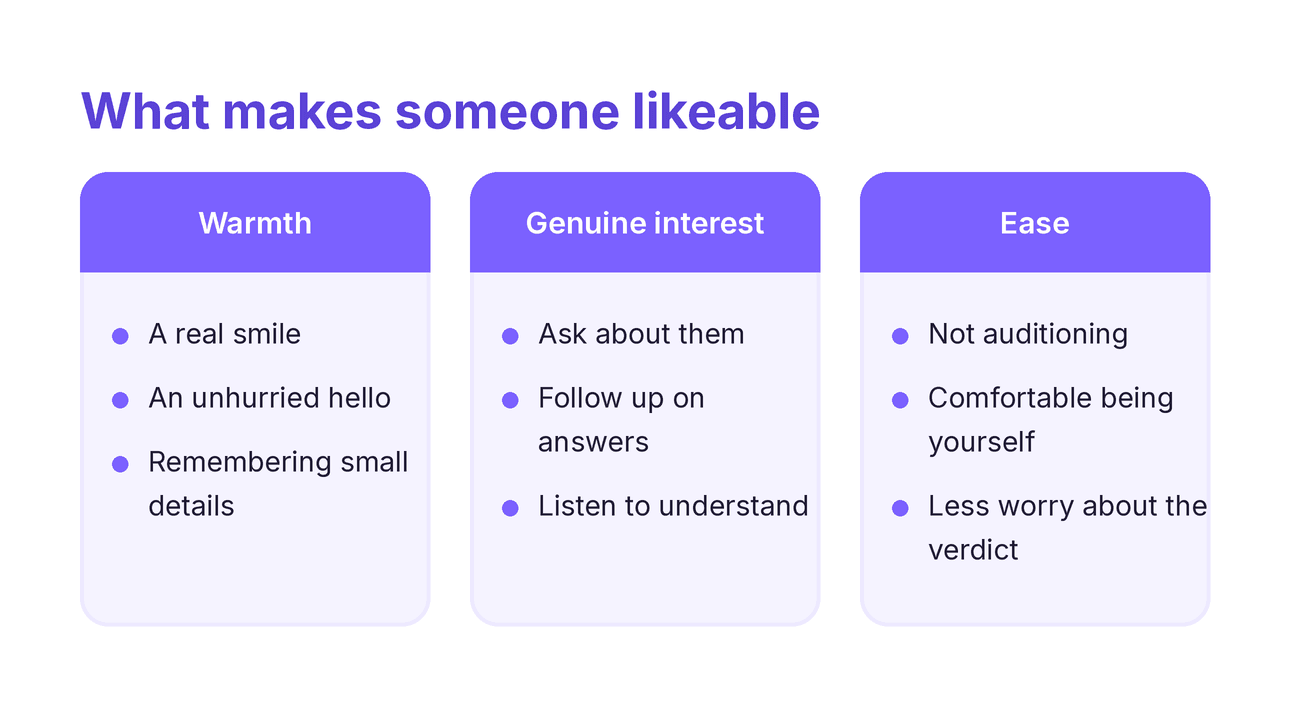
These are things you can practice, not steps you have to do in order. Pick one or two that fit where you tend to struggle and work on those. Learning how to be likeable is mostly about removing the friction that keeps the genuine version of you from showing up.
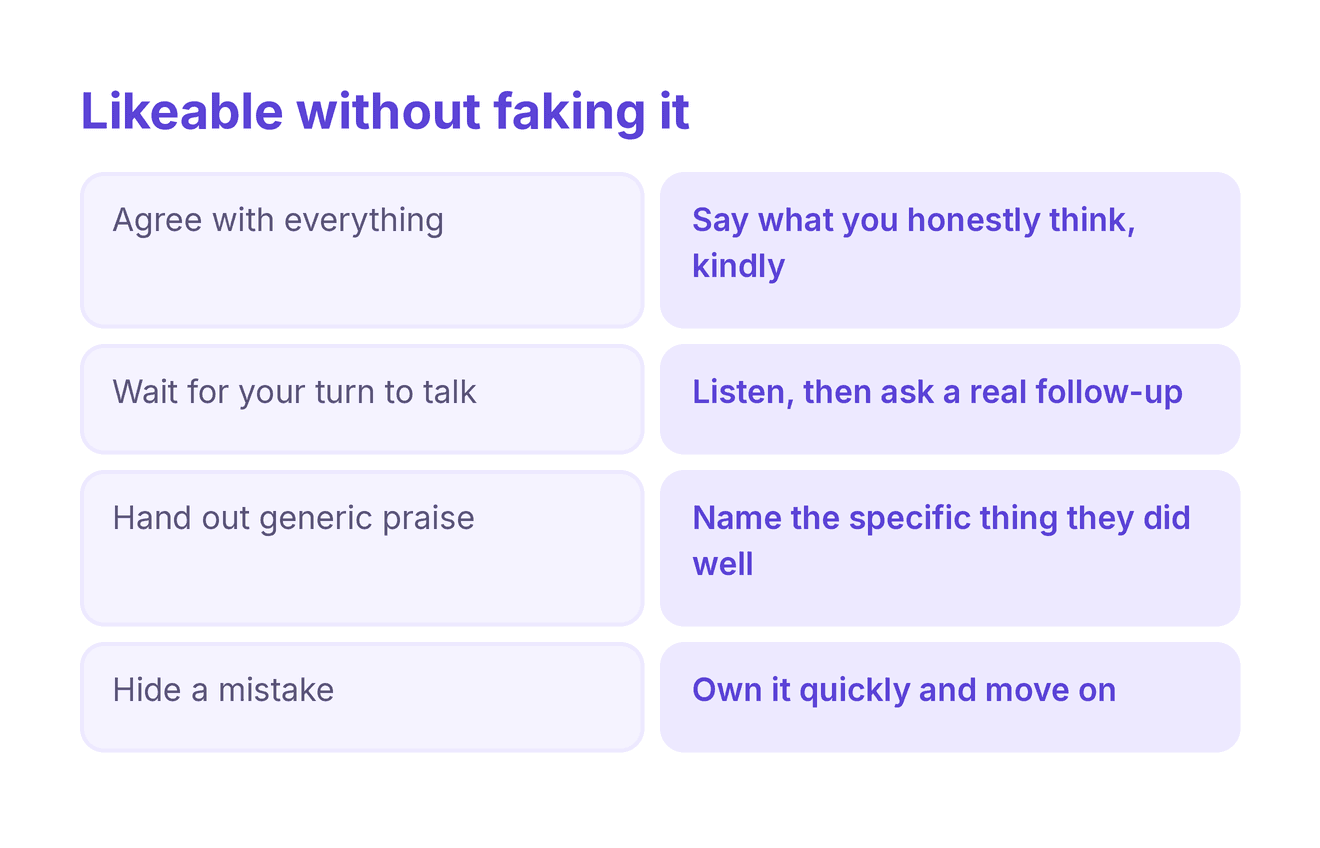
The single most reliable way to be liked is to be interested rather than interesting. Ask people about themselves, then ask a follow-up that shows you were listening. Remember the small things, like the trip they were nervous about or the name of their dog, and bring them up next time. This only works when the curiosity is real, so pick things you actually want to know. If you find people genuinely interesting, this stops being a technique and becomes the easiest part of a conversation.
Most people listen with half their mind while the other half loads up what they'll say next. Real listening means letting the other person finish, sitting with what they said for a second, and responding to the actual thing rather than steering back to yourself. You can show it plainly: a short summary of what you heard, a question that goes one layer deeper, or just holding the pause instead of rushing to fill it. People can tell the difference immediately, and being truly listened to is rare enough that it makes you memorable on its own.
A lot of likeability happens before you say anything. Facing people, uncrossing your arms, making steady but relaxed eye contact, and smiling when you actually feel like it all signal that you're glad to be there. You don't need to script this or hold a pose; forced body language reads as stiff, which undercuts the whole point. If you want to get more deliberate about it, learning to read body language helps you notice the signals people react to and send warmer ones without faking them.
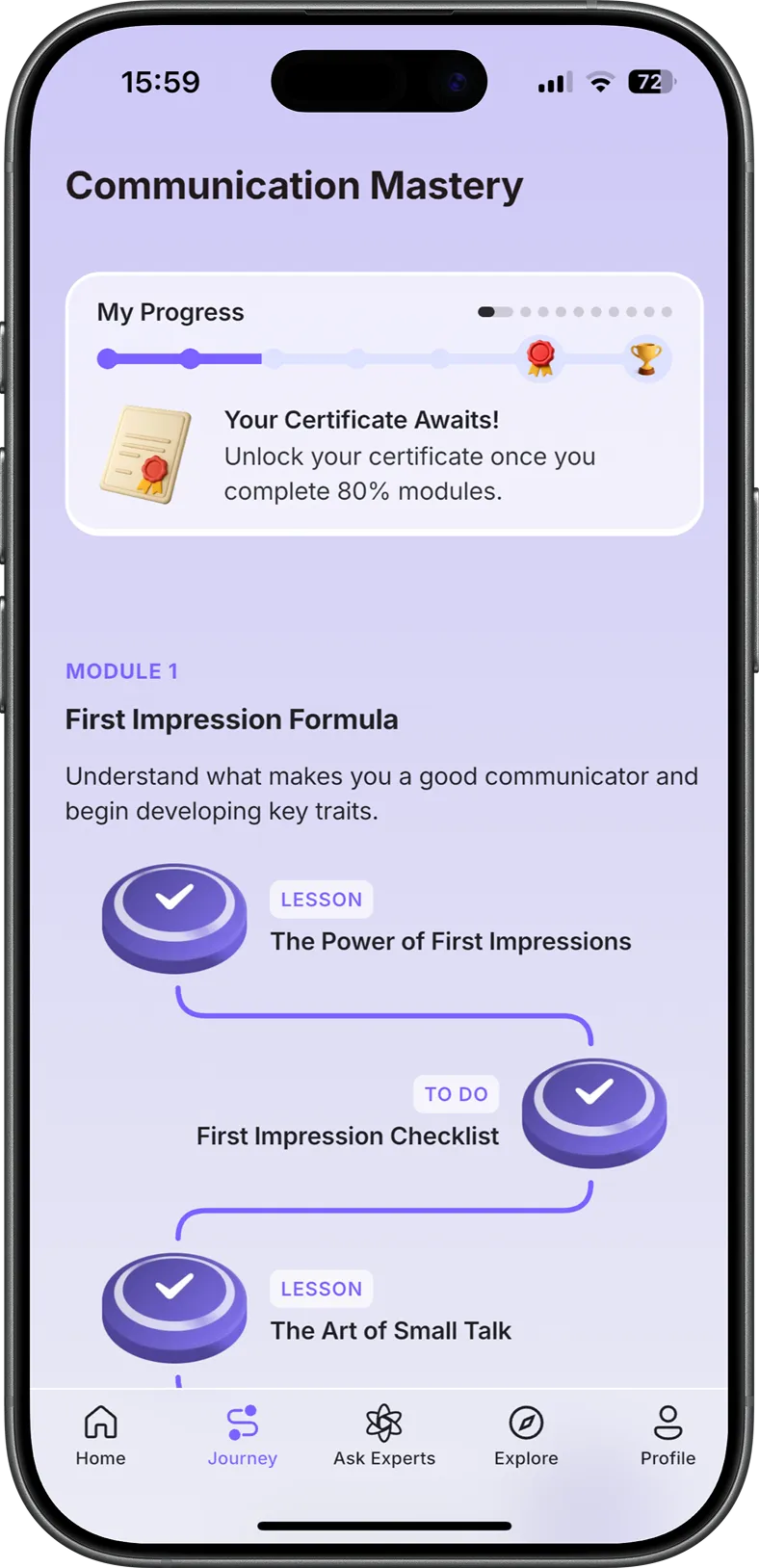
Almost every fake-feeling behavior comes from the same root: being anxious about how you're landing. The way out is to care a little less about the verdict, since trying to perform your way to likeable keeps your focus on yourself, which is the actual problem. Some of that comes with practice. The more ordinary conversations you have, the less any single one feels like a test. Recalling the liking gap helps too: the person across from you is very likely enjoying this more than your inner critic claims. If casual conversation is where you freeze up, RiseGuide's Communication Mastery journey includes a Small Talk Simulator that lets you rehearse low-stakes exchanges until they feel routine, so you can be present instead of bracing for judgment.
Flattery is generic and aimed at being liked; real appreciation is specific and aimed at the other person. "You handled that awkward moment really gracefully" lands because it's true and it's about them. Notice what people are actually good at and say it plainly, without piling it on. The specificity is what makes it believable. Anyone can say "great job," but only someone paying attention can name the exact thing you did well.
Likeable does not mean agreeable about everything. People trust someone who will gently tell them the truth far more than someone who nods along, and constant agreement starts to feel hollow fast. You can hold your own view, say no, and still be warm about it. This is where likeability and self-respect meet: being pleasant while giving up your own position wears you both out and doesn't actually make you more likeable. If saying what you think without turning it into a confrontation is hard for you, learning to be more assertive shows how to do it kindly.
People warm to those who can admit a mistake without a fuss. A quick, sincere "you're right, that was my fault" does more for how people see you than a flawless record, partly because it shows you're secure enough not to get defensive. When you've actually caused someone trouble, a real repair matters, and knowing how to apologize well helps it land. The willingness to be a little imperfect out loud is one of the most disarming, genuinely likeable things you can do.
Connection grows out of shared things: an interest, a frustration, a sense of humor about the same stuff. Instead of manufacturing agreement, listen for the places where you honestly overlap and follow those. When you don't have much in common, curiosity fills the gap: treat the difference as something to learn about rather than something to paper over. This keeps the warmth real, because you're building on what's actually there.
Being more likeable isn't about installing a new personality or memorizing a set of moves. It's about turning your attention outward, staying honest, and getting relaxed enough that the version of you people already tend to like can show up without the extra layer of performance. Start with one habit, notice how conversations change, and let the rest follow from there.
Usually it comes down to anxiety about being judged rather than any real lack of likeability: you listen less, tighten up, or try too hard, and people read the effort. The liking gap research suggests people tend to like us more than we assume, so the issue is often perception plus a few habits, not a fixed trait. Working on genuine interest and easing the pressure on yourself tends to shift it.
Warmth, real interest in others, and being comfortable in your own skin. People feel good around those who make them feel heard and who aren't performing. Wit and confidence help, but they're optional; warmth and attention are what almost every likeable person has in common.
Yes, and being genuine is what makes it last. Manufactured charm works for a first impression at best, while real warmth and honesty hold up over time. The goal is to remove the anxiety and self-focus that hide the likeable parts of you, so you don't have to act at all.
The same habits apply, with a bit more consistency: take real interest in colleagues, listen properly in meetings, give specific credit, and be honest and reliable rather than just agreeable. Being someone people can trust to tell them the truth kindly earns more goodwill at work than trying to please everyone.