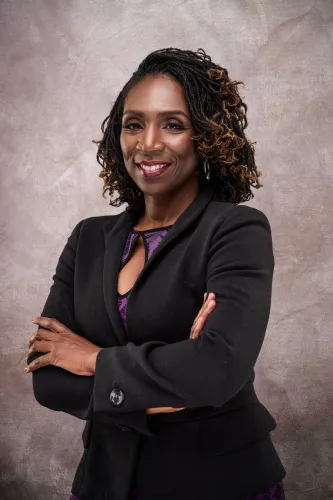
Demetra Moore
Leadership & Communication Coach

For a long time, we have treated leadership as a possession, something a few people at the top of the org chart hold and everyone else receives. I understand why that model took root, because it feels orderly. But in my years of coaching leaders and teams, I have come to believe something different, and it sits at the heart of the framework I created, the Light Method: leadership belongs to everyone, not just the org chart.
Leadership is an inclusive, evolving process rather than a rigid hierarchy, and every single member of a team contributes to a company's growth. When we understand that, we stop hoarding leadership at the top and start cultivating it everywhere. The result is a team that is more resilient, more creative, and far more able to adapt and evolve when things change. Let me walk you through the elements of the Light Method, because each one is a place where this belief becomes practical.
The first element is exactly what it sounds like: cultivating a leadership mindset across the entire organization. This does not mean everyone has the same role or authority. It means everyone is invited to think, take ownership, and act with intention, wherever they sit. When a leadership mindset lives at every level, decisions get better because they are informed by the people closest to the work, and when change arrives, you are not depending on a handful of people to carry the whole organization.
The second element is about creating spaces where diverse ideas flourish. Good ideas do not only come from senior people or from any single department. They come from everywhere, and often from the corners we least expect. Our job as leaders is to build the kind of environment where those ideas can surface, which means inviting perspectives that differ from our own and truly listening to them, making it safe for people to speak up before they are certain, and encouraging cross-departmental collaboration so insight is not trapped inside silos. When we do this well, creative problem-solving becomes a natural part of how the team operates rather than something we scramble for in a crisis.
The third element is guiding people toward their best. I believe leadership is, at its core, an act of development. We are not simply managing tasks; we are helping human beings grow into more of who they are capable of becoming. This is also where the practical value shows up most clearly, because when we invest in developing our people, we retain them, keeping their knowledge, their relationships, and their momentum inside the company instead of losing them to the exit. Developing talent is one of the wisest financial decisions a company can make, since replacing people is far costlier than growing them.
The fourth element is helping teams work effectively together. A group of talented individuals is not the same as a high-performing team, and the difference lies in how they connect, trust one another, and align around a shared purpose. High-performing teams are built rather than found. They come from clarity about what matters, honest communication, and a shared sense that everyone's contribution counts. When leadership is distributed across a team rather than concentrated at the top, that sense of shared ownership grows naturally, and the whole group becomes greater than the sum of its parts.
The fifth element is overcoming setbacks with resilience. Every team and every company will face challenges: reorganizations, rapid growth, unexpected pivots, and seasons that ask more of us than we thought we had. These are simply part of the work rather than signs that something has gone wrong. What determines the outcome is how we meet those moments. Teams that have cultivated a mindset of growth and resilience treat setbacks as places to learn and adapt, and when leadership is shared across the organization, that resilience multiplies, because you have many hands and many minds ready to rise to the challenge together.
When you look at these five elements together, a pattern emerges. Each one grows stronger the more widely leadership is shared: a leadership mindset held by everyone, ideas welcomed from every corner, people developed at every level, teams that own their work together, and resilience that lives throughout the organization rather than resting on a few shoulders. Hoarding leadership at the top does the opposite, creating bottlenecks, leaving good ideas unspoken, and making the whole company fragile because so much depends on so few.
If you are a leader reading this, my encouragement is simple and warm. Look for the leadership already present in the people around you, and make more room for it. Ask for their ideas and mean it. Invest in their growth. Trust them with real ownership. You may find that loosening your grip on leadership as a possession is the very thing that makes you a stronger leader. Leadership was never meant to be a title reserved for a few, and when we cultivate it in everyone, we build something far stronger, far kinder, and far more able to grow into whatever comes next.