
Katie Mares
Brand Experience Expert
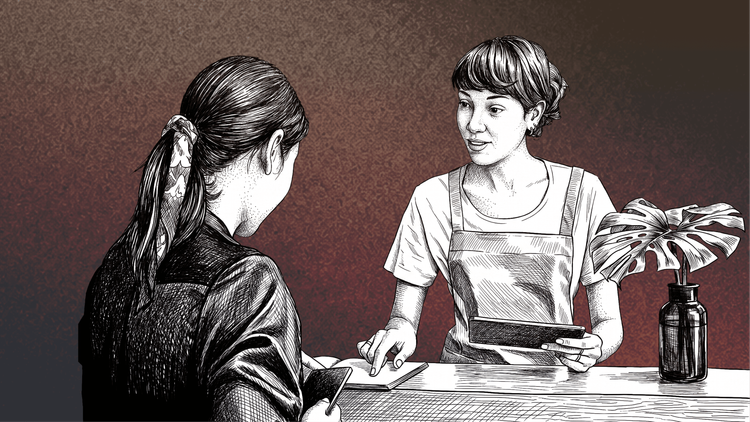
I have spent my career in and around service, studying how people feel when they interact with a brand, a leader, or a team. And the longer I do this work, the more convinced I am that the frontline of service is one of the best leadership schools there is. The people who wait on tables, staff the desk, answer the calls, and handle the complaints learn things about human beings that no leadership seminar can teach. When those lessons get carried up into how we lead, they make us dramatically better at it. Great service and great leadership turn out to run on exactly the same engine.
The first thing service work teaches you is that every single person wants to feel seen, and that this desire does not switch off when someone becomes an employee instead of a customer. On the floor, you learn to read people fast. You can tell who is stressed, who is celebrating, who needs a little patience and who needs you to move quickly. You learn that the same request can mean two completely different things depending on the human in front of you.
Leadership asks for that identical skill. Your team members are people who want an experience too, and the experience of being led well is not so different from the experience of being served well. They want to feel noticed, respected, and understood as individuals rather than processed as roles. Leaders who never learned to read a person the way a good server reads a table tend to manage everyone the same way and wonder why it lands so unevenly.
Here is something anyone who has worked in service knows in their bones. You cannot pour a great guest experience out of an empty cup. When the people on the floor are treated poorly by their own managers, that treatment finds its way into every interaction with a customer, no matter how good the training was. The experience you create for your team is the experience they hand to everyone else.
This is one of the most important things service work can teach a leader. If you want your people to be patient, generous, and attentive with customers, you have to be patient, generous, and attentive with your people. You are not just running a team. You are setting the emotional temperature that the whole culture takes on, and that your customers eventually feel. Care rolls downhill, and so does its absence.
Look closely at what makes someone excellent on a service floor, and you will find a list of leadership skills hiding in plain sight. Reading people. Staying calm when someone is upset. Recovering gracefully when something goes wrong. Anticipating a need before it is spoken. Making a stranger feel like the most important person in the room for the length of an interaction. These are not lesser skills than the ones on a leadership competency model. They are the soft skills that keep people engaged, and they are far harder to teach than a spreadsheet.
I would argue that some of the best leaders I have met carry a service heart into every room. They lead the way a wonderful host takes care of a table, with warmth, attention, and a genuine desire to make the experience better for the person in front of them. That posture is not weakness. It is the thing people remember long after they have forgotten what you actually said.
Service work also teaches you what to do when someone is unhappy with you, which is one of the hardest things any leader has to learn. On the floor, you cannot get defensive with an upset guest and keep your job. You learn to hear the frustration, find the real need underneath it, and respond to that instead of to the tone. It is a discipline, and it is a rare one.
Bring that into leadership and it changes how you receive hard feedback from your own team. The person telling you something is not working is not attacking you. They are handing you information you would not otherwise have, often at some personal risk. Leaders who learned to welcome a complaint on a service floor tend to be the ones whose people feel safe telling them the truth, and that safety is worth more than any suggestion box.
If you take one thing from this, let it be that leadership is a service, not a status. The frontline teaches this quickly, because on the floor you cannot hide behind a title. You either take care of the human in front of you or you do not, and they feel the difference immediately. When you carry that same standard into leadership, treating your team as people who want and deserve a real human experience, you build the kind of loyalty and trust that no perk or policy can manufacture. The best leaders never really leave the service floor. They just start serving the people they lead.