RiseGuide Team

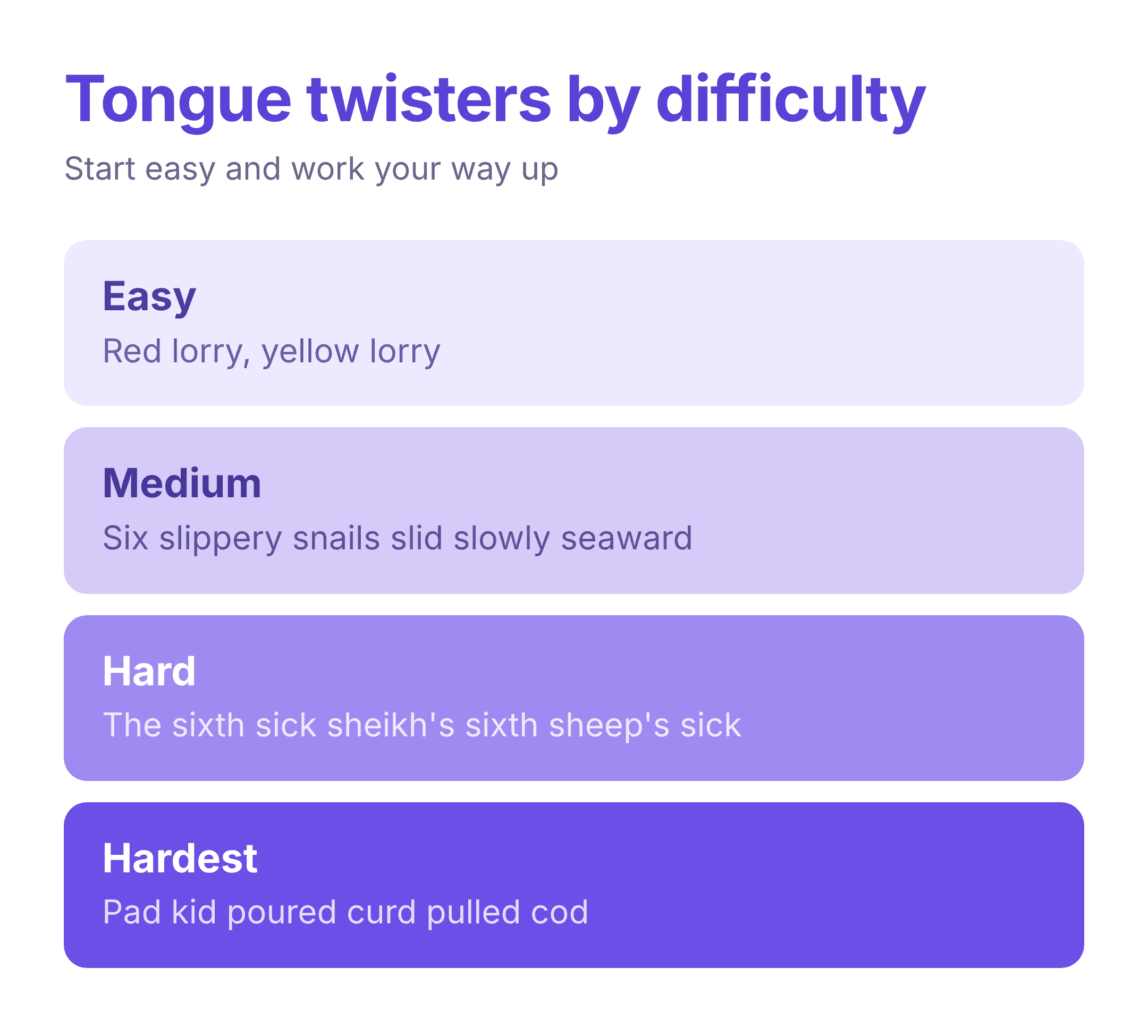
To use tongue twisters to practice clear speech, say each one slowly first, exaggerate every sound, then speed up while keeping each word crisp. Start with easy ones and work your way up. The best tongue twisters for this are grouped below by difficulty: easy ones for beginners, short ones to repeat fast, funny ones, famous classics like Peter Piper, hard ones, long ones, and the hardest ever tested in a lab. Say a few out loud every day and your mouth learns to move more precisely, which is what makes speech sound clearer.
Actors, broadcasters, and singers warm up with tongue twisters before they perform, for a simple reason: a phrase built on repeated, clashing sounds forces your mouth to work harder and more precisely than ordinary talking does. Do a few on purpose and the muscles you use to speak get a quick workout, so your everyday words come out cleaner. All of the tongue twisters in english below are grouped from easiest to hardest, so you can start where you're comfortable and build up. They work just as well as tongue twisters for adults who want to sound sharper at work as they do for kids learning to read.
Tongue twisters are hard because of how your brain plans speech. Sounds that are similar but not identical, like the "s" and "sh" in "she sells seashells," sit close together and your brain mixes up the instructions it sends to your mouth. MIT researchers led by psychologist Stefanie Shattuck-Hufnagel built a phrase so tricky, "pad kid poured curd pulled cod," that some volunteers simply stopped talking when they tried it. Practicing these on purpose trains your mouth to hit each sound cleanly, even when the sounds are fighting each other.
They also make a good warm-up. Sound expert Julian Treasure, in his TED talk, demonstrates a set of vocal exercises he recommends before any important talk, loosening the lips and tongue so your words land clearly.
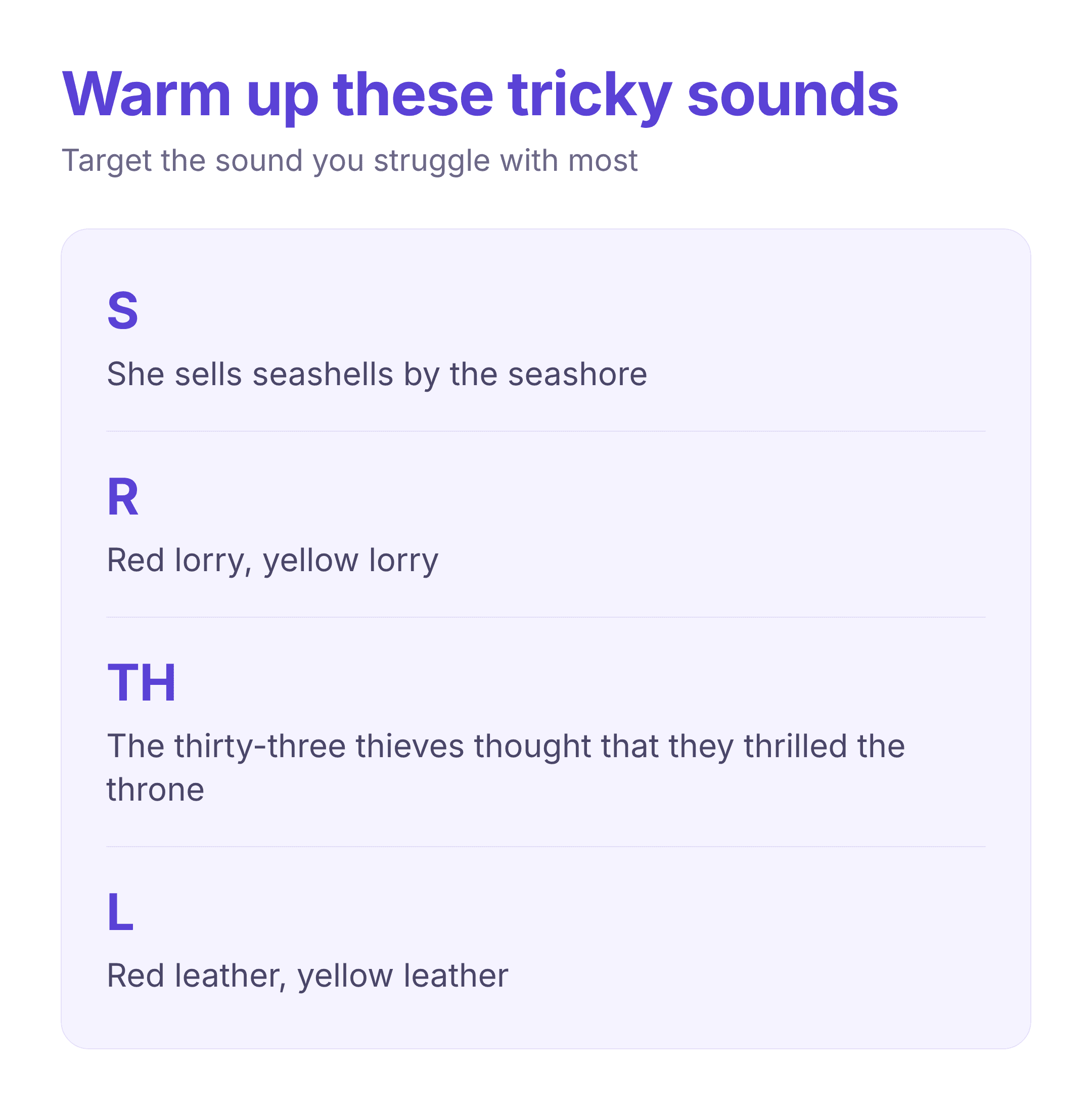
Warming up the specific sounds you struggle with helps most. If "s" sounds slushy or "r" and "l" blur together, a few twisters built on those letters give you targeted practice, which is the kind of focused work our team's guide to improving your speaking voice goes into.
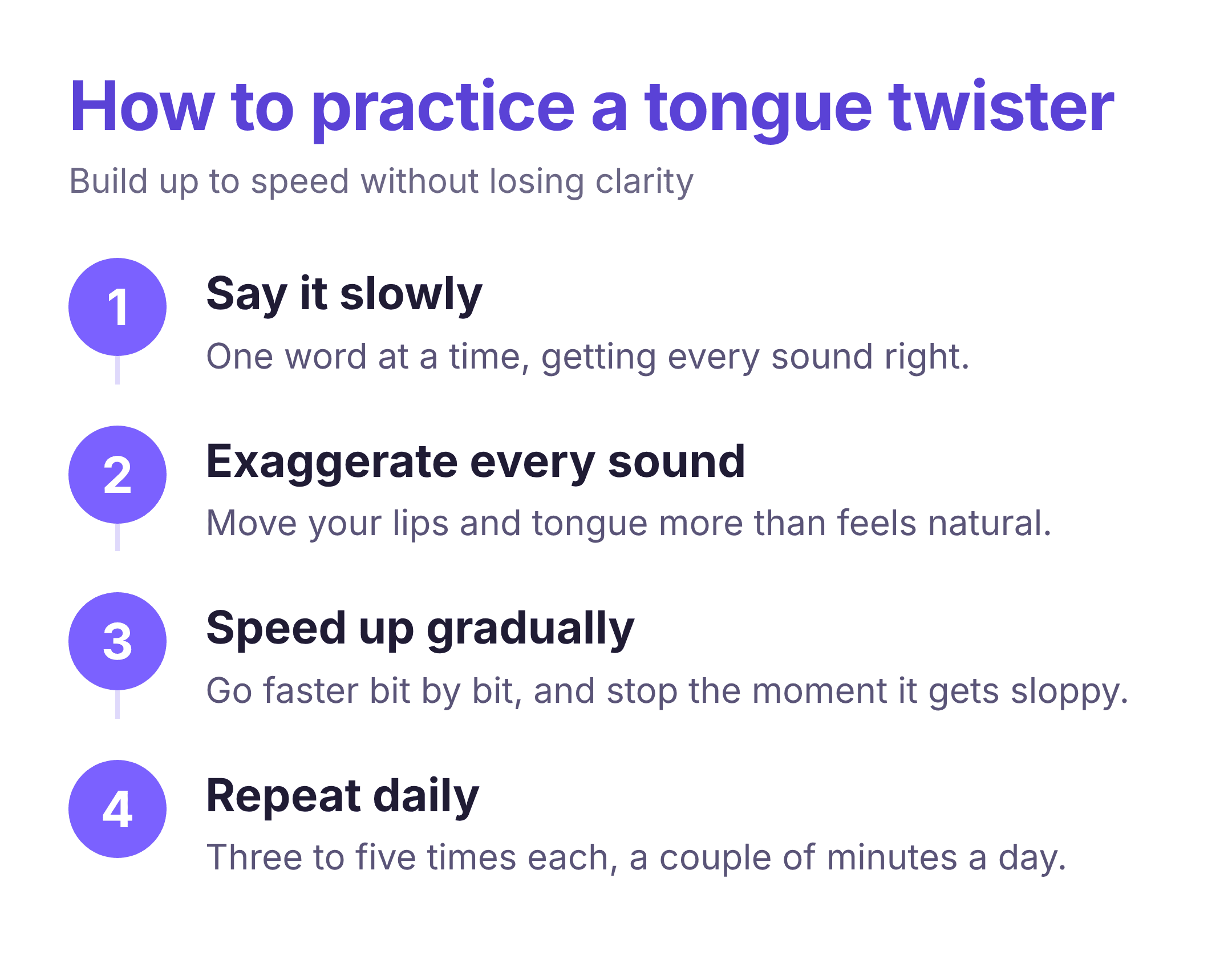
Saying a tongue twister fast on the first try only teaches your mouth to stumble. The trick is to build up to speed.
First, say it slowly, one word at a time, getting every sound right. Then say it again, exaggerating each sound and moving your lips and tongue more than feels natural. Speaking coach Vinh Giang teaches that unclear speech usually comes from a mouth that barely moves, so over-articulating on purpose is how you fix it.
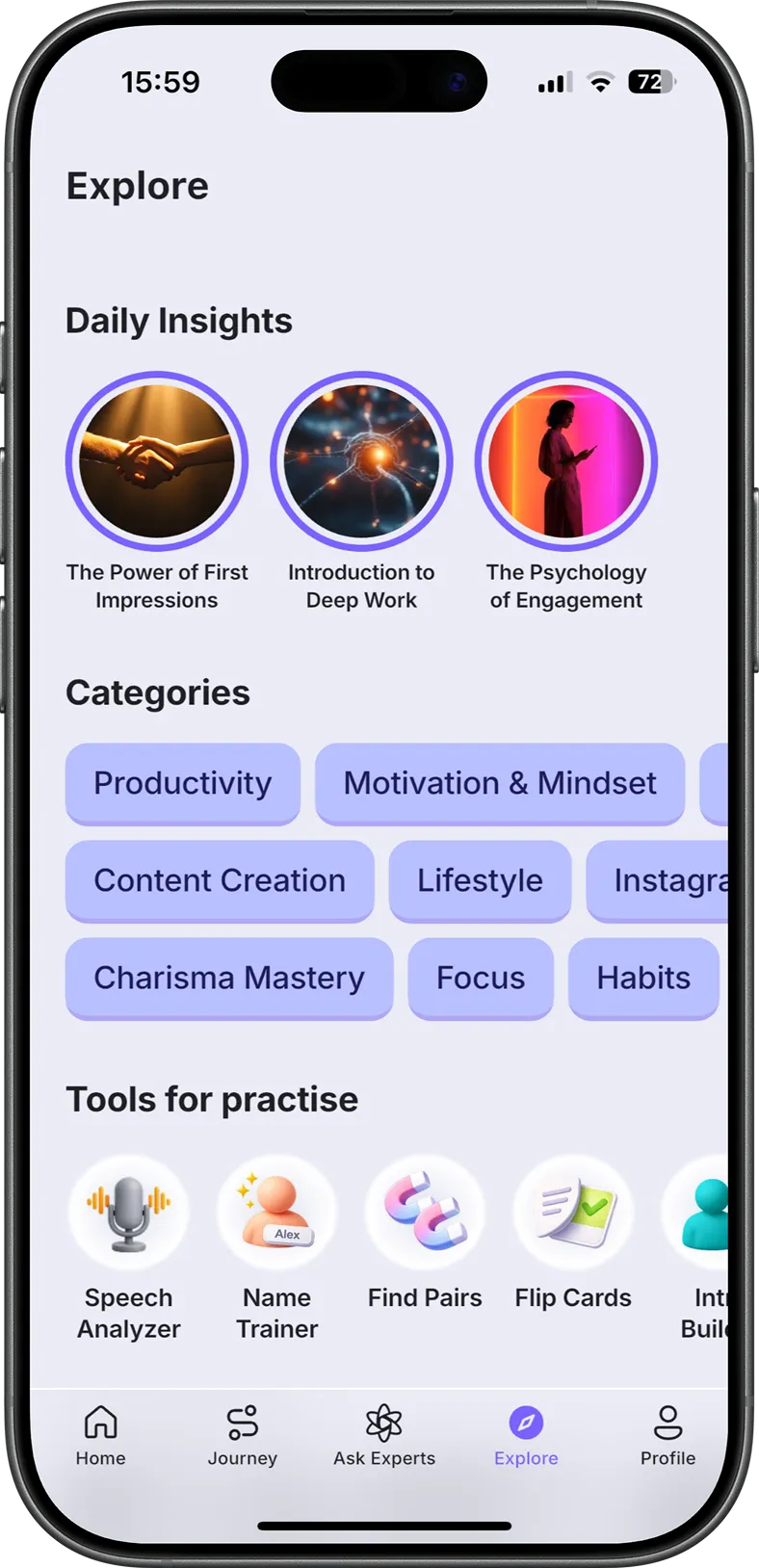
Once you can say it cleanly, speed up a little at a time, and stop the moment it gets sloppy. Repeat each one three to five times, and come back to a few every day. A couple of minutes is enough. If you want to hear how you're doing, RiseGuide's Speech Analyzer listens to you read a line aloud and shows you where your pace, clarity, and filler words slip, so you can tell whether the practice is paying off. Using them as a quick warm-up is also one of the communication games our team recommends for loosening up before you speak. Clear articulation is one part of speaking well, and our team's tips on public speaking cover delivery, nerves, and structure.
These easy tongue twisters are a gentle place to start, and they double as tongue twisters for kids who are learning to read.
Short tongue twisters are the ones to repeat fast, over and over, as a quick warm-up.
These funny tongue twisters are worth saying out loud just for how they trip you up.
These famous tongue twisters are the classics almost everyone has heard at least once.
These hard tongue twisters are where most people start to slow down. Take them one sound at a time.
Long tongue twisters test your breath and focus as much as your mouth. Try to get through each one without losing the thread.
Save these hardest tongue twisters for last. The first two are often named the toughest in English, and the third comes straight from a speech lab.
Sometimes you want to drill one specific sound rather than work through a mixed list. These tongue twisters are grouped by the sound they train, so if your "r" or "s" tends to slip, you can go straight to it and practice that one.
Hissing "s" sounds are some of the most common to blur. These s tongue twisters give them a workout:
The "r" is one of the last sounds many people master, and it slips easily into "l." Try these r tongue twisters:
Pair "l" with "r" and words get slippery fast. These l tongue twisters help:
The "th" sound trips up a lot of speakers. Work through these th tongue twisters slowly:
A few more sounds worth drilling if they give you trouble:
Pick two or three tongue twisters you like, say them slowly, then build up speed, and come back to them for a couple of minutes a day. The ones that trip you up are the ones worth repeating, because they point straight at the sounds your mouth needs the most practice with. Clear speech comes from that small, steady work: a couple of focused minutes a day.
The best tongue twisters depend on what you want to practice. "She sells seashells by the seashore" and "red leather, yellow leather" are great for clarity, "Peter Piper picked a peck of pickled peppers" is the most famous, and "the sixth sick sheikh's sixth sheep's sick" is one of the hardest.
"The sixth sick sheikh's sixth sheep's sick" is often called the hardest in English. Researchers at MIT also created "pad kid poured curd pulled cod," which tripped up volunteers so badly that some stopped speaking.
They give the muscles you use to speak a focused workout and train your mouth to move precisely, which helps with clarity and warm-ups. They aren't a cure for a speech disorder; for that, a speech-language professional can help.
A couple of minutes a day is plenty. Short, regular practice does more than one long session, so pick a few, repeat each three to five times, and return to them daily.
Yes. Harder ones like "lesser leather never weathered wetter weather better" or "imagine an imaginary menagerie manager managing an imaginary menagerie" give adults who want to speak more clearly plenty to work with.