RiseGuide Team

To find your love language, take the love language test below: you answer a set of quick this-or-that questions about how you most like to give and receive affection, and you get the one or two of five love languages that matter most to you, which are words of affirmation, quality time, acts of service, physical touch, and receiving gifts. Treat the result as a starting point for better conversations with the people you care about, not a fixed label, because it can shift as your life and relationships change.
Most of us show love the way we like to receive it, and then assume the people close to us feel it the same way. When they do not, it can look like someone not caring, when really the two of you are speaking different languages. A love language test gives you a simple way to name how you each prefer to feel loved, so you can stop guessing and start matching what the other person actually wants.
A love language is the way you most naturally like to give and receive affection. The idea comes from relationship counselor Gary Chapman, who noticed in his counseling work that partners often express care sincerely but in a form the other person does not register, and grouped those preferences into five categories. Answering what is my love language, and learning your partner's, turns a vague sense of "we keep missing each other" into something specific you can act on.
This love language quiz is an independent, informal tool from RiseGuide, made for self-reflection. It draws on the widely discussed five love languages idea and is not affiliated with, endorsed by, or connected to Gary Chapman or The 5 Love Languages.
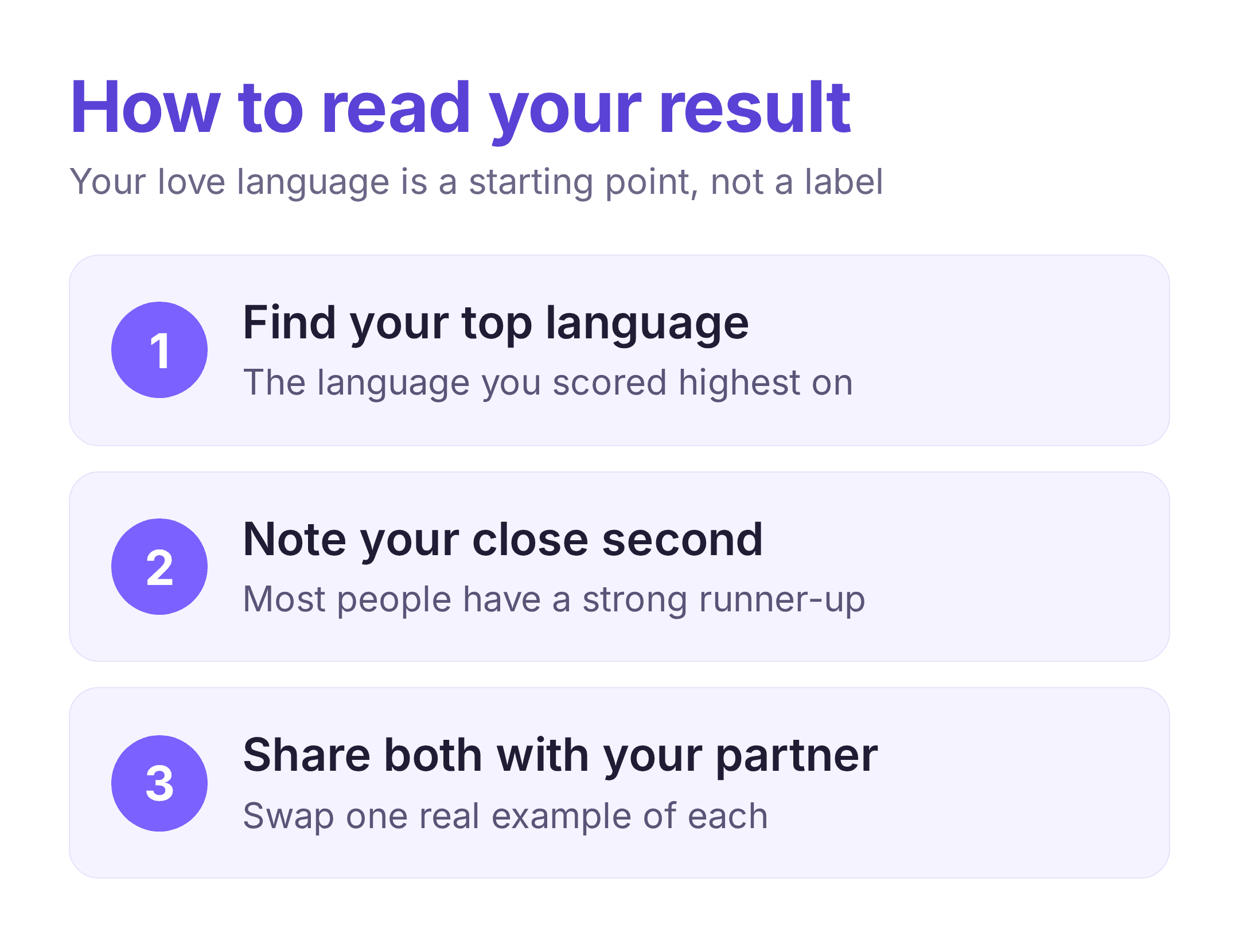
After you take the test, here is what each result means in everyday terms. Most people have one clear top language and a strong second, so read the top two with the most attention.
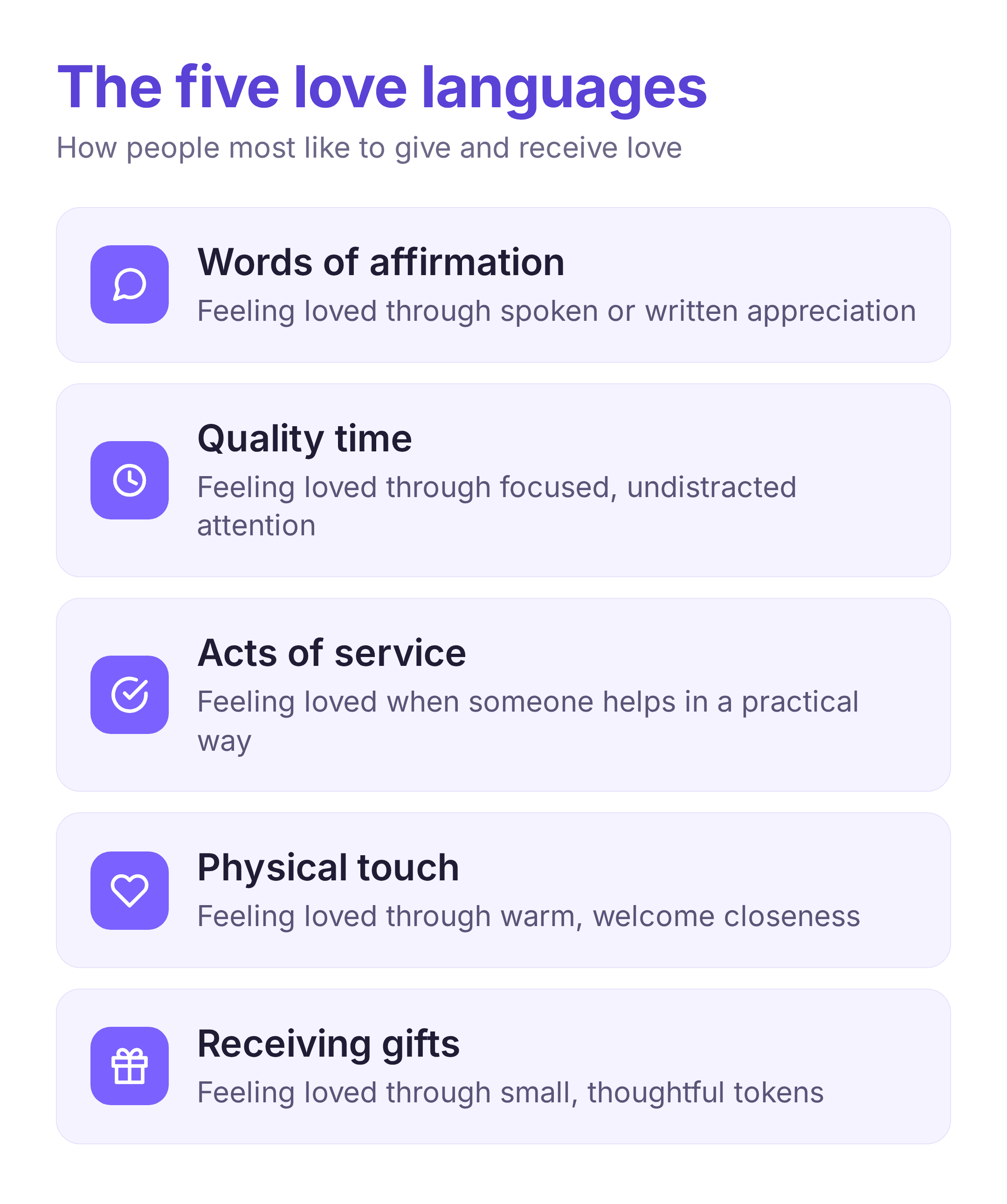
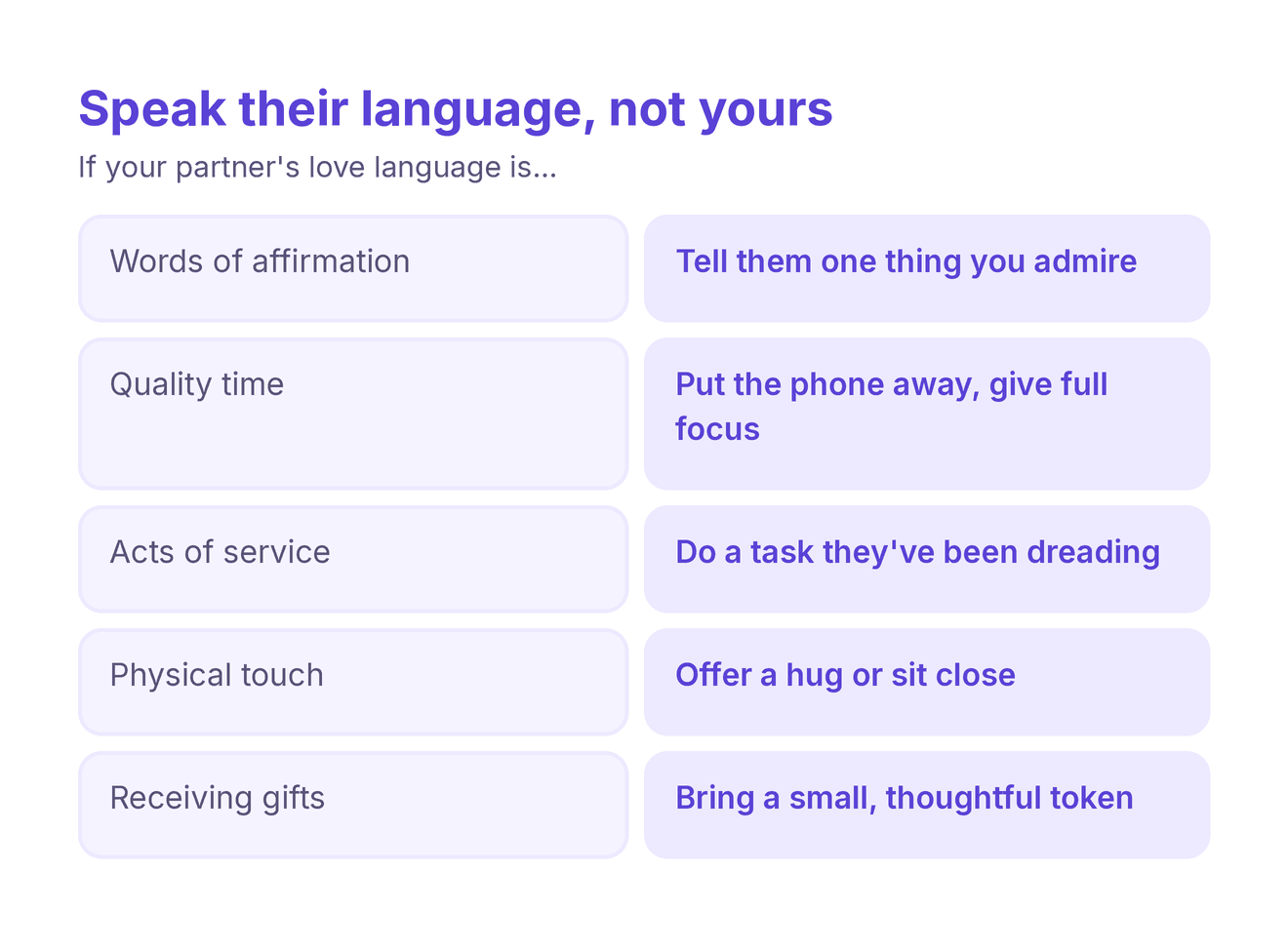
If your result is words of affirmation, you feel most loved through spoken or written appreciation: being told what someone values about you, a sincere compliment, a supportive text in the middle of a hard day. For you, the words carry the feeling, and their absence is felt just as strongly.
The quality time love language is about focused attention. What lands is not just being in the same room, but time where the phones are down and you have each other's full focus, whether that is a real conversation or an unhurried walk.
If you score high on the acts of service love language, actions speak loudest. Someone handling a task you were dreading, or doing a small thing without being asked, reads as clear proof they were thinking about you.
The physical touch love language is feeling connected through appropriate, welcome contact: a hug, a hand on the shoulder, sitting close. For people with this language, touch is a direct line to feeling safe and wanted. Tone and body language matter here too, and the RiseGuide team's guide on how to read body language is a useful companion.
With the receiving gifts love language, sometimes called gift giving, the value is in the thought, not the price. A small item that shows someone remembered a detail about you says, clearly, "I was thinking of you."
Read your result as a snapshot of what you need right now, not a permanent label. Two things are worth keeping in mind. First, most people are effectively bilingual: a top language and a close second that matters nearly as much. Second, your love language can change with your circumstances, so it is worth retaking the test every so often. The point of knowing your love languages test result is direction, a specific way to ask for what helps you feel loved and to give it in the form your partner actually feels.
You may also see people talk about the 7 love languages. This is an informal expansion of the original five, not a separate system, and the answer to what are the 7 love languages usually keeps the first five and adds a couple more that some people find describe them better, such as valuing shared activities or meaningful conversation. The core five are the original framework, and they are still the most useful starting point, so if the expanded list speaks to you, treat it as extra detail rather than a different test.
A result only helps if you do something with it. The most direct move is to say it out loud: tell your partner your top language, ask them theirs, and swap one concrete example of what it looks like in practice. From there it becomes a communication skill more than a personality quiz. It helps to know your default styles, and the RiseGuide team breaks down the four communication styles so you can spot where yours clash. When something has gone wrong, the RiseGuide team's steps to rebuild trust and to apologize well matter more than any label. And reading how your partner actually feels, rather than how you assume they feel, is a core part of emotional intelligence, which you can build with practice. If communication is the piece you want to strengthen, RiseGuide's Communication Mastery journey turns it into short, expert-based lessons you can practice a few minutes at a time.
A love language test cannot capture everything about how you love and want to be loved, but it gives you and your partner a shared, plain vocabulary for something that is easy to get wrong in silence. Take the test, compare your top languages, and use the result to give love in the form the other person actually feels.
The five basic love languages are words of affirmation, quality time, acts of service, physical touch, and receiving gifts. They describe the main ways people prefer to give and receive affection, and most people have one or two that stand out.
The 7 love languages are an informal expansion of the original five. They keep words of affirmation, quality time, acts of service, physical touch, and receiving gifts, and add a couple more that some people relate to, such as shared activities or meaningful conversation. The five remain the core framework.
Yes. The love language quiz on this page is free and takes about two minutes, with no sign-up needed to see your result.
There is no single best or most common love language, and it varies a lot from person to person. Yours is simply the one that helps you feel loved most.
Yes. Your love language can shift with your circumstances, your stage of life, and what you need from a relationship at the time, so it is worth retaking the test occasionally.