RiseGuide Team
 FREE GUIDE with any plan: the First Impression FormulaClaim the offer

MasterClass is worth it if you enjoy learning for its own sake and like hearing how accomplished people in film, writing, music, cooking, business, and sport think about their craft, in short, well-produced video lessons you can watch anywhere. Across reviews, people consistently praise the instructors and the production quality, and just as consistently point out that watching alone will not make you skilled, that there are no certificates, and that the community and personal feedback are thin. Plans run from $120 to $240 a year, billed once up front. If what you really want is step-by-step practice, feedback on your own work, a credential for your resume, or short daily sessions you keep coming back to, you will probably get more from a hands-on platform or a practice-based app.
MasterClass is one of the most recognizable names in online learning, mostly because of who teaches on it: Gordon Ramsay on cooking, Margaret Atwood on writing, Serena Williams on tennis. The idea is simple and appealing, which is also why it is worth looking closely before you pay for a year. The honest answer to whether MasterClass is worth it depends less on the platform and more on what you are hoping to get out of it. Here is what MasterClass actually gives you, what people say after spending real time with it, what it costs, and the kind of learner who tends to love it or come away wanting more.
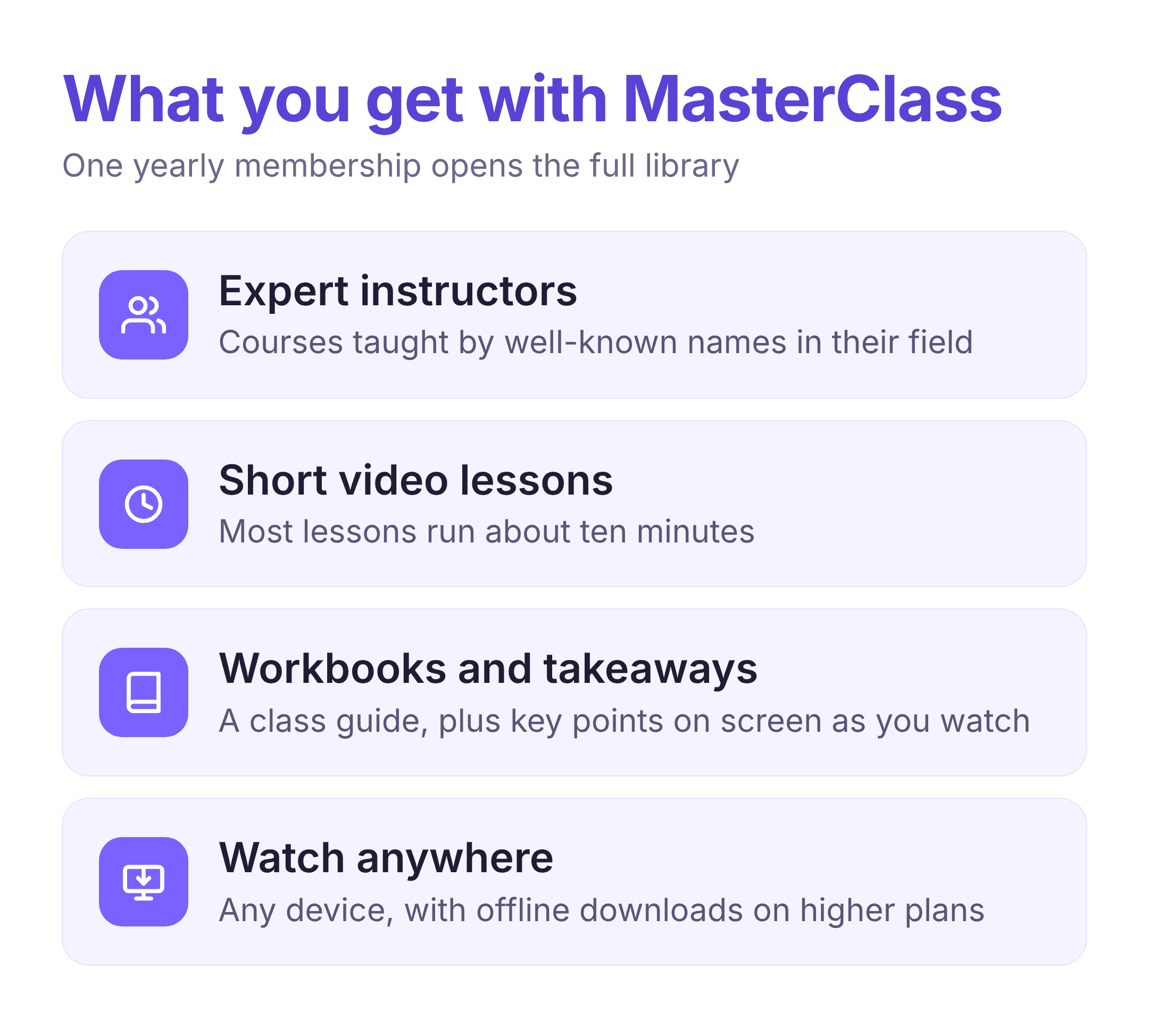
MasterClass is a subscription service built around video courses taught by well-known experts in their fields. One membership opens the full library, which covers creative subjects like writing, film, music, photography, and acting, along with cooking, business, sport, science, and personal development.
Each class is a set of short lessons, usually around ten minutes each, filmed in a polished, documentary style. Most courses come with a workbook or class guide, and an on-screen panel of takeaways that summarizes the key points as you watch. You can watch on a phone, tablet, computer, or TV, listen in audio-only mode, and on the higher plans download lessons for offline viewing. The format is closer to a well-made series than a traditional course: you are mostly watching an expert explain how they think and work, rather than completing graded exercises.
If you read through a range of MasterClass reviews, a clear and fairly consistent picture shows up, and it is worth taking it on its own terms rather than as a simple thumbs up or down.
The praise centers on the people and the production. A reviewer for AOL who worked through more than 25 courses described MasterClass as closer to a documentary than a classroom, and valued hearing experts explain their own path in a way a short video or article rarely captures. In one detailed review based on watching 70-plus courses, the standouts were the instructors' real-world examples, the clear structure of short lessons that build on each other, and the workbooks that come with most classes. People also like how easy it is to fit a lesson into a commute or an evening.
The limitations that come up again and again are just as useful to know. Reviewers note that quality varies from class to class, that some lessons lean toward philosophy and storytelling rather than concrete steps, and that watching by itself will not make you skilled without your own practice. There are no certificates, so you cannot add a class to your resume or LinkedIn, and the community features and direct feedback are limited. On Reddit threads where people debate whether the yearly subscription is worth it, the most common advice is to be honest about whether you will actually keep watching, since the value depends entirely on how much you use it.
None of this makes MasterClass a poor product. It is a well-made library of expert-led courses. The question is simply whether the way it teaches matches the way you want to learn.
MasterClass is a yearly subscription rather than a per-course purchase, and MasterClass lists three membership plans. All three open the full library; the difference is how many devices you can use at once and whether you can download lessons for offline viewing.
| Plan | Price (billed yearly) | Devices at once | Offline downloads |
|---|---|---|---|
| Standard | $120 / year | 1 | No |
| Plus | $180 / year | 2 | Yes |
| Premium | $240 / year | 6 | Yes |
A few practical points worth knowing before you subscribe. Memberships are billed once a year up front, so there is no month-to-month option, and they renew automatically at full price unless you cancel. First-time purchases made directly on the MasterClass site are covered by a 30-day satisfaction guarantee, which is the main way to try it with a safety net. Prices and plan names change from time to time and sales are common, so it is worth checking the current options at checkout.
MasterClass tends to be well worth it for a specific kind of learner. If you recognize yourself here, the odds are good that you will enjoy the membership and use it.
For this learner, the yearly cost is easy to justify, and the breadth of the library is a real draw.
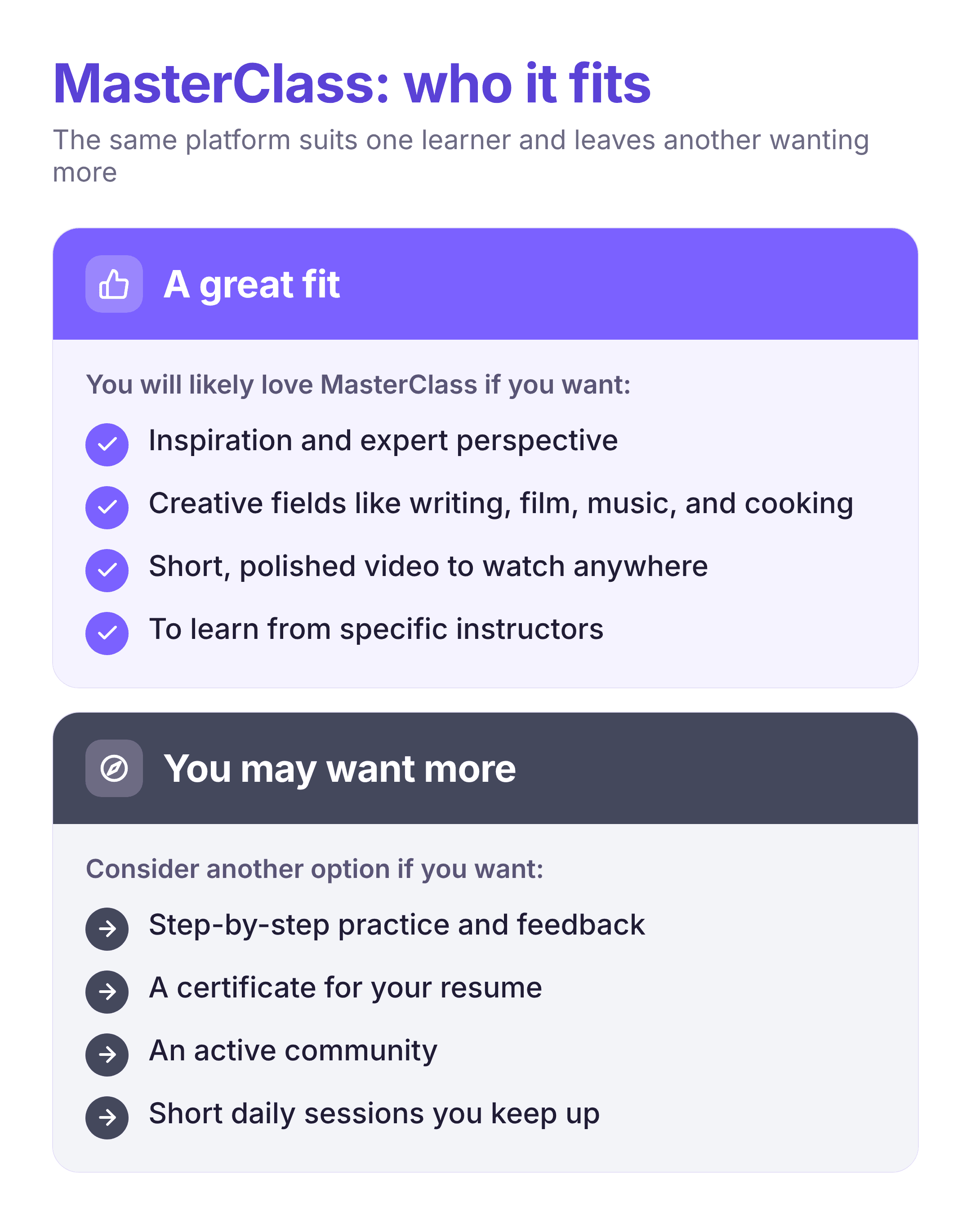
MasterClass is a wonderful platform for the learner above. It is just as fair to say that some people will want something different.
You may want more than MasterClass gives if you are hoping to actively build a skill rather than watch someone describe theirs. If you learn best by doing a little every day, getting feedback, and practicing in short sessions you return to, a watch-and-absorb library can feel one-directional. The same is true if you need a certificate for work, want structured assignments, or are looking for an active community.
If that sounds like you, it is worth looking at the alternatives rather than forcing the fit. Our team's roundup of Masterclass alternatives walks through the main options by what they are good for, from broad course libraries with certificates to practice-based apps. If you want to compare a few head to head, our team also put RiseGuide, MasterClass, and Mindvalley in a side-by-side comparison.
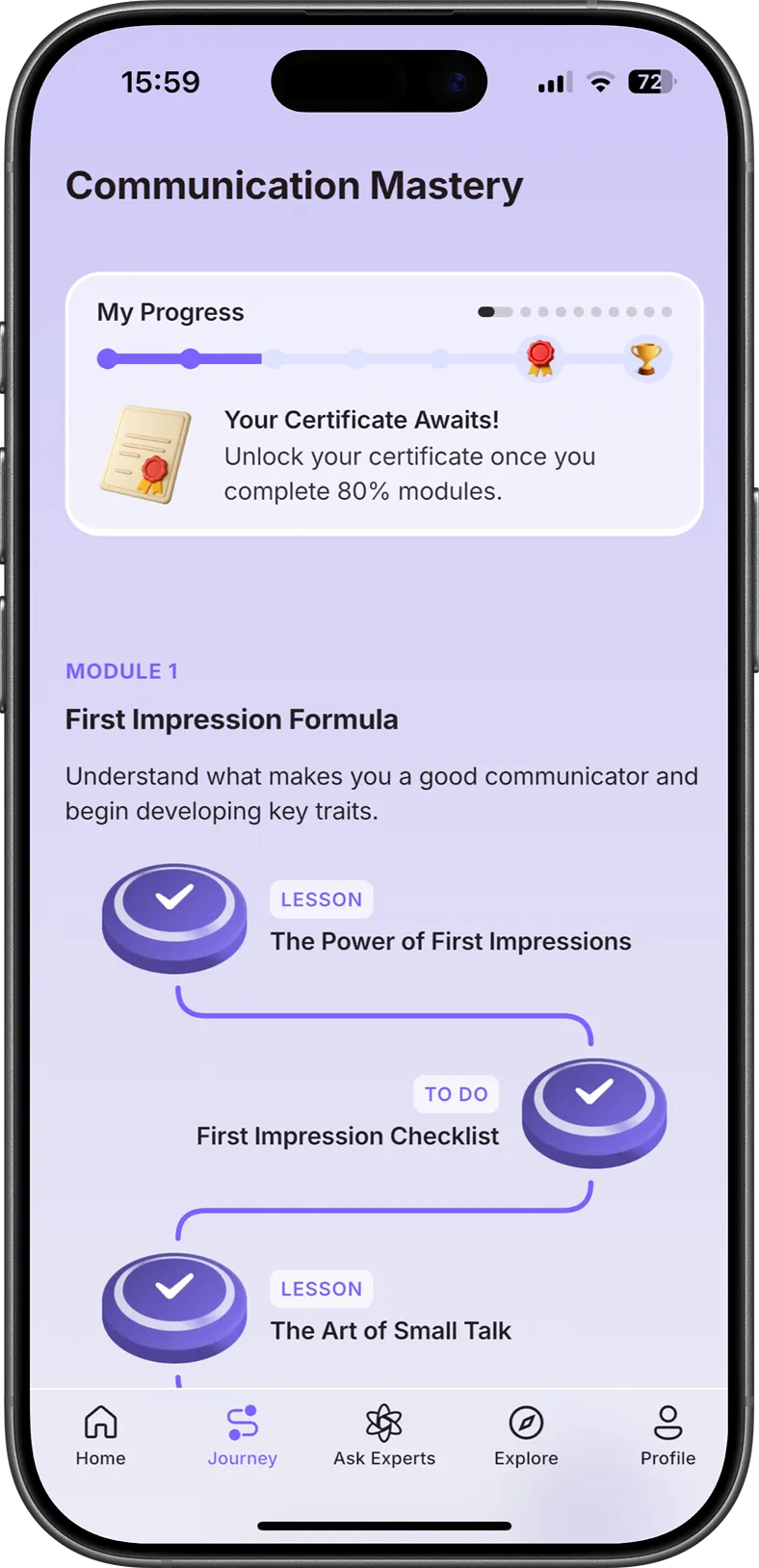
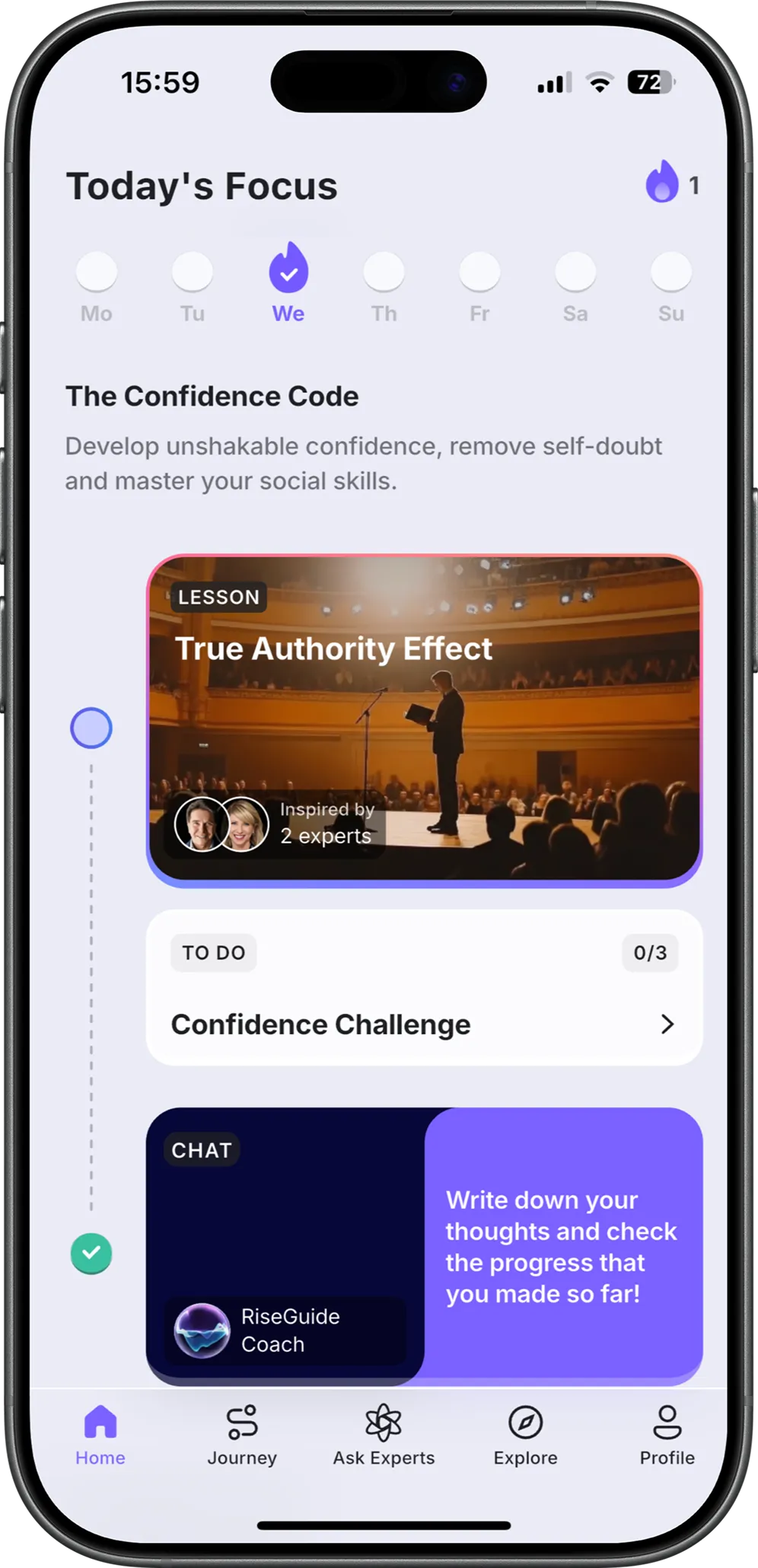
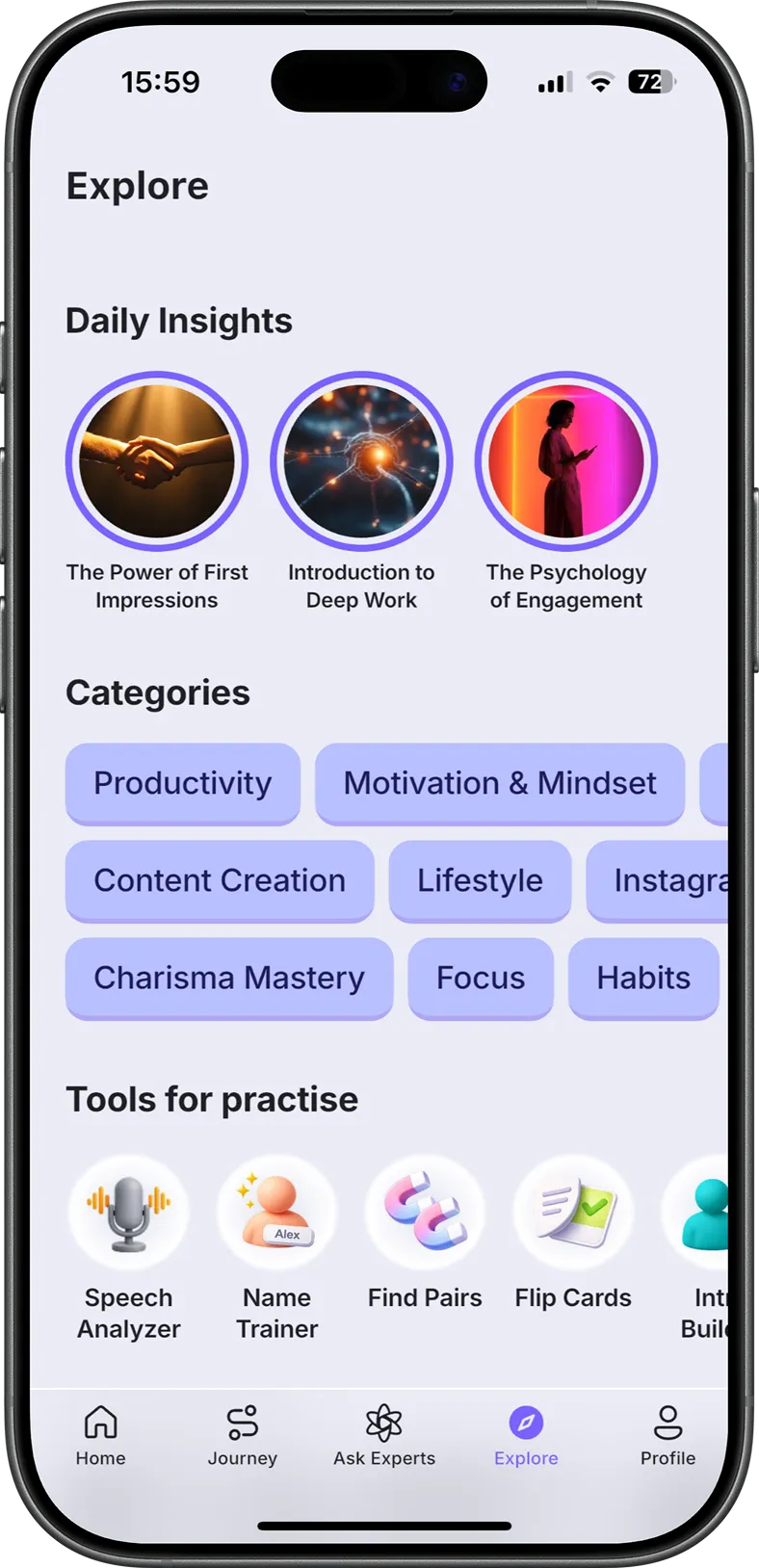
One option in that practice-first group is RiseGuide, a self-improvement app built from the insights of experts. Instead of long video courses, it gives you short, interactive micro-learning journeys, around 10 minutes each, that you work through a little at a time, with tools to practice what you are learning rather than only watch it. For a wider set of practice-based and course-based picks, our team's list of the best microlearning apps is a good place to start.
Is MasterClass worth it? For the right person, clearly yes. If you love learning for its own sake, enjoy creative subjects, and like short, beautifully produced lessons from people at the top of their field, it is one of the most enjoyable ways to spend time learning, and the yearly cost is easy to justify. If you want to actively build a skill with practice, feedback, certificates, or short daily sessions, you will likely be happier with a more hands-on platform or a practice-based app, and MasterClass may leave you wanting more. The platform is a strong one. The real question is whether the way it teaches matches the way you want to learn, and that is something only you can answer.
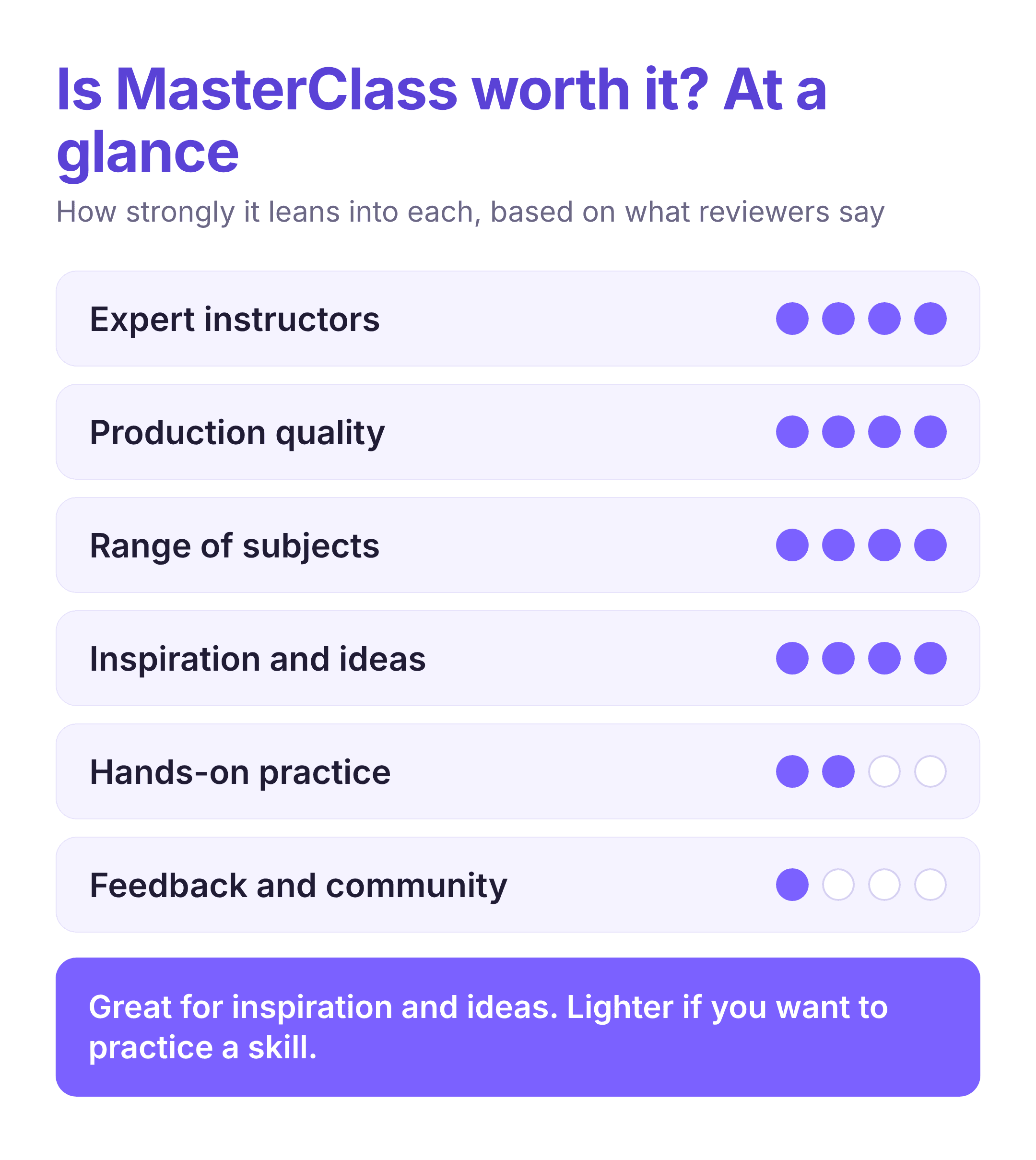
It depends on your goal. MasterClass is worth it if you want inspiration and a close look at how accomplished people work, delivered in short, polished video. If you want structured practice, feedback, or a certificate, another platform will likely serve you better.
MasterClass has three yearly plans: Standard at $120 a year, Plus at $180 a year, and Premium at $240 a year. All three open the full library, and the higher plans add more simultaneous devices and offline downloads. Memberships are billed once a year and renew automatically.
No. MasterClass does not award certificates of completion, so you cannot add a class to your resume or LinkedIn. If a credential matters to you, look at platforms built around certificates instead.
MasterClass does not offer an open free trial, but first-time purchases made directly on its site come with a 30-day satisfaction guarantee, which lets you try it and get a refund if it is not for you. Existing members can also send a short guest pass to someone else.
There is no single better option, only a better fit for your goal. If you want hands-on practice, certificates, or a wider range of professional topics, other platforms may suit you more. Our team's guide to Masterclass alternatives compares the main ones.
They are built for different things. MasterClass is about inspiration and expert perspective in mostly creative fields, with no certificates. Coursera is closer to structured university and professional courses, often with graded work and certificates. The better choice is whichever matches what you want to walk away with.