RiseGuide Team
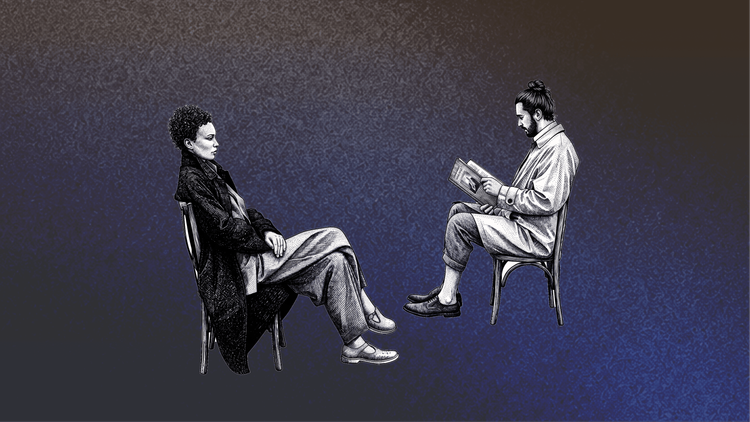
The difference between an introvert and an extrovert comes down to where you get your energy. Introverts recharge with quiet, alone time, while extroverts recharge around other people. Introverts tend to prefer depth, think before they speak, and feel drained by long social stretches. Extroverts tend to think out loud, enjoy lots of contact, and feel flat with too much time alone. Most people are ambiverts, sitting somewhere in the middle and leaning either way depending on the day. Neither type is better, and you can get a rough sense of yours from how you feel after a busy, social weekend compared with a quiet one.
"Introvert" and "extrovert" get used loosely, usually to mean shy versus outgoing. The real difference is about where you get your energy, and once you understand it, a lot of your own preferences start to make sense: why a big party can leave you flat, or why a whole day alone can leave you restless. This guide explains what introvert vs extrovert means, the traits of each type, where most people fall on the spectrum, and how to tell which way you lean.
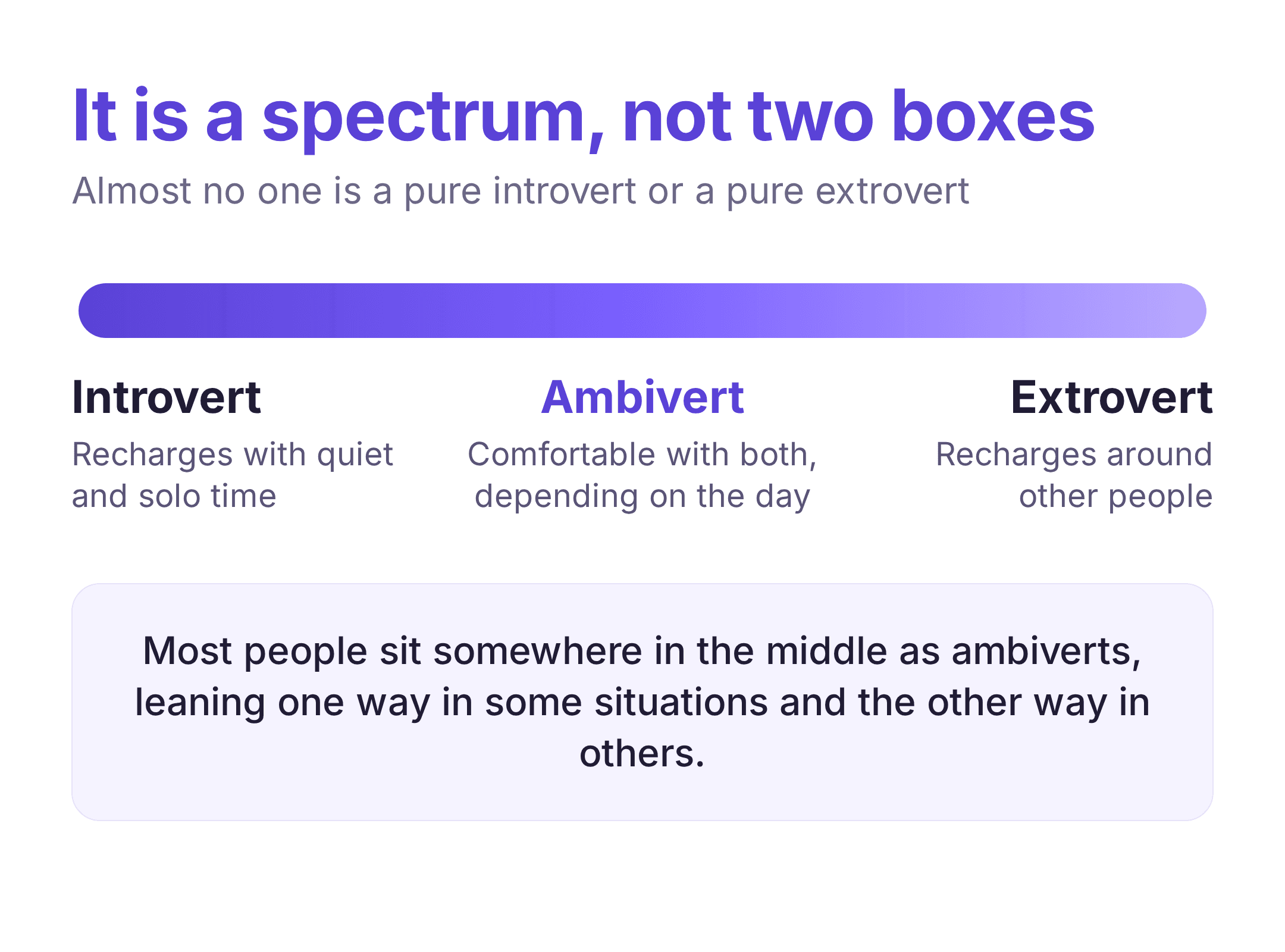
The core difference is energy. Introverts recharge in quiet and solitude, and extroverts recharge in company. Someone who leans introverted can enjoy a party and still come home drained, needing alone time to refill. Someone who leans extroverted can enjoy an afternoon alone and still feel restless by evening, wanting people around to feel like themselves again. Psychologist Carl Jung first described the terms in 1910, and today psychology treats introversion and extraversion as the two ends of one of the Big Five personality traits, measured on a spectrum rather than as two separate boxes. It is about where your energy comes from, and it is separate from being shy or confident. Plenty of introverts are socially skilled, and plenty of extroverts get nervous.
No one fits a type perfectly, but some patterns show up often. Introverts tend to prefer depth over breadth, a few close friends over a wide circle, and thinking a point through before saying it. Extroverts tend to prefer variety and contact, work out what they think by talking, and feel energized by a busy room.
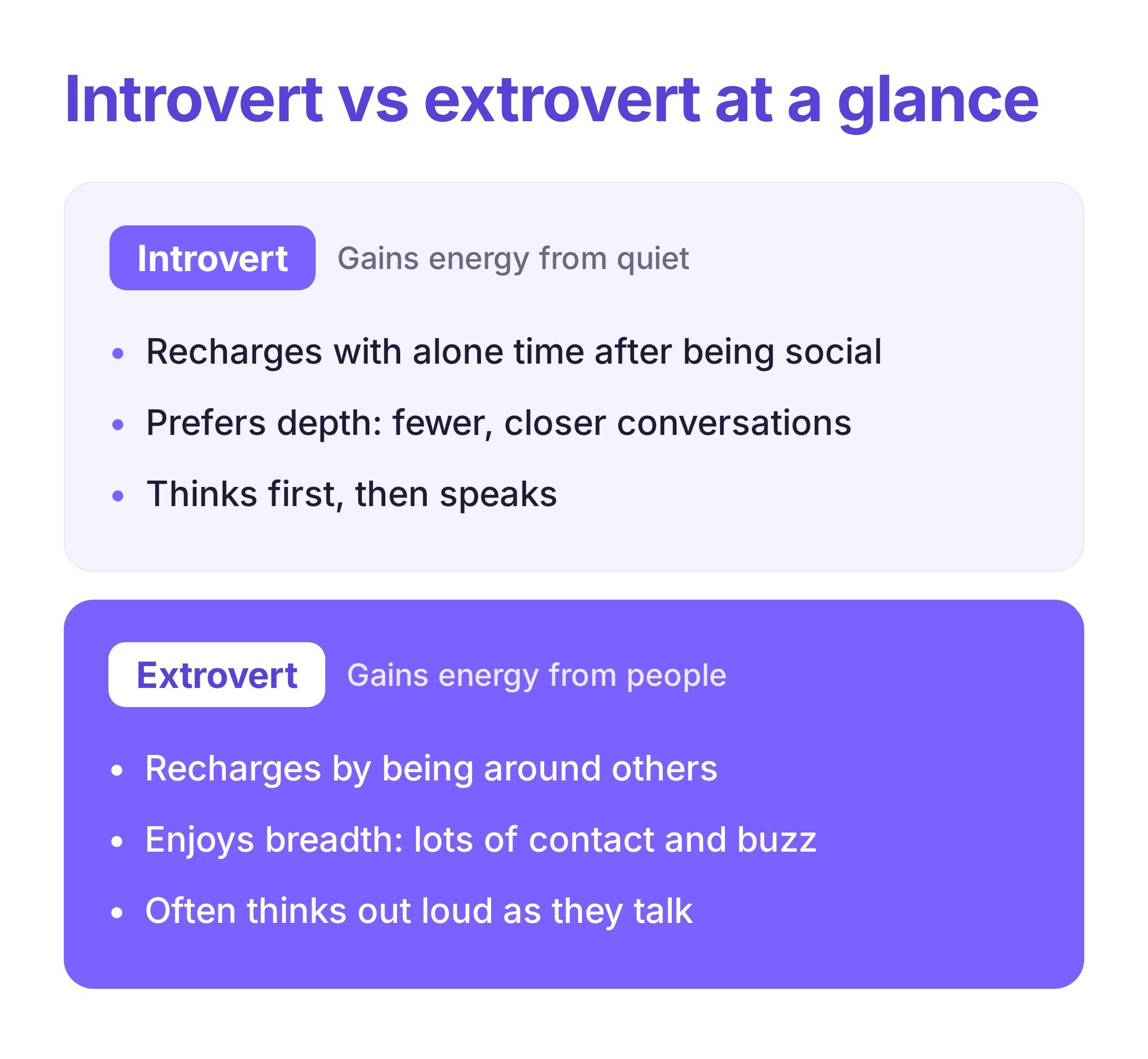
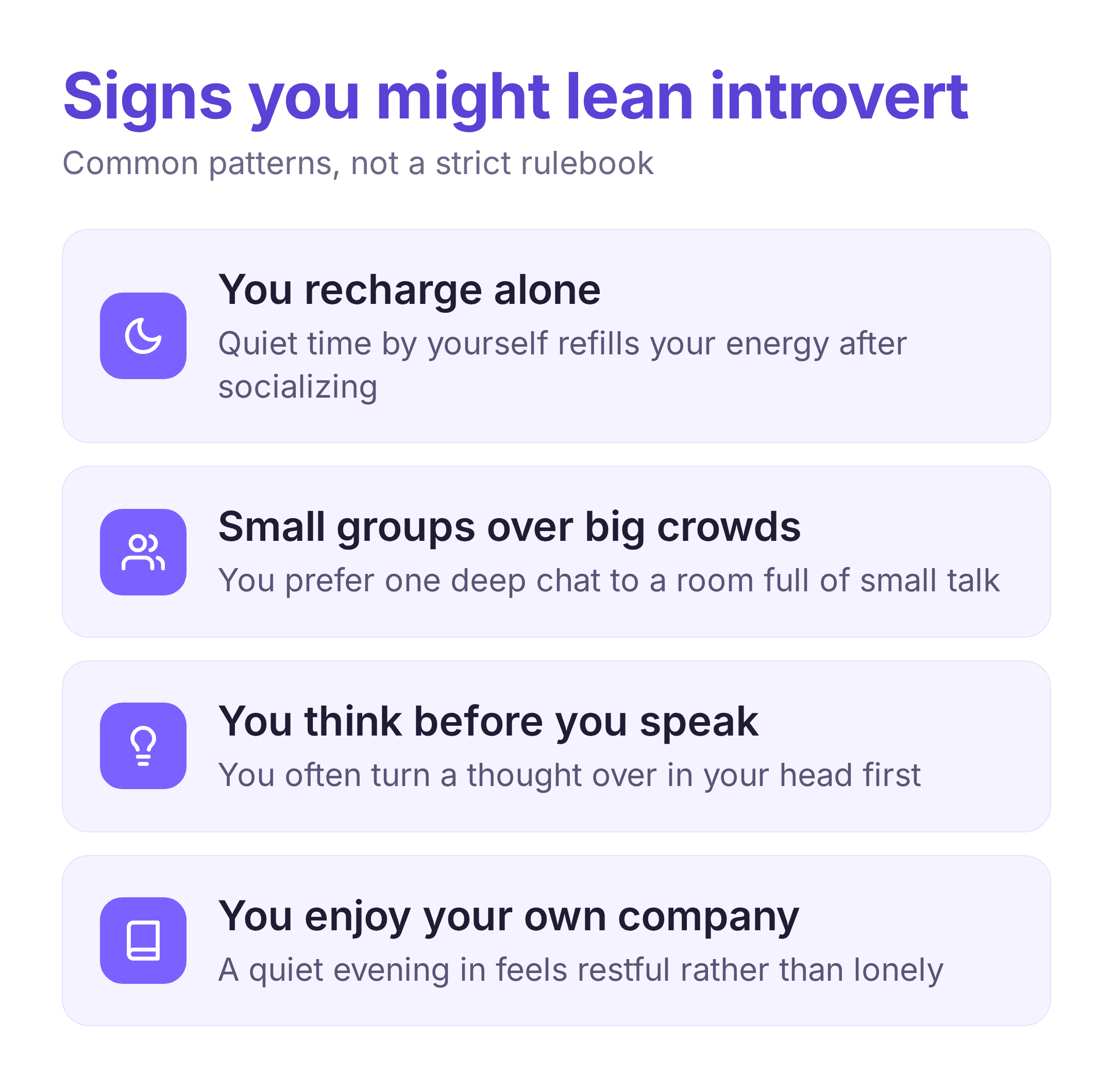
The clearest signs of an introvert are about energy and preference, not skill. You probably recognize a few of these: you look forward to a quiet night in, you find small talk tiring but enjoy a real conversation, you rehearse things in your head before you say them, and after a big social event you need time alone to recover.
Extroverts show the opposite pattern. You feel energized after time with people, you often figure out what you think by talking it through, you are comfortable jumping into a conversation, and too long on your own leaves you restless and looking for company.
Most people are not at either extreme. An ambivert sits in the middle of the spectrum, comfortable being social and comfortable being alone, and shifting between the two depending on the situation and the day. If you read the lists above and felt like both described you, that is normal, and it probably means you are an ambivert.
Personality researcher Brian Little takes this further, showing that even a strong introvert or extrovert can act out of character when something matters to them, like a reserved professor who becomes lively and outgoing on stage because the subject matters to them.
You do not need a formal introvert vs extrovert test to get a useful read on yourself. Ask how you feel after two different weekends: one packed with people and plans, and one mostly quiet and alone. The weekend that leaves you refreshed points toward your type, and the one that leaves you drained points away from it. A few more questions help if you are still unsure:
If your answers lean one way, that is your tendency. If they are split, you are likely an ambivert. Treat this as a rough self-check to help you reflect, not a clinical or scientific test, so hold the result lightly.
No. Each way of being has real strengths, and the world needs both. Introverts often bring focus, careful listening, and depth. Extroverts often bring energy, quick connection, and ease in a crowd. Susan Cain, whose book Quiet made the case for introverts, argues that quiet people are undervalued in a culture built around the loudest voice in the room, and that their strengths are worth protecting.
Whatever your type, the social skills that help are learnable. Introverts can get comfortable with small talk and still keep it genuine, anyone can learn to make friends as an adult, and charisma is a set of habits more than a fixed trait, as our post on how to be charismatic explains. If the social side does not come naturally, RiseGuide's Communication Mastery journey breaks it into short, practical lessons built on expert insights, so you can build the skill in a few minutes at a time.
Introvert and extrovert are useful labels as long as you hold them loosely. They describe where you get your energy, not what you are capable of, and most people land somewhere in the middle. Once you know which way you lean, you can shape a life that fits: enough quiet if you are an introvert, enough contact if you are an extrovert, and room to step out of type when you need to.
An extrovert is someone who gets their energy from being around other people. They tend to feel their best in company, think out loud, and find long stretches of alone time draining rather than restful.
An ambivert is someone in the middle of the introvert-extrovert spectrum. They are comfortable both socializing and being alone, and they lean one way or the other depending on the situation, their mood, and the day. Most people are ambiverts.
The quickest way to tell is to notice how you recharge. If quiet, solo time refills your energy, you lean introvert. If being around people does, you lean extrovert. If both feel fine and it depends on the day, you are probably an ambivert.
An omnivert is a less common term for someone who swings between clearly introverted and clearly extroverted modes rather than sitting steadily in the middle like an ambivert. On some days or in some settings they are very outgoing, and in others they are very reserved.
Your basic tendency is fairly stable, but it can shift gradually over life, and you can learn to act out of type when you need to. An introvert can grow confident in social settings, and an extrovert can learn to enjoy solitude, without either one changing who they are at the core.