RiseGuide Team

To overcome procrastination, stop treating it as a time-management flaw and start making the task easier to begin. The eight methods are simple: shrink the first step so starting takes two minutes, ease the feeling the task stirs up instead of avoiding it, plan exactly when and where you'll do it, tackle the hardest thing first, remove the friction and distractions around you, work in short timed sprints, add a deadline or someone to answer to, and forgive yourself for the last time you put it off. Pick one and use it on whatever you're avoiding right now; you don't need all eight to start.
Everyone puts things off sometimes. It turns into a real problem when the important task keeps sliding to tomorrow while the stress quietly grows. The good news is that procrastination isn't a character flaw or plain laziness, and you don't beat it with more guilt or a stricter schedule. You beat it by understanding what's driving the delay and using a few practical methods to get moving.
Procrastination is choosing to delay something you know you should do, even though you expect to be worse off for it. That last part is what separates it from a sensible pause: you can see it'll cost you, and you do it anyway.
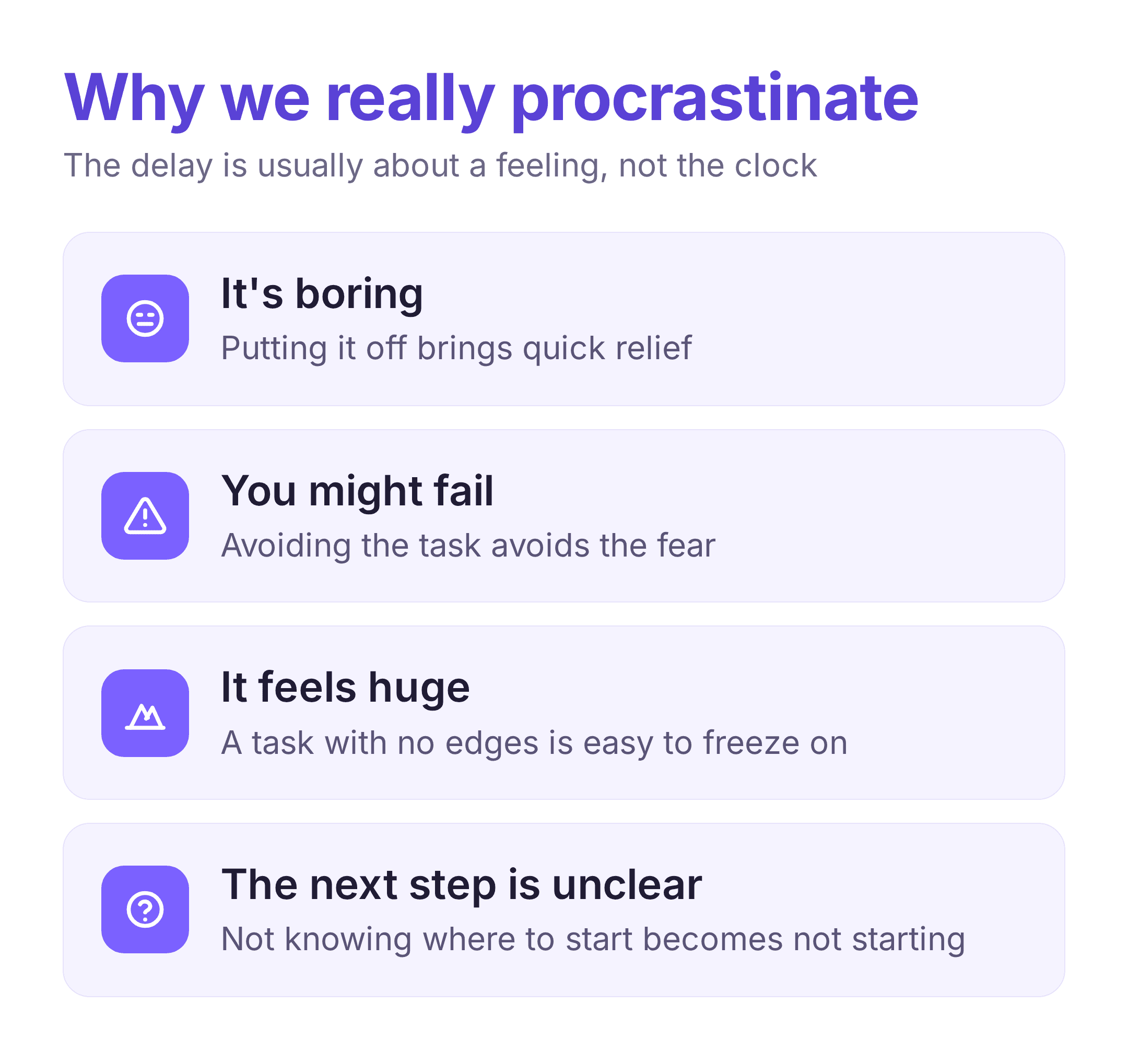
For a long time people assumed that meant a time-management problem. Research points somewhere else. We mostly procrastinate to escape an uncomfortable feeling the task brings up, whether that's boredom, anxiety, or the fear of doing it badly; putting it off brings quick relief, which is why it's so hard to resist. Psychologist Tim Pychyl, who studies this, frames it as managing emotions rather than managing time. In a widely watched TED talk on procrastination, writer Tim Urban put the same idea in more playful terms, describing the impulsive part of the mind that hijacks the plan: "The Instant Gratification Monkey does not seem like a guy you want behind the wheel. He lives entirely in the present moment."
That reframe tells you where to aim. If you want the deeper reasons behind your own pattern, our team's post on why you procrastinate digs into the causes. The rest of this guide is about what to do once you know the delay is about the feeling.
No single trick fixes procrastination for everyone, so treat these as a toolkit. Most work by making the task smaller, less unpleasant, or harder to avoid. Try one on whatever you're putting off right now.
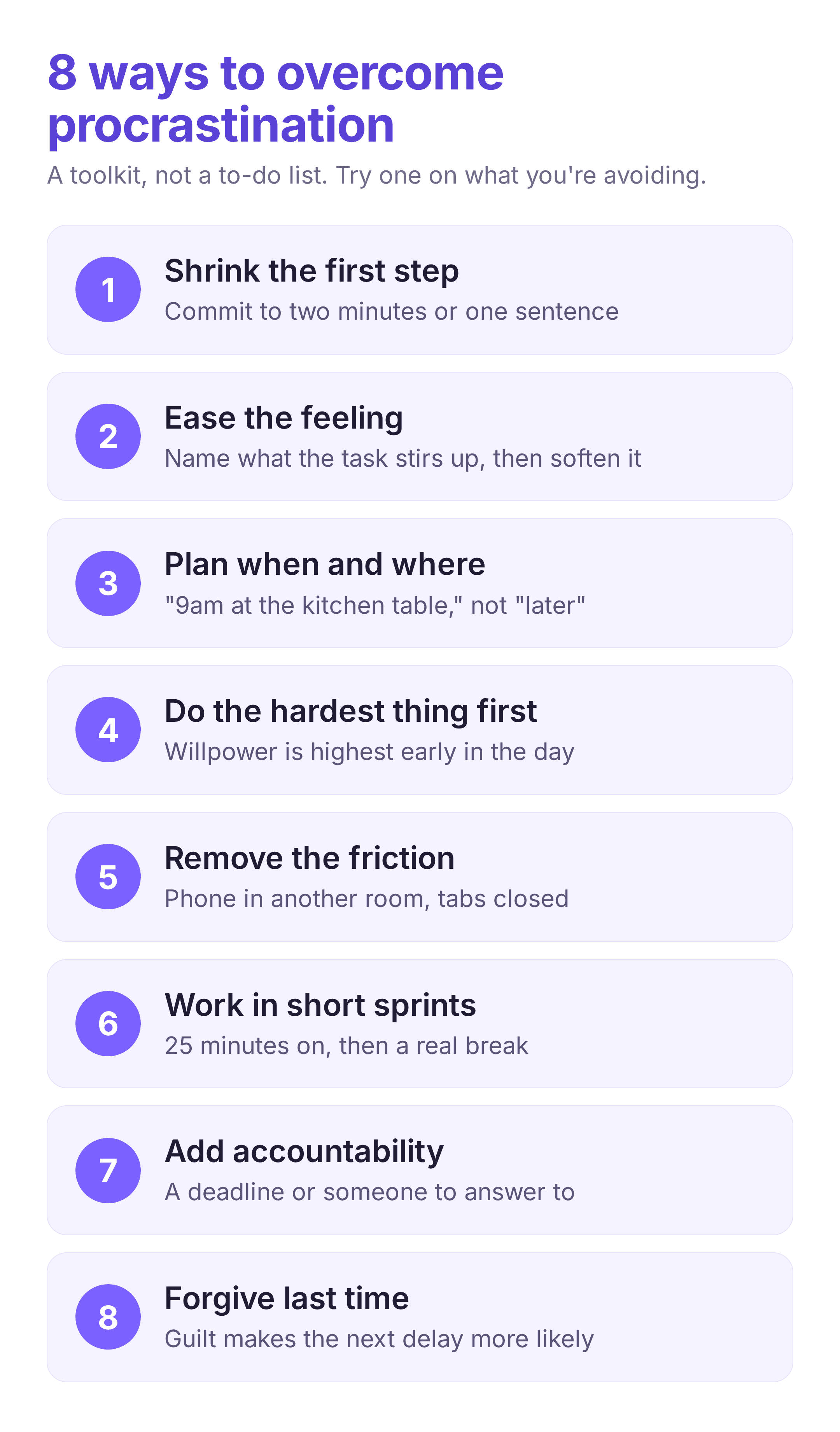
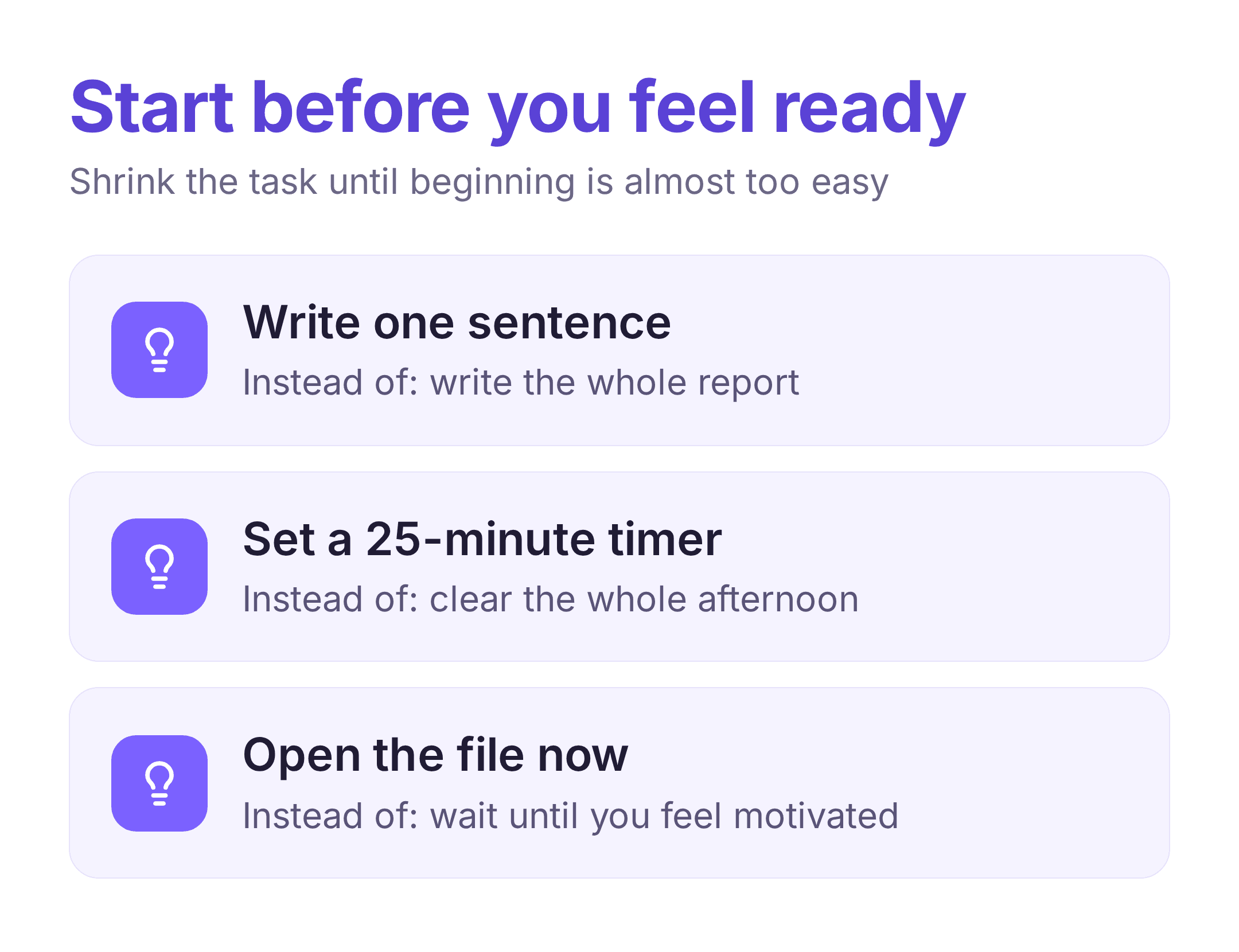
The hardest part is starting, so make starting tiny. Commit to two minutes, or to opening the document and writing one sentence. Once you've begun, staying in motion is far easier than starting cold, and the two-minute version often turns into twenty.
Since the delay is usually about dodging discomfort, name what the task makes you feel: is it boring, confusing, or scary because you might fail? Naming it takes some of the charge out of it, and you can often shrink the feeling by making the task clearer or smaller. Being kind to yourself about past delays helps too; harsh self-talk adds another bad feeling to avoid. If your inner voice runs cruel when you slip, Juliann Wiese, a Master Certified Coach and one of our experts, has a useful piece on working with your inner critic.
Vague intentions lose to specific plans. Decide the exact moment and place, like "I'll draft the report at 9am at the kitchen table," instead of a vague "I'll get to the report." Tying the task to a concrete time and spot removes the in-the-moment negotiation where procrastination wins.
Willpower is highest early, so put the task you most want to avoid at the front of your day, before the small stuff eats your energy. Getting the worst thing done first also removes the dread that would otherwise hang over everything else you do.
Make the right task easy to start and the distractions annoying to reach. Put your phone in another room, close the extra tabs, and lay out whatever you need the night before. Every bit of friction you remove is one less excuse to stall.
A big open-ended task invites delay. Set a timer for 25 minutes, work on just that task, then take a short break. Short sprints feel manageable, give you a clear finish line, and quietly build the kind of good habits that make focus automatic over time.
We take our commitments to other people more seriously than the ones we make to ourselves. Tell a colleague you'll send it by three, work alongside a friend, or set a real deadline with a small consequence. A little outside accountability can carry you past the moment you'd normally quit.
Beating yourself up over yesterday's procrastination makes today's more likely, because it piles on the bad feelings you're trying to escape. Letting the last slip go, and simply starting again, takes away that extra weight. Forgiving yourself is what lets you start again.
Procrastination isn't a flaw in your character, and it fades fastest when you make the task easier to face and start before you feel ready. Pick one method from this list, aim it at the thing you've been avoiding, and give yourself credit for beginning at all. Done a few times, starting stops feeling like such a battle.
For most people the root is emotional. We put off tasks that stir up boredom, anxiety, or a fear of failing, because delaying them brings quick relief. That's why "just try harder" rarely works, and why easing the feeling around a task tends to help more than a stricter schedule.
Shrink the task to a two-minute first step and start that, today, before you feel ready. Put your phone in another room and set a 25-minute timer. Beginning is the hard part, and once you're moving, continuing is much easier.
No. Procrastinators usually care a lot about the task, which is why it feels stressful enough to avoid; laziness is the absence of that care. Treating procrastination as laziness and piling on guilt tends to make it worse.
It's the idea that you commit to doing something for just two minutes, or to a version of the task that takes two minutes, to get past the friction of starting. It works because starting is the biggest hurdle, and a tiny start often builds into real momentum.