RiseGuide Team
To practice public speaking, get regular reps at the act of speaking and raise the pressure gradually as each stage gets comfortable. You don't need a stage, a course, or an open mic: rehearse out loud at home, run your talk past a friend or a small group, use the low-stakes chances to speak already on your calendar, join a club or class if you want a standing audience, and use a public speaking app when you want feedback on your own. What makes the reps pay off is aiming each one at a specific weakness, getting precise feedback, and practicing more often than feels necessary.
Speaking improves the way any skill does, through doing it, but real chances to speak to a room can feel rare, so the practice never starts. You can get most of your reps on your own, in ordinary settings, well before you're on a stage.
More practice isn't automatically better practice. When psychologist Anders Ericsson studied how people reach the top of demanding fields, the deciding factor wasn't the number of hours but their quality: practice that targets a specific weakness and gives you immediate feedback on it. Run a talk start to finish ten times and you mostly rehearse the habits you already have; work a single pass on one problem - a rushed opening, the spot where you lose your thread - and you actually change something. The moment in front of the audience is the worst place to find those problems, which is exactly why you surface them in practice first. Alexander Triassi of the MIT Communication Lab makes the comparison:
"Delivering an unpracticed talk to your audience is like submitting your first draft of a paper to a journal editor."
So the point of practice isn't to log reps for their own sake, but to spend your rough drafts somewhere they cost nothing.
The settings below run roughly from lowest pressure to highest, and that order matters. Meeting speaking situations gradually, rather than all at once, is one of the most consistent findings in decades of research on public-speaking anxiety. Start wherever feels manageable and add pressure as each stage gets comfortable. Tim Ferriss uses the same logic when he prepares for a big talk:
"Mimic game-day conditions as much as possible… I don't want my first rehearsal in front of a large group of strangers to be when I stand up in front of 3,000 people."
The lowest-pressure place to start is how to practice public speaking at home, alone. Say the whole thing out loud, standing up, the way you would in the room, instead of reading it over in your head. Talk it through to the wall, record a voice memo and play it back, or prop your phone up as a camera. Home is where reps are effectively free and unlimited, and reps are what eventually make a talk feel easy. Carmine Gallo, who studied hundreds of the most-watched TED talks, points to how far the best speakers take that:
"Brain researcher, Dr. Jill Bolte-Taylor, told me she rehearsed her TED Talk not once or twice, or even ten times. She practiced it 200 times."
You won't need 200 run-throughs, but the direction is right: practice more often than feels necessary, spread across days rather than saved for the night before.
Once the words are steady, add a couple of listeners - a partner, a friend, a few colleagues. A small audience is safe enough to relax into and real enough to change how you sound, and it gives you the one thing solo practice can't: an outside read. That read only helps if it's specific, though. A 2024 study in Communication Education found that feedback improves speakers most when it's precise and they act on it, which is why a vague "that was good" changes nothing. Gallo puts it the same way:
"While 'good job' might help you feel good, it won't help you get better. Ask them to be specific."
Ask your listeners for one concrete thing to change, not an overall verdict.
You speak in public more often than you probably count. Asking a question in a meeting, giving a short status update, proposing a toast, or speaking up in a group are all public speaking on a small scale. If you're wondering where to practice public speaking without organizing anything, these are the moments - real enough to lift your pulse a little, frequent enough that the practice compounds. Pick one this week and treat it as a deliberate rep rather than something to get through.
When you want a dependable audience and a reason to show up, a Toastmasters club, a local meetup, or a speaking class gives you both. The value is less any single session than the schedule: a standing commitment turns practice from something you mean to get to into something that happens every week, in front of people who came for the same reason.
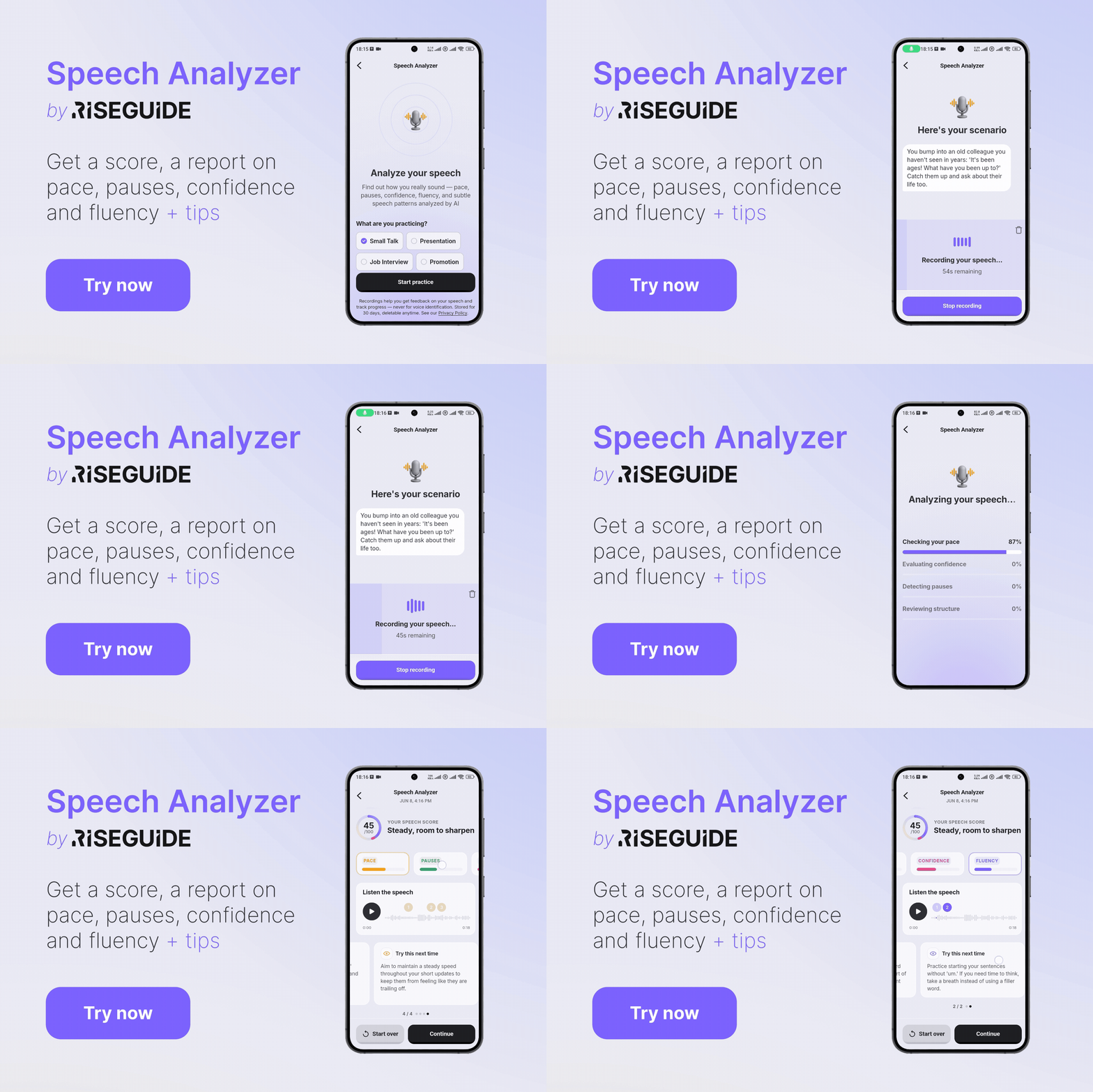
When you want to rehearse and get feedback on your own, a practice public speaking app can stand in for the audience. Some record you and flag your pace and filler words, some coach your voice, and some simulate a conversation - even that kind of simulated practice helps, with a 2024 trial finding that a single session of virtual-reality practice lowered speaking anxiety. Match the app to what you're working on; we compared the main options in our guide to public speaking apps. RiseGuide is one of them: our Communication Mastery journey teaches speaking, body language, and voice in short daily lessons built from expert insights, and its Speech Analyzer reviews a short recording and shows you where your pace, pauses, and clarity slip.
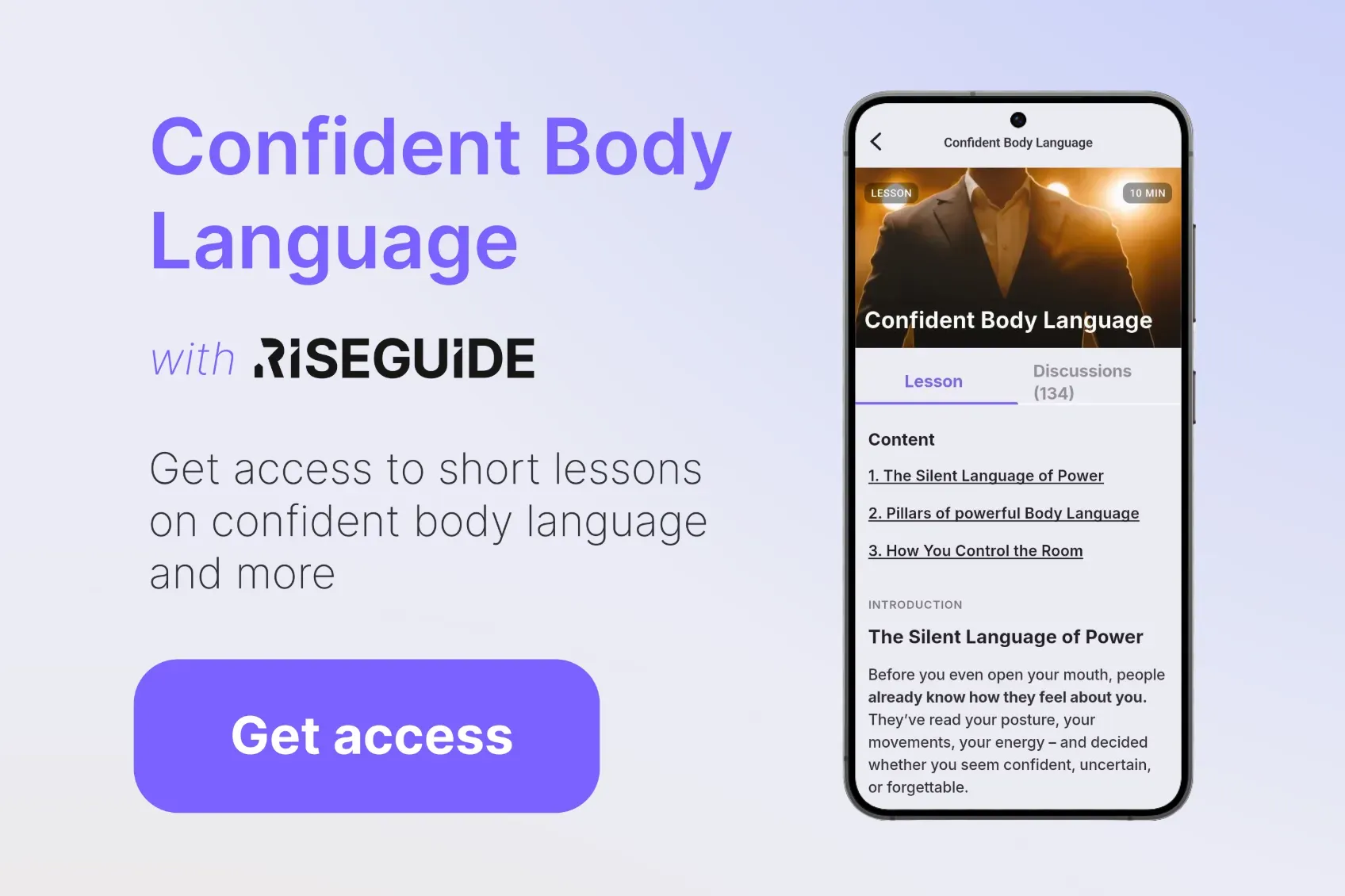
Pick one setting from the list, use it this week on something low-stakes, and move up as it starts to feel routine. And because an audience takes in your posture, hands, and eyes as much as your words, it's worth rehearsing how you carry yourself alongside what you say. RiseGuide's lessons on a confident body cover that side of delivery.
Learning how to learn public speaking skills without a coach comes down to two things: regular reps at speaking out loud, and precise feedback on how they went, whether from a person, a recording, or an app. Once you're practicing regularly, working on specific delivery habits gives you things to aim at, which is what our guide to improving your public speaking skills covers.
Yes. How to learn public speaking at home mostly means speaking your material out loud on your feet, recording yourself to see how it lands, and gradually adding a small audience. You don't need a class or a stage to make real progress.
If you're asking where can i practice public speaking without an audience watching, start where no one is: rehearse alone and record it, then move to one trusted person, then to low-stakes real moments like a question in a meeting. Raising the stakes gradually is what keeps the nerves manageable.