RiseGuide Team

If you just want the shortlist, here are the six, each with the kind of speaker it suits:
Pick RiseGuide if you want to learn the craft and rehearse it as you go, Orai or Speeko if you want feedback right after you record yourself, Vocal Image if your focus is how your voice sounds, and Yoodli if most of your speaking happens on video calls.
Search "public speaking" in either app store and you'll scroll past dozens of apps making nearly identical promises about confidence and clarity. They are not interchangeable. One grades a recording of your speech, another drills the sound of your voice, a third quietly takes notes during your video calls, and some give you practical tips on how to build a talk. The skill they each target is different, so the right choice depends on the part of speaking you personally find hardest — interview nerves, a rambling delivery, a thin voice, or simply never practicing out loud.
This guide sorts the six apps below by what each one is built to do, so you can find the match for your situation. Each entry covers what it teaches, its current rating and price, who it suits, and what are the possible limitations.
Most of these apps fall into one of three camps, and knowing which is which prevents a wasted subscription.
A handful blend two of these, but few do all three well, so the first question to ask is which one your situation actually calls for.
Two details separate an app you'll still use next month from one you'll abandon. The first is whether it gives you something to act on rather than just a verdict; a 2024 study in Communication Education found that feedback helps speakers most when it's specific and they apply it, which is the difference between an app that scores you and one that tells you what to change. The second is where the teaching comes from - guidance shaped by experienced communicators tends to hold up better than generic tips once you're past the basics. With that in mind, here are the six.
App Store (4.6 ⭐)
Google Play (4.1 ⭐)
Best for: people who want practical learning, built on expert insights, that they can put into action.
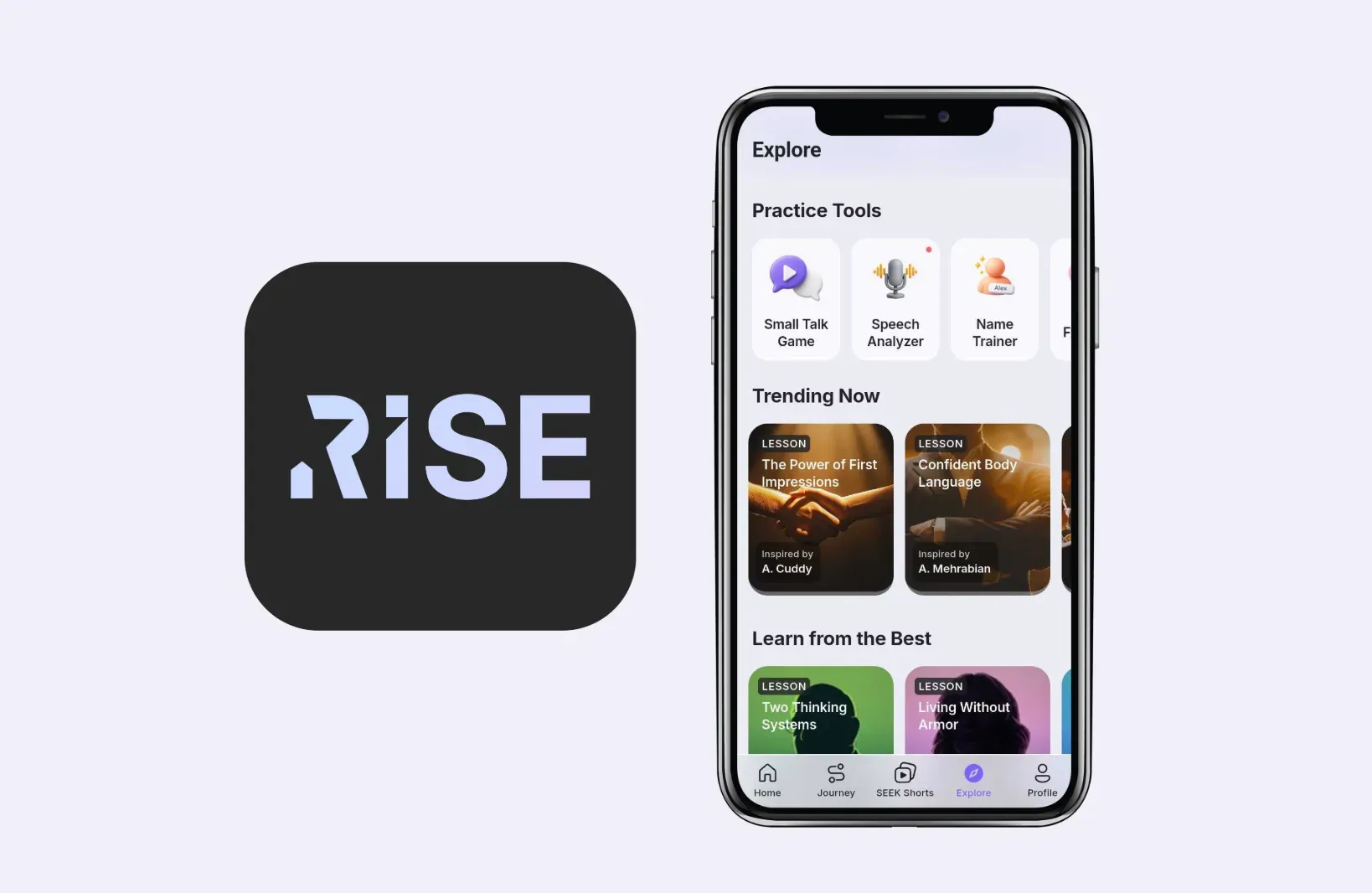
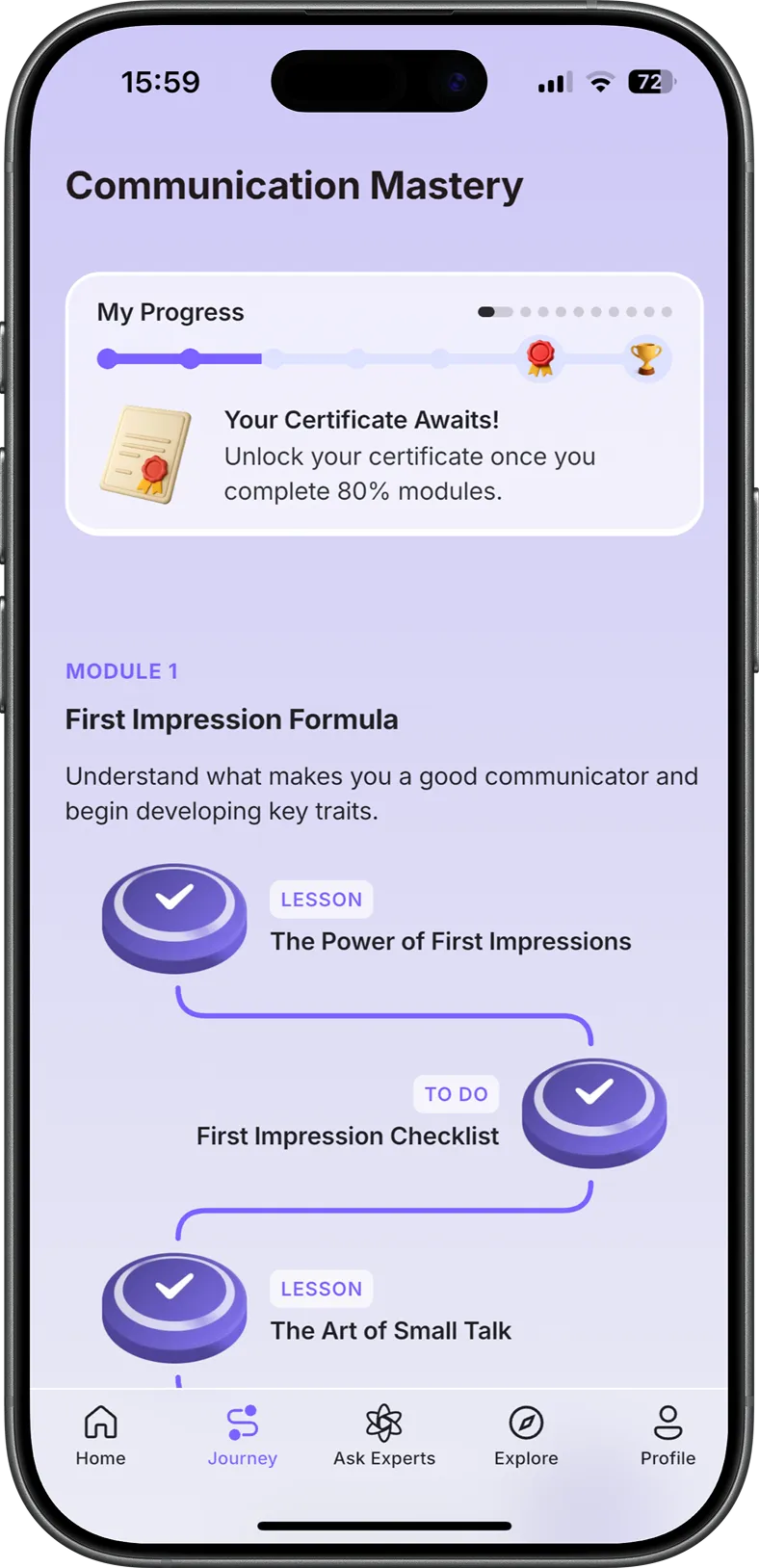
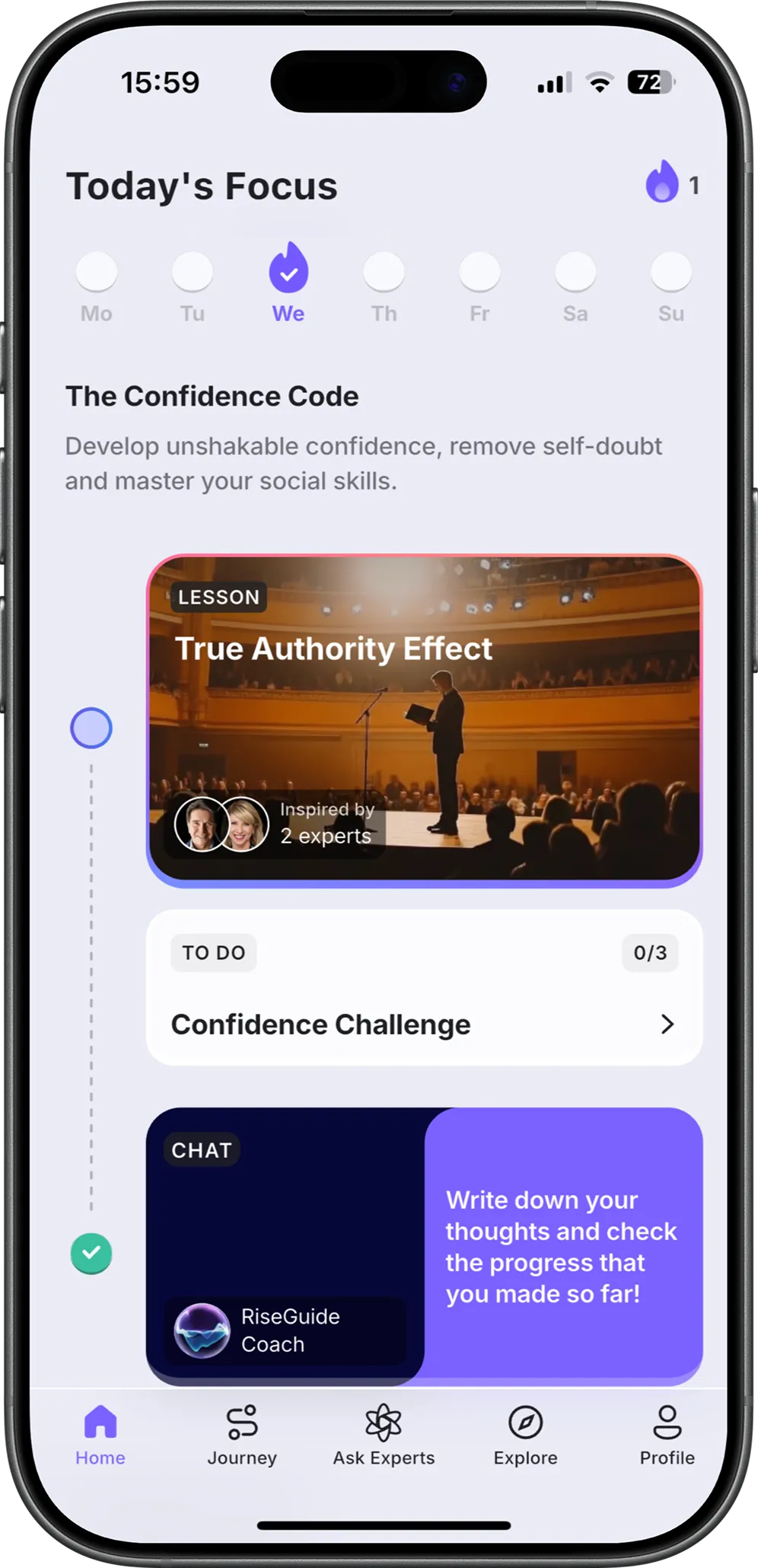
RiseGuide organizes its content into journeys - step-by-step paths through one skill at a time, drawn from the work of experts in each field. The Communication Mastery journey is the one that matters here, moving through speaking, body language, voice, storytelling, and first impressions in short daily lessons, so technique builds in a sensible order instead of arriving as scattered advice.
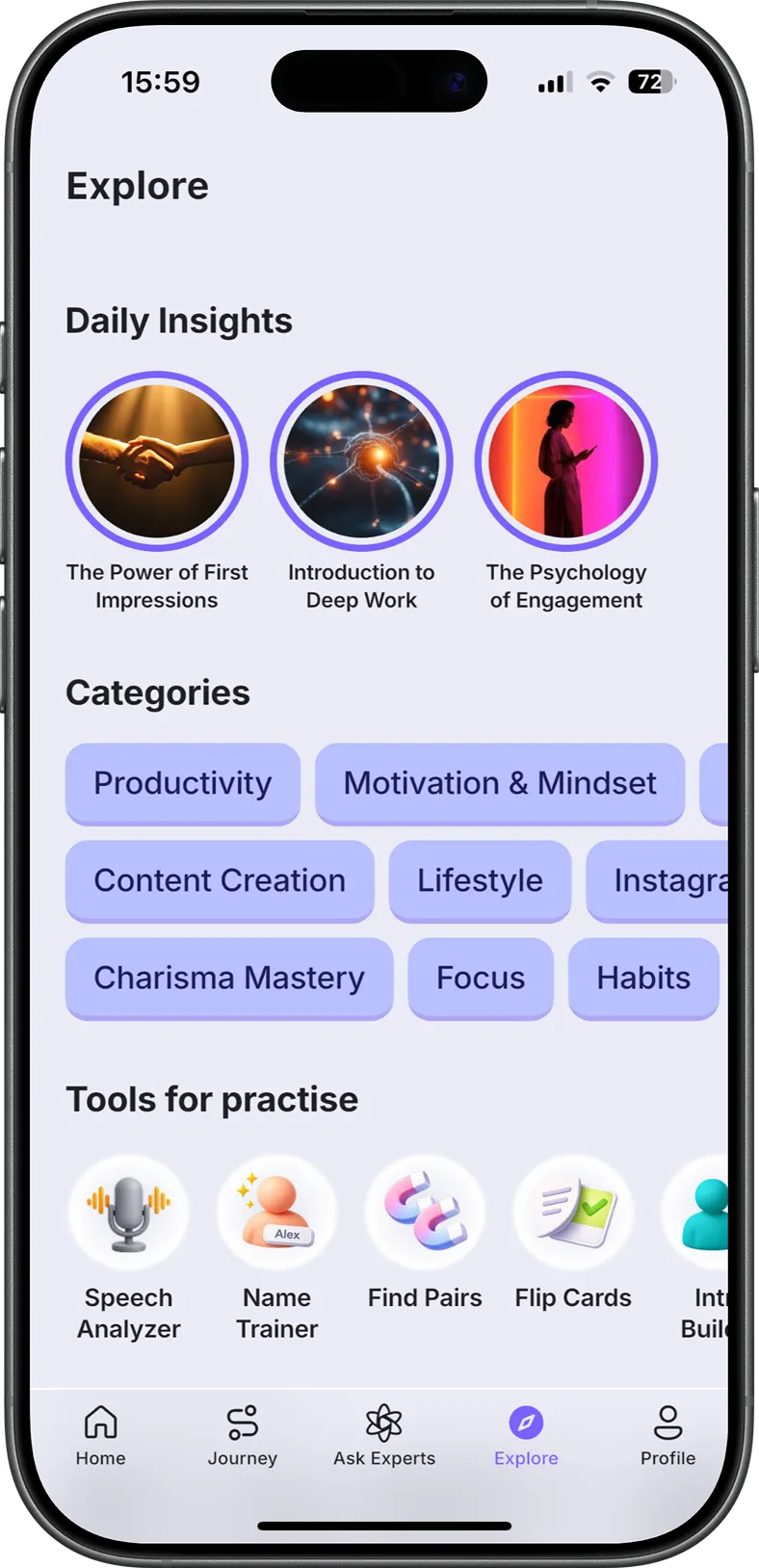
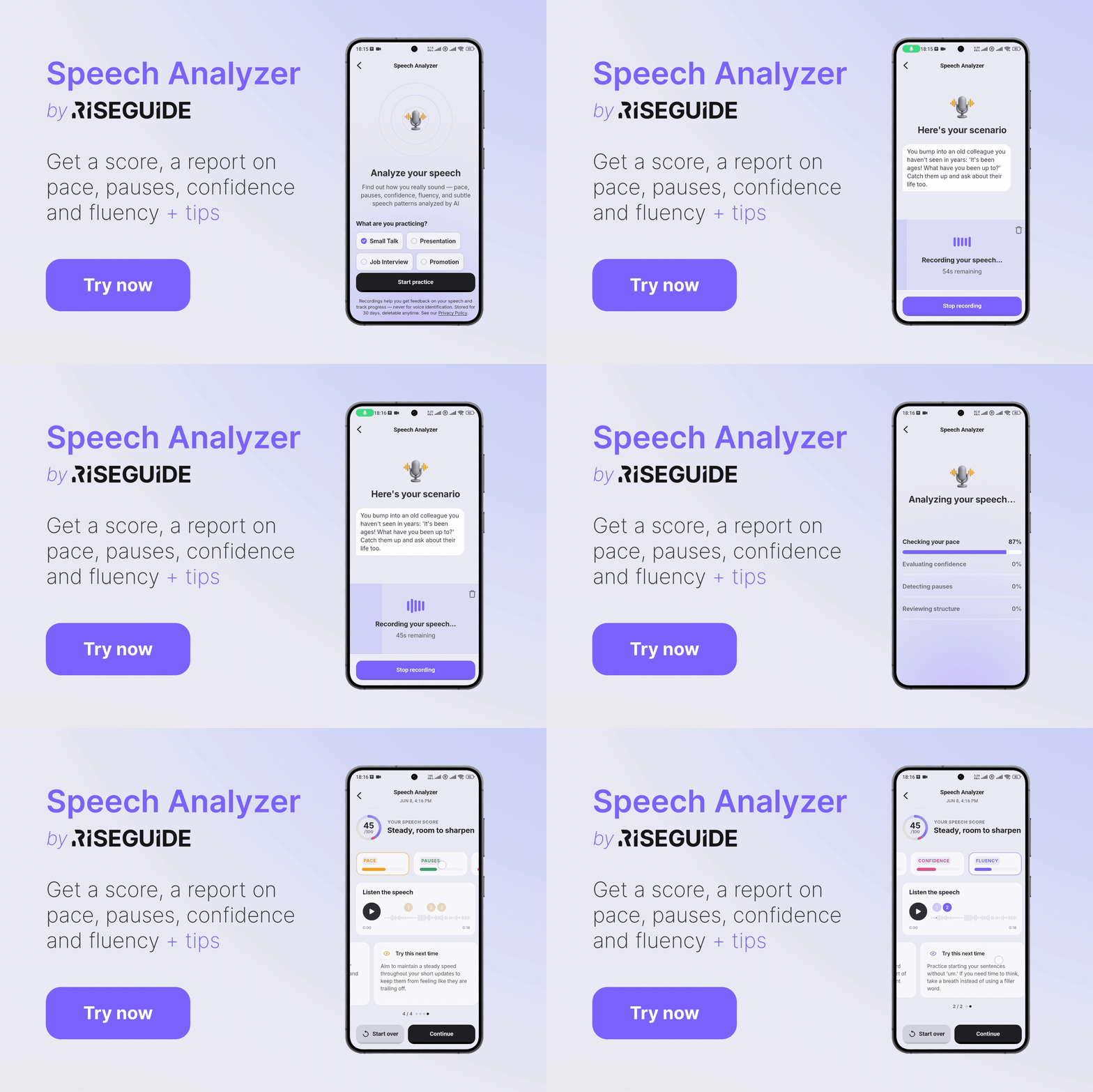
Around those lessons sit the tools that let you apply them. Speech Analyzer records up to a minute of you talking and reports back on your pace, confidence, pauses, and structure, with notes on what to adjust. A small talk simulator, an intro builder, and a thoughts organizer help you shape and rehearse what you want to say. Across every journey, SEEK (search engine for expert knowledge) answers a question using a curated library of expert sources and links back to the originals. Lessons run about 15 minutes, which keeps the habit realistic on a busy day.
Strengths:
Limitations:
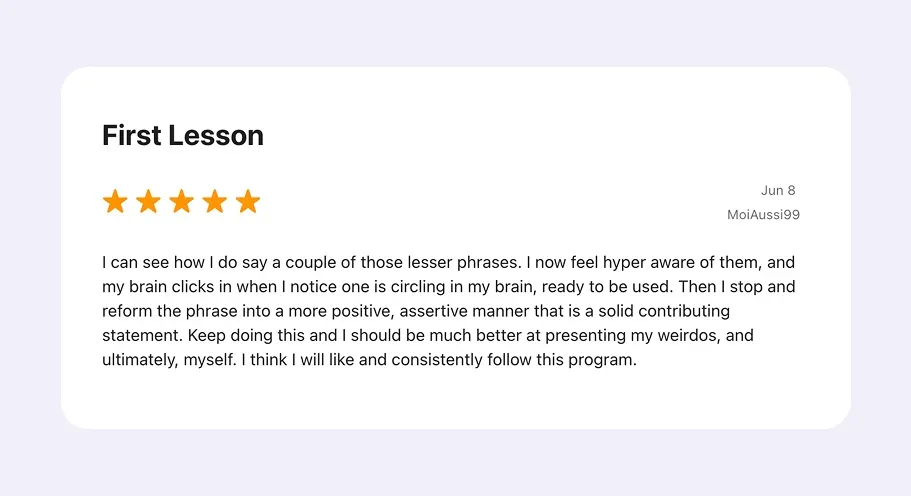
To work on speaking with a clear plan, the Communication Mastery journey is built for exactly that, in about 15 minutes a day.
App Store (4.6 ⭐)
Google Play (4.2 ⭐)
Best for: people preparing a specific speech or pitch who want fast, concrete feedback.
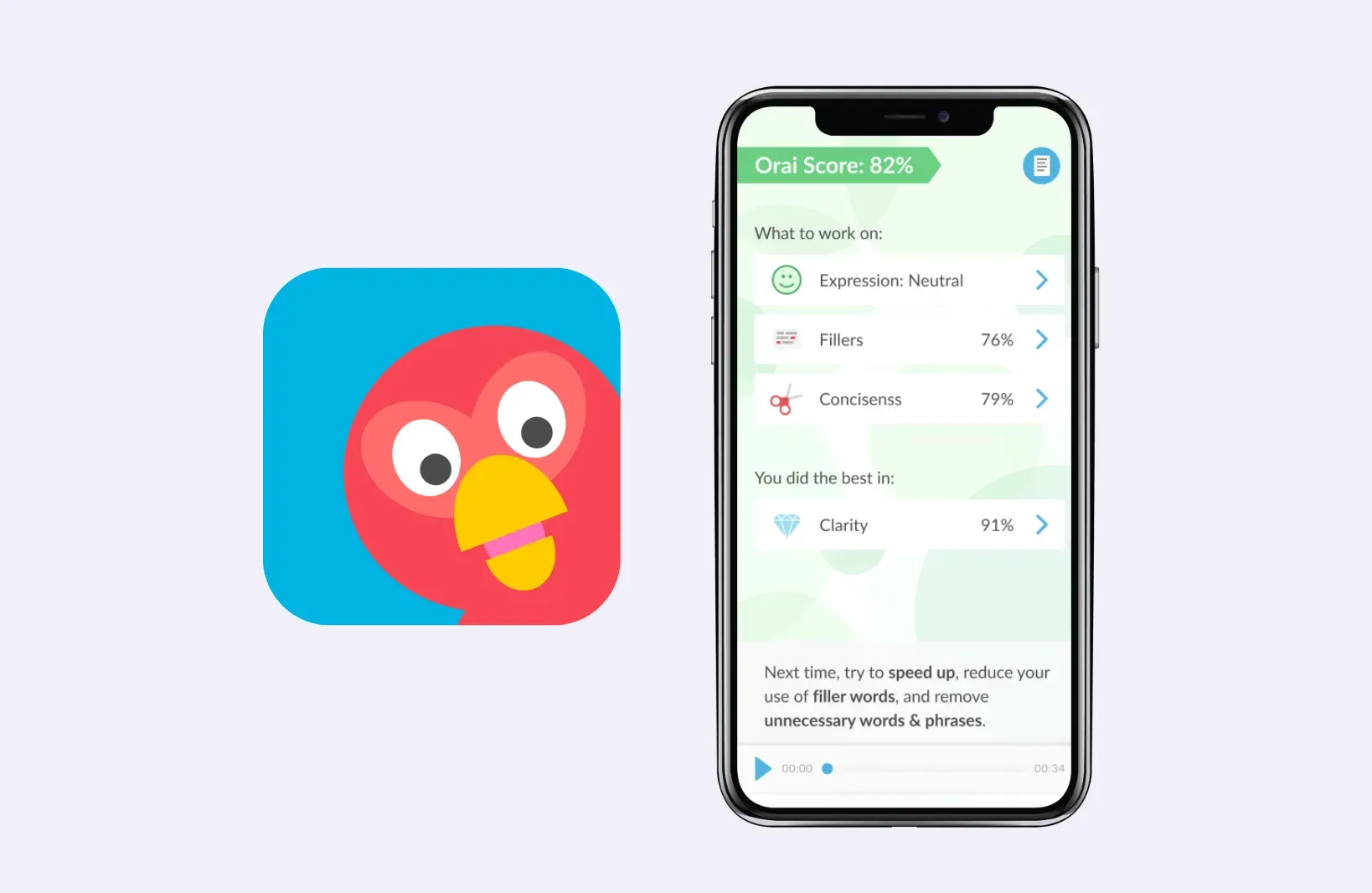
Orai runs on one loop: record yourself, then get an instant read on your filler words, speaking speed, energy, clarity, and confidence. Short gamified lessons sit beside the recorder, and a freestyle mode lets you rehearse any material - useful when a presentation is twenty minutes away and you want a fast warm-up. Of the feedback apps here, it's the most squarely aimed at speaking, and it works on both iPhone and Android.
Strengths:
Limitations:
App Store (4.7 ⭐)
Best for: people who want to refine tone, pacing, and presence, not only cut filler words.
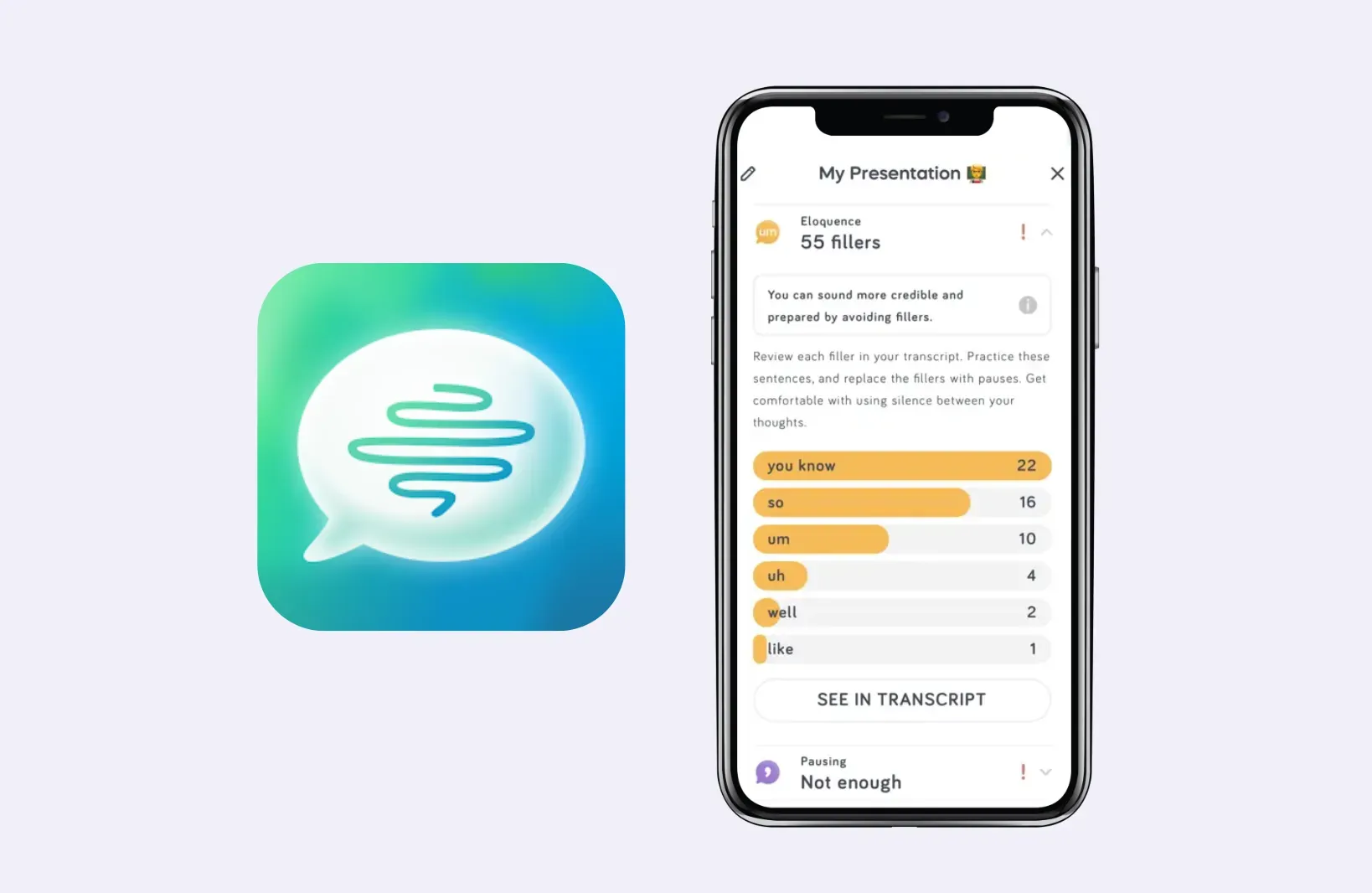
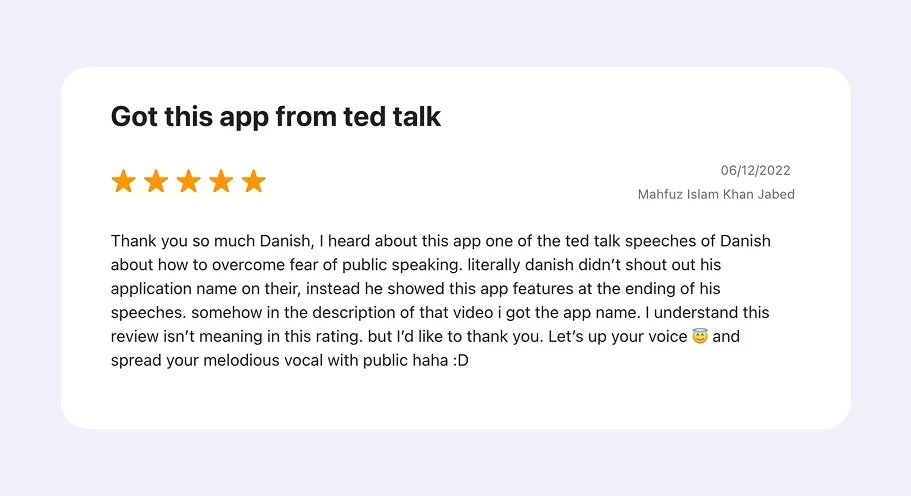
Speeko gives real-time feedback on your pace, tone, pitch, and fillers, then suggests exercises based on what it hears. It leans toward voice and delivery, with content shaped in part by voice coach Roger Love and a growing set of formats, including AI roleplay conversations for rehearsing real situations. The design is polished and the exercises vary enough to keep a daily habit interesting. It's iOS and Mac only, with no Android version.
Strengths:
Limitations:
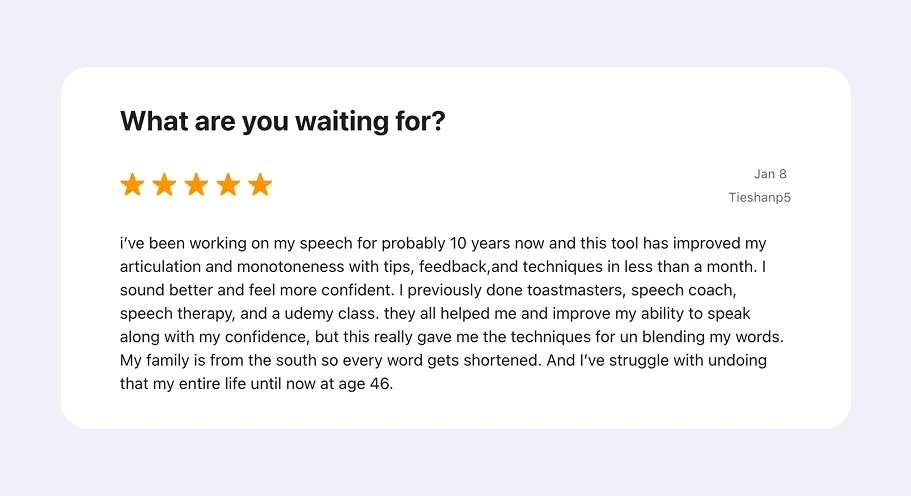
App Store (4.5 ⭐)
Google Play (4.1 ⭐)
Best for: people who want a daily routine focused on the sound and confidence of their voice.
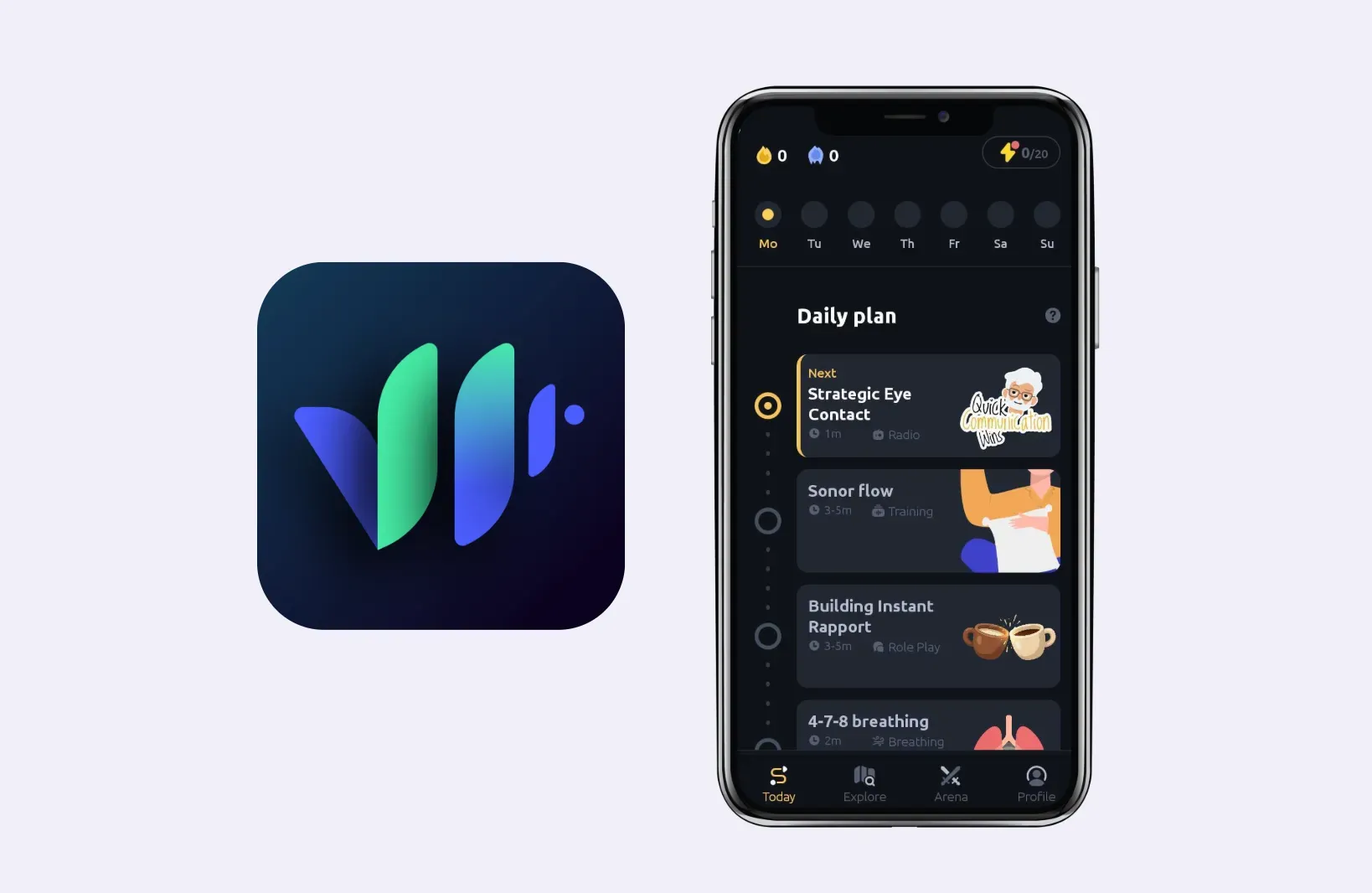
Vocal Image treats your voice as something you can train. It evaluates how you sound, sets a personalized plan, and mixes in articulation drills, short daily audio lessons, and video coaching, with progress tracking to keep you going. It's less about one upcoming speech and more about steady gains in clarity and confidence across everyday conversation, which makes it a fit if that's where you want to improve. It runs on both iOS and Android and has a large user base.
Strengths:
Limitations:
Web and desktop (no app-store rating; community rating around 4.7 on G2).
Best for: people whose speaking happens on Zoom, Meet, or Teams and who want private feedback.
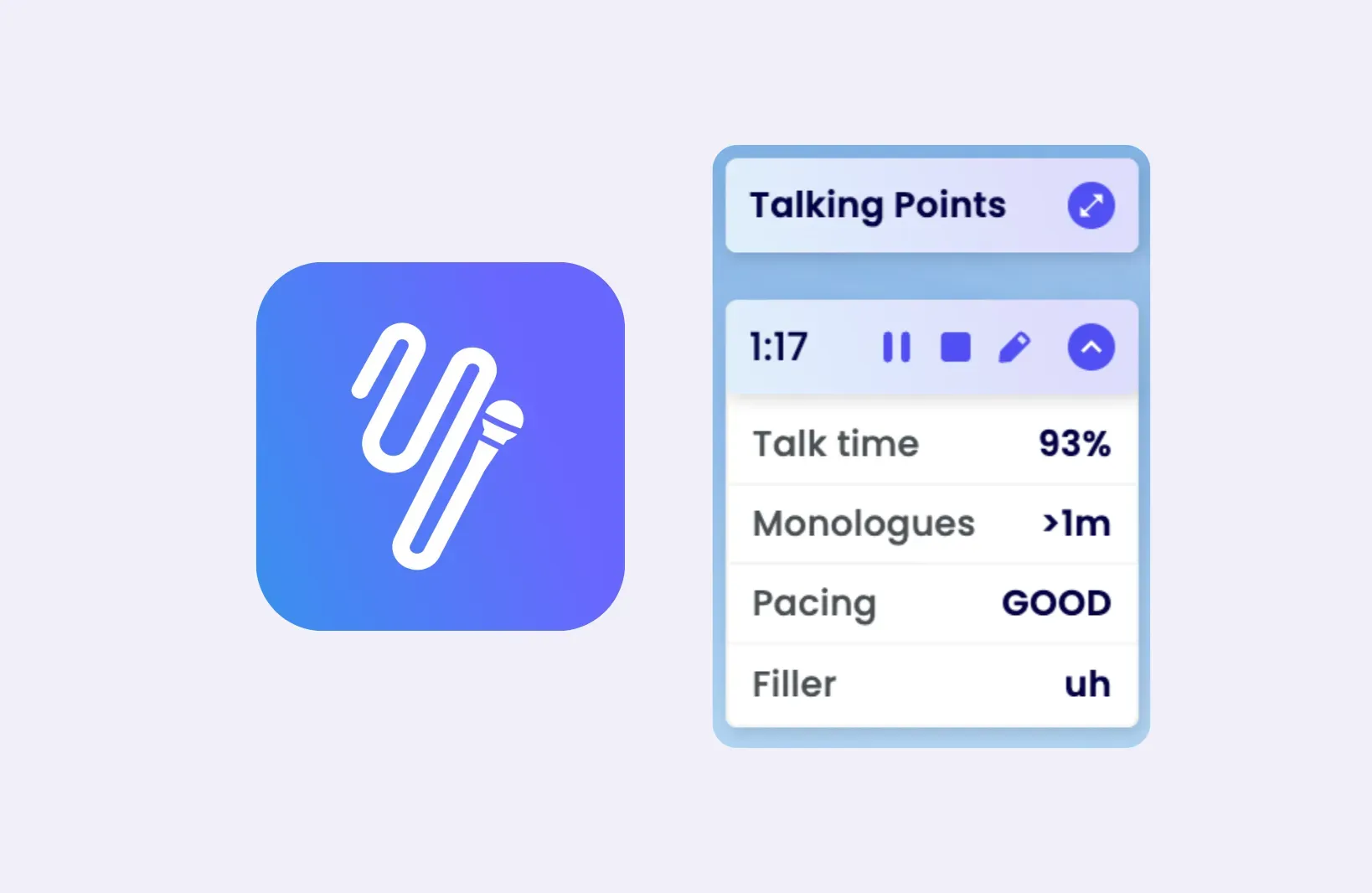
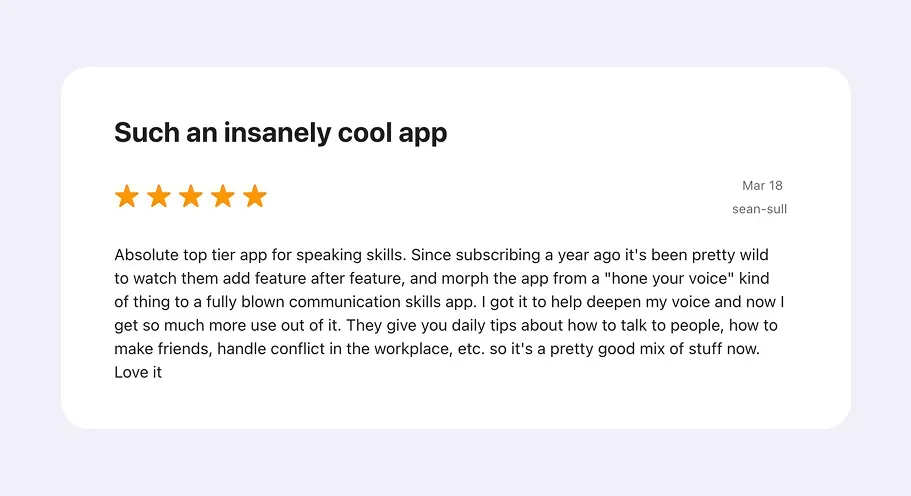
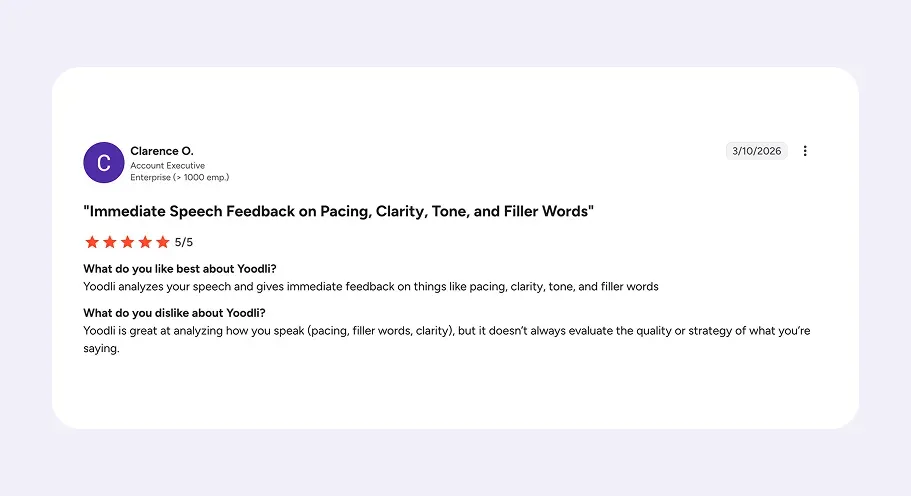
Yoodli is the outlier here, because it isn't a mobile app - it's a web and desktop tool that can sit in on your live calls and give private, after-the-fact feedback on pacing, filler words, and word choice, with a timestamped transcript to review. It's a Toastmasters partner and is built for the reality that much of today's speaking happens through a screen. If your nerves surface in virtual meetings more than on a stage, it's the most natural match.
Strengths:
Limitations:
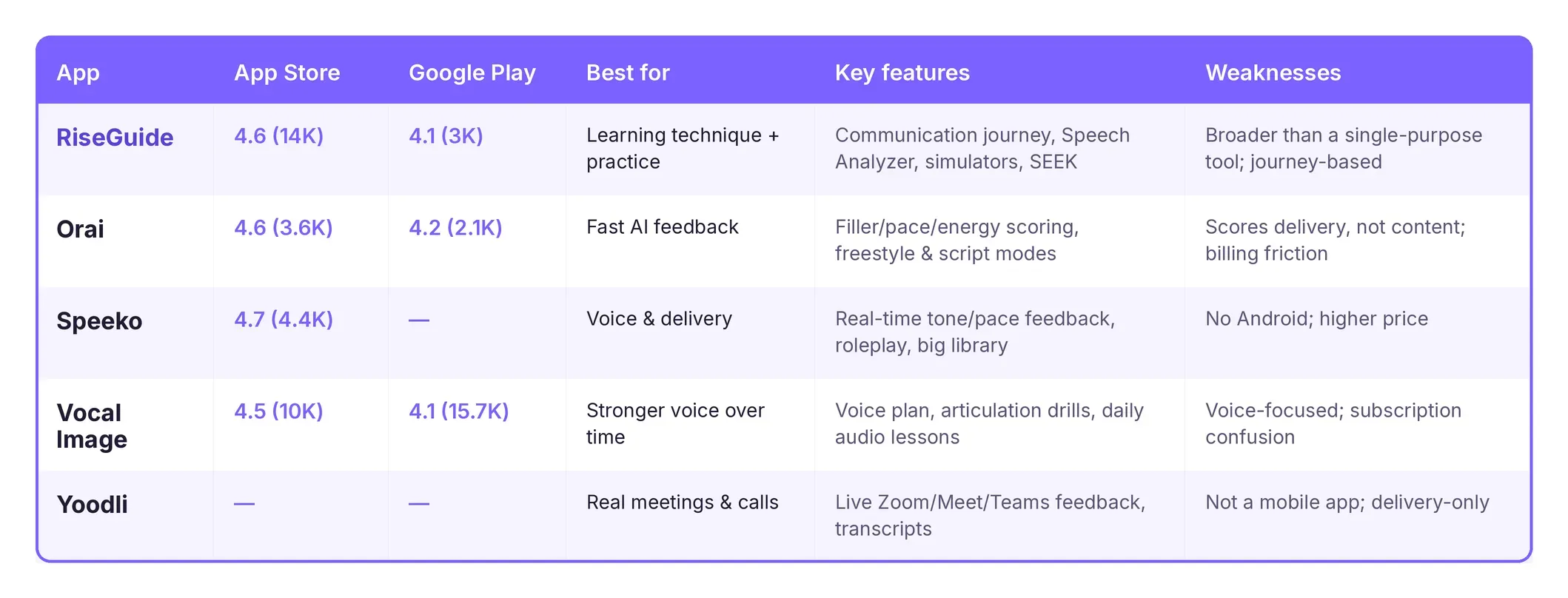
A dash means the app isn't on that platform. Ratings shift over time, so treat these as a June 2026 snapshot.
Start from where your difficulty actually sits. If your words come out fine but filler and pace let you down, a feedback tool like Orai gives you the fastest read. If it's the voice itself — tone, clarity, sounding sure of yourself — Speeko and Vocal Image are built for that. And if the camera worries you more than the stage, Yoodli works inside the calls you already have.
Most of these apps share a quiet assumption: that you already know what to say and just need to tidy how it lands. That's fair for polishing, but it skips the harder part of becoming a better speaker, which is building the talk in the first place. RiseGuide is the one here that starts there, teaching technique through its Communication Mastery journey and then handing you Speech Analyzer and roleplay tools to rehearse it, all built on expert knowledge and experience. For someone who wants to grow as a speaker rather than audit a single speech, that pairing of learning and practice is the real difference.
Whichever you choose, the honest move is to match it to the part of speaking you avoid most and give it a fair run of a few weeks before you judge whether it's working.