RiseGuide Team

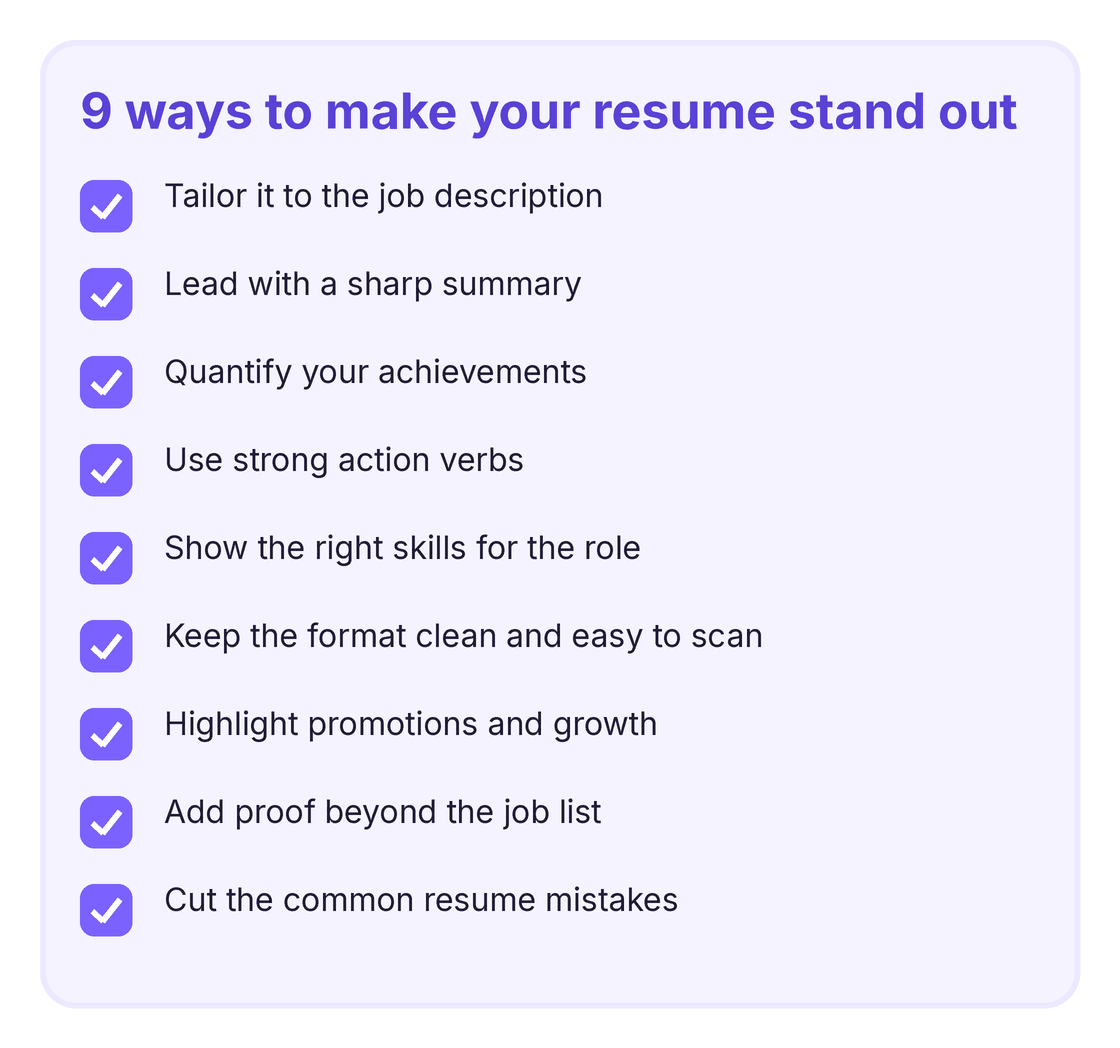
To make a resume stand out, tailor it to each job so the wording matches the role, lead with a short summary that names the value you bring, and quantify your results with real numbers. Use strong action verbs, list the skills the job actually asks for, and keep the layout clean enough to read in a few seconds. Show promotions and growth over time, add proof like projects or a portfolio, and cut the common resume mistakes that make you look like everyone else. The nine ways are tailoring, a sharp summary, quantified results, strong action verbs, the right skills, clean formatting, promotions, outside proof, and avoiding common mistakes.
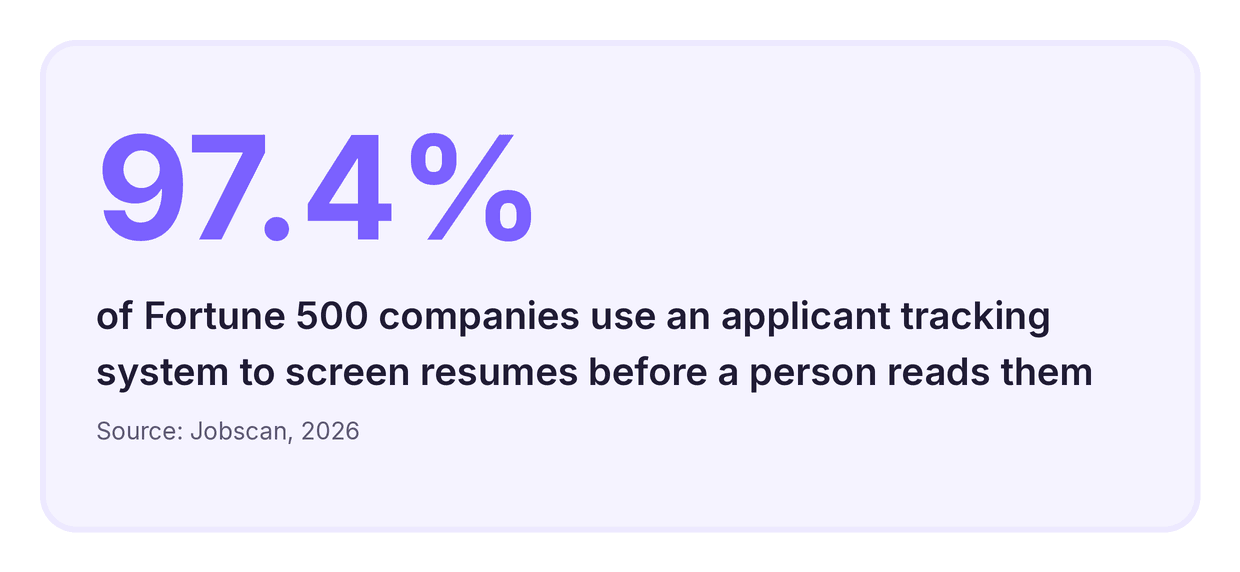
A strong resume rarely fails because the person isn't qualified. It fails because the qualifications are hard to see in the few seconds a recruiter gives it, or because software screens it out before a person ever reads it. About 97.4% of Fortune 500 companies use an applicant tracking system to filter resumes before a human sees them, according to Jobscan. Knowing how to make a resume stand out means writing for both audiences at once: the software that scans for the right terms, and the person who skims for reasons to keep reading.
A resume stands out when it clearly shows you can do the specific job in front of you, and shows it fast. A page built around the target role beats one that lists everything you have ever done. When you list every task, the reader has to hunt for the parts that matter; when you build around the role, you hand them the answer.
Two facts shape how much time you have. First, most large employers run resumes through an applicant tracking system, so wording that matches the job posting is what gets you past the first filter. Second, once a human opens your resume, the first read is quick. A widely cited eye-tracking study from Ladders found recruiters spent an average of 7.4 seconds on the initial scan (the study is from 2018, and it remains the number most recruiters quote). So what makes a resume stand out is a focused, easy-to-scan page that proves, with real results, that you fit the role. Clever design and a long list of duties do far less.
Below are nine ways to make your resume stand out. They are not a strict order, so start with the ones that fit your situation. Together they move your resume from a list of duties to a clear case for why you are a strong match.
Generic resumes read as generic. Before you send anything, read the job posting closely and mirror its language where it honestly describes your experience. If the role asks for "budget forecasting" and you have done that work, use those words rather than a vague synonym. This is also how you handle resume keywords: an applicant tracking system looks for terms tied to the role, so the phrasing in the posting is your best guide to what to include. Tailoring means pulling out the parts of your real background that match the posting and cutting the parts that do not. It never means inventing experience you don't have.
The top third of your resume is what gets read first, so use it to state the value you bring. A short summary of two or three lines that names your role, your strengths, and what you are aiming for gives the reader a frame before they reach your work history. If you are not sure what belongs there, here is what goes into a strong resume summary. Keep it specific to the job you want rather than a general description of who you are.
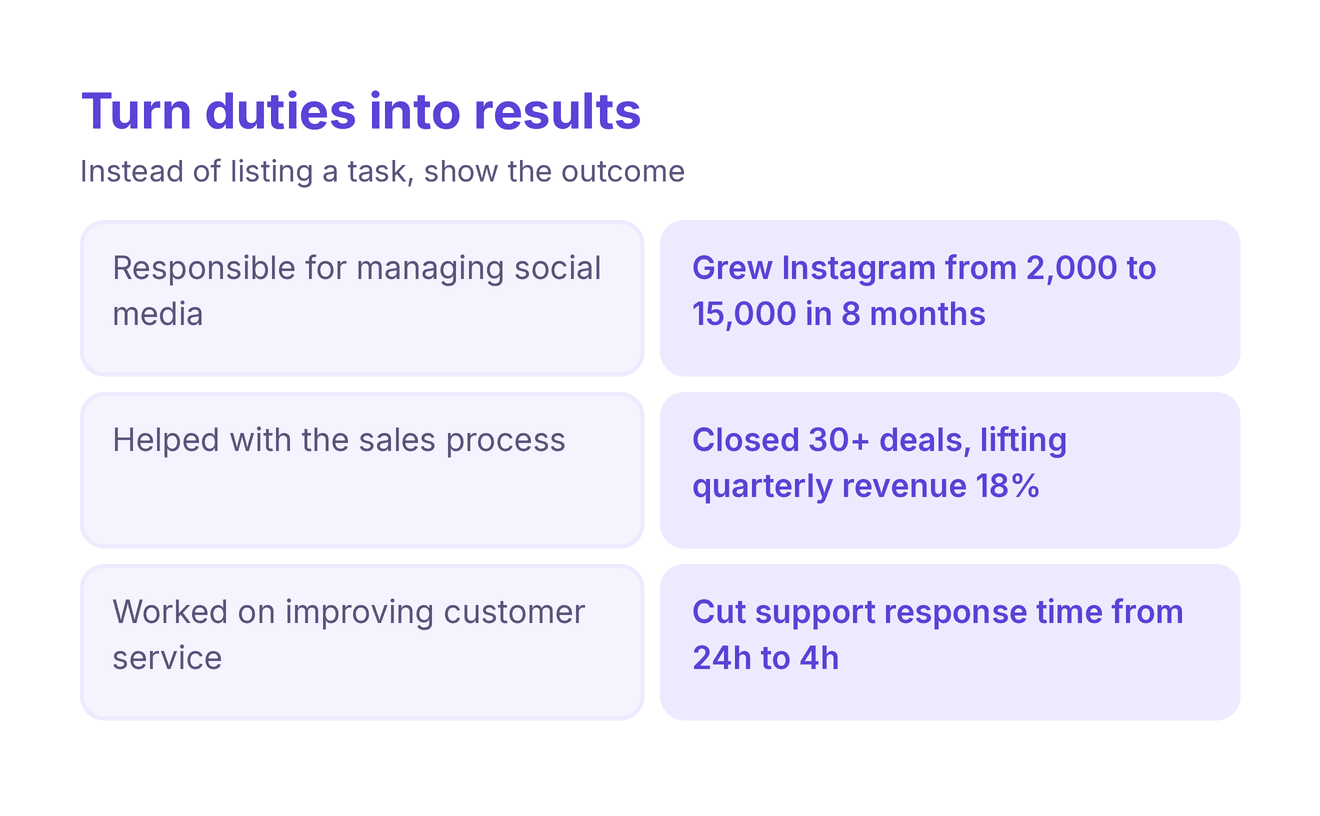
Numbers make accomplishments concrete. "Managed social media accounts" tells the reader almost nothing; "grew Instagram following from 2,000 to 15,000 in eight months" shows scope and result. Wherever you can, attach a figure: money saved, time cut, percentage grown, people led, deadlines met. If you do not have hard metrics, use a plain before-and-after or a clear outcome. The point is to replace claims with evidence the reader can picture.
Career educator Lorraine K. Lee makes a related point about restraint. As she puts it, "Don't try to make your résumé a laundry list of everything you did." A few strong, quantified wins do more than a long roll of every task, so choose the results that matter most for the role and let the rest go.
The verb that opens each bullet sets its tone. Weak openers like "responsible for" or "helped with" flatten your work; strong resume action verbs like "led," "built," "launched," "cut," or "negotiated" show ownership. Start each bullet with the action, follow it with what you did, and end with the result. Vary the verbs so the page does not repeat "managed" ten times, and match the verb to the real level of your role so it reads as accurate rather than inflated.
A skills section works when it reflects the job, not a generic checklist. Read the posting for the abilities it names, then list the ones you genuinely have, mixing the technical with the interpersonal where both apply. If you are deciding which skills to list, it helps to start from the role. Soft skills like communication and collaboration matter, but they land better when your bullet points already show them in action rather than only naming them in a list.
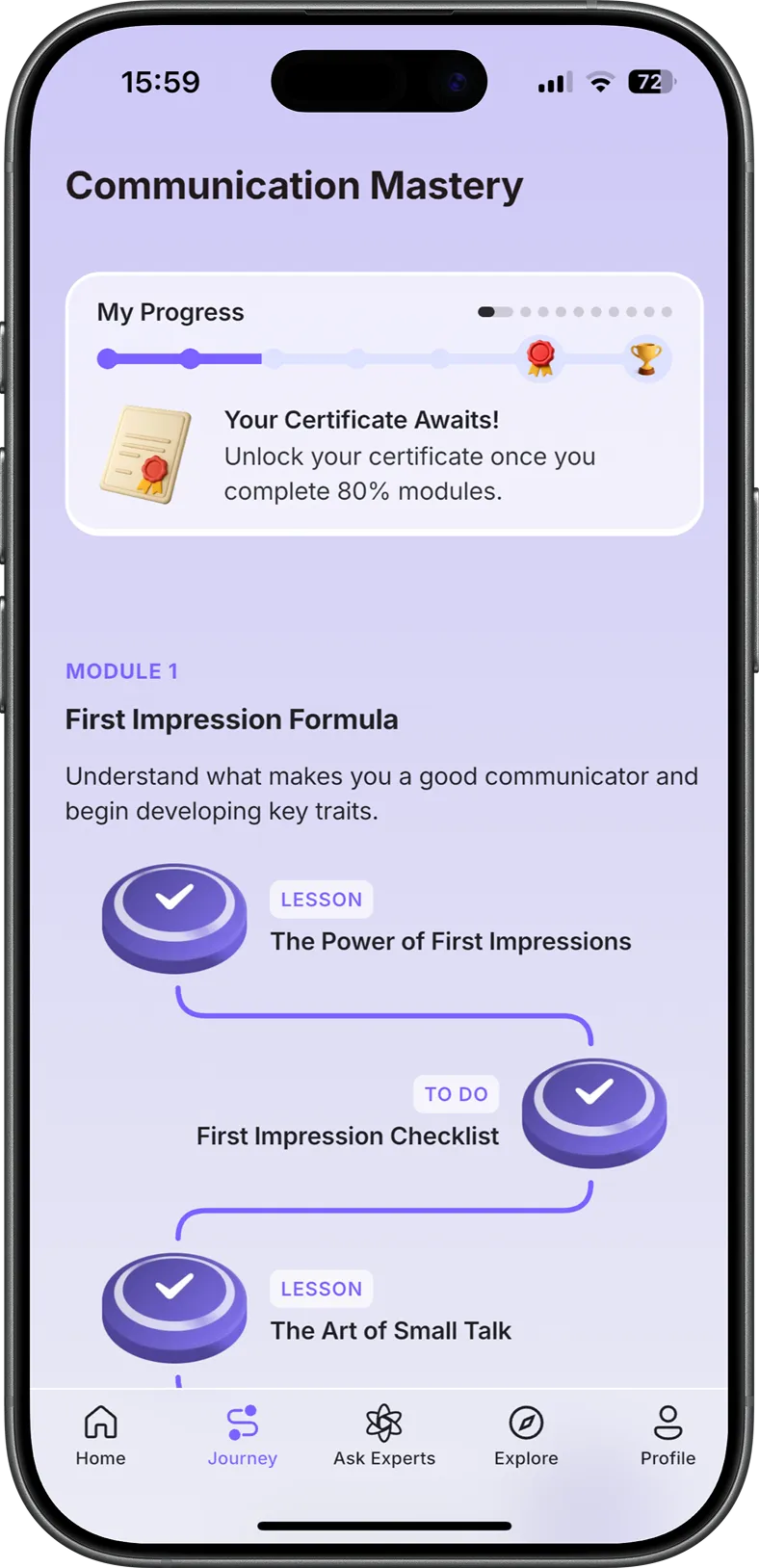
If communication is the area you most want to strengthen behind the resume, that is something you can build with practice. RiseGuide is an expert-powered micro-learning app whose flagship Communication Mastery journey turns short, ~15-minute lessons into steady practice at explaining your value clearly, which is the same skill a strong resume and interview rely on.
Because the first read is quick, layout does real work. Use clear section headings, consistent spacing, one readable font, and enough white space that the eye can move down the page. Bullet points beat dense paragraphs for work history. Save the file as a PDF unless the employer asks otherwise, so your formatting holds. Length matters too: most resumes are strongest at one page, or two if you have years of relevant experience, and here is how to decide how many pages a resume should be.
A resume that shows movement tells a stronger story than one that shows a flat line. If you were promoted, make that clear rather than burying it, since it signals that people who worked with you trusted you with more. Group roles at the same company so the progression is visible, and let your bullets show growing scope over time, from what you handled early to what you owned later.
Your work history is the core, but outside proof can set you apart. A link to a portfolio, a short list of relevant projects, a certification tied to the role, or measurable results from volunteer work all give the reader more evidence. This is especially useful early in a career, when your job history is short but your projects show real ability. Keep it relevant to the role and easy to check.
Small errors do more damage than people expect. The most common resume mistakes are typos, an email address that looks unprofessional, one generic version sent to every job, listing duties instead of results, and running past two pages with detail no one needs. Read your resume out loud, or ask someone else to, before you send it. Removing what does not help the reader is as important as adding what does.
A last pass catches the small things that can sink a strong resume. Use these quick resume tips as a final check: confirm your contact details are current, save and name the file clearly (for example, "First-Last-Resume.pdf"), match the exact job title where it is honest to do so, and make sure every claim on the page is something you can speak to in an interview. If a line does not help your case for this specific role, cut it.
Making a resume stand out comes down to relevance and clarity. Tailor the page to the role, prove your results with numbers, and lay it out so the value is obvious in seconds. Do that and you clear both the software filter and the quick human scan, which is what it takes to reach the interview. The resume gets you the interview, and the skills you show there decide what happens next.
Relevance and clear results. Employers notice a resume that is tailored to their specific role, uses the terms from the posting, and backs up its claims with numbers rather than vague duties. A clean layout they can scan in a few seconds helps those results register quickly.
The three C's are usually given as clear, concise, and compelling: clear so it is easy to read, concise so it stays focused on what matters, and compelling so the results give the reader a reason to move you forward.
The 30-second rule is the idea that a recruiter's first look is very short, so your most important information needs to be visible at a glance. In practice the first scan is often closer to seven or eight seconds, which is why a sharp summary and quantified wins near the top matter so much.
Lead with education, projects, coursework, and transferable skills, and quantify whatever you can, including volunteer work, internships, or personal projects. A focused summary that names the role you want, plus proof like a portfolio, helps a shorter history read as capable rather than empty.