RiseGuide Team

Deepstash and RiseGuide are both pitched as a better use of the minutes you'd otherwise hand to a feed, and either one is a step up from another doomscroll. The difference lies in what kind of learner each one suits. Deepstash gives you a stream of single "idea cards" pulled from books, articles, and podcasts, which works well when you want to move across many topics in a few spare minutes. RiseGuide goes slower and deeper, building a guided journey around one skill from the insights of experts and then having you practice it through quizzes, exercises, and tools such as a speech analyzer. So the best alternative to doomscrolling depends on what you're after: choose Deepstash to keep discovering new ideas, and RiseGuide to take a single skill and become genuinely good at it.
Nobody plans to lose half an hour to a feed. You unlock the phone to check one thing, and somewhere along the way the scrolling takes over. Deepstash speaks directly to that habit, with a homepage that promises to "replace doomscrolling with microlearning". Once you start comparing Deepstash alternatives, the question that matters is whether the app gives you somewhere better to put that time and whether you feel better afterwards for having spent it there, which counts for more than the length of any feature list.
RiseGuide and Deepstash both answer that habit, and they do so in fairly different ways. Instead of tallying features, this comparison looks at the work you actually want the app to do and which of them does it for you.
The two apps start from the same observation, that a spare ten minutes spent learning beats another loop through Instagram, and then differ on how that ten minutes should feel.
Deepstash works like a knowledge feed. It breaks books, articles, and podcasts into bite-sized idea cards and lines them up in a personalized stream you swipe through, keeping to its promise of something new in five minutes. Most of those cards come from its own community of users, which is part of why the library is so wide and grows so quickly. Anything that catches your attention can be saved into a Stash to revisit, and a streak counter encourages you to keep coming back.
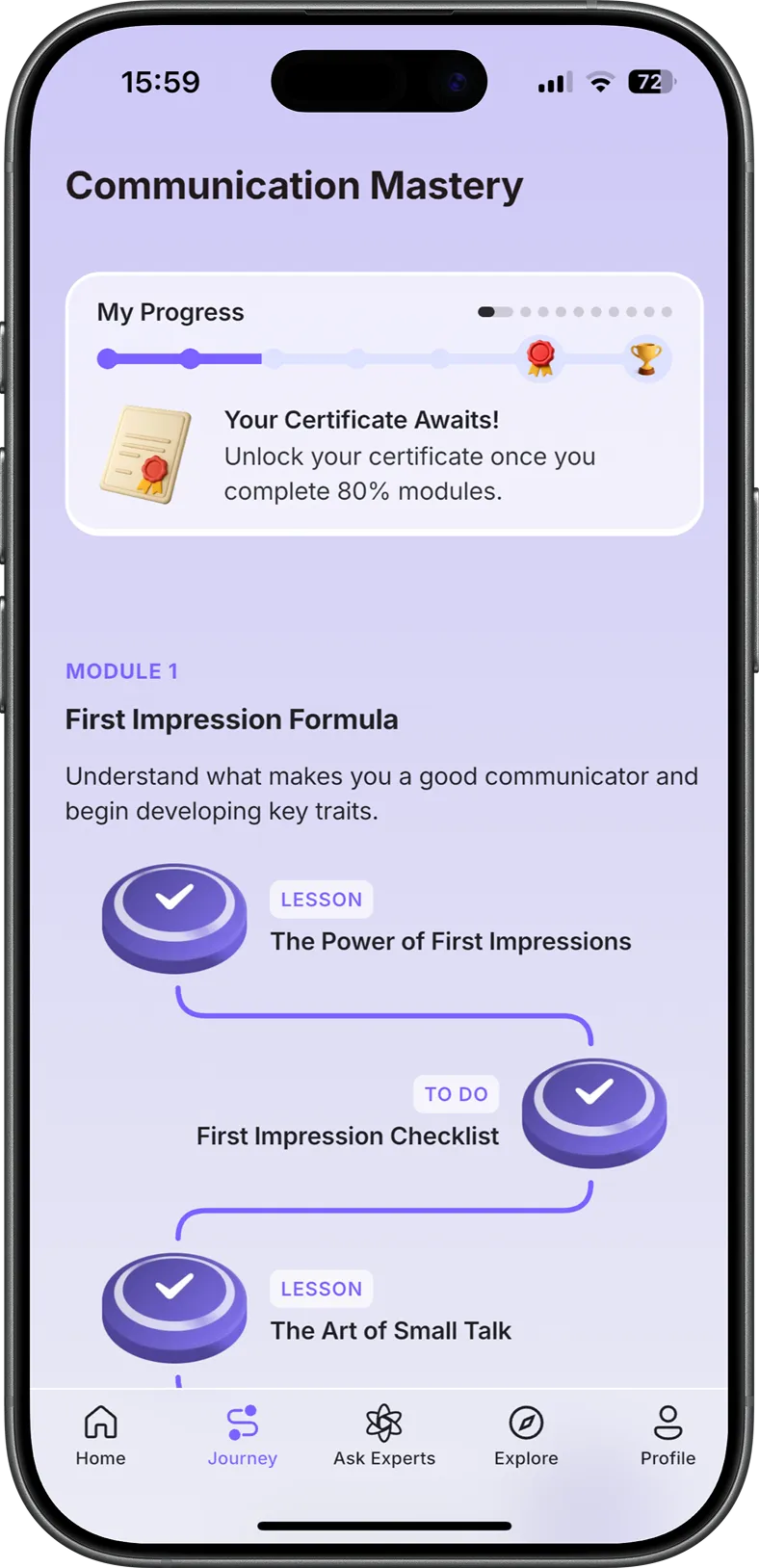
RiseGuide trades that breadth for depth. Its content is organized into growth journeys, each one a step-by-step path through a single skill drawn from the work of more than a hundred experts, delivered as 15-minute lessons that you act on as you go. A search feature called SEEK rounds things out, answering questions from a curated library of expert sources and pointing you back to the originals.
The two end up suited to different purposes. Deepstash rewards curiosity and casual reading across subjects, and it does that more naturally than RiseGuide, while RiseGuide rewards staying with one skill long enough to improve at it. Which of them you'll get more from depends on what you're looking for when you reach for your phone.
A steady diet of negative scrolling is linked to more stress and a lower mood, and compulsive phone use is, according to the research, genuinely difficult to switch off through willpower alone. Replacing the habit tends to work better than trying to ban it, which means giving yourself something that is just as easy to reach for.
Deepstash is at its strongest in exactly this situation. The swipe is the same one you already make, the cards take only seconds, and very little is asked of you, so the app fits into the same small gaps of time the feed used to fill. That low friction is the whole appeal, and for many people it is enough to interrupt the reflex.
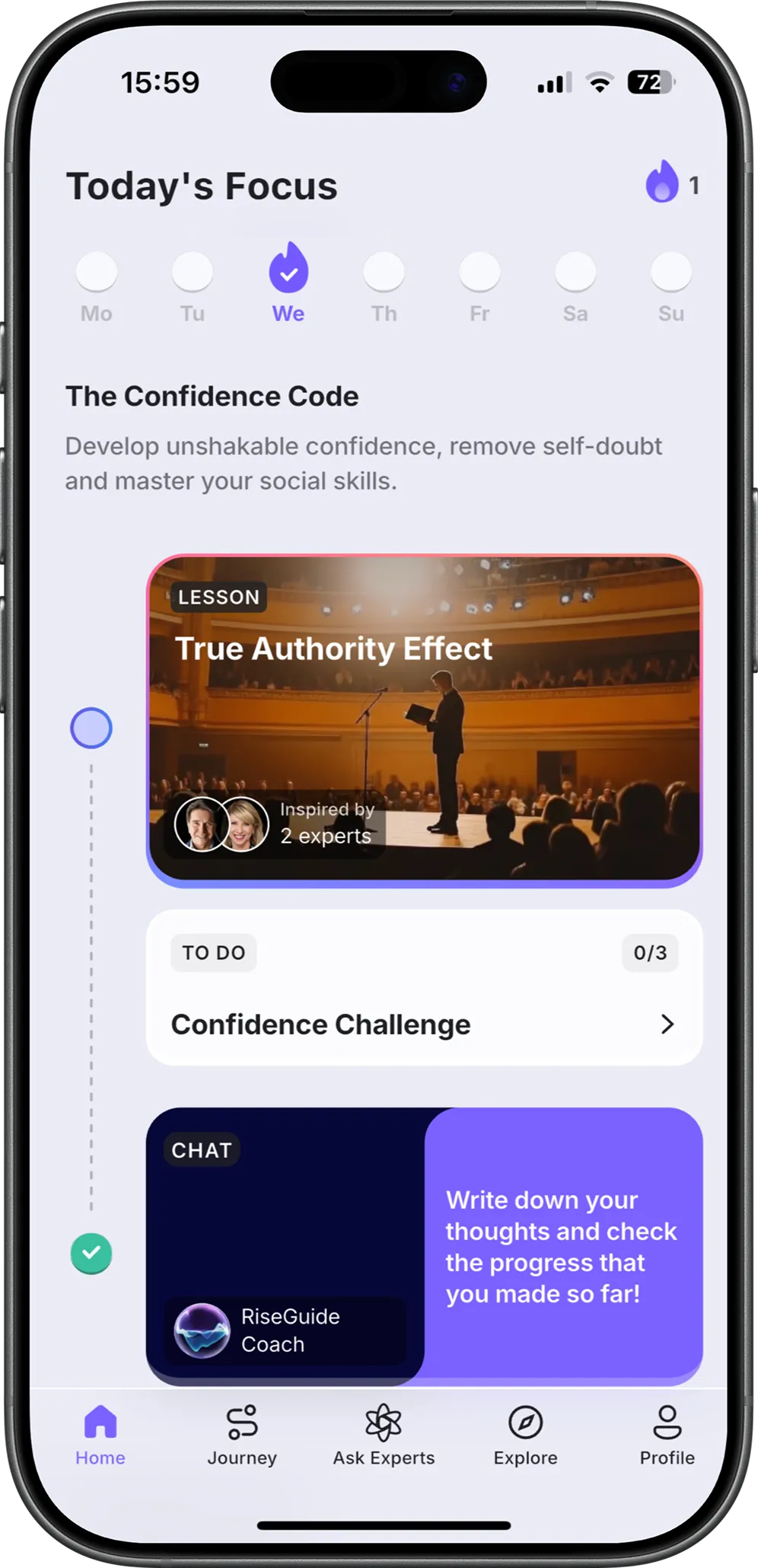
RiseGuide asks more of you and returns more in exchange. Instead of skimming a stream, you work through a 15-minute lesson that walks you through a topic and expects you to respond as you go, which the company calls growth scrolling. The session takes more attention than a quick swipe, and in return it tends to leave you with something you can use later that day. Choosing between the two comes down to what you want your downtime to be for: a relaxed look at new ideas, or steady progress on a single one.
The harder problem is one almost everyone recognizes. You take in something useful, feel sharper for an afternoon, and then can't recall much of it a week later. Whether an app helps with this comes down to how it delivers the material and whether it ever asks you to use it.
Deepstash is built around volume and saving: you move through a lot of ideas quickly, file the best ones into Stashes for later, and gain real breadth in the process. The trade-off built into the card format is that an insight separated from its source can feel thin on detail when you return to it, and recognizing a familiar idea in your feed is some way from being able to apply it.
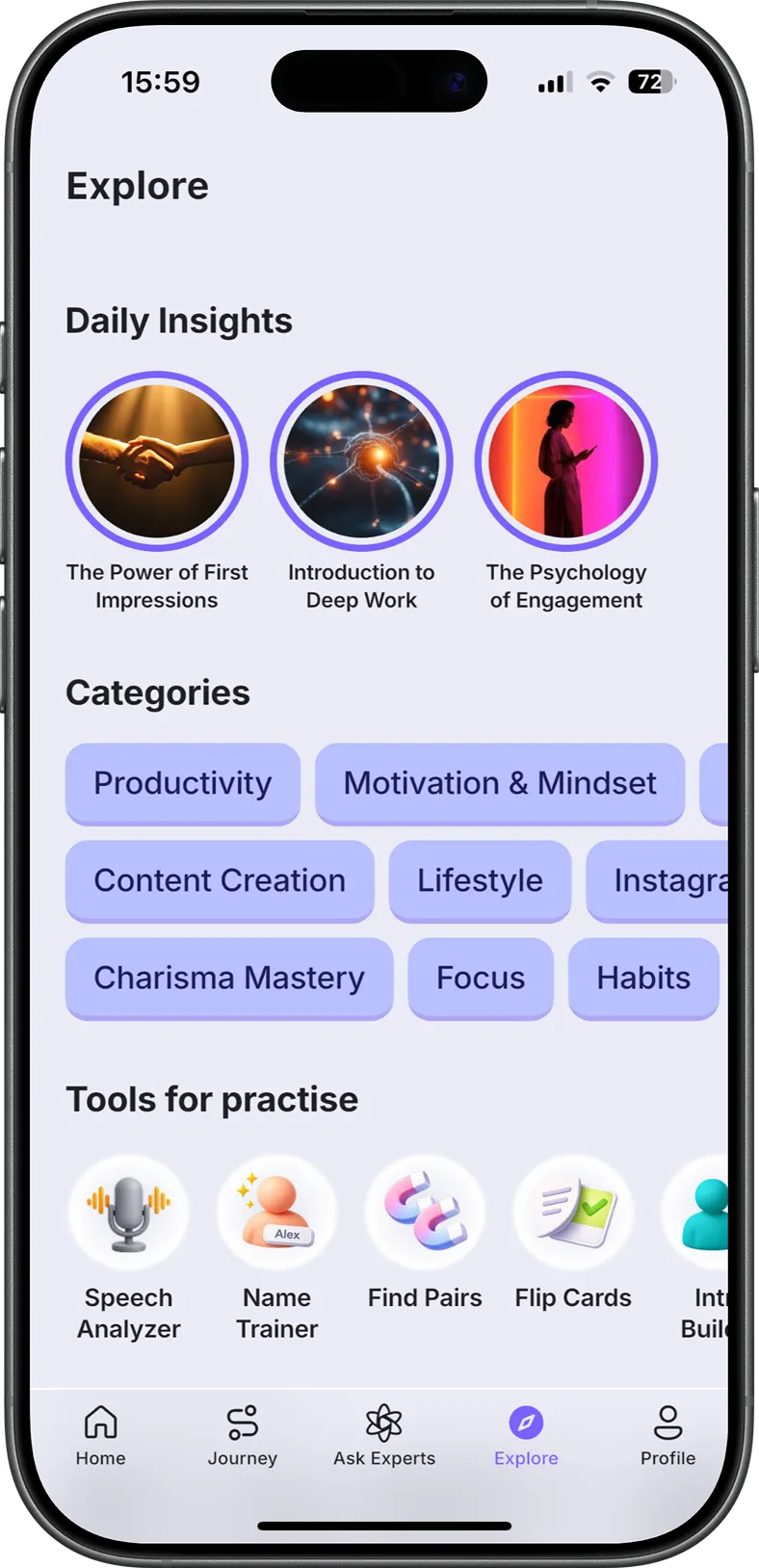
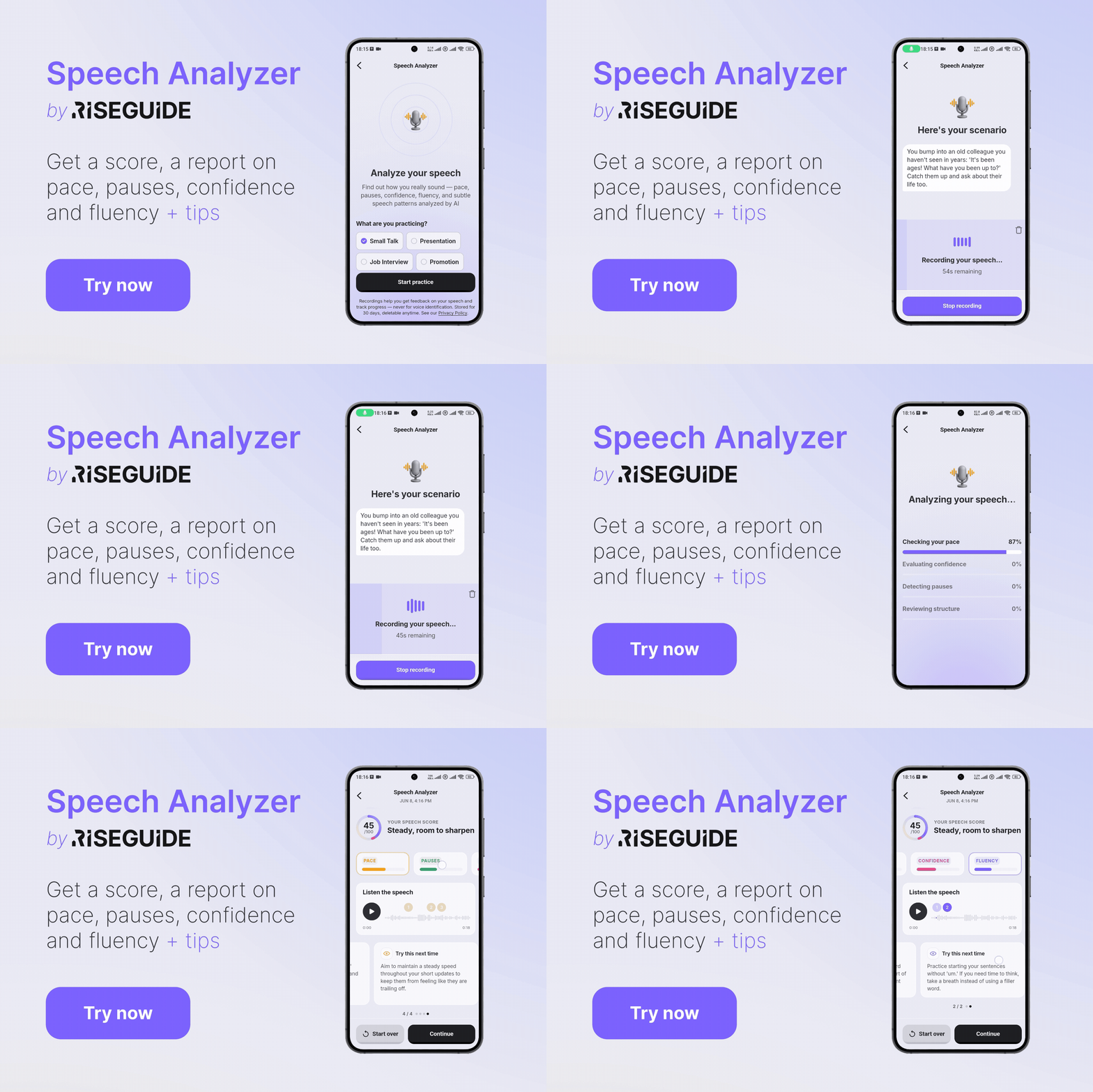
RiseGuide works in the opposite direction, around doing. Expert insight provides the substance of each lesson, but the part that supports memory is what you are asked to do with it. Lessons are interactive, ending with a quiz, a small task, or an exercise tied to your own situation, and they are spaced out over days instead of covered in one sitting, which is closer to how memory actually forms. The communication journey leans furthest into practice: a speech analyzer listens to a minute of you speaking and reports back on your pace, pauses, and structure, while a small talk simulator, an introduction builder, and a thoughts organizer give you space to rehearse before the moment is real. The intelligence journey includes its own recall exercises, among them a name trainer and flip cards. When you want the source behind a particular claim, SEEK takes you to the expert it came from. Learning the idea and then practicing it is what gives a lesson a real chance of staying with you.
Choose Deepstash if browsing is how you prefer to learn. When you enjoy coming across a dozen ideas in psychology, business, or science before deciding what deserves a closer look, want a steady stream of new thinking during a commute, or simply want something lighter than a full course, it does the job well. The catalogue is large, the app feels quick and well made, and an active community keeps new cards arriving.
What it offers, honestly, is broad and low-pressure exposure to a lot of ideas. If what you want is to keep running into interesting thinking without committing to a structured program, Deepstash is the right tool for it, and that is a perfectly reasonable thing to want.
RiseGuide makes more sense when ideas are not what you're short on and follow-through is. If you have collected plenty of insight and still don't feel any different, want to go deep on one skill rather than move quickly across many, or simply learn better by doing than by reading, the journey format has more to offer. Among the alternatives to Deepstash, it is the one organized around practice, built so that the time you spend turns into something you can actually do.
The thread running through it is that practice. There are the quizzes and exercises that close each lesson, the speech analyzer and small talk simulator in the communication journey, and the recall games in the intelligence one. Each of these asks you to work with an idea rather than only save it, and that is the part that tends to last.
For a sense of how the practice-first approach plays out elsewhere, the RiseGuide and Blinkist comparison covers nearby ground, and our roundup of the best microlearning apps sets both styles against the wider field.
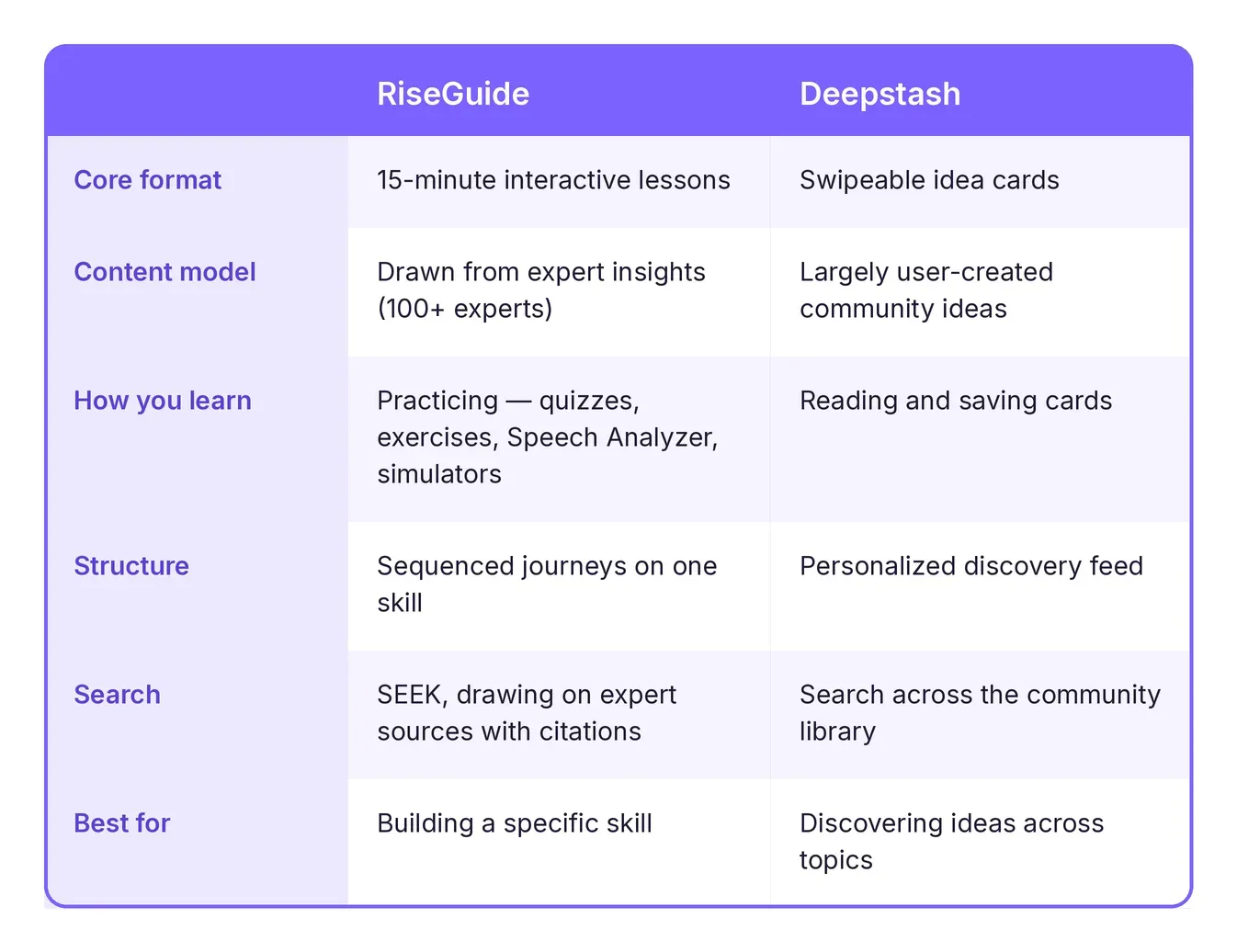
The decision comes back to the question we opened with, and the answer depends on your aim. If you want to meet more ideas across more subjects, Deepstash gets you there with less effort and a much larger library to explore. If you want to take one thing and practice it until your behaviour changes, that is the purpose the journey format was built for. Neither one rules out the other, and it is common to move between them depending on what you need at the time. So rather than looking for a single winner, choose based on the reason you wanted off the feed in the first place.