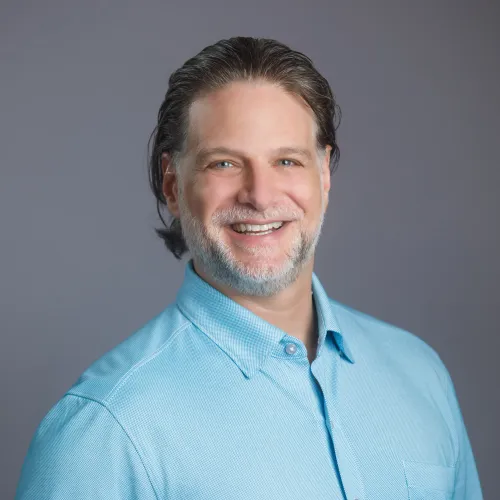
Juliann Wiese
Master Certified Coach & Leadership Consultant

I spent more than 30 years watching talented people with real "high potential" get dismissed, marginalized, and overlooked. Not because they lacked ability, and not because they weren't working hard. Most of the time it happened because they were unaware of how others perceived them. They were doing everything they believed a strong performer should do, and the results kept falling short of what their talent deserved. That gap is where careers quietly stall.
I believe a large percentage of people have blind spots about their blind spots. It is one thing to know you have room to grow. It is another to realize that the thing holding you back is completely invisible to you and obvious to everyone around you. A person can have amazing talents and great drive, and still have it show up to others as aggressive or self-serving, becoming a derailer to their success rather than a lever. I have watched exceptionally driven leaders come across as intimidating, passionate advocates land as dismissive, and highly accountable people communicate mistrust simply because they will not delegate. We can also have great intentions without great impact. Those two things live much further apart than most of us assume.
The frustrating part of stalling is that it rarely comes from a weakness. It usually comes from a strength that has stopped being calibrated to the room.
Drive is a good example. Early in a career, sheer drive gets rewarded, so we lean on it harder. At a certain level, that same drive can read to colleagues as steamrolling, and the feedback you get is no longer about the quality of your work but about how it feels to work with you. Your decisiveness can be experienced as inflexibility, and your confidence can sound like certainty when curiosity is what the situation actually calls for. The strength didn't change. Its impact on others did, and no one thought to tell you.
Two forces keep this hidden. The first is that we don't experience our own intentions and our own impact as separate things, so when our intentions are good we assume our impact must be too. The second is that success tends to quiet the honest voices around you. The higher you climb, the fewer people feel free to tell you how you are actually coming across, and the more your own view of yourself goes unchallenged.
There is also a story running underneath all of this. When performance dips or feedback turns critical, the mind reaches for a narrative, and that narrative is rarely accurate. We tell ourselves we are not good enough, that we are falling behind, that someone else is simply more talented. I keep coming back to something I remind my clients of often: you have to imagine that the evidence of your success is way more real than the narrative that's playing in your head that you can't or you shouldn't. The narrative is loud, but the evidence is truer.
You close this gap the same way I have watched hundreds of leaders close it, which is by deliberately building the outside view you cannot generate on your own. A few things make the biggest difference.
None of this is about becoming someone else. It is about seeing the whole picture of who you already are, including the parts that are landing in ways you never meant. That is also why I say that leadership is first and foremost an inside job. The outside results follow the inner clarity, not the other way around.
The leaders I have watched break through their stall were not the most naturally gifted. They were the ones willing to look at the part of themselves they couldn't see, and to keep adjusting once they could.