RiseGuide Team
 FREE GUIDE with any plan: the First Impression FormulaClaim the offer

A good answer to "tell me about yourself" follows a simple present, past, future structure: start with who you are now and your current role, add the background and skills that got you here, then connect it to why you want this job. Keep it to about 60 to 90 seconds, focus on work and strengths that match the role, and leave out your full life story. A new grad leads with education, projects, and what they want to learn. A career changer connects past skills to the new field. An experienced candidate leads with a track record and one or two real results. Knowing how to answer "tell me about yourself" comes down to that structure, plus saying it out loud and adjusting it for the specific company and role.
"Tell me about yourself" is usually the first real question in an interview, right after the small talk. It sounds easy, which is part of why it trips people up. There is no single correct answer, so people either freeze or spend three minutes covering everything they have ever done. A strong answer is short, built around the job in front of you, and it sets the tone for everything that follows. The parts below walk through how to build one, with example answers for a few common situations.
Most people do not struggle with this question because they have nothing to say. They struggle because it is wide open and they are not sure what the interviewer actually wants. Two things make it harder than it looks.
The first is that it points you nowhere in particular. Most interview questions give you a target. "Why do you want to work here" tells you to talk about the company, which our team's post on why this company breaks down. "Tell me about yourself" gives you no topic, so it is easy to fall back on your life story or a flat list of past jobs.
The second is that the interviewer is asking something more specific than the words suggest. They are not looking for your biography. They want a short, relevant preview of who you are professionally and why you fit this role. Once you treat the question that way, it gets much easier to answer.
The cleanest way to answer is to move through three parts in order: where you are now, how you got here, and where you want to go. It keeps you from rambling and makes sure the interviewer hears the most useful information first. Think of your tell me about yourself interview answer as a 60 to 90 second preview, not a full account.
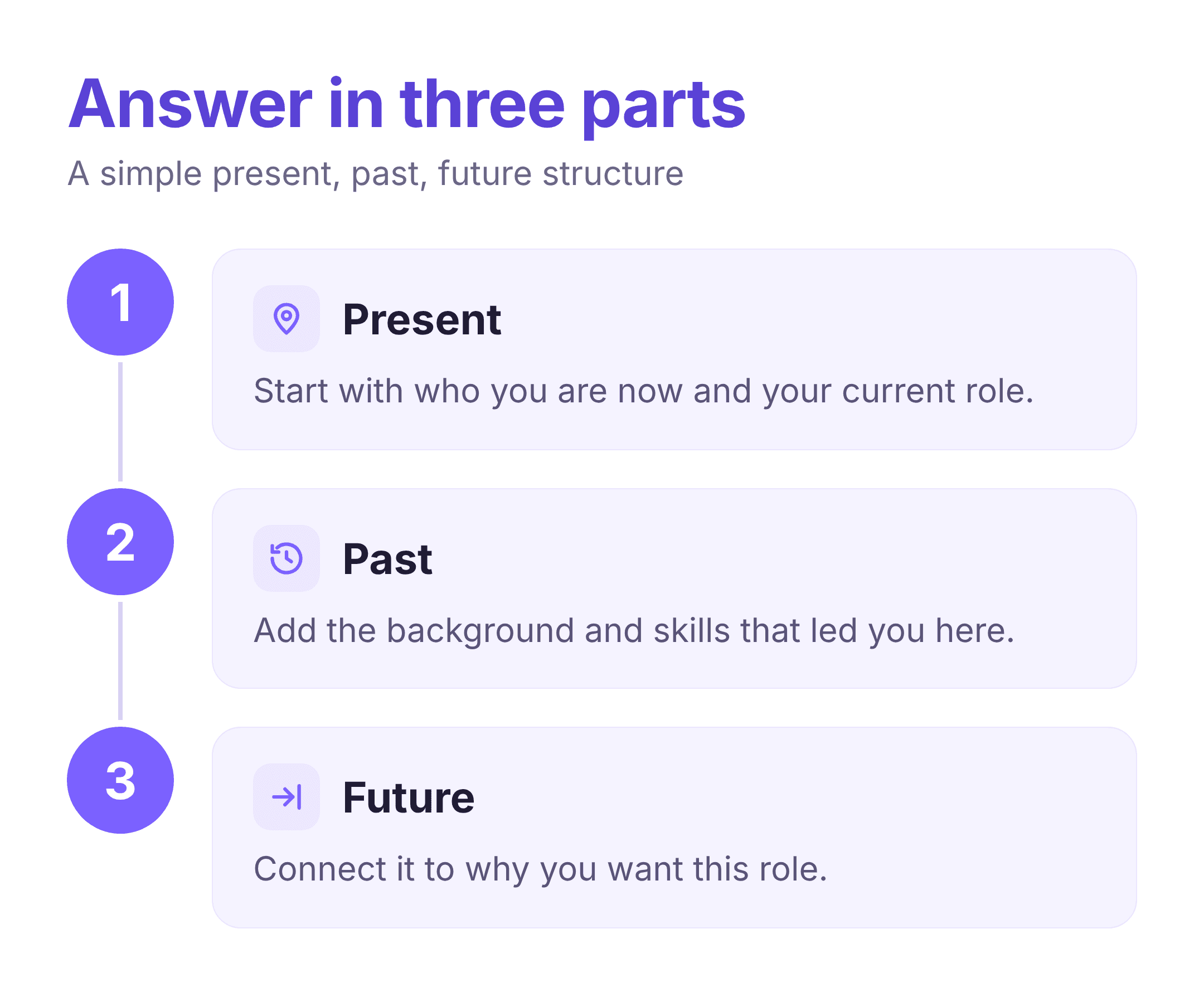
Open with your current role or main focus, in one or two sentences. If you have a job, name it and say what you do. If you are a student or between roles, say what you are working on or studying. This gives the interviewer an anchor before you add any history.
Add a short line of background that explains how you reached this point. Pick the experience and skills that connect to the job you are interviewing for, and skip the rest. This is not a walk through your whole resume. It is one or two steps that show why you are a sensible fit for this role.
Close by linking your story to the job in front of you. Say what you are looking for next and why this position fits. This is also a natural place to show you have thought about where you are headed, which ties into our post on career goals. It leaves the interviewer with a clear reason you are sitting across from them.
Everything in your answer should earn its place by connecting to the job. A good filter is simple: if a detail would not help this employer decide you can do this role, leave it out. That keeps the answer short and focused.
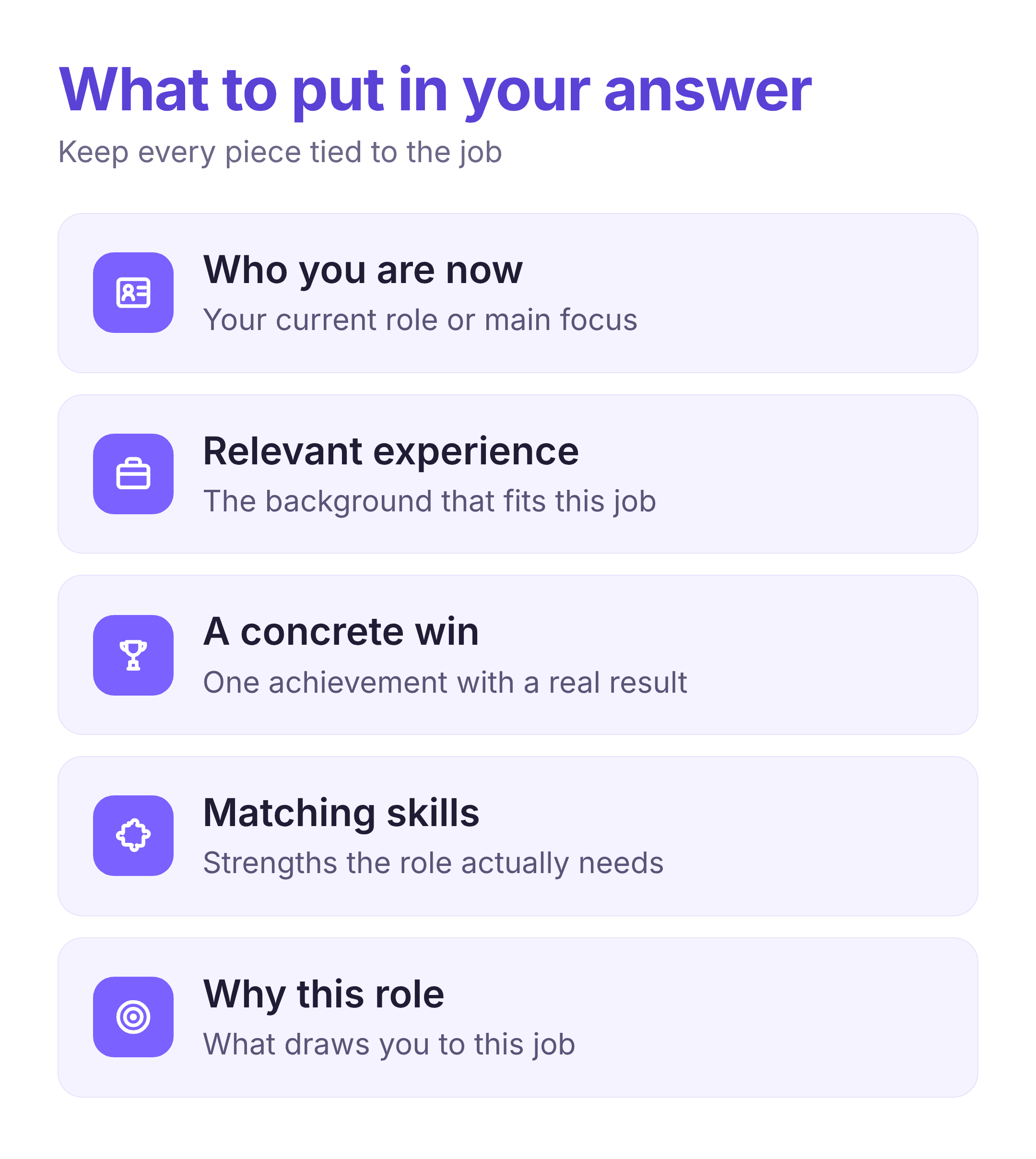
In practice, that means naming your current role or focus, the background that fits this job, one concrete achievement with a real result, the strengths the role actually needs, and a clear reason you want this particular position. If you are early in your career and short on work history, a class project, an internship, or volunteer work counts. Our team's guide to introducing yourself in an interview covers the wider first impression, from your handshake to your opening line.
The same structure works whether you are fresh out of school or fifteen years into a career. What changes is which part you lead with. The tell me about yourself examples below show the structure in three common situations. Treat each tell me about yourself sample answer as a starting point you adapt to your own experience, not a script to memorize.
If you do not have much work history, lead with your education and the real projects you have done, and show energy for learning. Recent grads often undersell themselves here by apologizing for a thin resume. You do not need to. Point to what you have actually built.
I just finished my degree in marketing, and over the past year I ran social media for our student entrepreneurship club, where I grew the following from about 400 to 3,000 and launched our first small paid campaign. I have always liked the mix of creative work and numbers, so I focused my coursework on digital marketing and analytics. I am looking for a first role where I can keep building on that, and a junior marketing position on your team is exactly the kind of place I want to start.
If you are switching fields, your job is to connect the skills you already have to the new role, so the move sounds deliberate rather than random. Name the thread that runs from your old work to this one. Whitnie Wiley, an executive coach and one of our experts, writes about carrying your strengths forward in a mid-career pivot instead of starting from zero.
For the past six years I have been a high school teacher, and a lot of that job is project management without the title: planning a full semester, keeping thirty timelines on track, and getting people with different priorities to agree. I started coordinating our school's events and realized the planning and logistics were the parts I enjoyed most. I have been building on that with a project management course, and I am now looking to move into coordination full time, which is what drew me to this role.
With more experience, lead with your track record and one or two results, then show you understand the work your team does, not just the strategy above it. Keep it tight. The temptation at this stage is to narrate your whole career, which is exactly what to avoid.
I am a marketing manager with about eight years in B2B software, most recently leading a team of five, where we rebuilt the demand-generation program and grew qualified leads by around 40 percent in a year. Before that I came up through content and email, so I know the day-to-day work my team does, not only the plan on top of it. At this point I want a role with a bigger product and more ownership of the whole funnel, which is why this position caught my attention.
Most weak answers fail in the same few ways. They start too far back, they repeat the resume word for word, or they wander off into personal details that have nothing to do with the job. The fixes are small, and knowing them in advance is most of the battle.
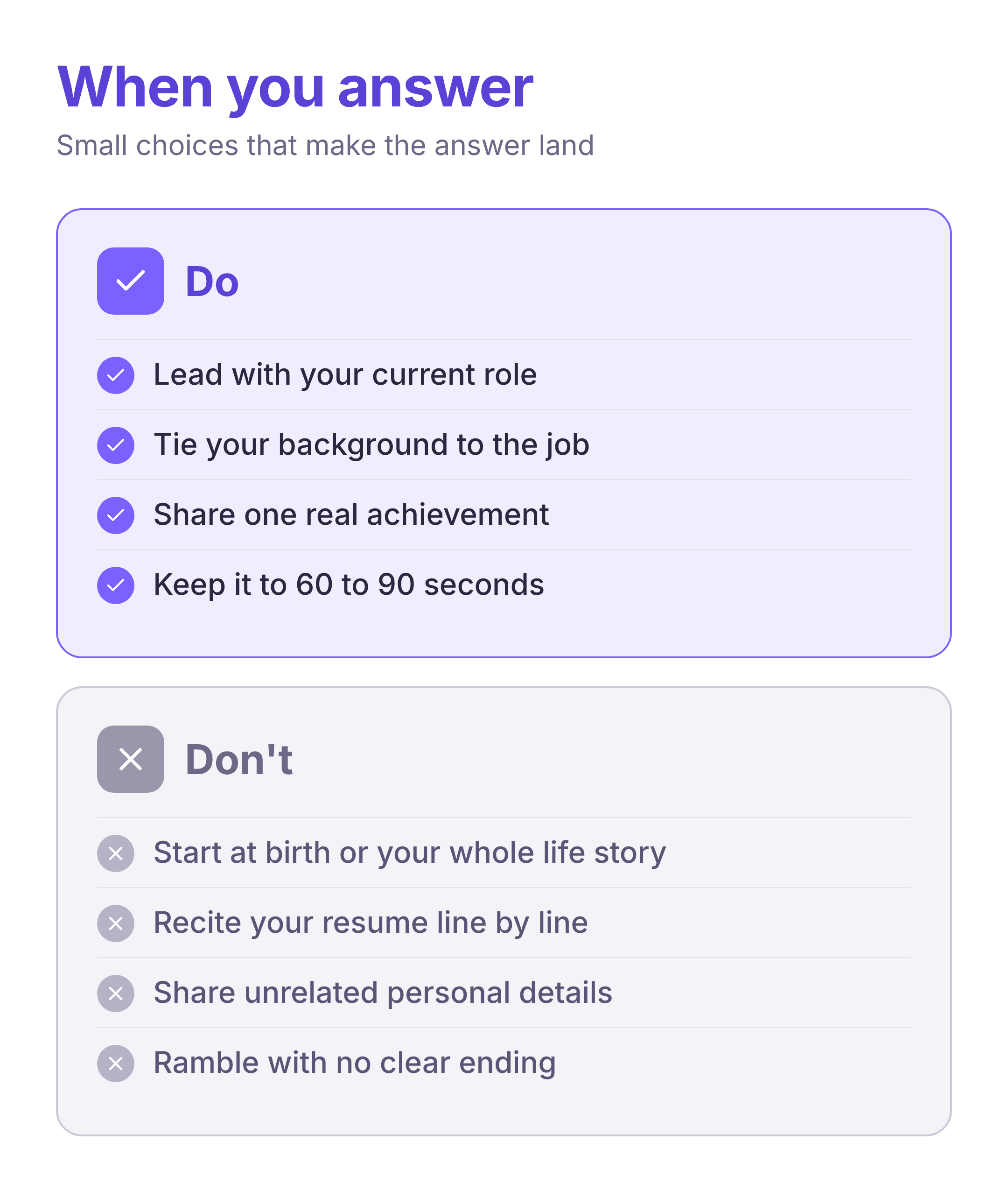
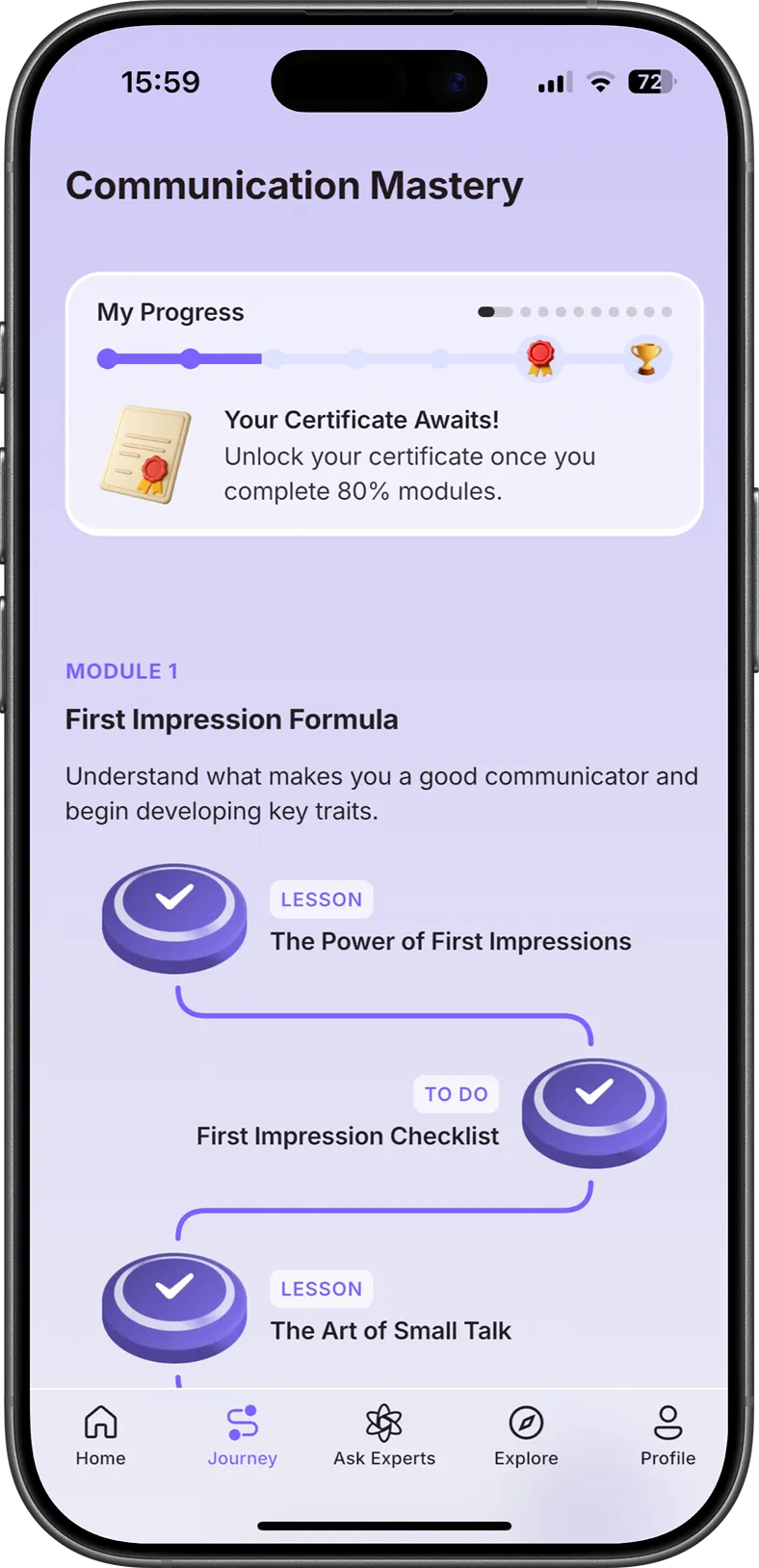
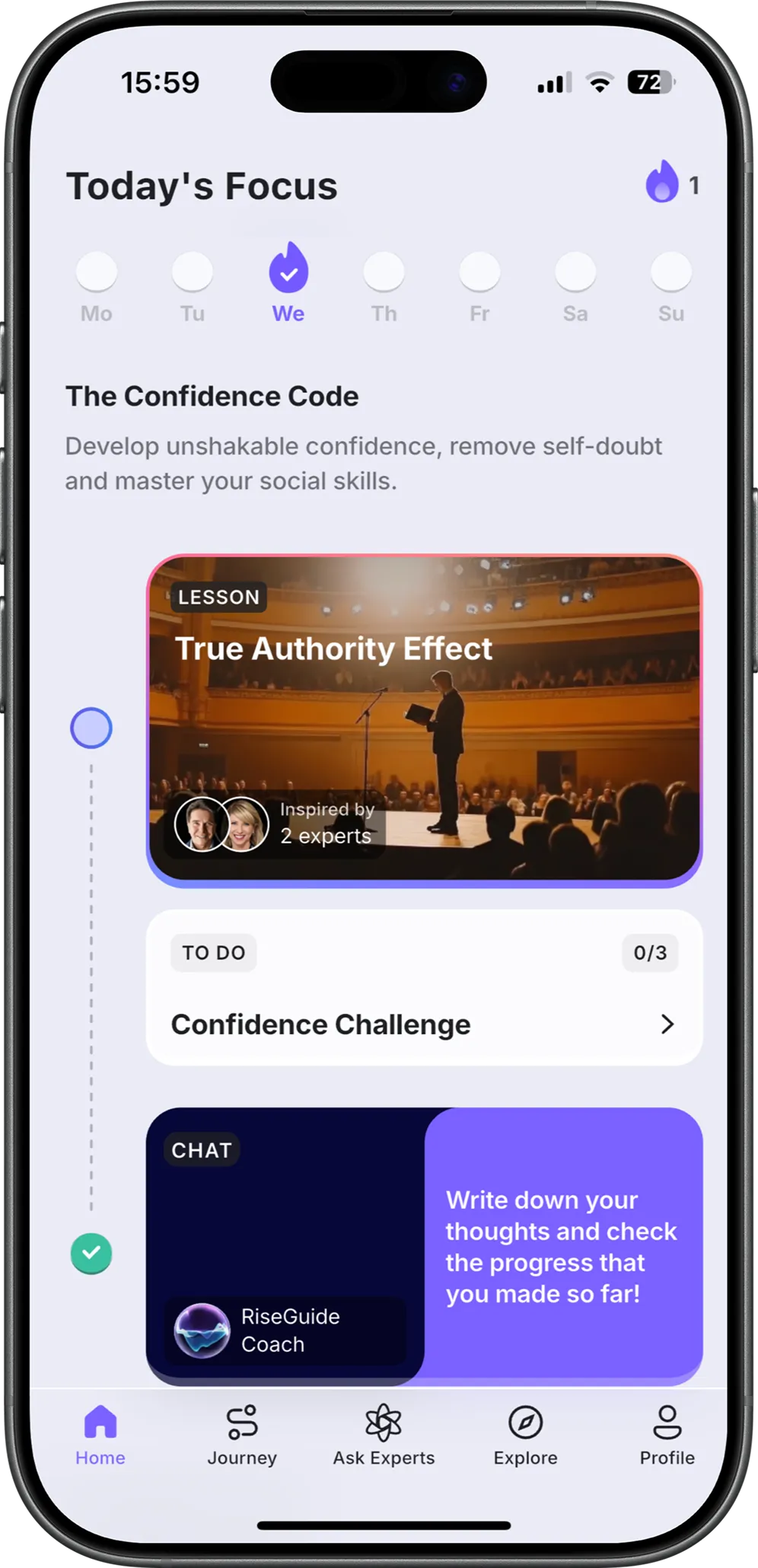
Saying your answer out loud a few times is what makes it sound natural instead of memorized, so practice it before the interview rather than in the chair. If talking about yourself under pressure is the part you find hardest, that is a skill you can build. RiseGuide's Communication Mastery journey has short lessons on talking about yourself clearly and handling high-stakes conversations, drawn from the work of communication experts.
One answer will not fit every interview, and it should not. Before each one, read the job description and the company's own site, and notice which of your strengths they seem to care about most. Then lean your answer toward those. A startup hiring a generalist and a large company hiring a specialist want to hear different things from the same person, so adjust which experience you lead with and which results you name.
It helps to come in with a few questions of your own too, since the interview goes both ways. Our team's list of questions to ask in an interview can help you figure out whether the role actually fits what you described wanting.
"Tell me about yourself" rewards preparation more than almost any other interview question, because it is predictable. You know it is coming, so you can decide in advance what your 60 to 90 seconds will cover. Build your present, past, and future, pick the one or two things that matter most for this specific job, and say it out loud a few times until it feels natural. Then adjust it for each company you talk to.
About 60 to 90 seconds, which is roughly three to five short sentences. Long enough to cover your present, past, and future, short enough that you are not still talking after a minute and a half. If you are not sure, err on the shorter side and let the interviewer ask follow-up questions.
Start in the present with who you are now, such as your current role, what you are studying, or what you are focused on at the moment. Opening with the present gives the interviewer an anchor, and it keeps you from drifting back to childhood or your first job out of habit.
Leave out your full personal history, a line-by-line reading of your resume, and details that do not relate to the job, such as your hometown or hobbies that are not relevant. Avoid starting with "well, where do I begin," and avoid rambling with no clear ending. Pick a stopping point and land on it.
They are close but not the same. "Walk me through your resume" asks for a chronological tour of your work history. "Tell me about yourself" asks for a short, curated highlight reel aimed at this specific role, so you can skip anything that does not help your case here.