RiseGuide Team
 Free with any plan: the First Impression Formula guideClaim the free guideGet the guide

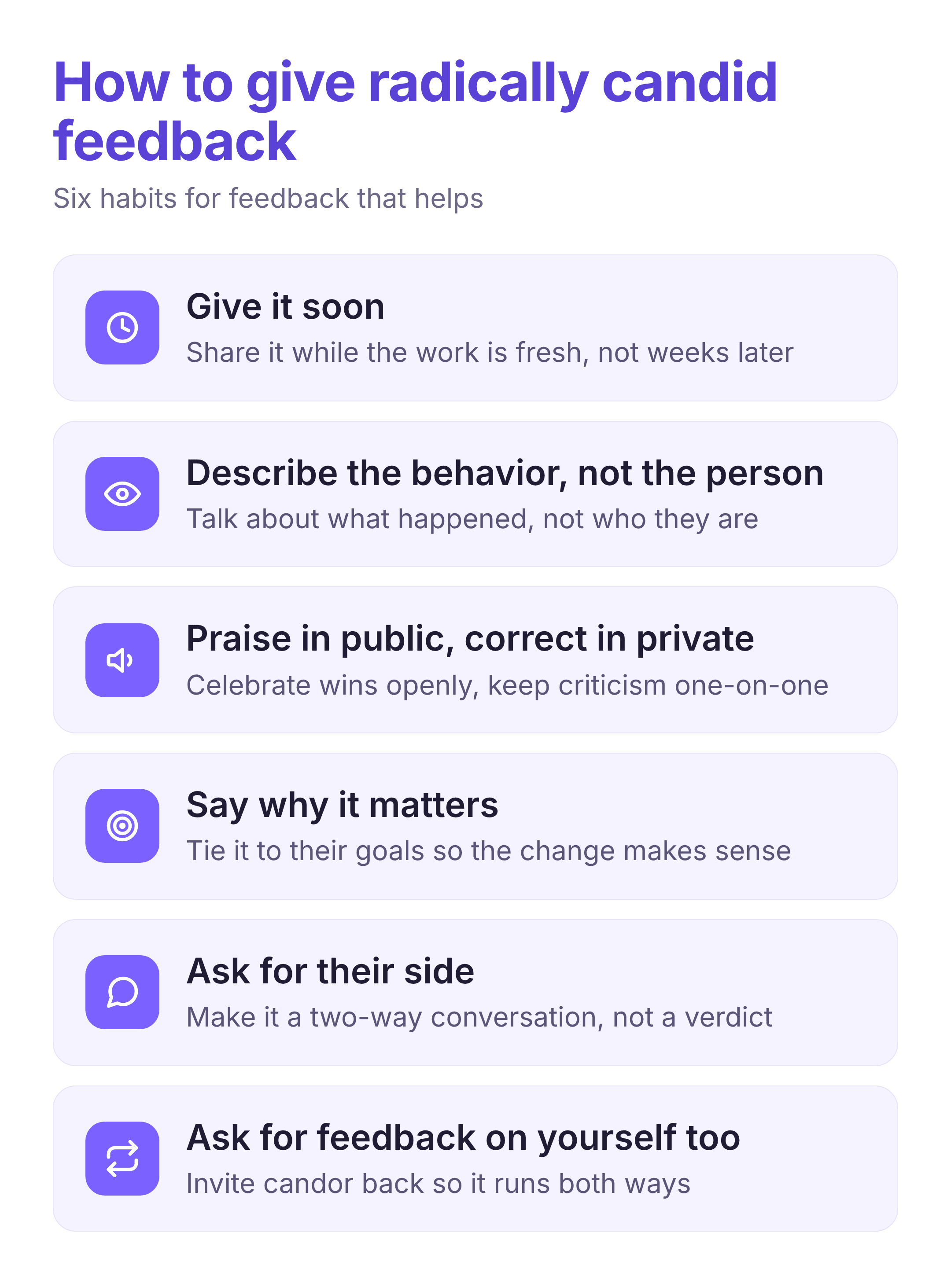
To give better feedback with radical candor, care about the person and tell them the truth about their work at the same time. Radical candor sits where two things meet: caring personally and challenging directly. Kim Scott maps it against three weaker habits: ruinous empathy (you stay kind but hold back the truth), obnoxious aggression (you challenge but forget the person), and manipulative insincerity (you do neither). To put it into practice, give feedback soon after you notice something, describe the specific behavior rather than label the person, praise in public and correct in private, explain why it matters, and ask for the other person's view. The same approach works in reverse: ask for feedback directly, and make it safe for people to be honest with you.
Giving feedback is one of the hardest parts of working with other people. Say too little and small problems grow; say it the wrong way and the other person stops listening. When managers avoid honest feedback, people are left guessing about how they are doing. Radical candor, a term from former Google and Apple leader Kim Scott, is a way to give feedback that is caring and direct at once, so the person hears the truth and knows you are on their side. The idea is simple to say and harder to do, so it helps to see where feedback usually goes wrong and what the better version sounds like.
Radical candor is feedback that is caring and direct at the same time. The meaning of radical candor comes down to doing two things together: you show the person you care about them as a human being, and you tell them the clear truth about their work, even when it is uncomfortable. Kim Scott developed the idea while leading teams at Google and Apple, and set it out in her 2017 book, Radical Candor.
Scott's description of good feedback is short and clear:
"Radical candor is humble, it's helpful, it's immediate, it's in person."
Kim Scott, author of Radical Candor
The radical candor framework plots any piece of feedback on two lines: how much you care about the person, and how directly you are willing to challenge them. Where your feedback is on those two lines decides what kind of feedback you are really giving, and only one of the four options helps.
The two lines, caring personally and challenging directly, cross to make four boxes. The radical candor quadrants give each kind of feedback a name, which makes it easier to spot which one you tend to fall into. Most people lean toward one of the weaker three under pressure, so it helps to know them all.
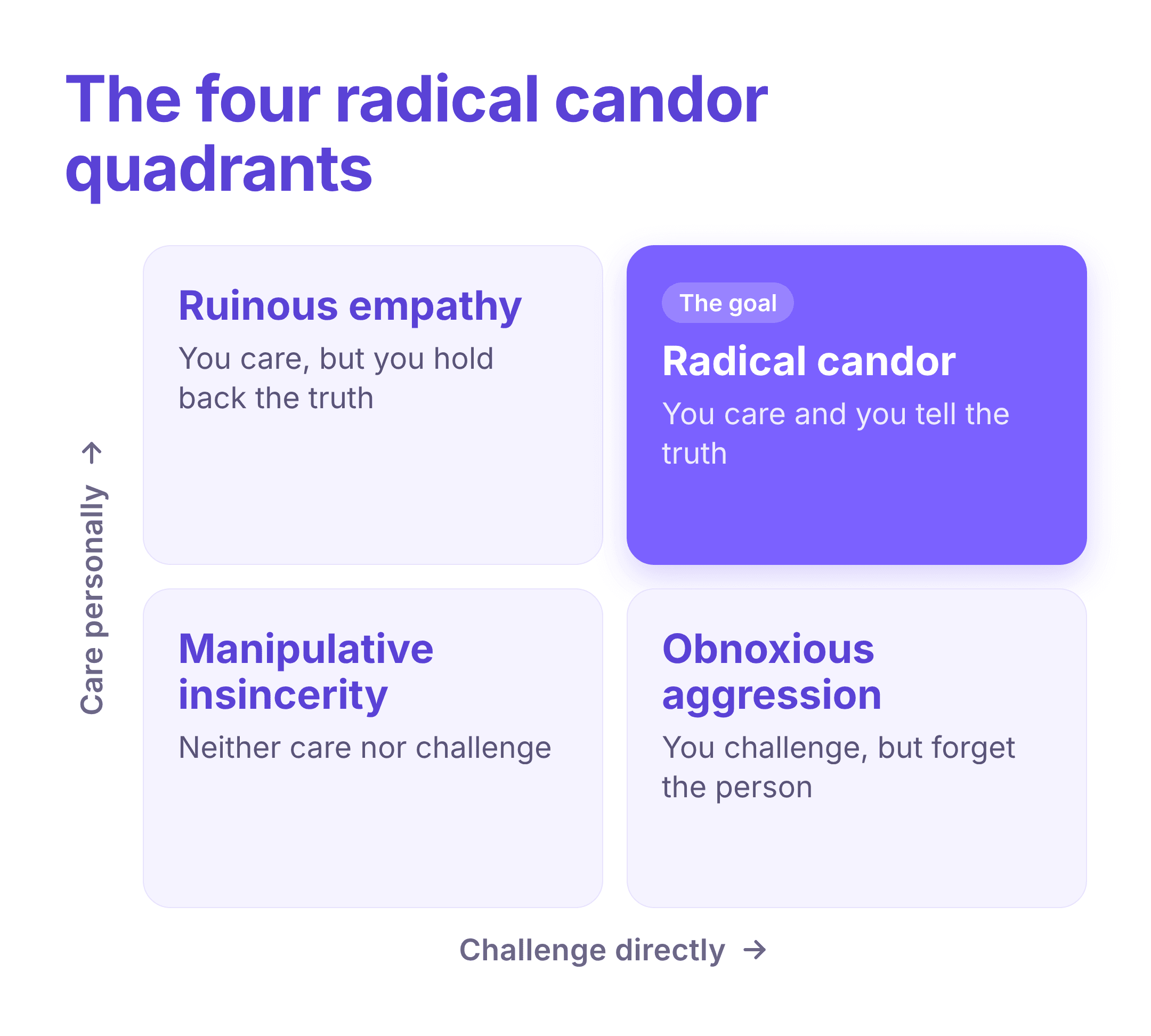
This is the goal. You care about the person and you challenge them directly, so your feedback is honest and kind. You tell a colleague their report missed the main point, and you do it because you want their next report to be better. The person can accept the criticism because they feel that you care for them.
This is the most common trap for empathetic people. You care about the person, so you soften the message until the point disappears, or you say nothing at all. It feels nice in the moment and it protects the relationship from a hard conversation. The cost comes later: the person keeps making the same mistake because no one told them, and the problem is harder to fix by the time it surfaces.
Here you are direct, but you leave out the care. The feedback might be accurate, yet it comes across as harsh, public, or personal, so the other person gets defensive instead of better. Being blunt is not the same as being helpful. Feedback only works if the person can take it in, and most people cannot take it in when they feel attacked.
This is when you neither care nor challenge. It shows up as fake praise, saying one thing to someone's face and another behind their back, or staying quiet to protect yourself. People usually end up here when they have given up or are trying to look good, and it leaves everyone worse off.
The clearest way to see the difference is to watch the same feedback change quadrant by quadrant. Say a teammate, Sam, gave a presentation that was hard to follow because the slides were crammed with text.
Here is what the same feedback sounds like in each quadrant:
These radical candor examples show the pattern: name the specific thing, say why it matters, and make it clear you want the person to do well. Demetra Moore, a leadership and communication coach and one of our experts, highlights the importance of saying the true thing kindly instead of avoiding the conversation.
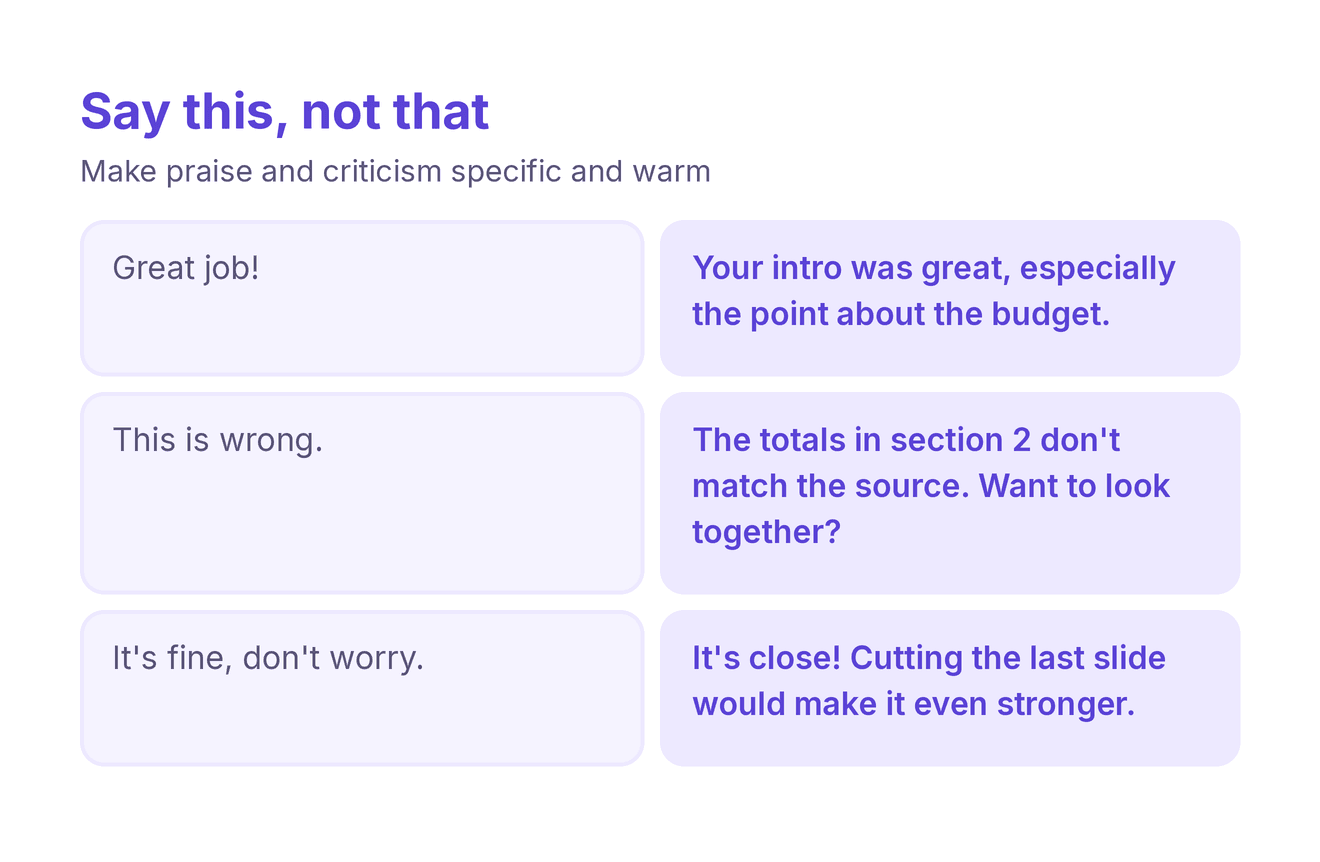
Knowing the quadrants is the easy part. Giving feedback this way in real conversations takes a few concrete habits:
This is also where feedback can tip into interpersonal conflict if the other person feels cornered, so keep the tone about the work and the shared goal, not about winning. Dale Carnegie made the same case decades ago about correcting people without resentment: lead with what is working, be specific, and let the person keep their dignity.
If giving feedback at work is the skill you most want to build, RiseGuide's Communication Mastery journey breaks it into short, practical lessons drawn from the insights of communication experts, so you can practice the wording of a hard conversation before you are in one.
Radical candor runs both directions. The fastest way to build a team where people tell each other the truth is to ask for feedback on yourself first, and to make it safe to give. Ask a direct question, like "What could I have done better in that meeting?", then sit with the answer instead of defending yourself. When someone is honest with you, thank them for it, so being candid feels rewarded rather than risky. Teams that handle this well tend to have fewer blowups, because small issues get named early instead of building up. Clear habits around feedback are a core part of good workplace communication, and they are easier to keep when everyone expects honesty to go both ways.
Radical candor is a simple idea that takes practice: care about the person and tell them the truth in the same breath. Most of us drift into ruinous empathy when we want to be liked, or obnoxious aggression when we are frustrated, and naming those habits is the first step to catching them. Start with one conversation you have been avoiding, be specific and kind, and ask the other person what they think. The more often you do it, the more normal honest feedback becomes for everyone around you.
No. Bluntness without care is what Kim Scott calls obnoxious aggression. Radical candor only works when the challenge comes with genuine care for the person, so the feedback is honest and kind at the same time.
Radical candor (care and challenge), ruinous empathy (care without challenge), obnoxious aggression (challenge without care), and manipulative insincerity (neither). Only the first helps the person improve.
Ruinous empathy is being so focused on sparing someone's feelings that you hold back the feedback they need. It feels kind in the moment, but it leaves the person unable to fix a problem they do not know about.
Kim Scott, a former leader at Google and Apple, developed the idea and wrote the 2017 book Radical Candor. The approach grew out of her experience managing teams and being managed herself.