
Whitnie Wiley
Executive Coach
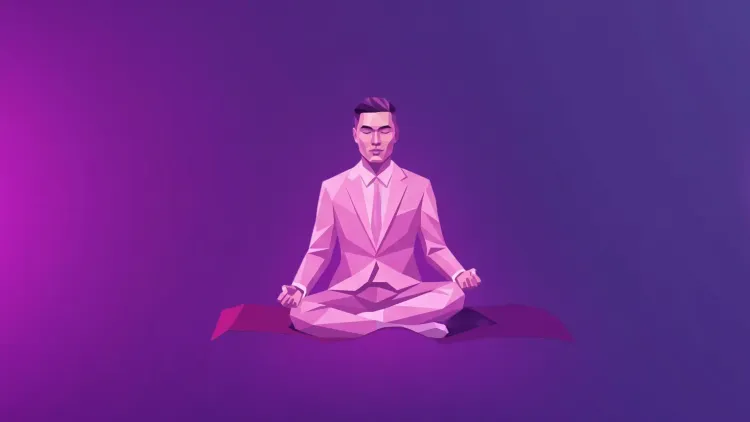
For a long time, I believed mindfulness required a cushion, a quiet room, and a stretch of time I never seemed to have, and I suspect that belief is exactly what keeps so many busy professionals from ever trying it. What I have learned, both in my own life and in the years I have spent coaching people through demanding careers, is that the reset you actually need in the middle of a hard day is much smaller and much more available than you think. It can happen in about two minutes, right at your desk, between one thing and the next. That's become central to how I think about mindfulness: the practice has to adapt to our lives rather than requiring us to reorganize our lives around the practice.
Most of us move through a workday without any meaningful pauses. We finish a tense call with no time to recover before going straight to drafting an email that requires patience and thought. We carry the residue of one meeting into the next, and by the afternoon that residue has compounded and we are running on a nervous system that has been in low-grade alert since morning. The stress does not come only from the day's events; it comes from never giving ourselves a moment to set one thing down before picking up the next.
This is the gap that micro-mindfulness is designed to fill. A micro moment of mindfulness is a brief, deliberate pause in which you step out of the momentum, notice where you actually are, and let your system settle before you move on. It is small enough to fit into the workday you actually have, which is the entire point, because a practice you cannot or will not actually do is not much use to anyone. This principle is at the heart of The Mindful Five<sup>TM</sup>, the framework I developed around five mindfulness practices that can each be completed in five minutes or less. The premise is simple: mindfulness should adapt to your life rather than requiring you to adapt your life to mindfulness.
You do not need anything special to do this. You need two minutes and a willingness to stop, which is often the harder of the two. Here is a simple version you can use between tasks.
Begin by taking a few slow, comfortable breaths. If it feels natural, allow the exhale to be slightly longer than the inhale, which can help support a shift toward a calmer state. Research from Stanford supports the value of even brief breathing practices. In one study, just five minutes of intentional breathing a day improved mood and reduced anxiety, with an exhale-focused practice showing particularly positive results.
Then notice, without judgment, what you are actually feeling and where you feel it, whether that is tension in your shoulders, a tightness in your chest, or a mind still racing from the last conversation. Naming what you're experiencing can create a little distance from it rather than leaving you caught up in it. There's research behind this, too. UCLA researchers found that simply putting feelings into words can help reduce emotional reactivity. Sometimes naming what we're experiencing is enough to create a little space between the feeling and what we do next.
Finally, set an intention for what comes next. Ask yourself: What do I want to bring into this next meeting, conversation, or task? Maybe it's patience, focus, curiosity, or simply presence. Then open your eyes and begin, carrying a little of that steadiness with you.
That is the whole practice. It looks almost too simple to matter, yet practiced consistently throughout the day, these brief pauses can interrupt the accumulation of stress rather than leaving you to unwind an entire day's worth at five o'clock.
The challenge with something this small is not that it is hard but that it is easy to forget, since the pull of the next task is strong and a two-minute pause is quick to skip past. So I encourage people to attach the reset to things that already happen in their day. Behavioral science sometimes calls this habit stacking: attaching a new behavior to something you already do consistently. Take the two minutes before you join a meeting, after you end a call, or each time you sit back down at your desk. Let the ordinary transitions of your workday become the cues, so the practice does not depend on willpower or a perfect memory.
I have watched this change how people experience their days, not because it removes the pressure, but because it gives them small, regular places to set the pressure down. Over time, the resets add up to a steadier way of working and of being with the people around you. You don't need to find a free hour or wait for a quiet retreat to take better care of your mind. Start with the two minutes you have. One intentional pause between what just happened and what comes next can change how you enter the next moment. And when those pauses become part of the way you move through your day, mindfulness stops being one more thing you have to fit into your life. It becomes something that fits the life you're already living.