
RiseGuide Team

Key takeaways:
Rehearsing phone calls, breaking up over text, and checking our messages over meals, young people may have mastered digital communication, but are they losing the ability to interact IRL?
RiseGuide surveyed 2,000 Gen Zers and millennials on how long they go without human interaction, the conversations that make them sweat, and the price they pay for not speaking up.
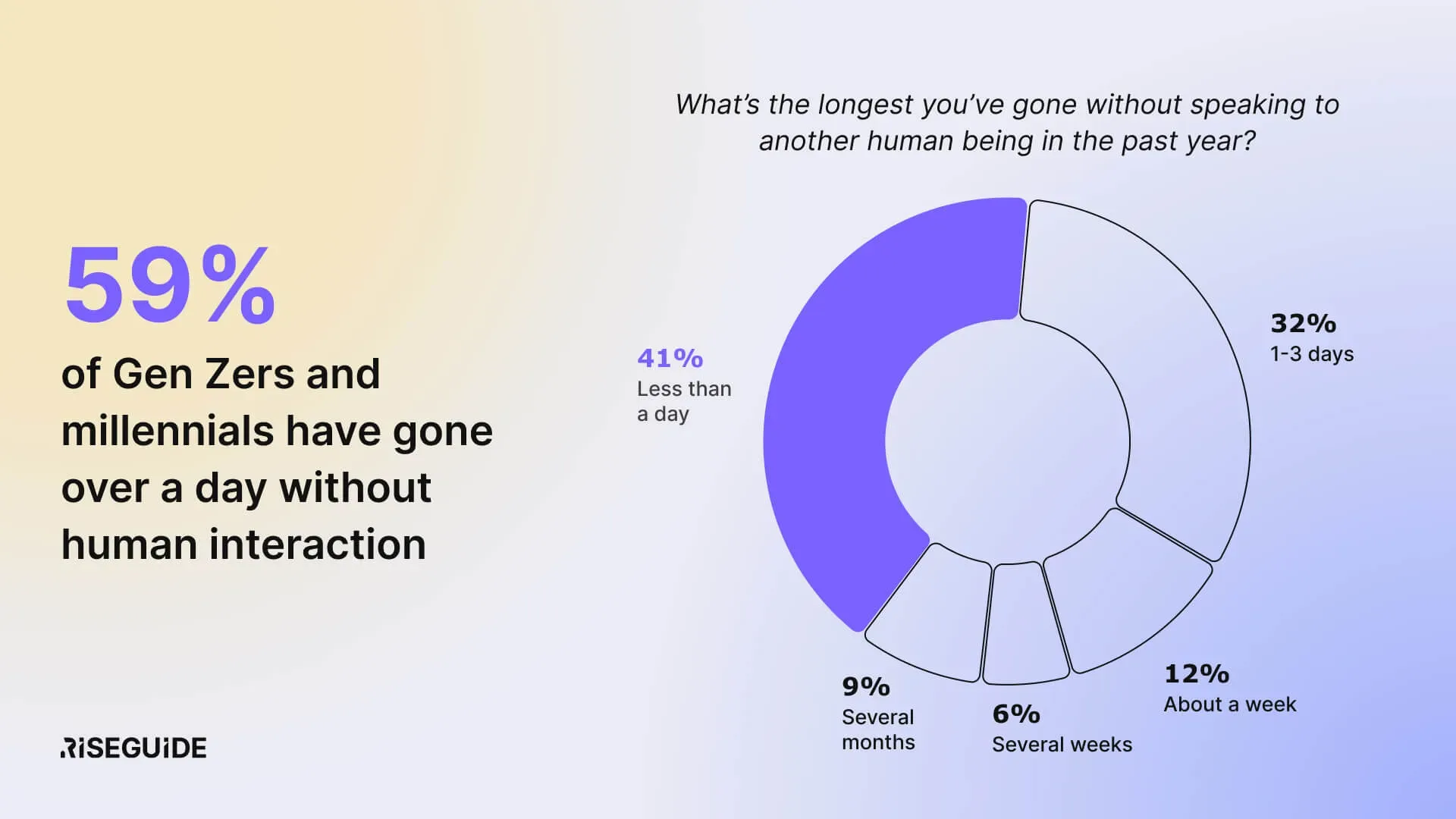
Life gets busy, work gets overwhelming, and sometimes we just need a bit of me time – so we go offline. For most, it lasts less than a day. However, 32% go days, 6% weeks, and 9% months without any human interaction.
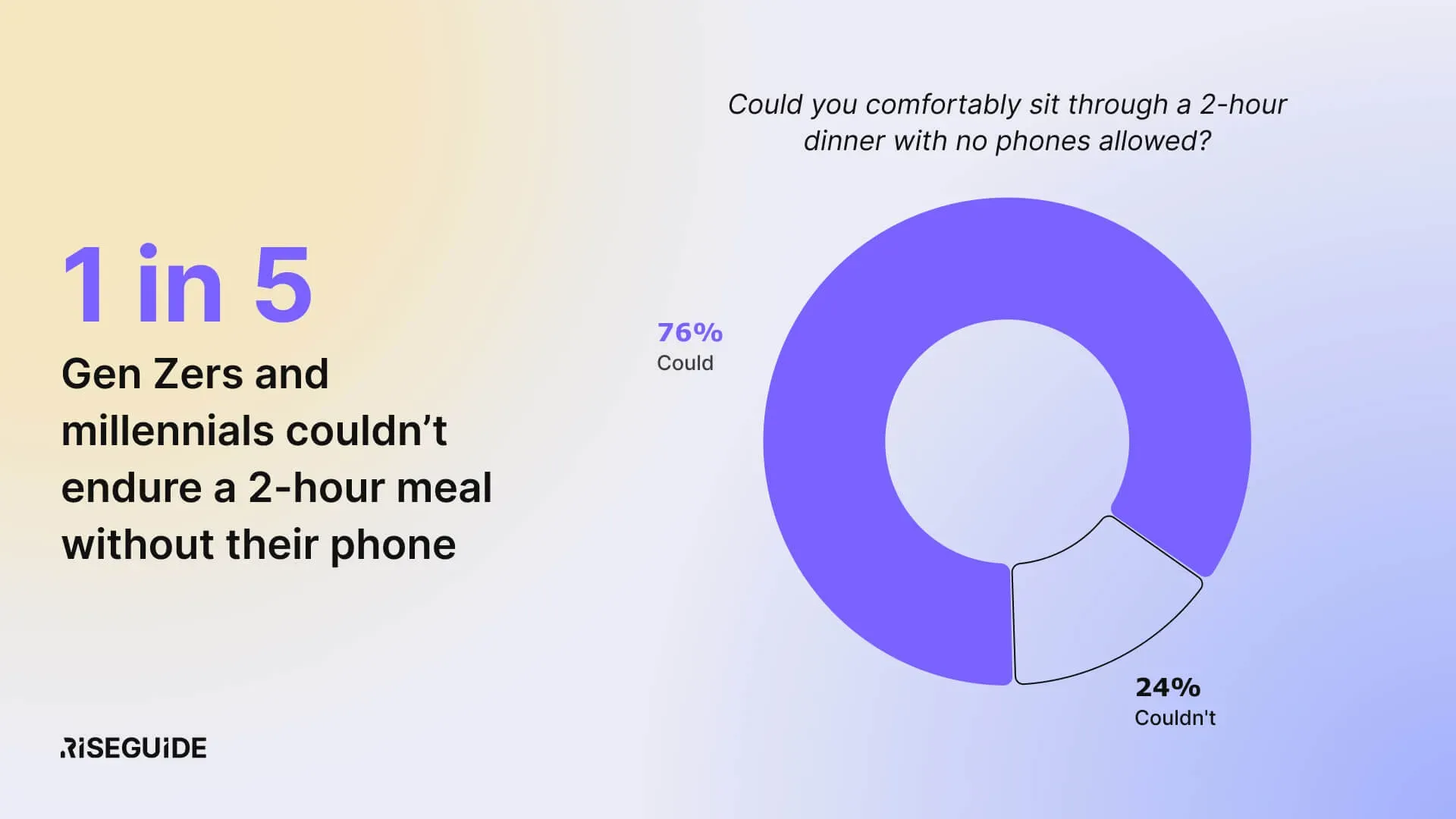
Millennials and Gen Zers don’t spend all their time shut away on their own, but getting them to fully disconnect and enjoy the real world? Some 24% admit they couldn’t sit through a two-hour meal without checking their messages and swiping on social media.
Think twice before making a millennial or Gen Z your emergency contact.
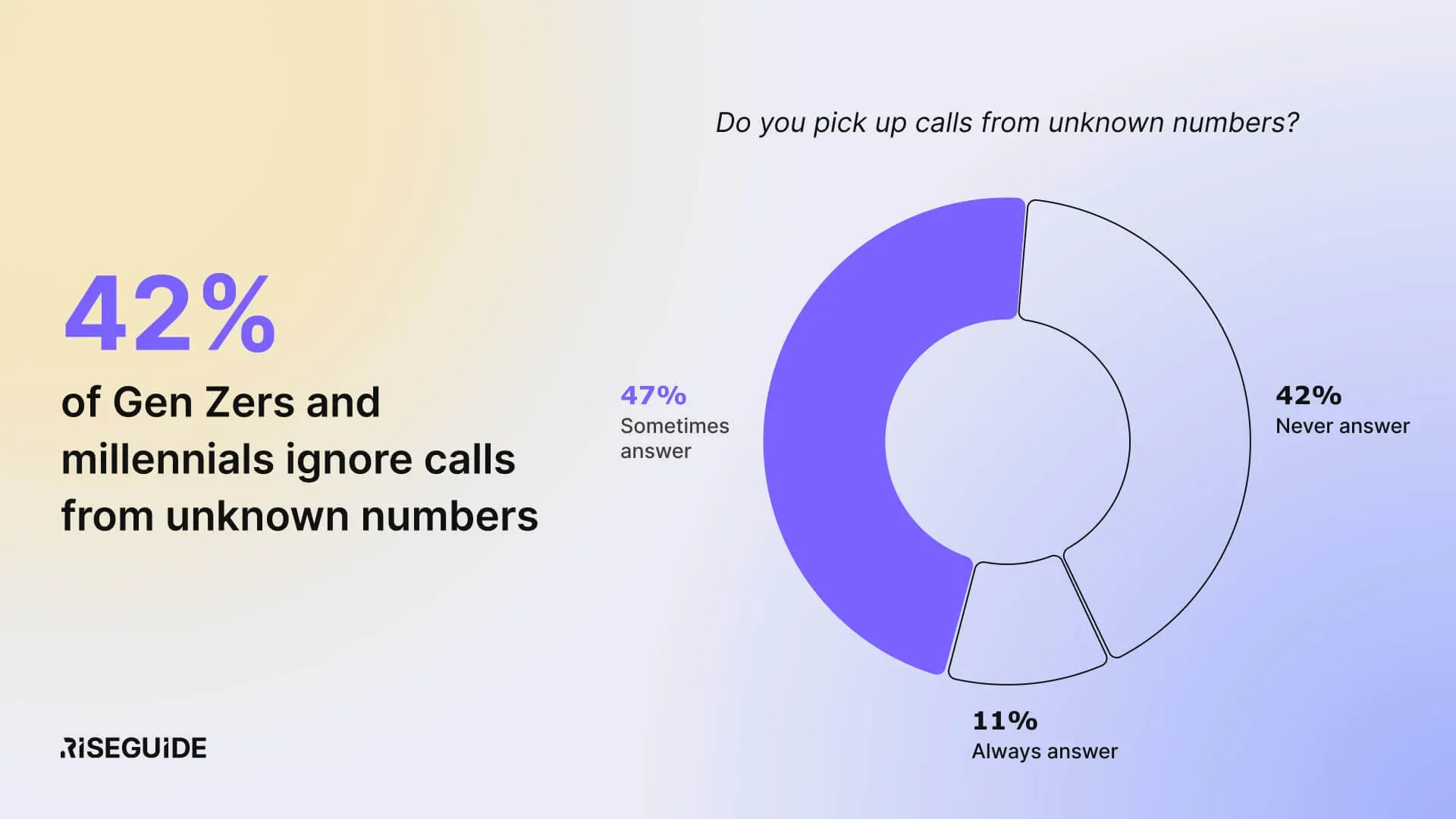
Young people today may be glued to their phones – scrolling on social media for hours on end – but good luck getting them to answer them. Only 11% always pick up, while 47% do occasionally. The other 42% let it go to voicemail, whether it's their bestie calling or an unknown number.
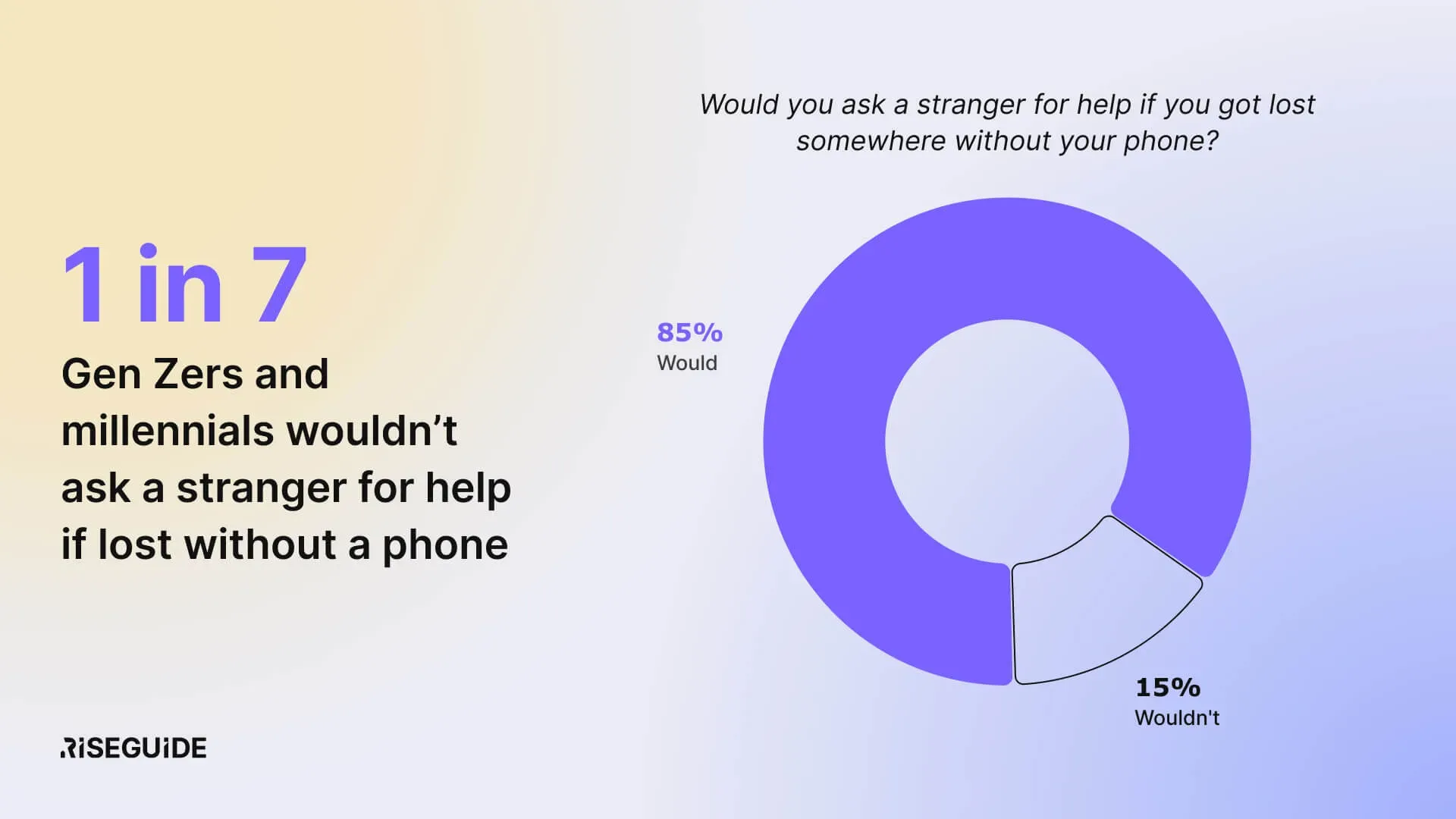
Why? Because for many, communication is stressful... especially with strangers.
They worry they'll struggle to get their words out or how the other person might react, and it's easier to avoid it altogether – with 15% admitting they wouldn't ask a stranger for help if they were lost and without their phone to guide them.
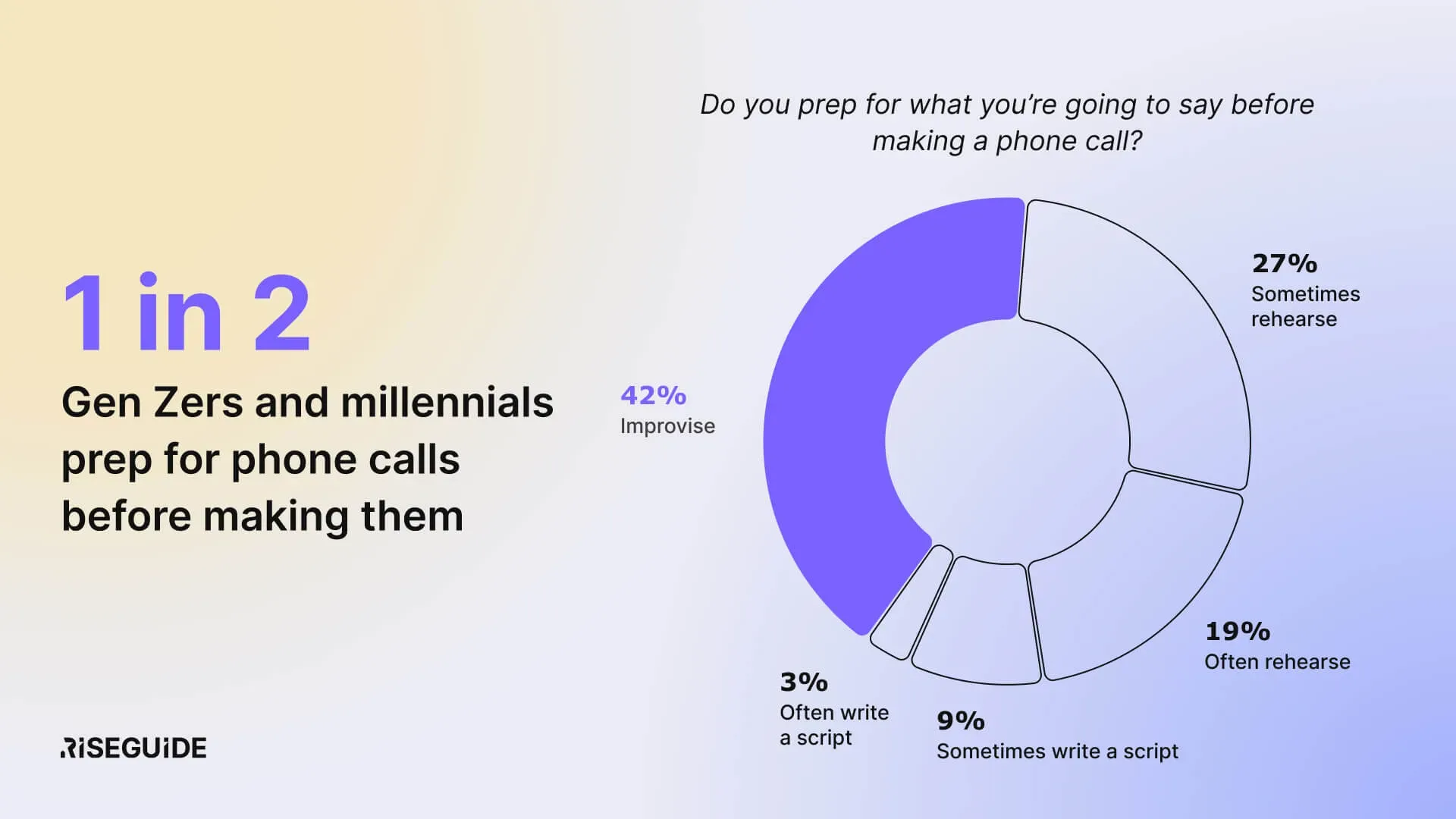
Conversations are usually easier when you don’t overthink them or run through all the awful things that could (but definitely won’t) happen. Yet, only 42% say they wing phone calls and go with the flow, falling to just 33% among Gen Zers.
The rest rehearse their calls (46%), with 19% doing so regularly, or write out a script in advance (12%). It’s a tried and tested way to build confidence and learn to articulate your thoughts clearly. However, it becomes a problem when preparation becomes avoidance rather than improvement. Write down your thoughts, sharpen them, then make the call.
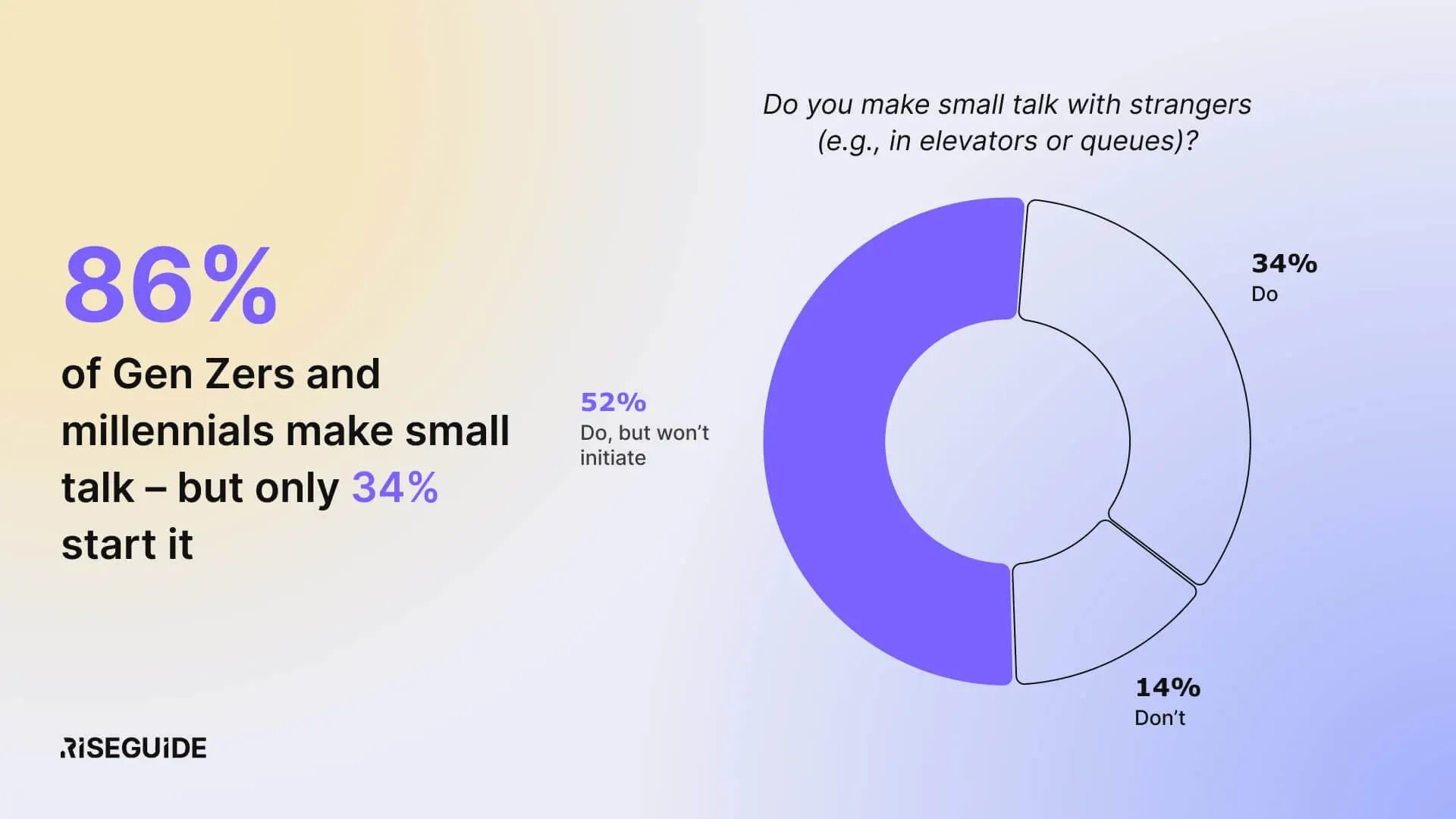
Some 86% of Gen Zers and millennials engage in small talk. However, only 34% would start the conversation themselves.
Millennials are much more willing to take the lead. Some 37% say they’ll break the ice with strangers, compared to just 23% of Gen Zers. Age brings experience, and with confidence and a little practice, small talk becomes a way to pass the time, rather than a source of dread.
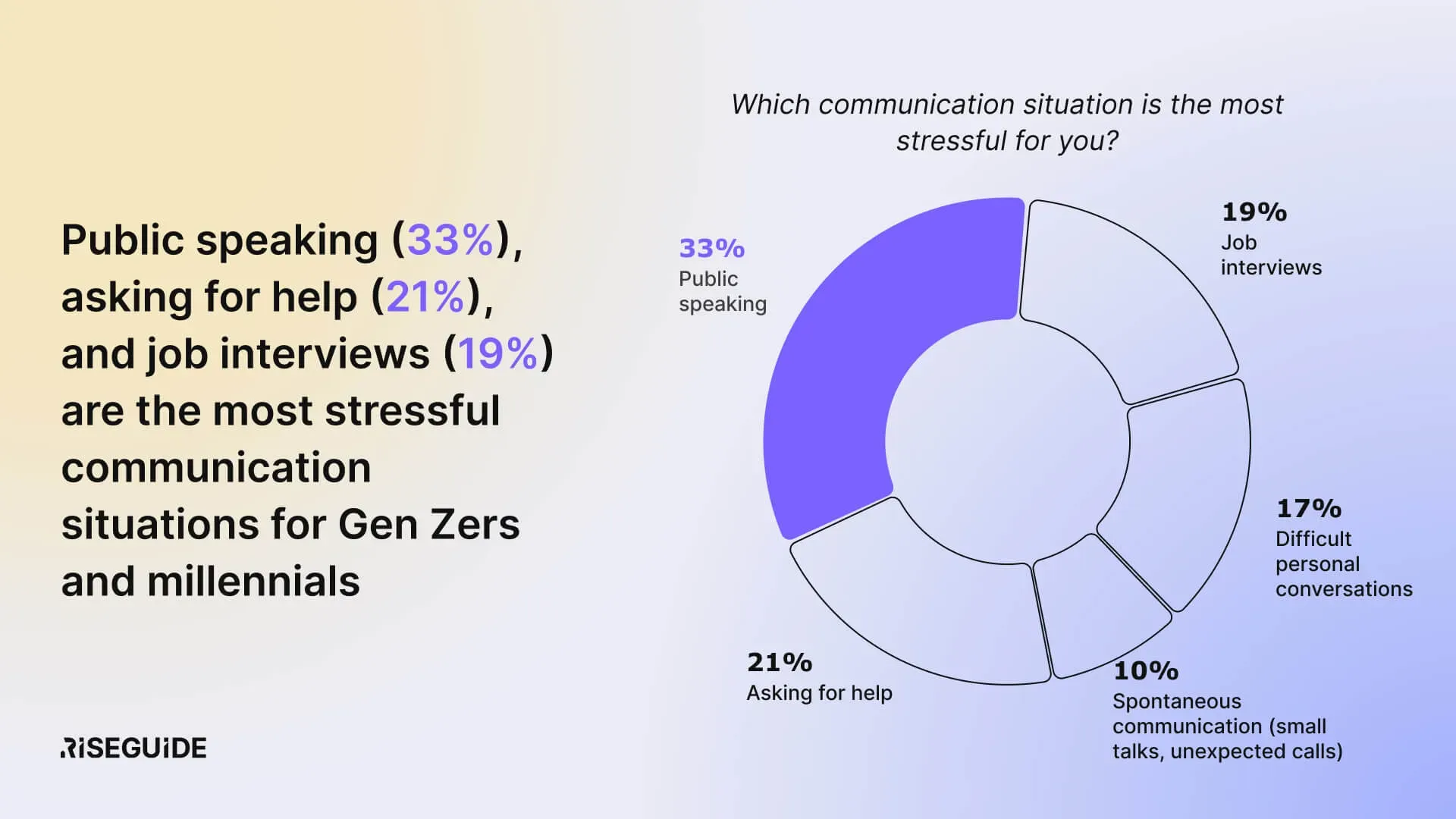
Some 33% admit that public speaking gets their heart racing. It’s only natural – It’s not an everyday situation for most, and standing at the front with all eyes on you is high pressure.
However, when you’re not confident in your communication skills, even everyday interactions can feel intimidating. Some 21% admit asking for help makes their palms sweaty, while 10% say spontaneous communication, such as an unexpected phone call, fills them with anxiety.
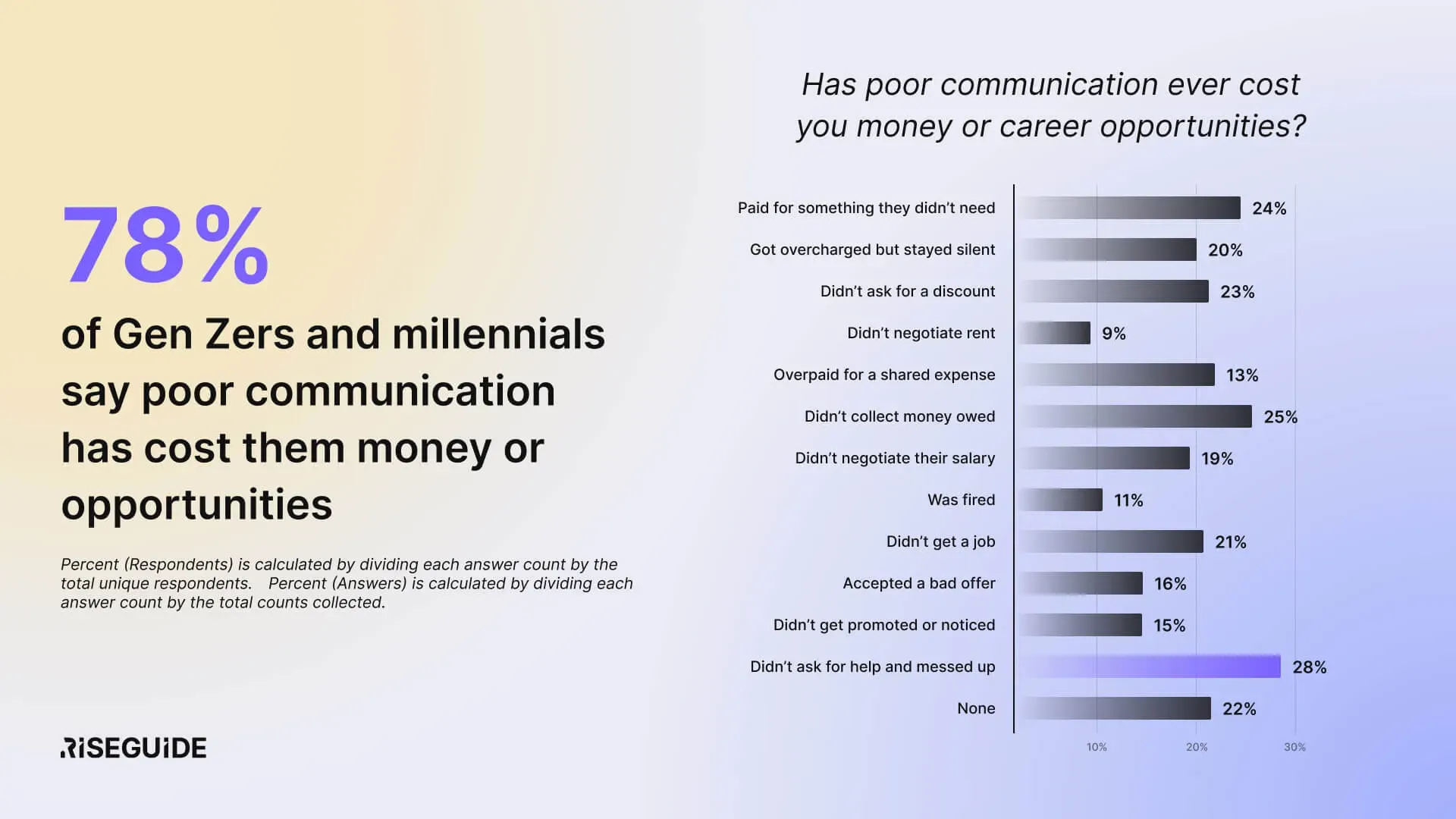
Poor communication isn’t cheap, with 78% of Gen Zers and millennials admitting it has cost them money or opportunities.
Some 28% say they didn’t ask for help when they needed it and made mistakes as a result, 25% didn’t collect money someone owed them, and 24% paid for things they didn’t need.
That silence shows up at work, too. Some 19% admit poor communication stopped them from negotiating a better salary, while 21% were passed up for a job entirely.
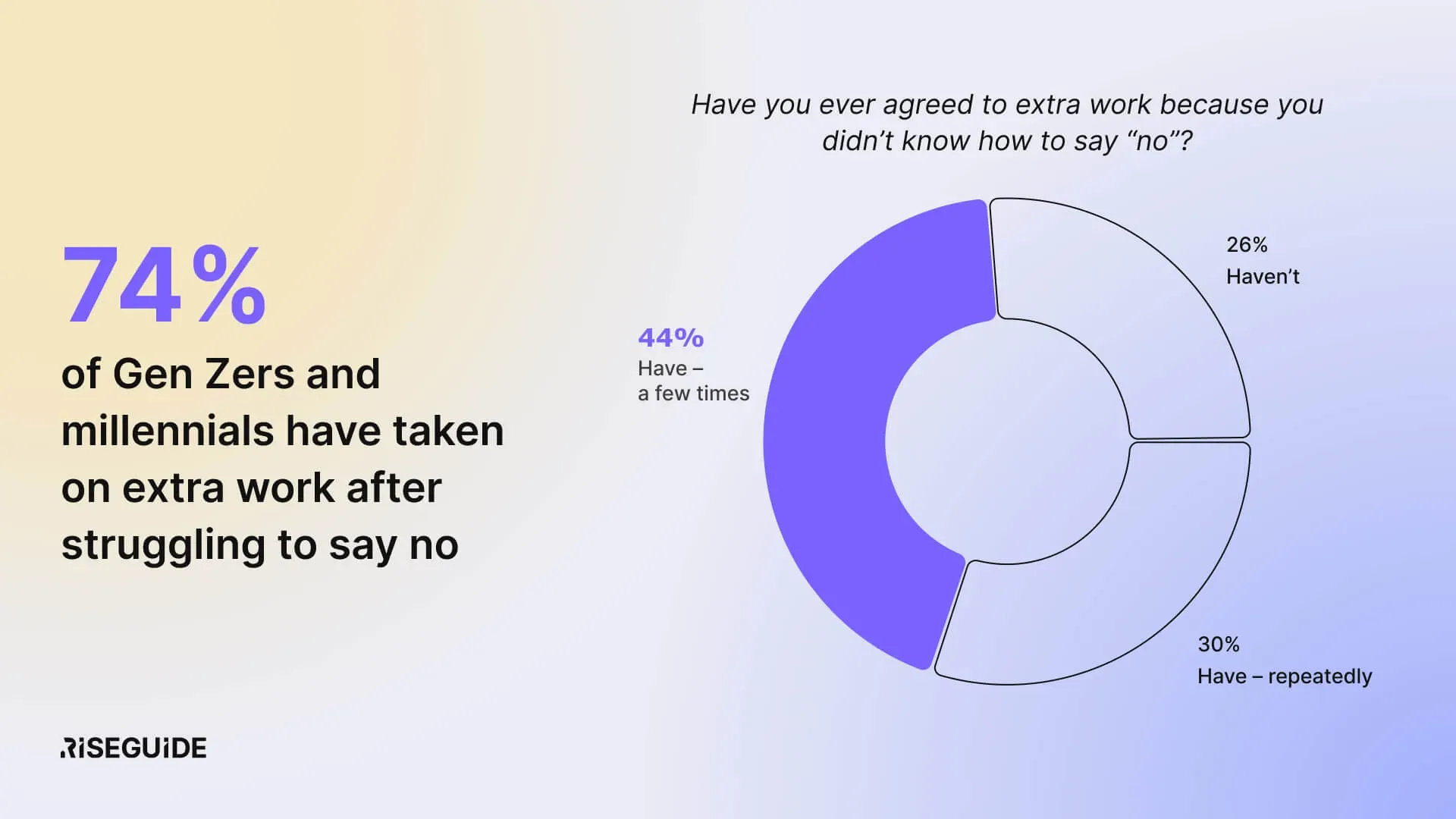
For 74% of Gen Zers and millennials, an inability to say ‘no’ causes their to-do list to pile up, with 30% admitting they repeatedly take on extra work to avoid the awkwardness of pushing back.
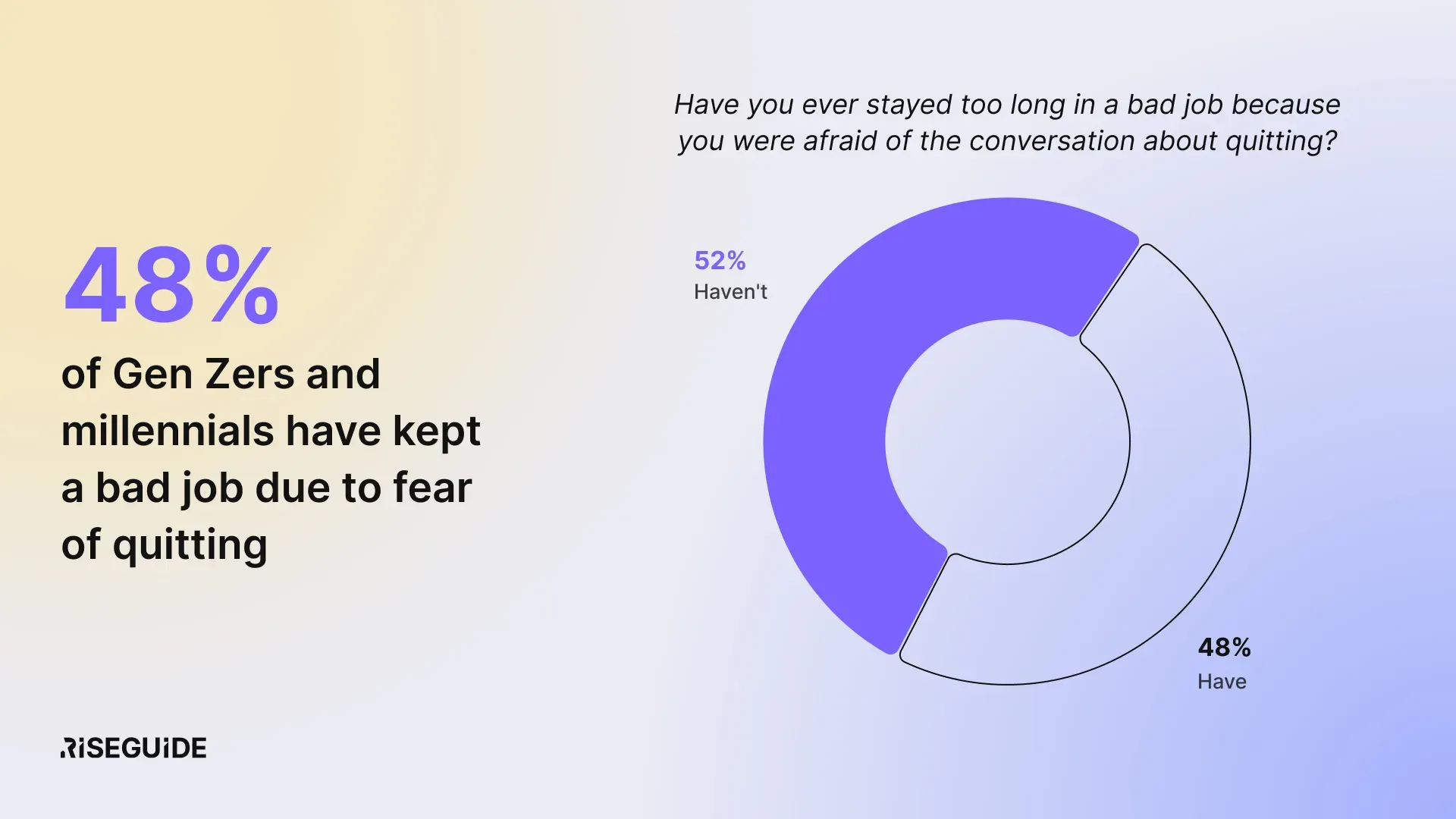
It all gets too much, burnout creeps in, and quitting feels like the only option. Yet, many struggle to say the words, with 48% admitting they’ve stayed in a bad job to avoid the resignation talk and exit interviews.
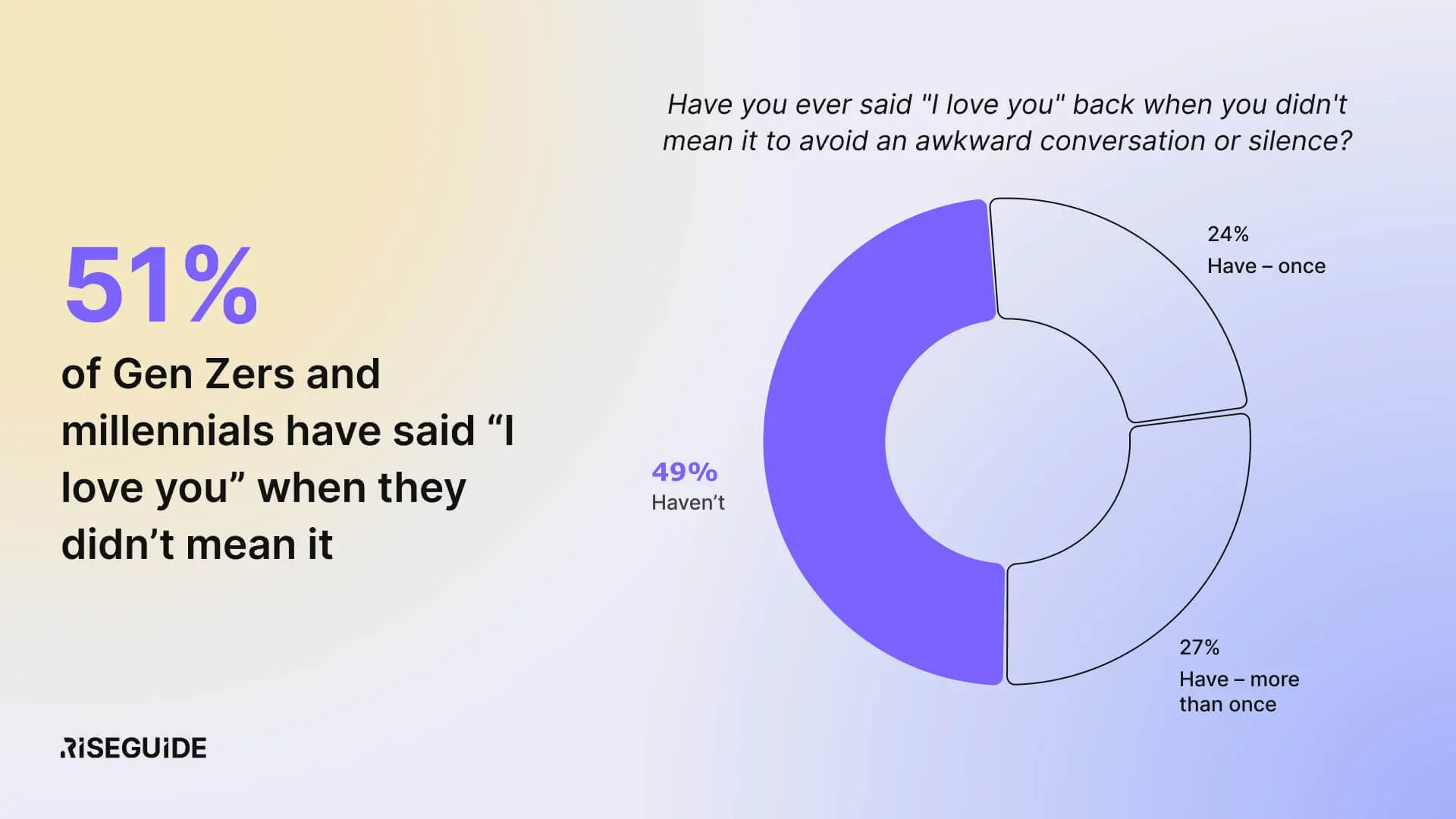
Few things are more awkward than an “I love you” that isn’t mutual. Do you leave them hanging and break their heart now, or say it anyway and break their heart later?
Some 51% admit they’ve said I love you without meaning it, with 27% doing so more than once.
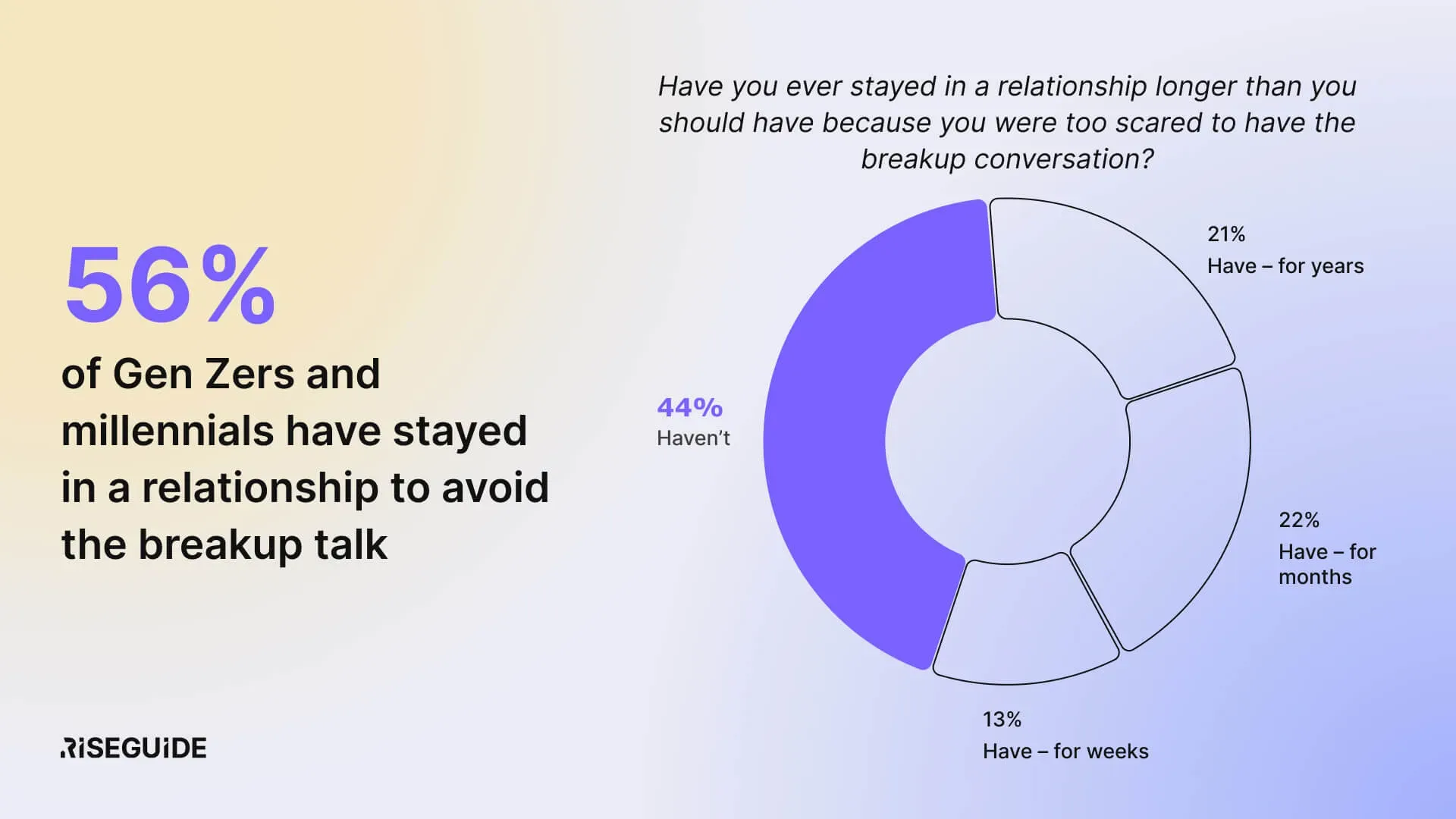
“It’s not you, it’s me”, “We’ve grown apart”, “I need space to work on myself” — words that many young people struggle to get out.
Despite knowing the relationship wouldn’t lead anywhere, 56% of millennials and Gen Zers admit they’ve stayed in a relationship to avoid the discomfort of a breakup, with 21% living a lie for years.
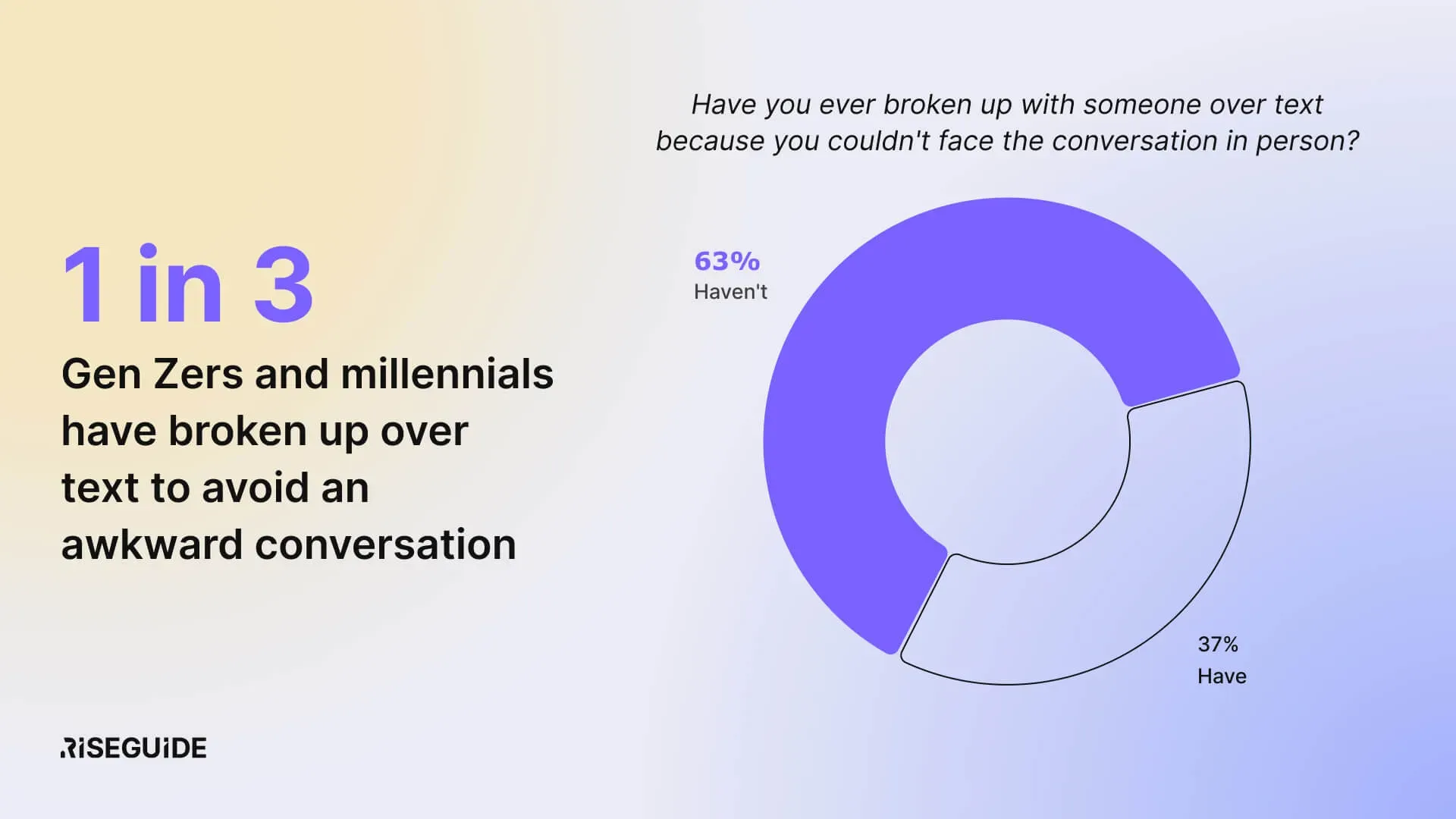
If they can’t face it, they message it instead – with 37% having broken up with someone over text to avoid the awkwardness of saying it out loud.
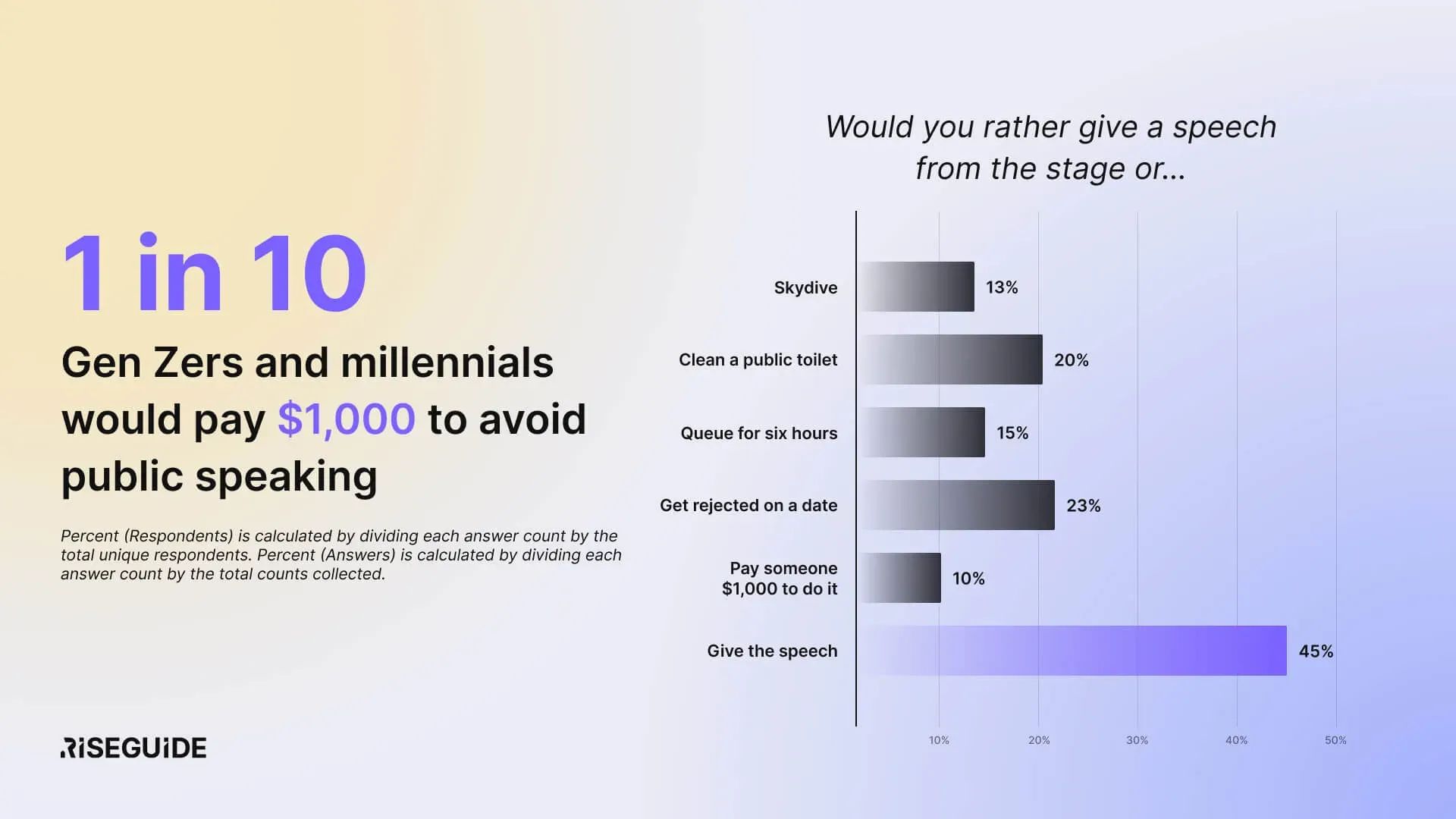
Give a speech? Some 20% would prefer to scrub a public toilet, and 13% would rather fall from the sky.
Given the choice, 10% would pay someone $1,000 to do it for them – a small price to avoid the spotlight.
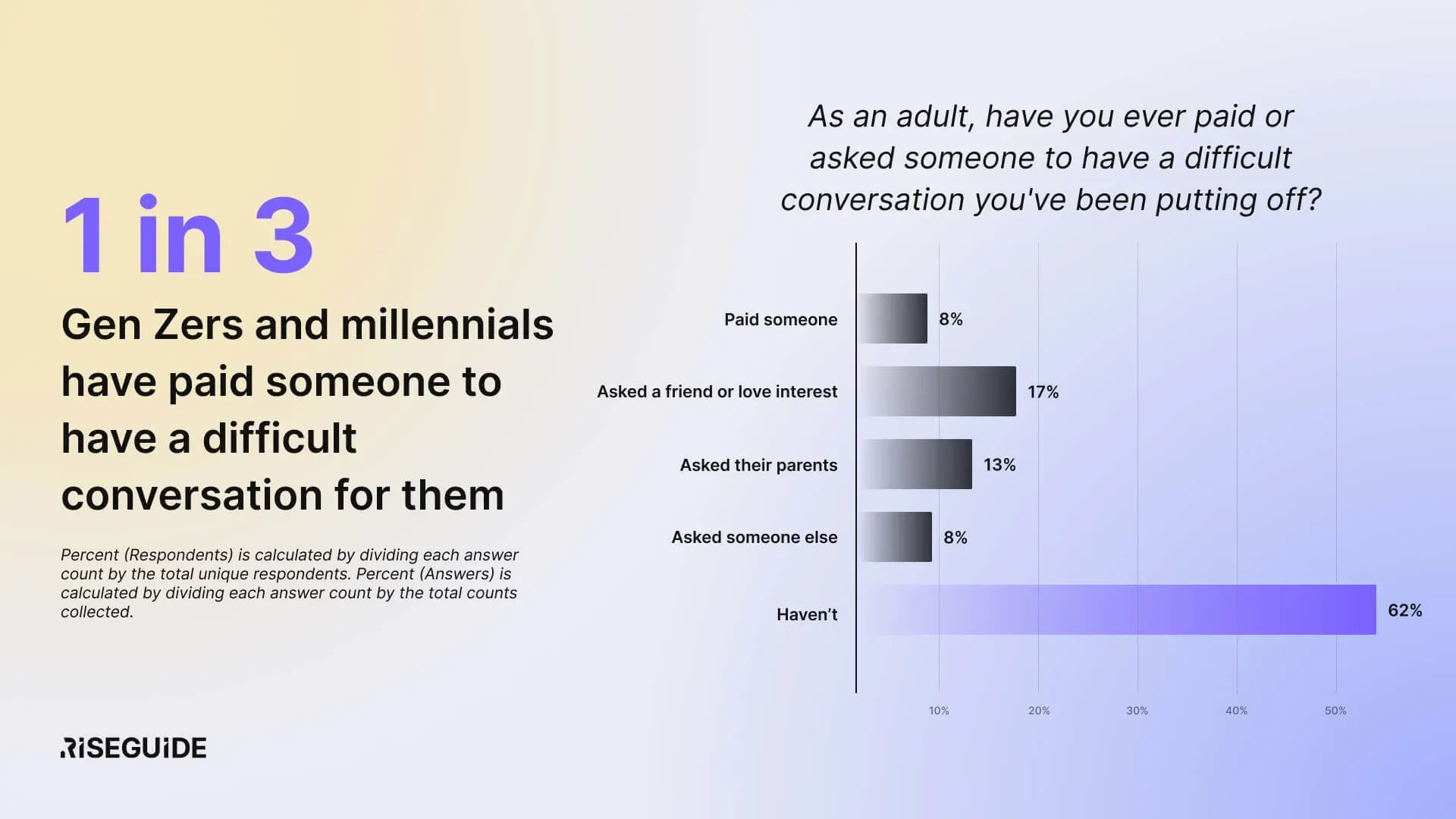
It’s not just something they would spend money on – many already have. Some 8% of millennials and Gen Zers have paid to outsource a difficult conversation entirely, while others have asked a friend or partner (17%), parent (13%), or someone else (8%) to speak on their behalf.
Lacking confidence in their speaking skills, many young people will go to great lengths to avoid talking. But that time, energy, and money would be far better spent learning. After all, you can train yourself to communicate confidently. With the right guidance and enough practice, anyone can get over the fear and stop second-guessing every word.
Methodology: RiseGuide surveyed 2,000 people equally divided across two generations (Gen Z and millennials) to examine communication frequency, confidence, and avoidance among younger populations. Participants were recruited through online survey panels using Random Device Engagement (RDE) technology to ensure a broad and diverse sample. The study did not target specific ethnic, educational, or socioeconomic groups.