
RiseGuide Team
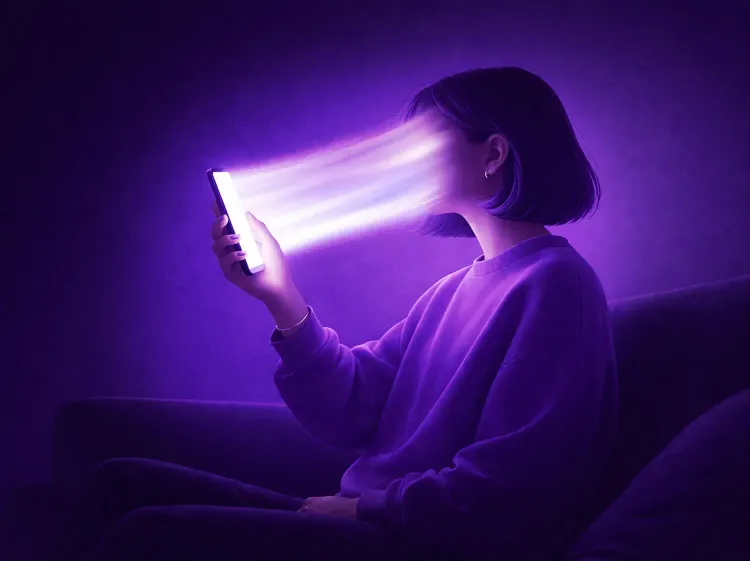
Just one more video… then you’ll sleep...
At least, that’s what you tell yourself. Then it’s 3 AM, your alarm is just hours away, and you’re full of regret.
Whether it’s reconnecting with old friends, chasing likes, or swiping through reels, social media is designed to keep us engaged.
To analyze doomscrolling statistics, Riseguide surveyed 2,000 Gen X, millennial, and Gen Z respondents, exploring how much they really scroll, how it affects their digital wellbeing, and whether it’s a habit they want to break.
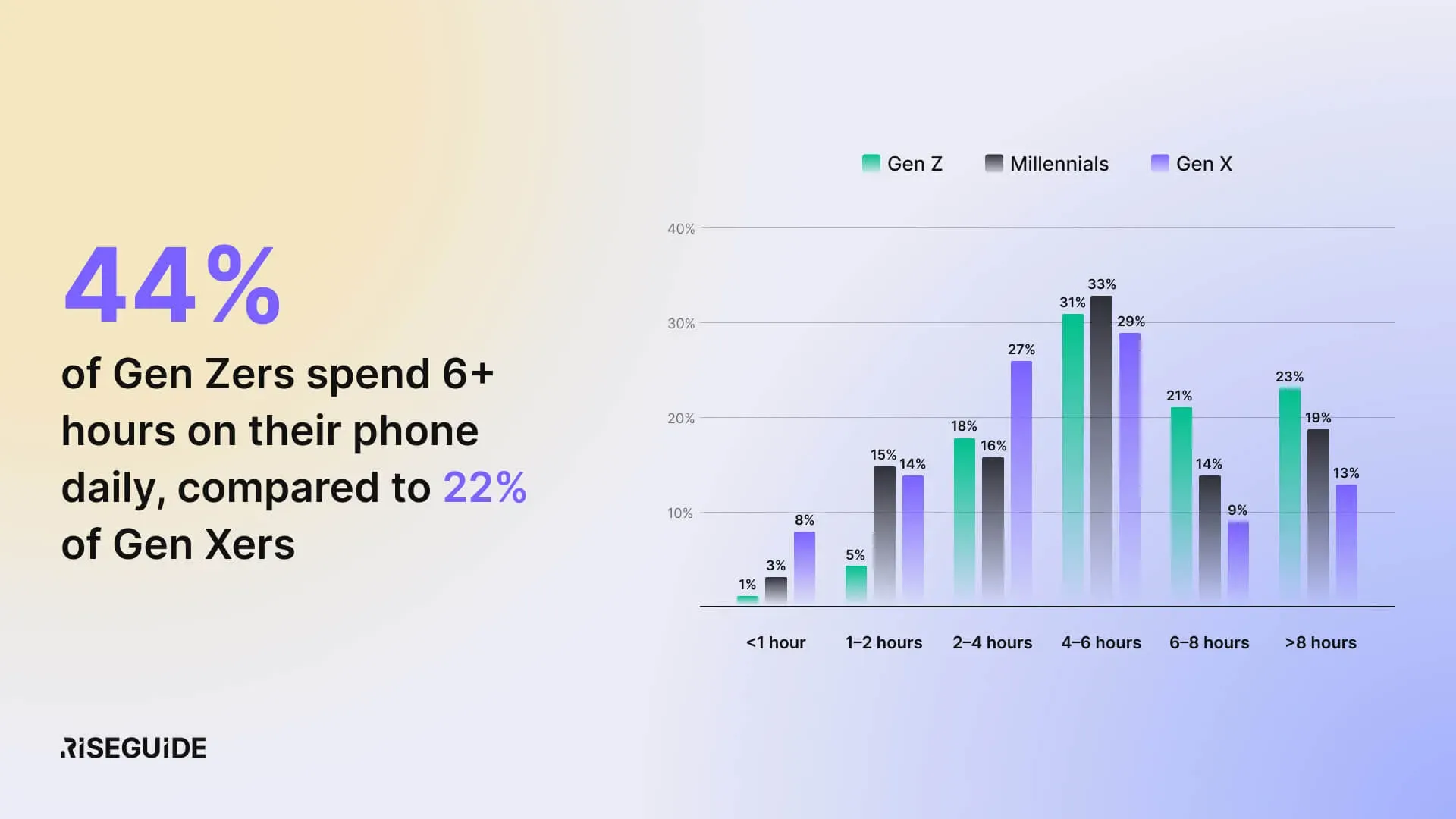
Some 44% of Gen Zers spend more than six hours on their phone daily, with 23% scrolling for more than eight. And they’re not the only generation glued to their screens – 66% of millennials and 51% of Gen Xers also spend more than four hours scrolling, liking, and sharing.
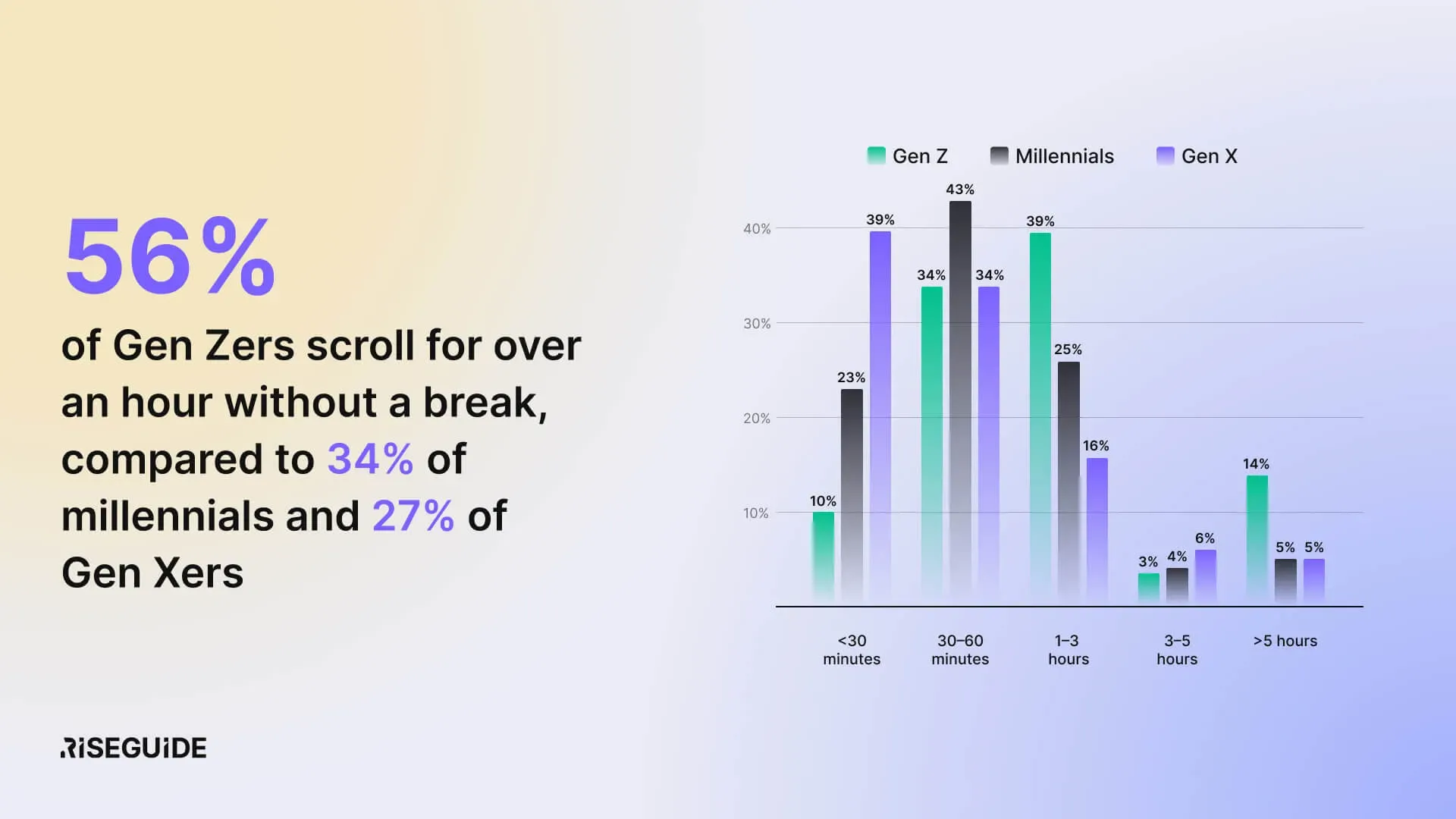
You watch a 10-second clip, and suddenly an hour has passed. Gen Z hasn’t figured out how to stop doomscrolling: 56% regularly go for over an hour without a break – and 14% lose more than five hours to the algorithm at a time.
By comparison, 43% of millennials limit their social media sessions to an hour, while 39% of Gen Xers stop after 30 minutes.
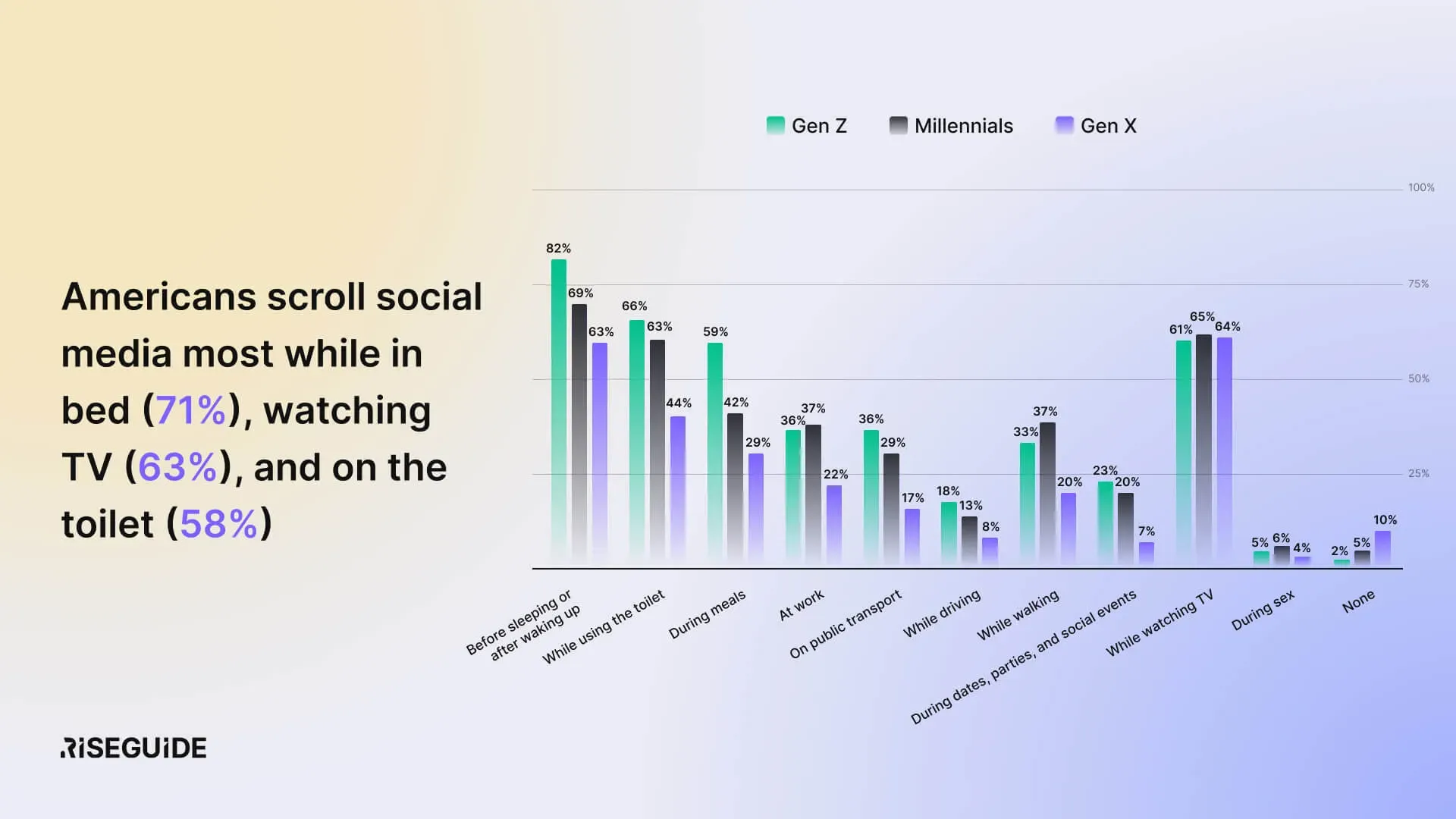
For 82% of Gen Z and 69% of millennials, the day starts and ends on social media – and their phones rarely leave their hands in between. Some 59% of Gen Zers and 42% of millennials scroll during meals, while 66% and 63% use toilet breaks to check their messages and notifications.
It’s a habit that often clouds their judgment, with 18% of Gen Zers and 13% of millennials admitting they even doomscroll while they drive.
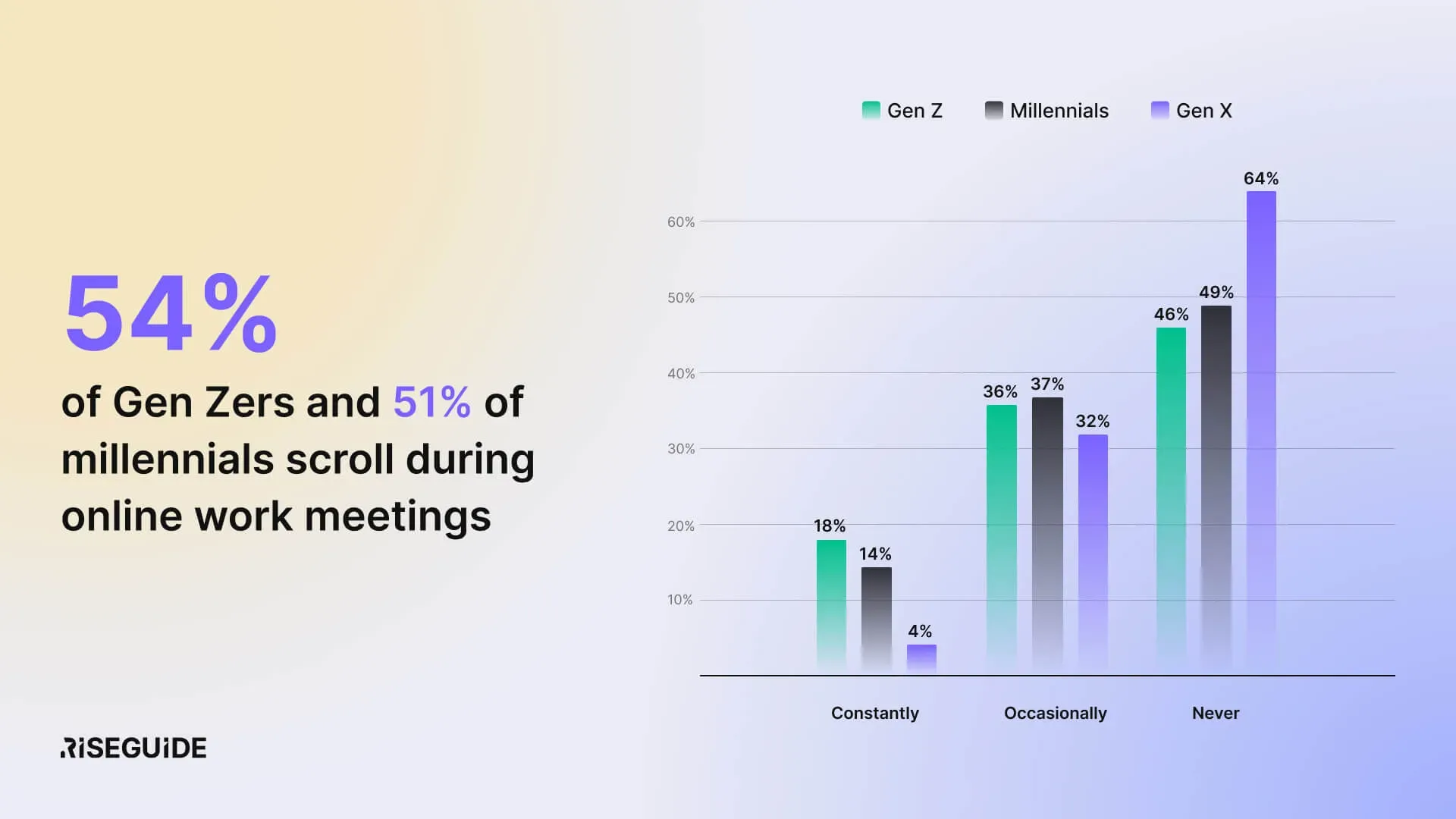
When it comes to work, scrolling is top of the to-do list for many Gen Zers and millennials – 18% and 14% admit to using social media constantly during online meetings.
Gen Xers are better at screen time management during office hours (but 32% admit to sneaking online if a meeting is particularly boring).
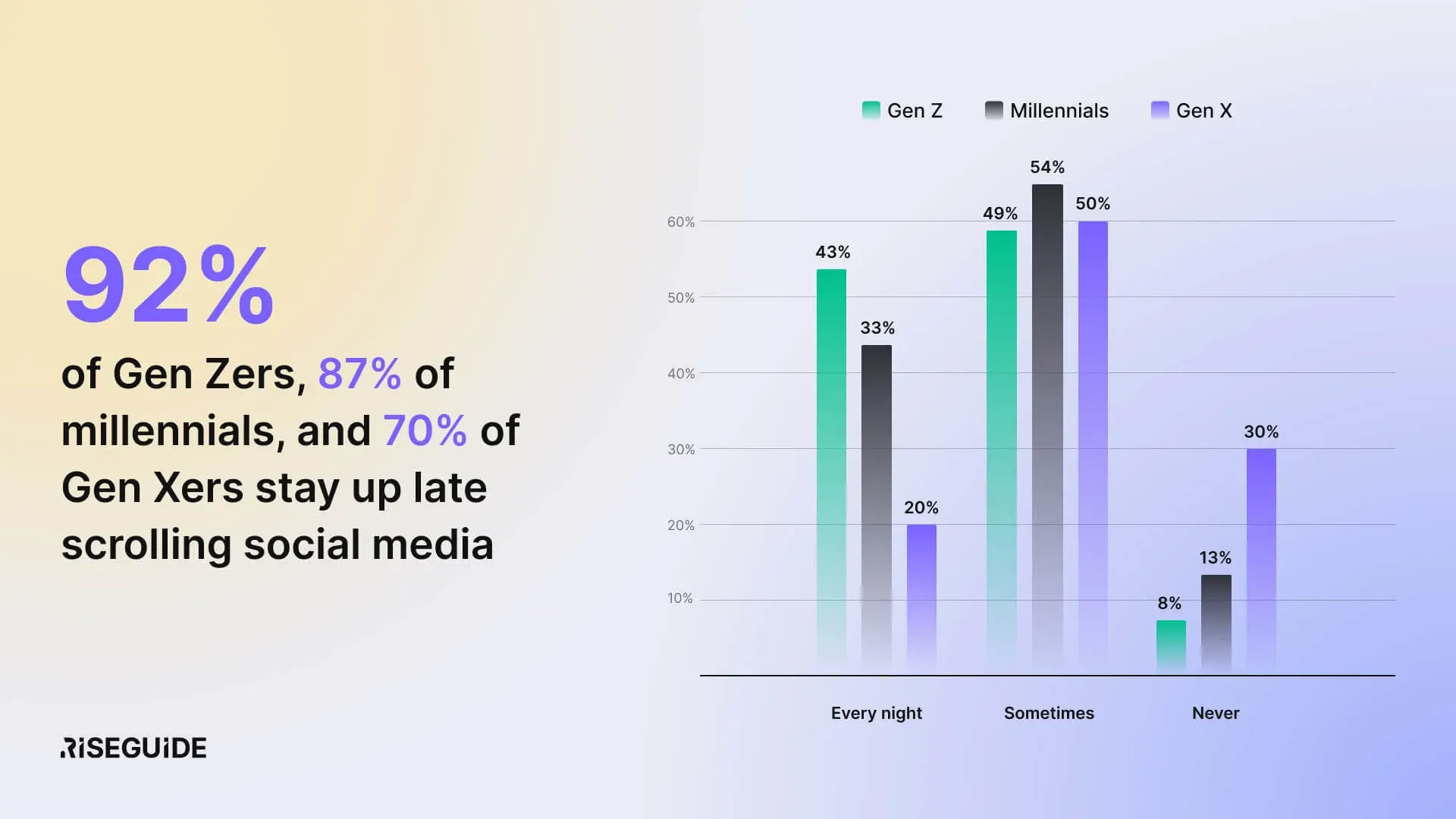
What keeps people up at night? Not stress or insomnia, but social media – 43% of Gen Z, 33% of millennials, and 20% of Gen X regularly sacrifice sleep to scroll.
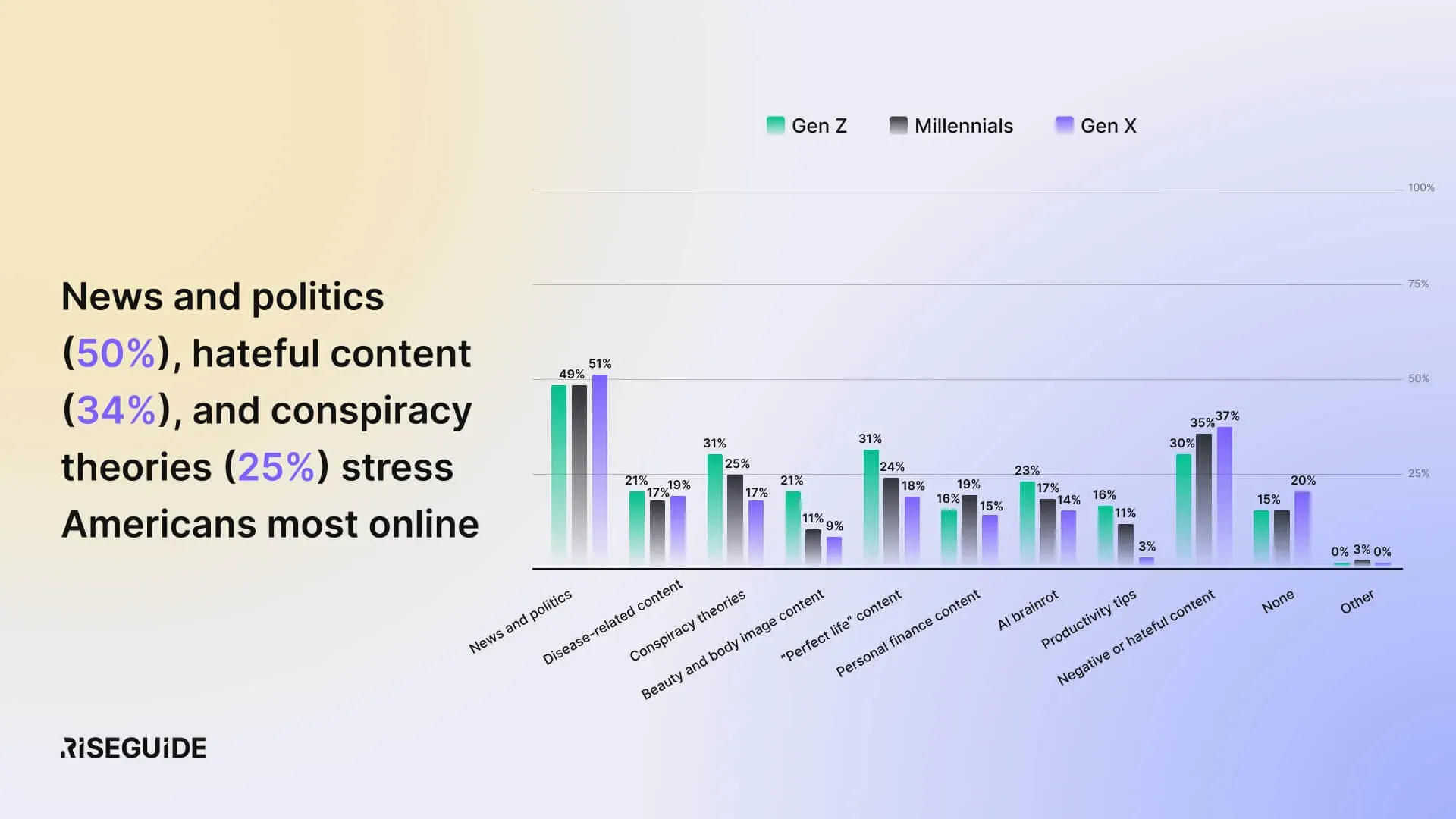
What is doomscrolling if not a habit that makes stress addictive? Amid growing information overload, half of respondents find news and political content the most stressful aspect of social media. Likewise, negative and hateful posts bother 35% of millennials, and online conspiracy theories trigger 31% of Gen Z. So why are our feeds full of it? Because ragebait fuels reactions, and positive or negative engagement pays just the same.
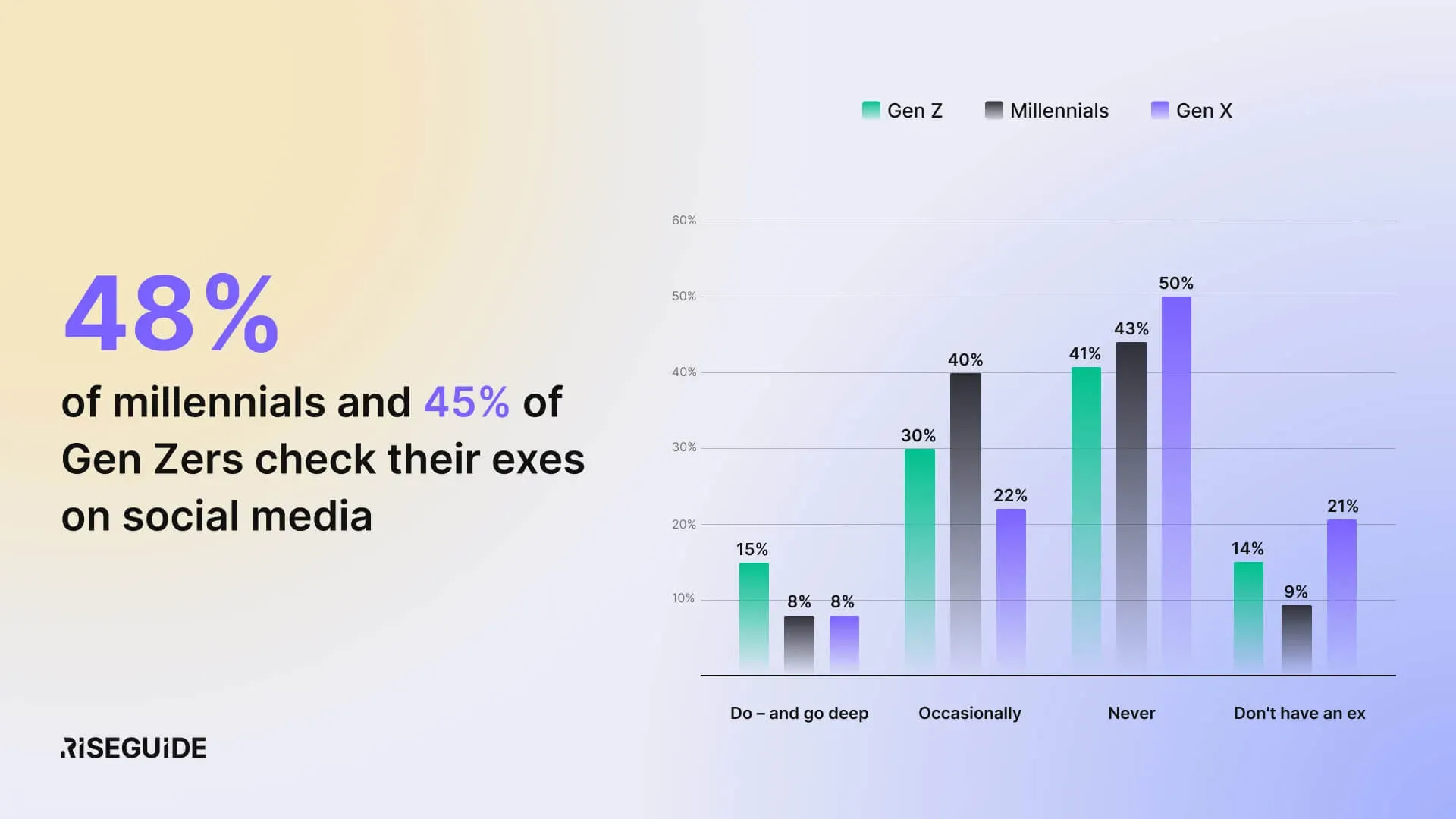
Some may call it cyberstalking, but 48% of millennials and 45% of Gen Z can’t resist a little digital nostalgia, admitting they at least occasionally dig through their exes' profiles.
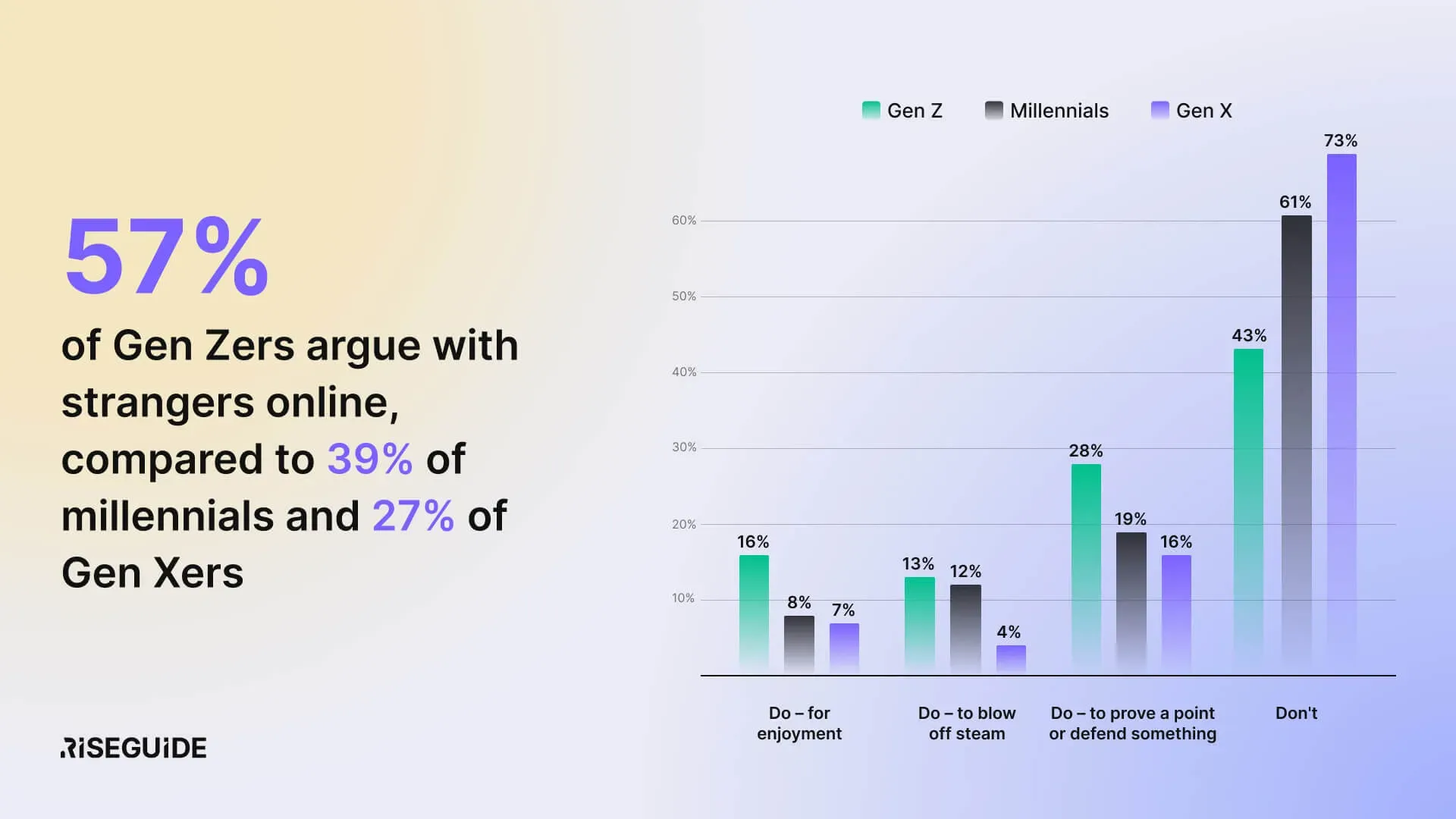
Comment sections often get heated, with Gen Zers most likely to get involved. Some 57% admit they argue with strangers online, compared to 39% of millennials and 27% of Gen Xers.
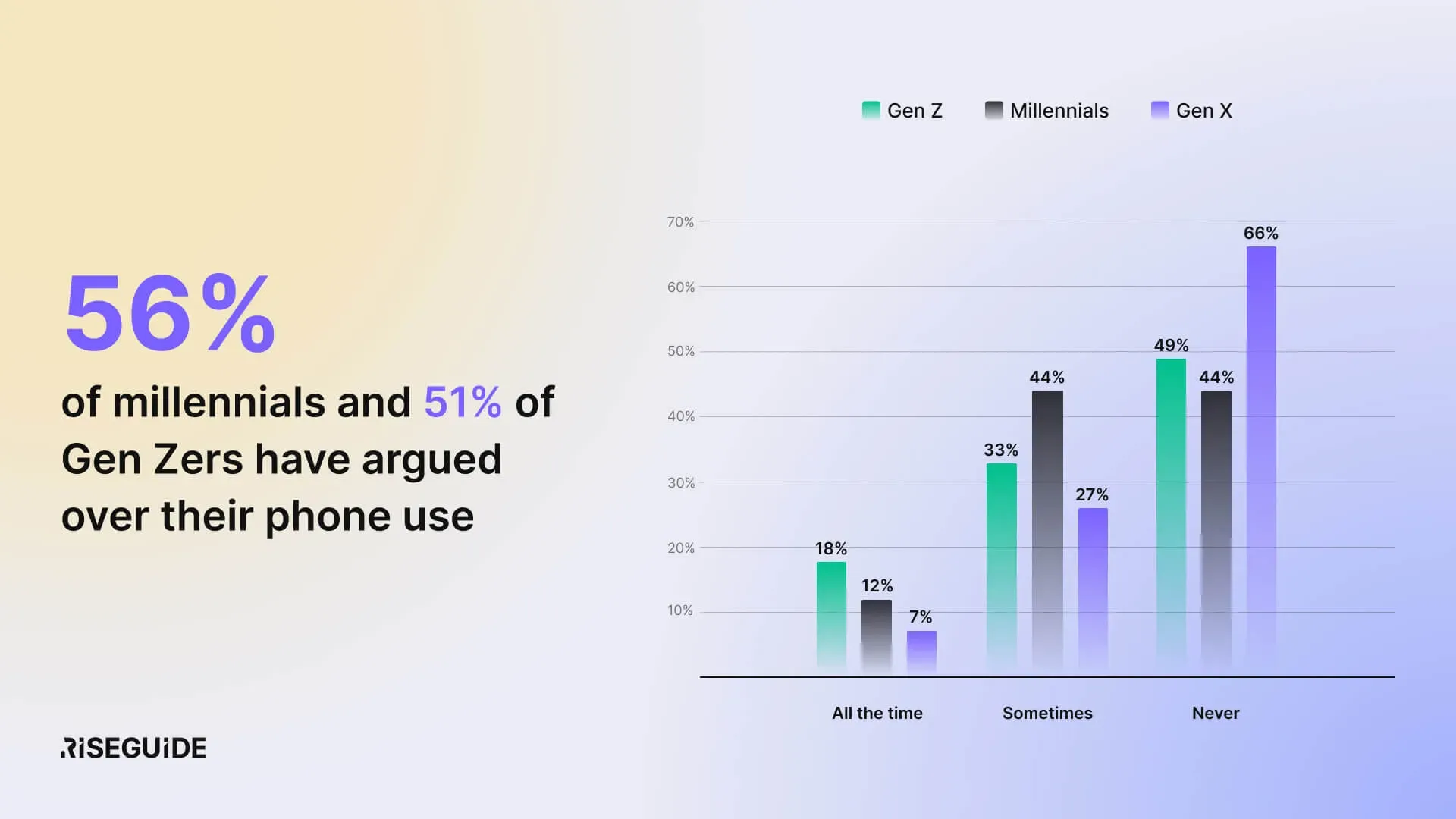
For many, the arguments don’t end when they log off. Social media fuels conflict offline too, with 56% of millennials and 51% of Gen Zers having argued with a partner or friend over their excessive phone use.
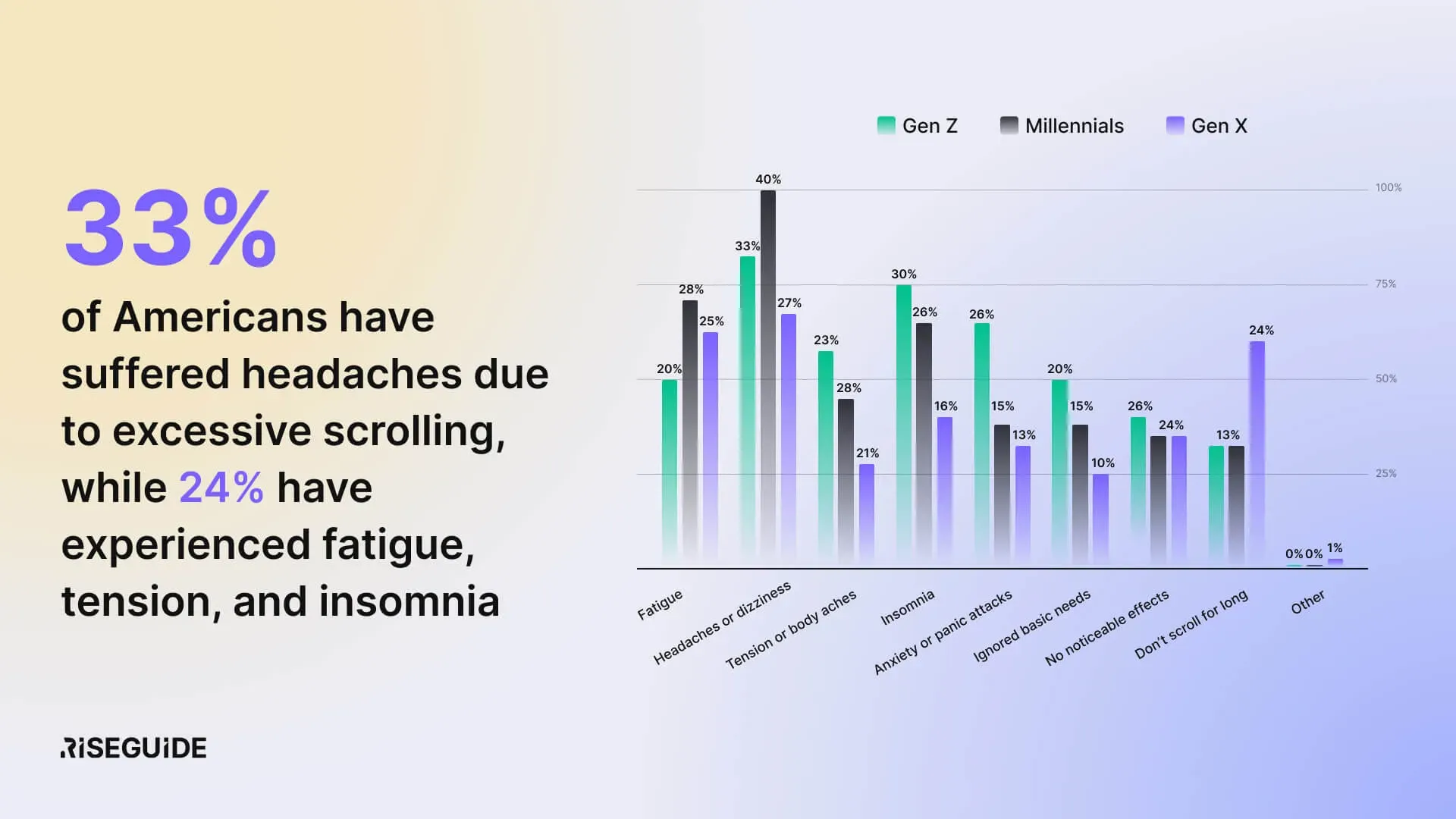
The effects of doomscrolling go beyond wasted time. Some 40% of millennials experience headaches and dizziness, while 30% of Gen Zers suffer from insomnia, and 25% of Gen Xers struggle with fatigue.
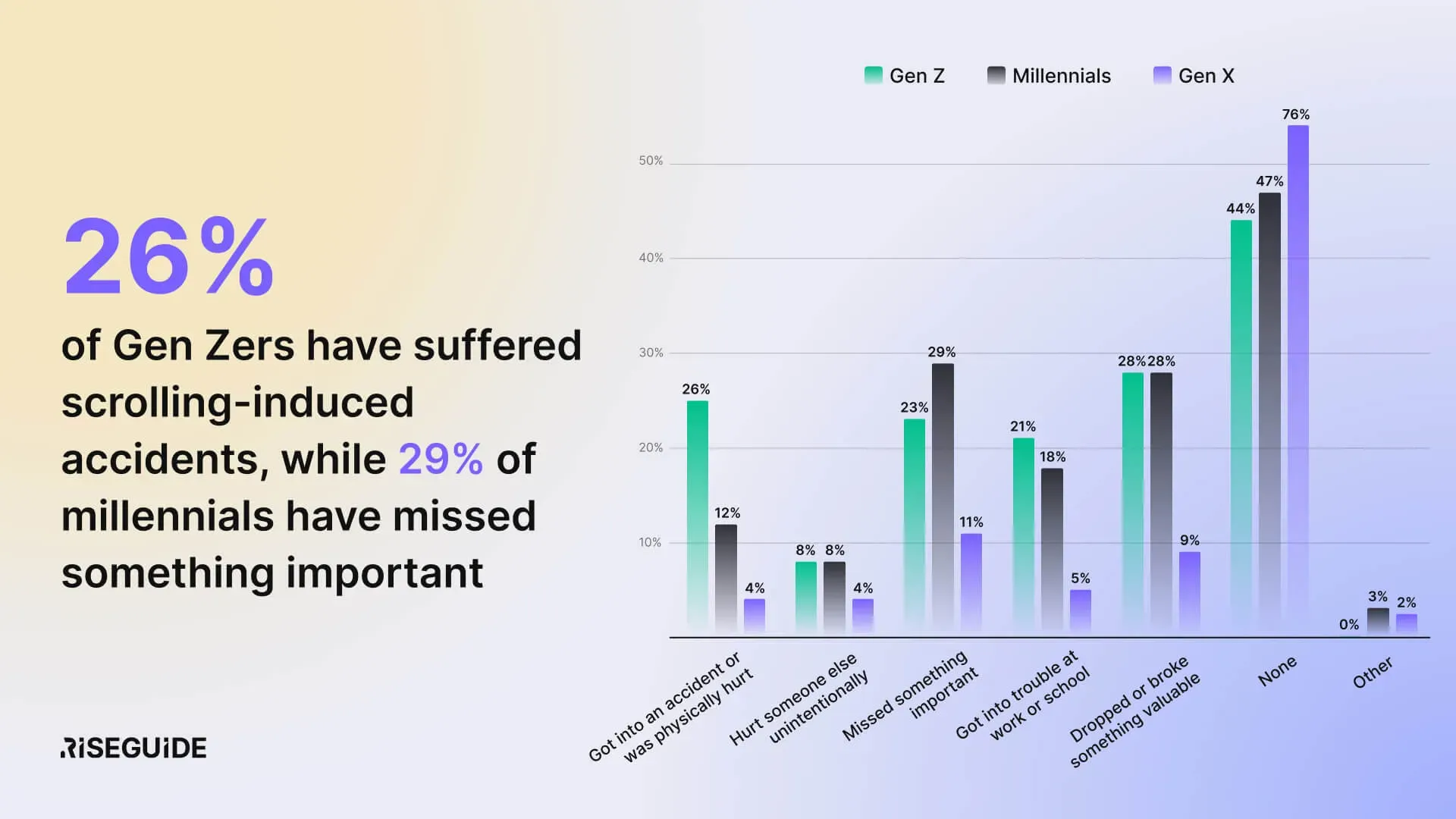
Social media's constant distraction can cause real-life risks, with 26% of Gen Zers having suffered an accident or physical injury.
Likewise, 29% of millennials have missed an important event, while 28% have dropped or broken something valuable because they were engrossed in their feed.
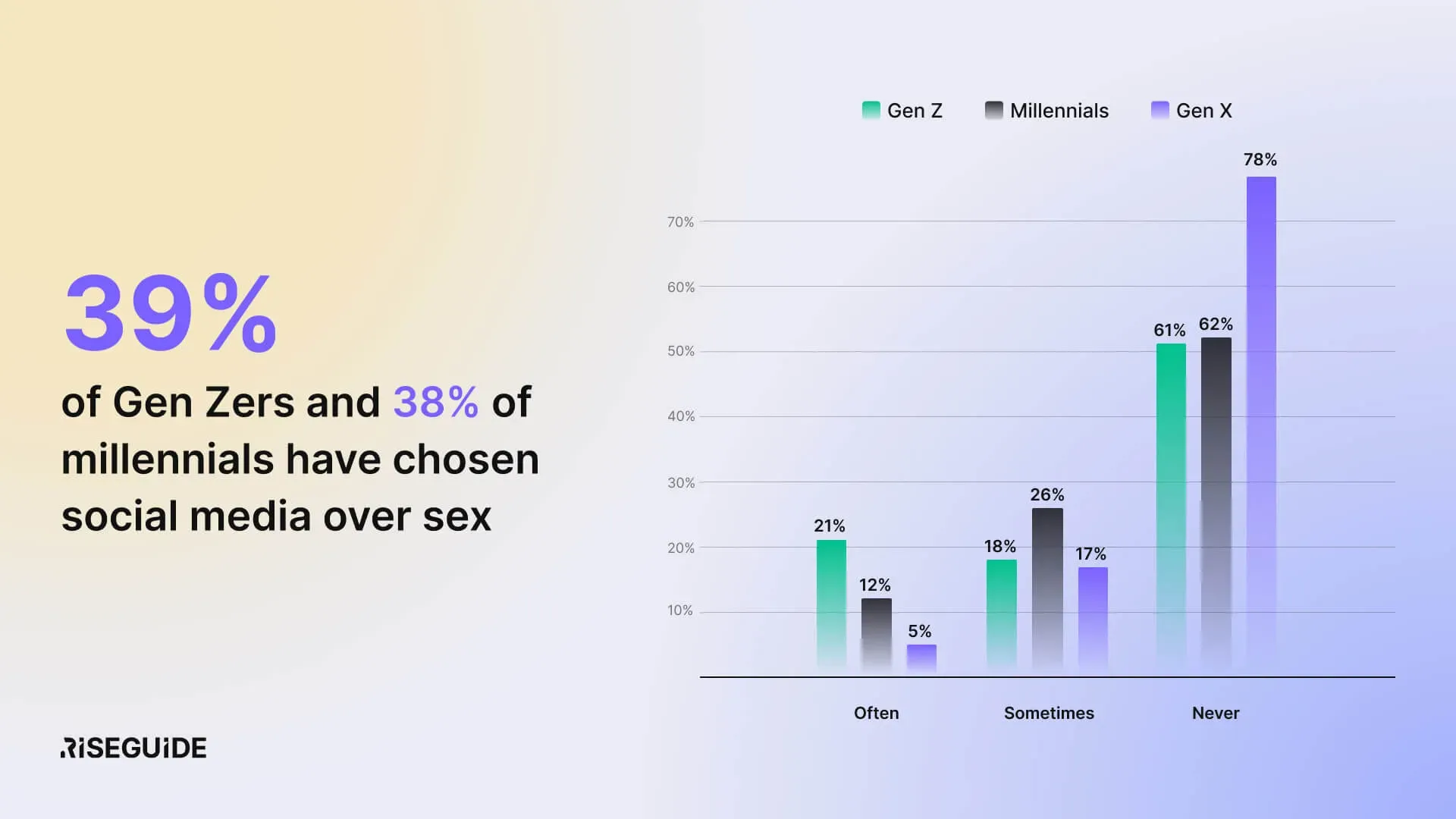
For many young people today, it’s less Netflix and chill, and more TikTok and chill… literally. Some 39% of Gen Zers and 38% of millennials admit they sometimes choose social media over sex.
But at least Gen Xers are keeping intimacy alive, with only 22% swiping on romance.
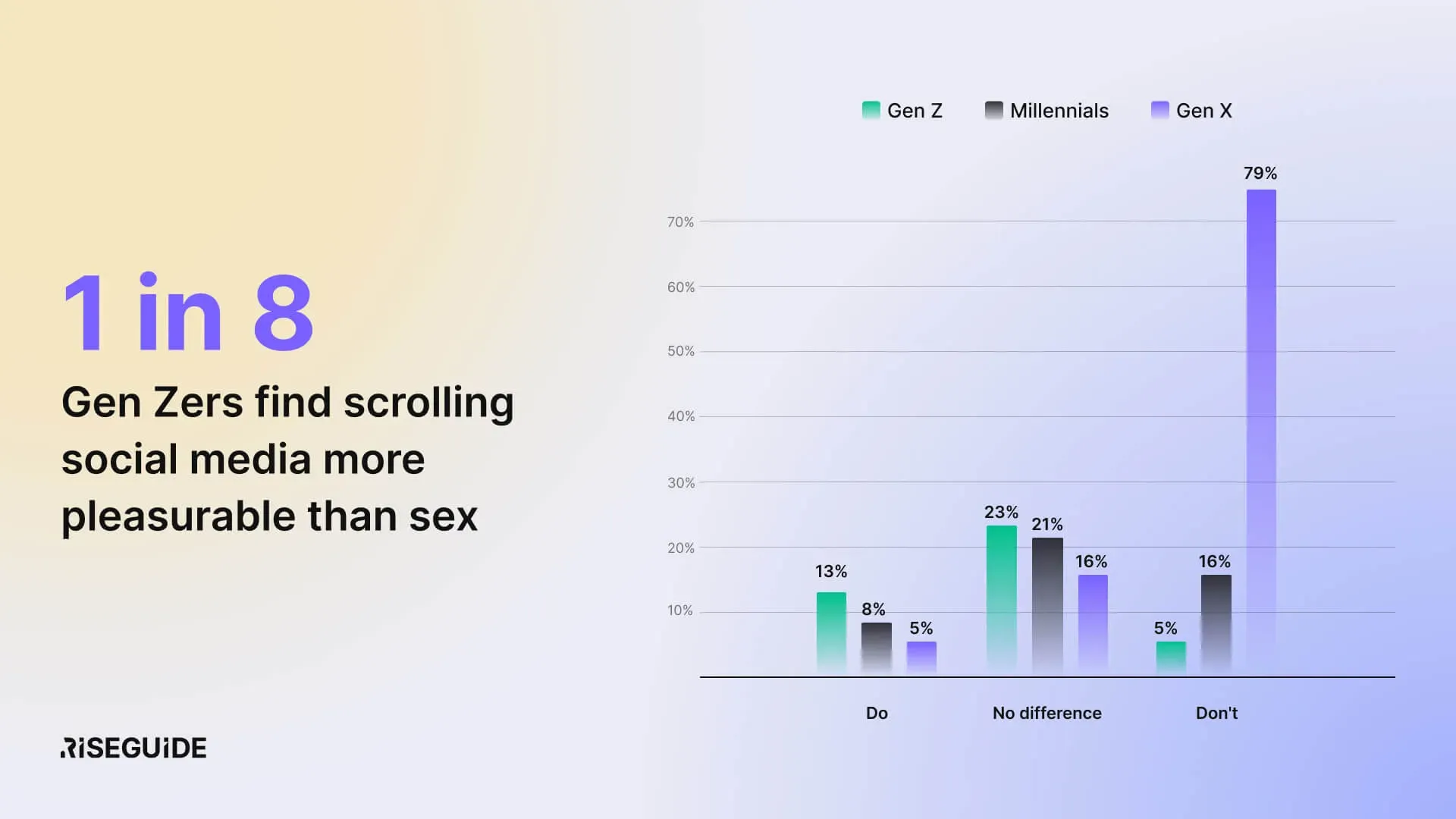
Both social media and sex deliver a hit of dopamine, endorphins, and oxytocin – the feel-good chemicals.
But if they have to pick, sex wins the hearts of 64% of Gen Z, 71% of millennials, and 79% of Gen X. However, 20% say they're equal, and 9% insist their algorithm gives them more pleasure.
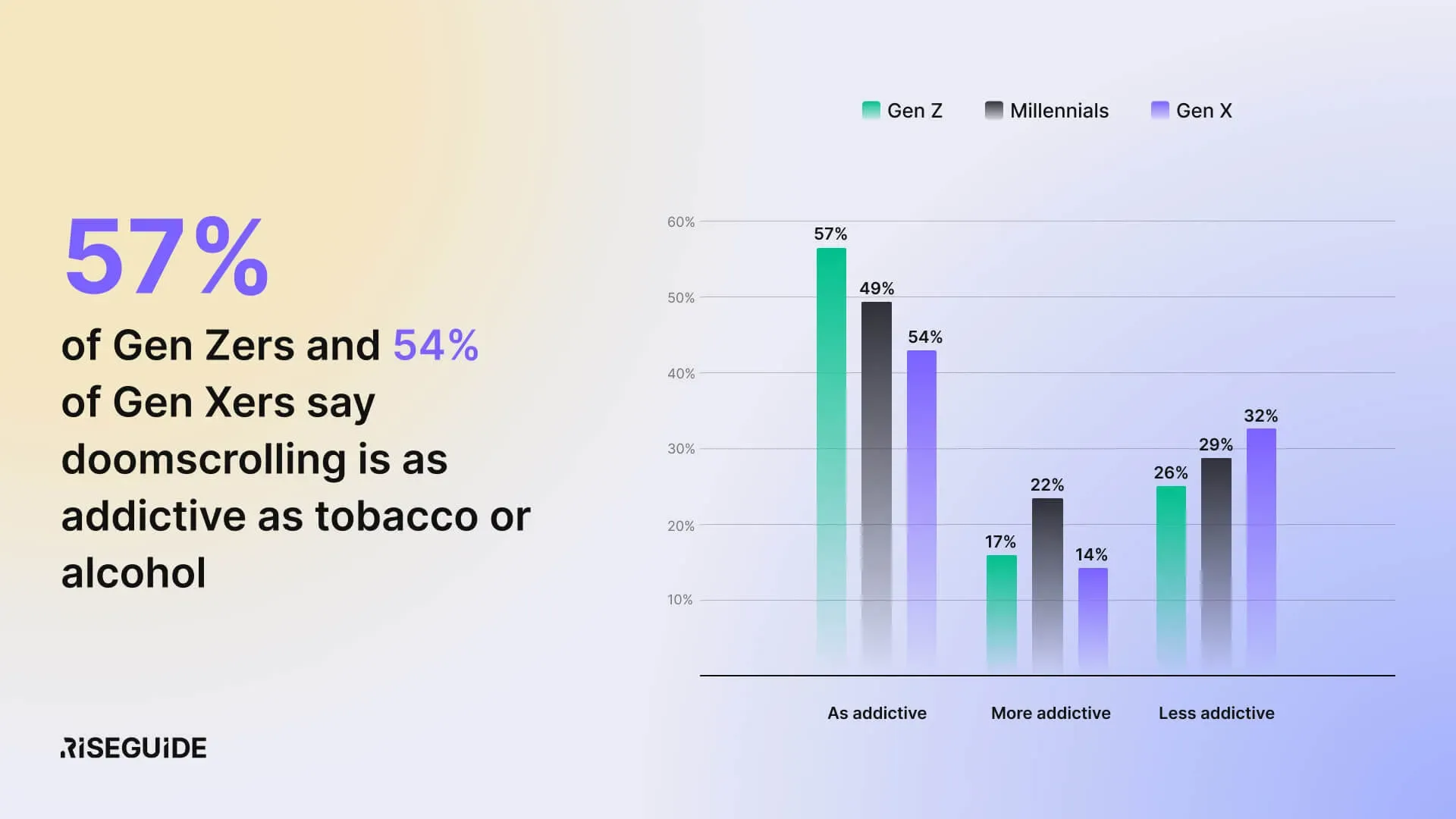
A funny video or friendly conversation makes us feel good, so we naturally want more. It’s just like any addiction – only this one has algorithms working 24/7 to feed our cravings. Having experienced it themselves, 57% of Gen Zers, 49% of millennials, and 54% of Gen Xers agree that doomscrolling is just as addictive as tobacco or alcohol.
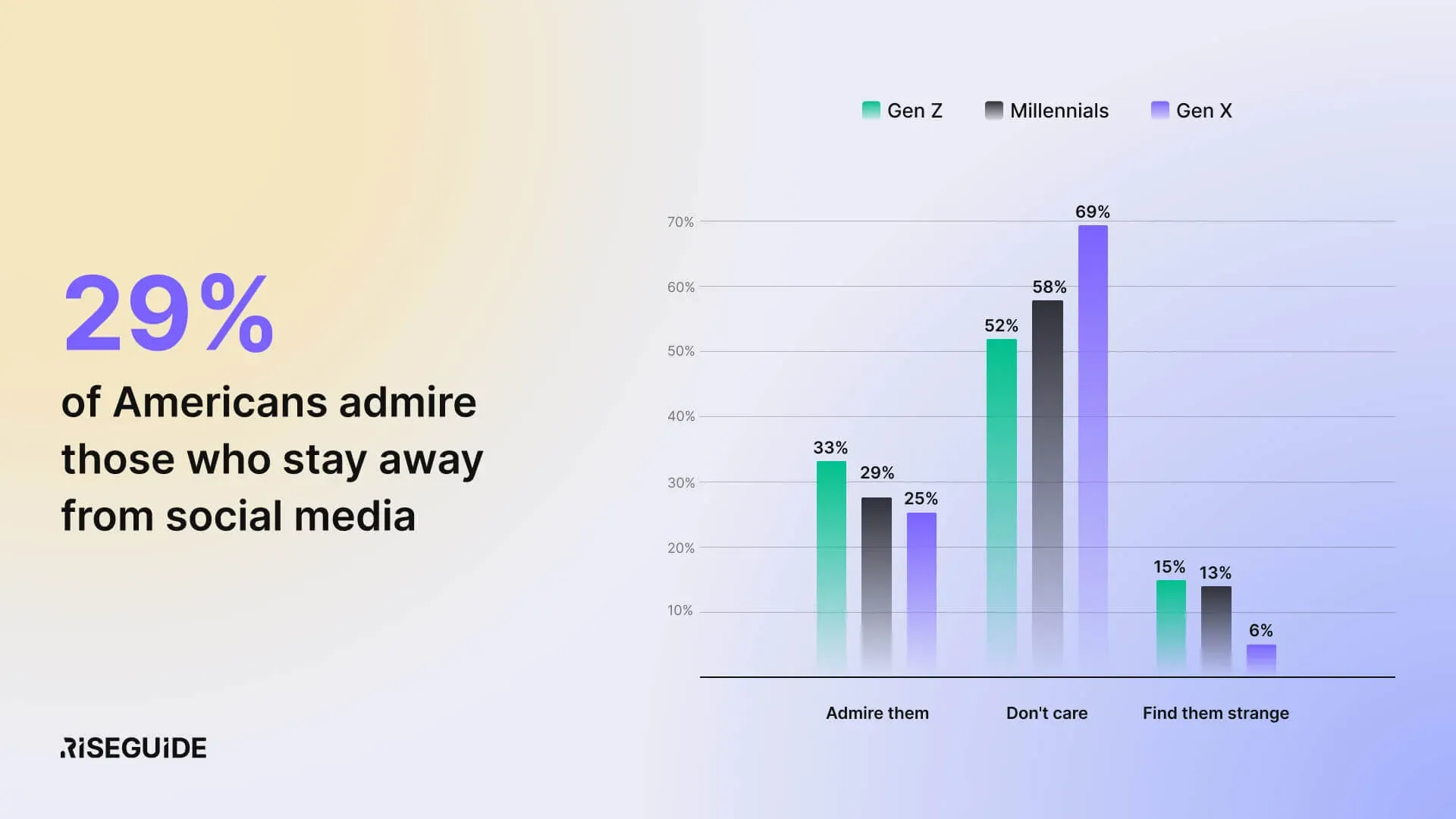
Recognizing that social media fatigue isn’t harmless, 33% of Gen Zers, 29% of millennials, and 25% of Gen Xers admire those who have logged out for good.
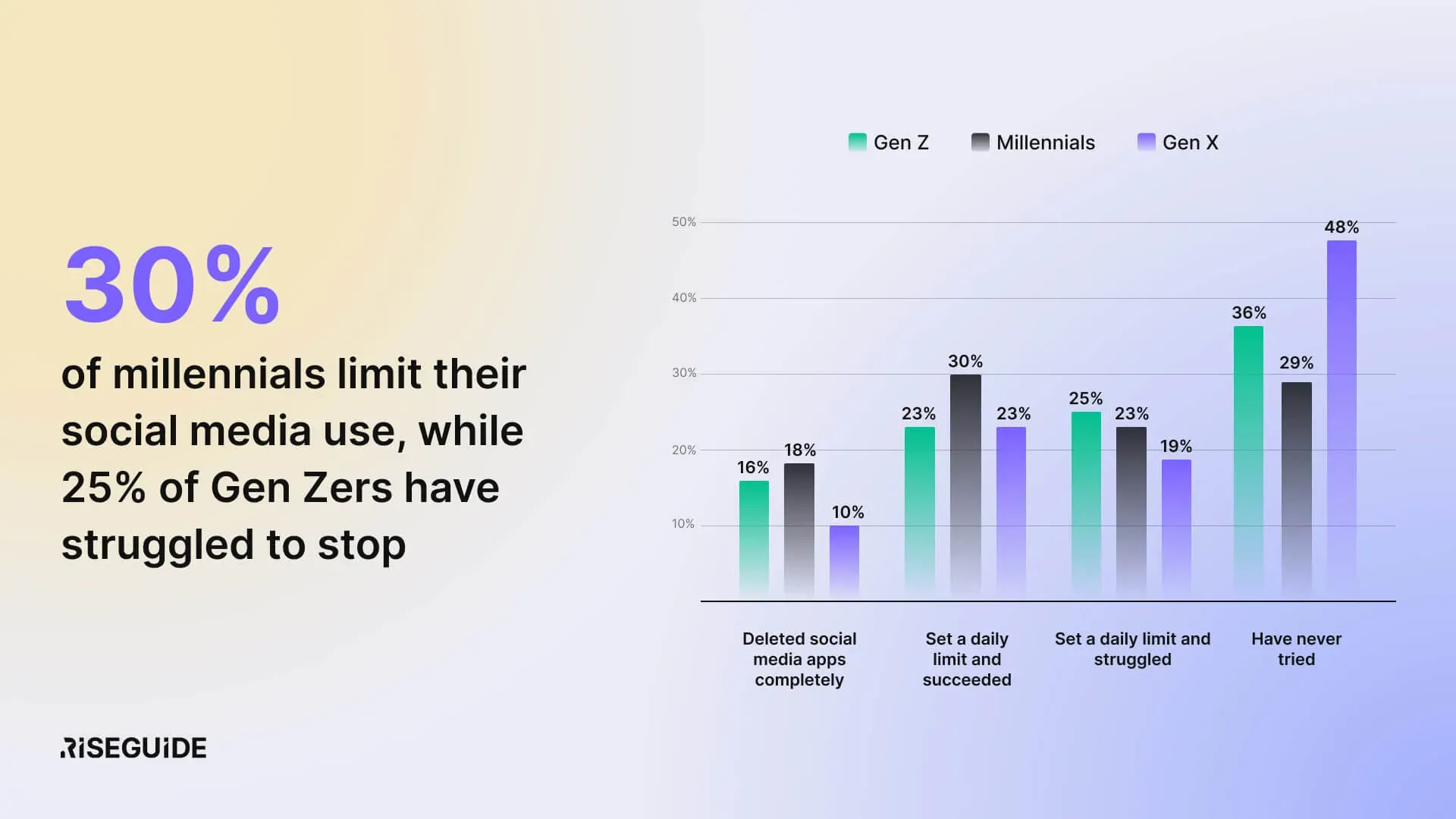
Many have taken steps toward a digital detox, with 14% having deleted their apps entirely, and 25% having set and stuck to daily limits. However, 22% have tried, only to be pulled back in by routine and the fear of missing out.
It’s habit, but all habits can be broken and replaced. It starts with being mindful of your use, taking intentional breaks, and instead spending your time enjoying hobbies and learning skills that deliver far more lasting satisfaction than any viral video or funny post.