
RiseGuide Team

Weekend plans, the weather, last night's TV: small talk is either the glue of the office or the thing you'd cross the building to avoid. Which one is it for you? And what do you do when you'd rather not chat at all? We asked 2,000 people how they feel about small talk with colleagues, and how far they'll go to dodge it.
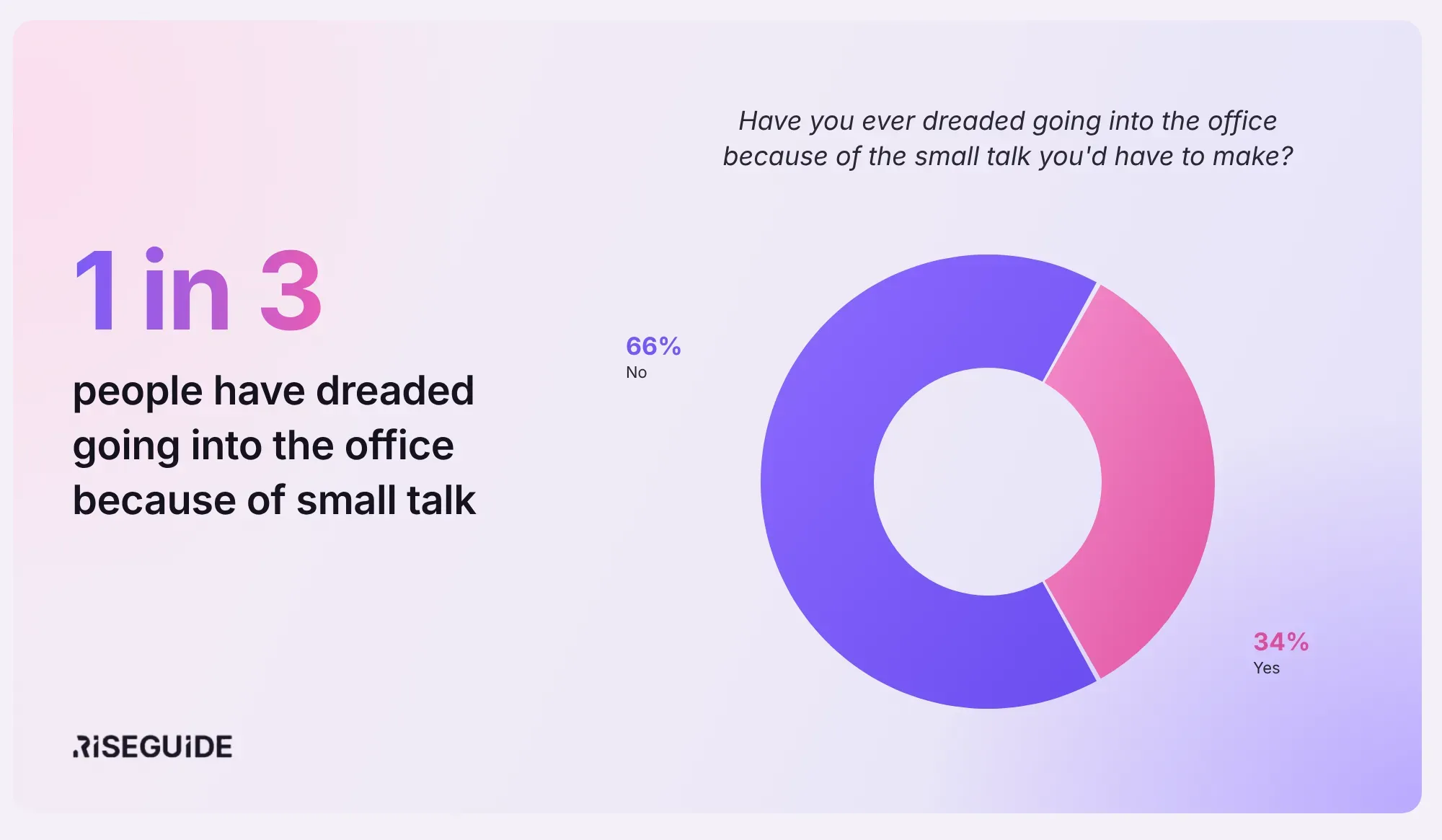
Because more of us are back in the same room. Amazon has asked its corporate employees to be at their desks five days a week, and Instagram has called most of its US staff back full-time too. Microsoft wants employees in at least three days a week, while TikTok has told its US hybrid workers to head back to the office five days a week.
The overall trend points the same way. Over the past year, the average number of days required by US company policy rose 10%.
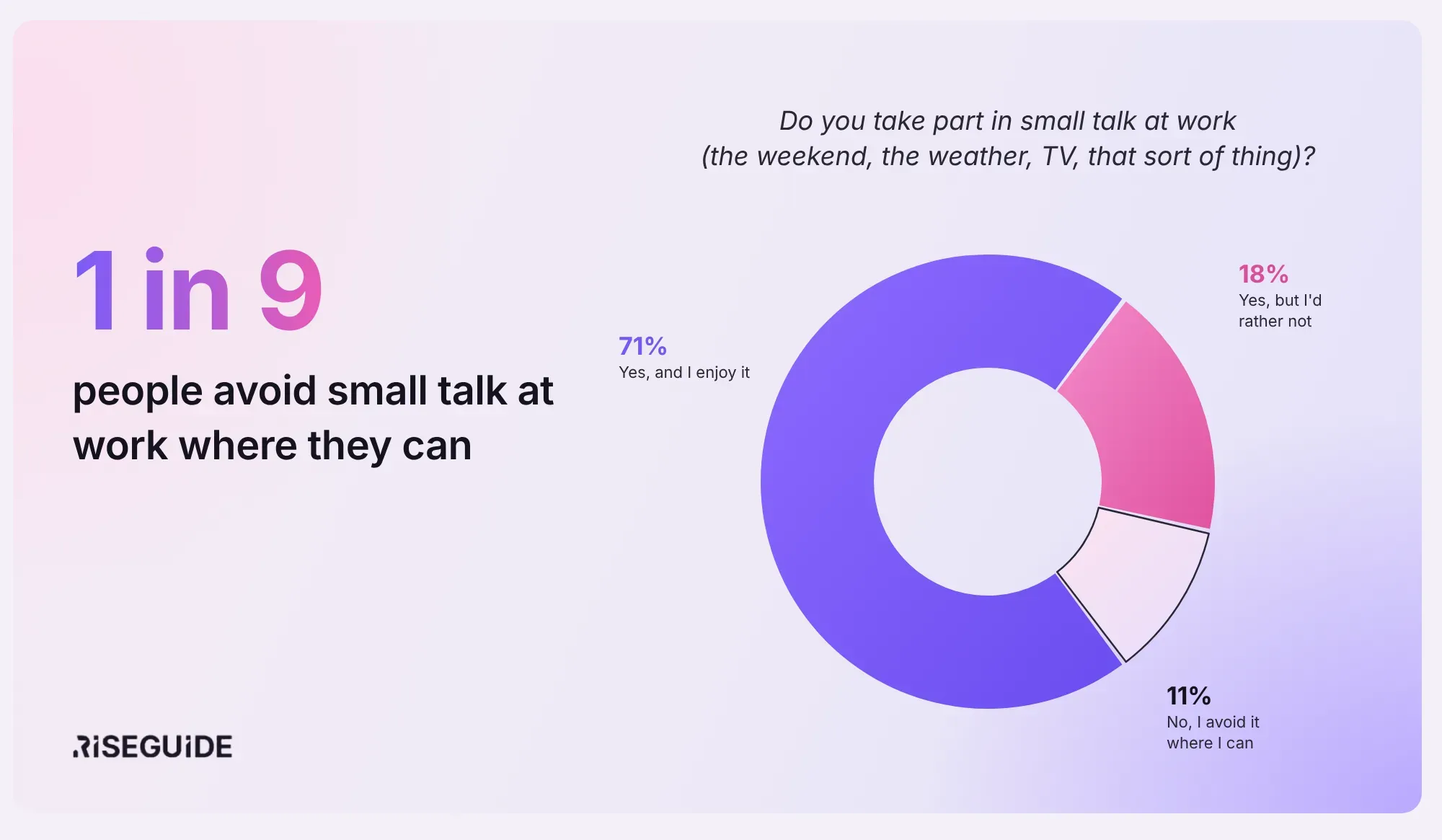
More days in the office means more corridors, kitchens, and lifts shared with colleagues, and more chances for unplanned chats. So we asked 2,000 people how they feel about it. Small talk is nearly universal at work (89% take part), but not everyone is there by choice. 18% take part even though they'd rather not, and another 11% avoid it altogether where they can.
Two in three (67%) have done at least one thing to avoid small talk with a colleague. The top moves: taking the long way round to avoid someone's desk (35%), pretending to be on a call (32%) and putting headphones on with nothing playing (26%).
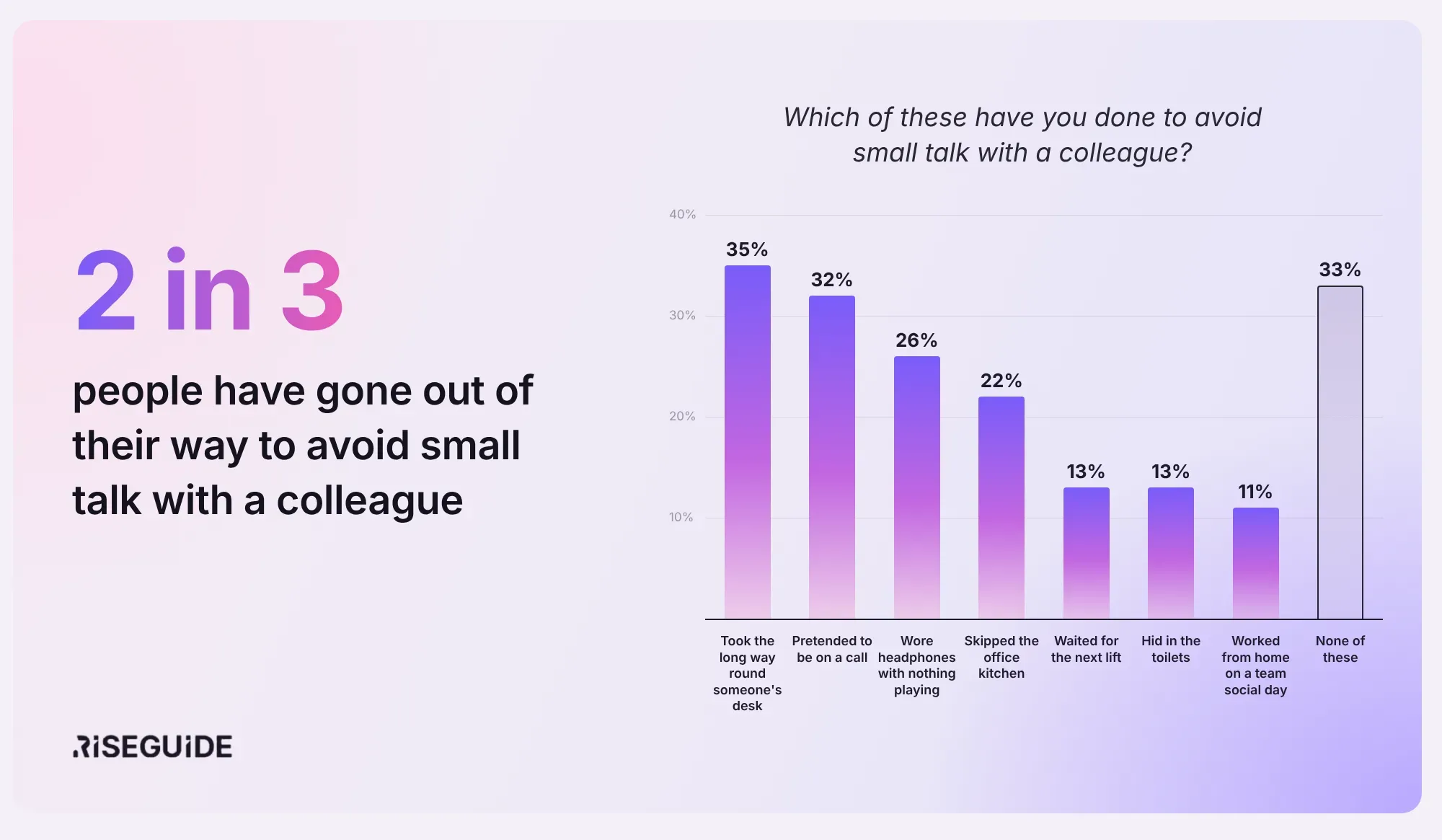
Others have skipped the office kitchen to avoid bumping into people (22%), waited for the next lift (13%), hidden in the toilets (13%) or worked from home on a day they knew there was a team social (11%). Only 33% say they've done none of these.
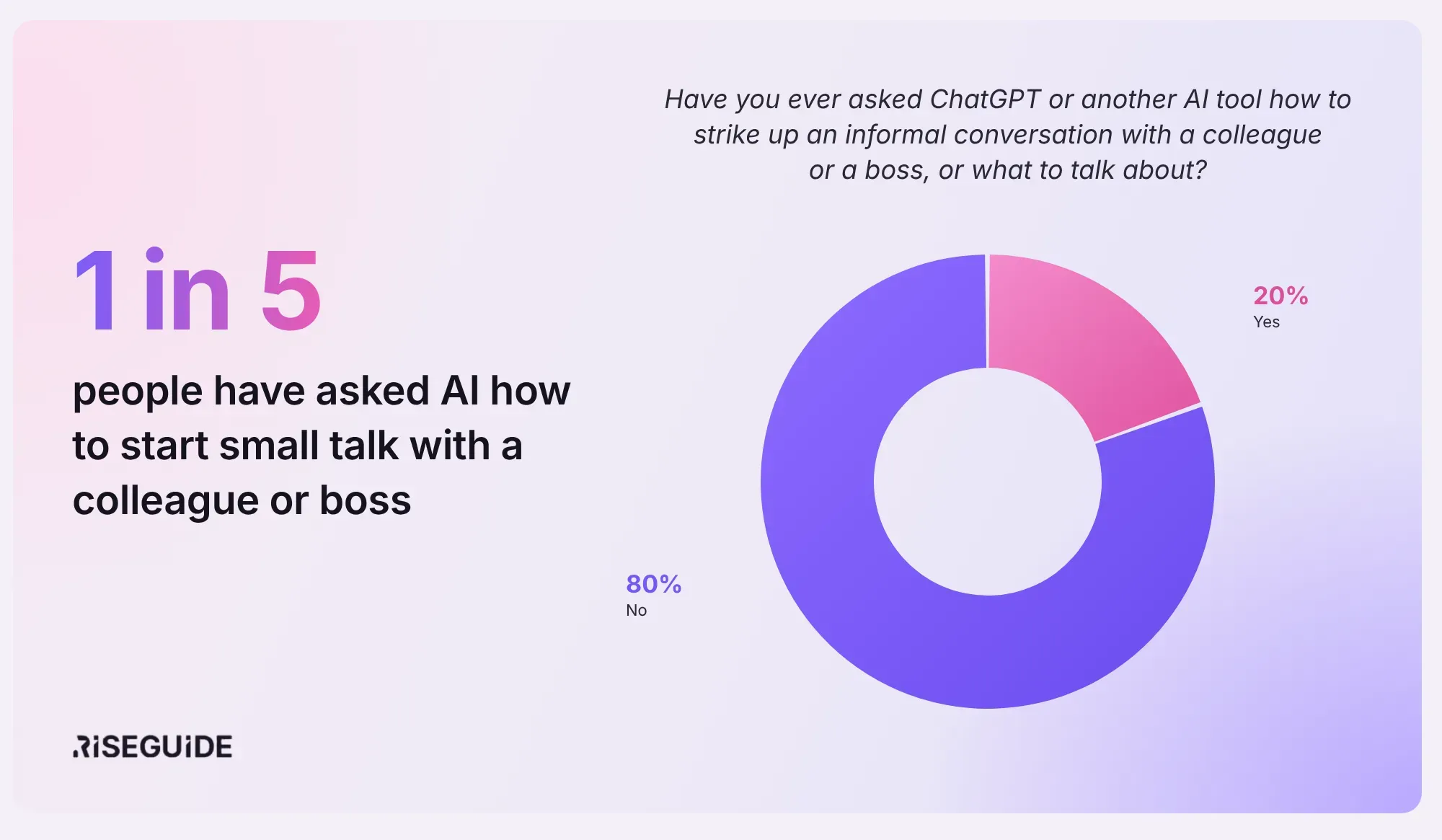
One in five (20%) have asked ChatGPT or another AI tool how to strike up an informal conversation with a colleague or boss, or what to talk about. Even though it's a minority habit, it's telling: for some people, even small talk now calls for a rehearsal.
This habit is part of a much bigger shift. According to the Pew Research Center, 49% of US adults used AI chatbots in early 2026, up from 33% in 2024. Starting a conversation is just one of the things people now ask them for.
Asking AI for a first line is becoming a normal way to prepare for the social side of work, and one in five of our respondents have already done it. That's understandable: a rehearsed opener can take the pressure off those first few seconds. But AI can only help you start. What happens next, and whether it turns into a real connection, still depends on the two people in the conversation.
Perhaps small talk is less a chore than a skill, and skills get easier with practice. As offices fill up again, office chat is harder to avoid, and people have already found their own ways to cope: some dodge it, some rehearse it.
The question for the months ahead is less whether small talk will stay part of office life and more how comfortable we get with it. A little practice, and a little patience with colleagues who find it harder than it looks, may go a long way.
The study surveyed 2,000 people to explore how people experience small talk at work. Participants were recruited through online survey panels using Random Device Engagement (RDE) technology to ensure a broad and diverse sample.