
RiseGuide Team

You hit every target, stay late on the launch, and keep your head down. Then the promotion goes to the colleague who always seemed to be in the right conversation.
Is that unfair, or is that simply how opportunities travel at work? And if the choice were yours, would you back the brilliant one or the one everybody likes?
We asked 2,000 people about promotions, casual conversations, and who gets ahead.
In August 2026, just 1.9% of US workers quit their job in the month, according to the Bureau of Labor Statistics. Most people are staying where they are, so the next step often has to come from inside the company, and it matters even more who hears about it first.
So who gets ahead: the brilliant one, or the one everybody likes? That is the question behind our survey.
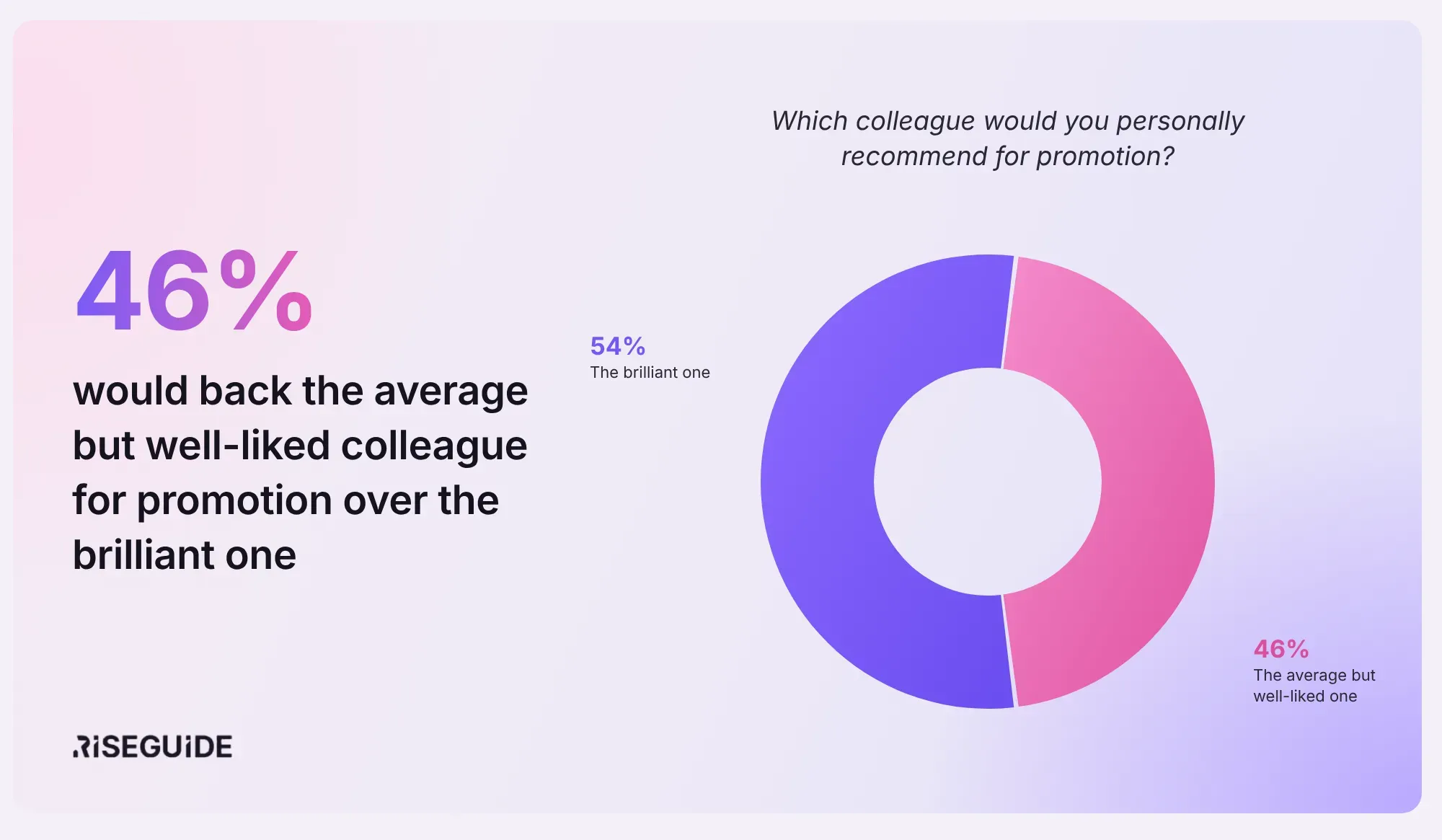
Almost half of us would back the nice one. Asked which colleague they would personally recommend for promotion, 46% chose the average but well-liked one, while 54% chose the brilliant one.
That is a gap of only eight points. Talent still has the edge, but almost half people would put their name behind a colleague who is pleasant to work with, even if that colleague isn't the standout performer. For many, being easy to work with counts nearly as much as being great at the job.
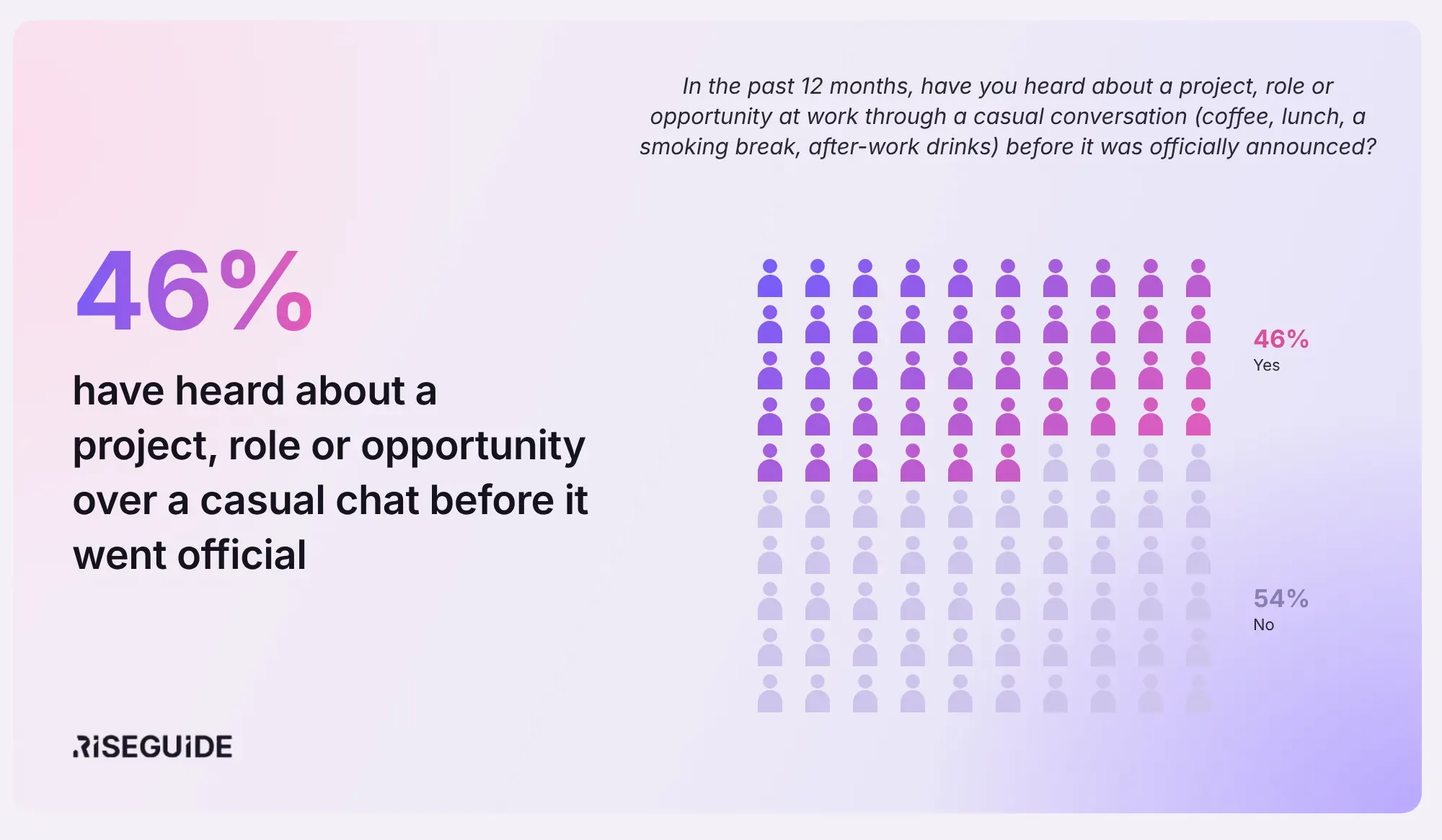
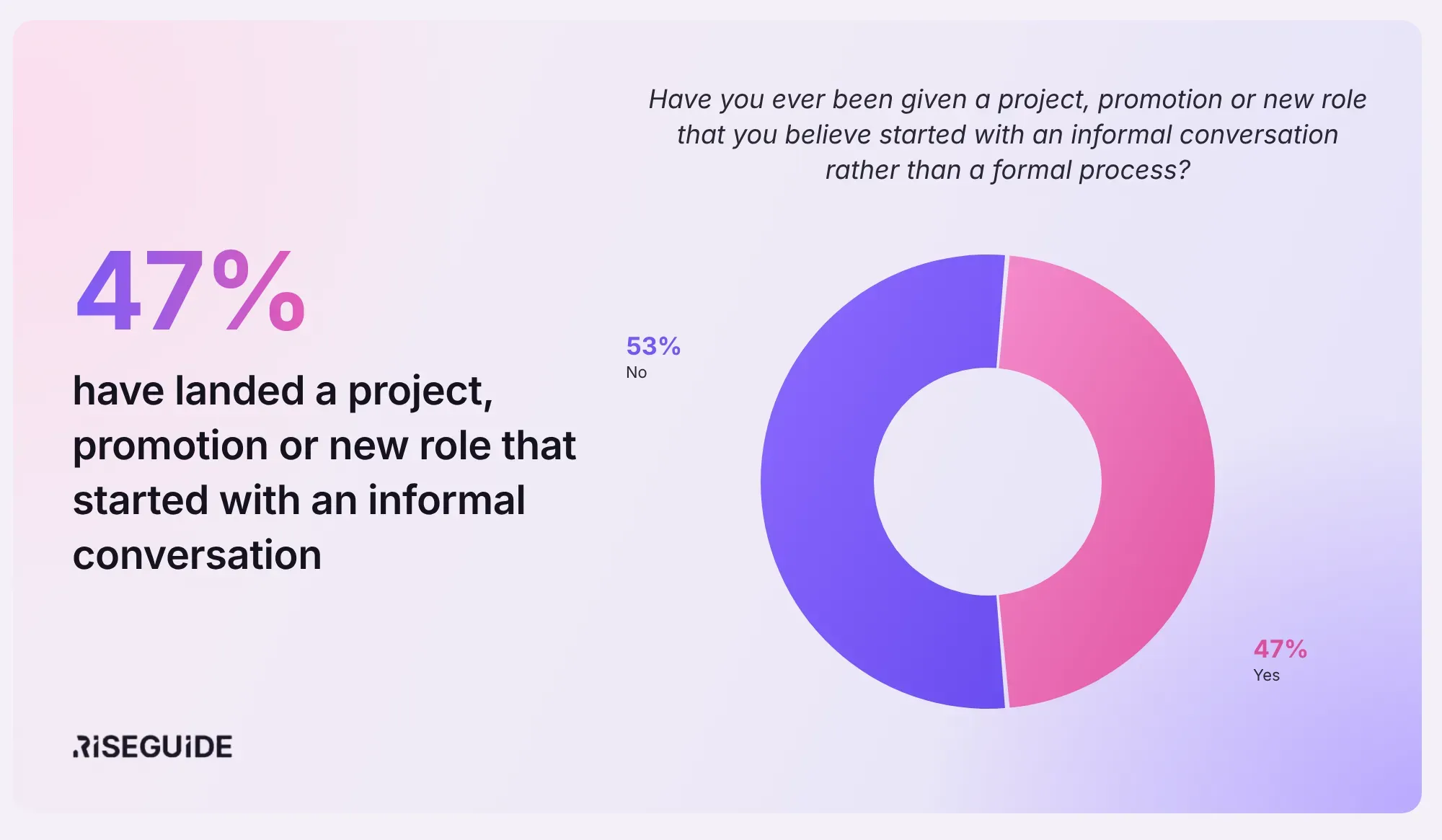
Think about the last time you heard news at work before it was official. 46% of the people we asked have heard about a project, role, or opportunity through a casual conversation (over coffee, lunch, a smoking break, or after-work drinks) before it was officially announced. 47% say they have been given a project, promotion, or new role that they believe started with an informal conversation rather than a formal process. This question isn't limited to the past year, and it reflects what people believe, not what a manager would say.
The two results sit close together. For nearly half of workers, casual conversations are how they hear about opportunities early, and how some of them end up being offered one.
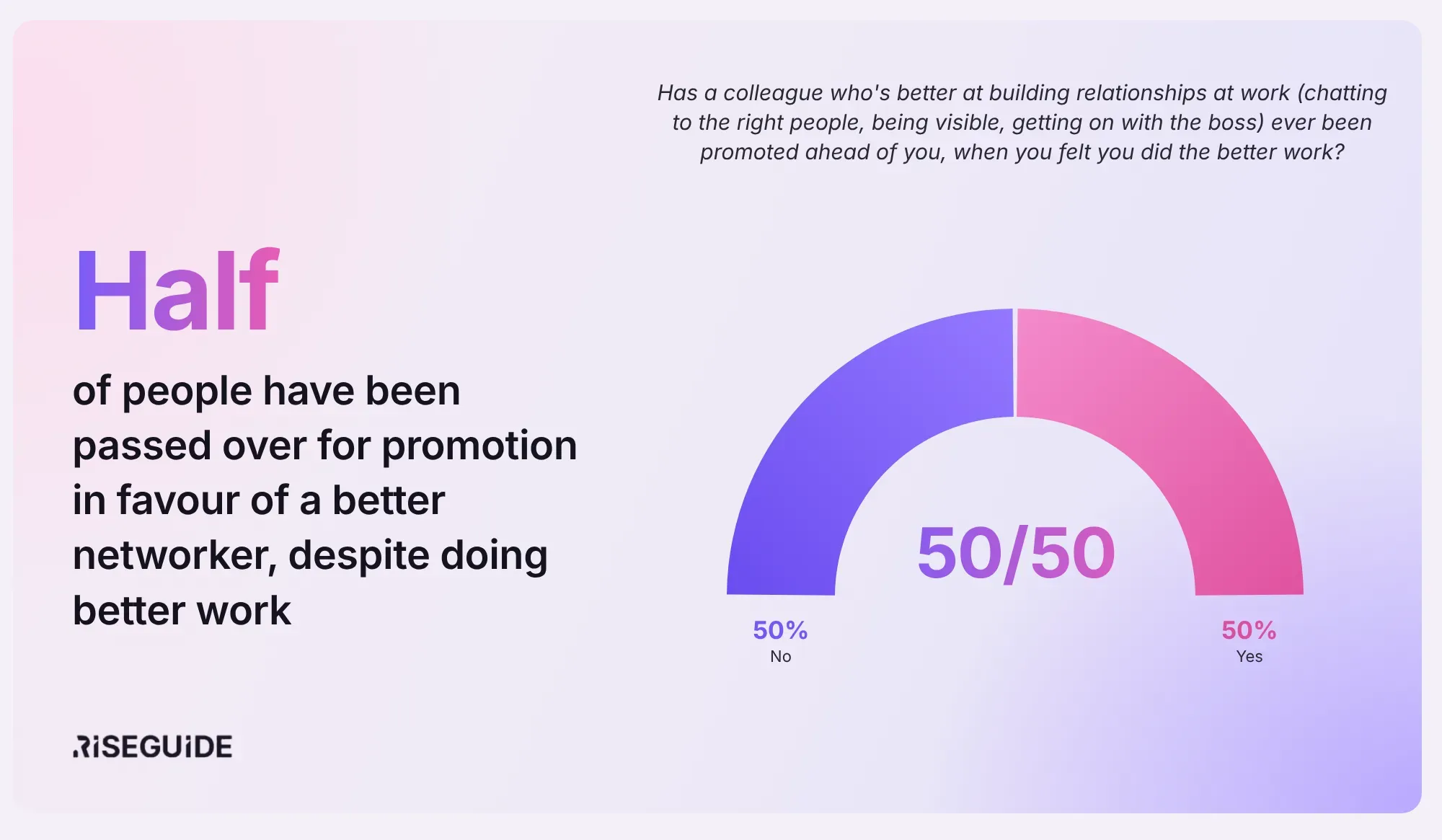
Has a colleague who is better at building relationships (chatting to the right people, being visible, getting on with the boss) ever been promoted ahead of you, when you felt you did the better work?
The answer split exactly down the middle: 50% say yes and 50% say no. The answer split exactly down the middle: 50% say yes and 50% say no. For half of workers, losing out to someone who is better at building relationships is a familiar story.
Perhaps the choice between brilliant and well-liked is a false one. Talent gets you considered, and relationships help the right people hear about it.
The good news is that building relationships is a skill like any other, and one anyone can practice: joining the chat, asking a question, staying in touch. If you've ever felt passed over, it may be worth building both.
The study surveyed 2,000 people to explore how people experience small talk at work. Participants were recruited through online survey panels using Random Device Engagement (RDE) technology to ensure a broad and diverse sample.