
John Lentini
Leadership Coach
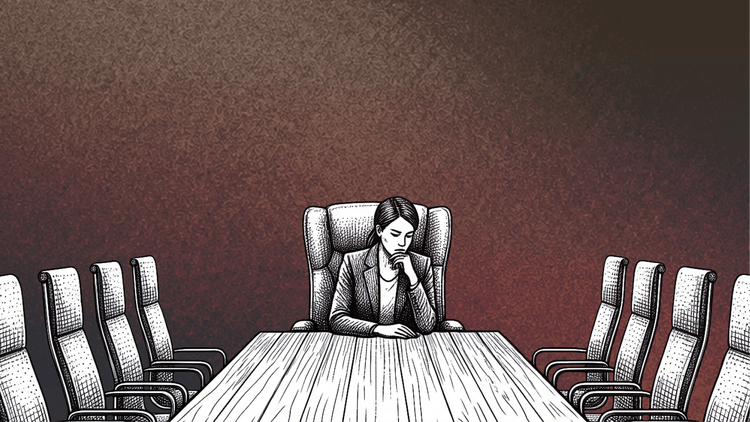
I'm John J. Lentini, The Leadership Engineer. I spent over two decades as a senior leader at some of the world's largest investment banks, running organizations across the Americas, Asia Pacific, and Europe, and I learned the most on the days those teams were under the greatest pressure. People talk about the weight of leadership. They talk about the hours, the decisions, the responsibility. They rarely talk about the part that surprised me most, which is how alone the job can leave you even when you are surrounded by people all day. That loneliness says less about the leader than about the role itself, and if you do not engineer guardrails around it, it will quietly wear down the very dials you lead with.
The isolation comes with the structure of the job. The higher you climb, the fewer people can see the full picture you are holding. You carry information you cannot share, decisions you cannot pre-announce, and doubts you cannot voice without shaking the confidence of the people counting on you. The team needs you steady, so you hold the fear yourself. That is part of the privilege of leading others, and it is also part of what separates you from them.
There is a second layer. The moment you have authority over people, the relationships change. You can be warm, respected, even liked, and you are still the person who decides their bonus, their promotion, their role in the next reorganization. Everyone in the room knows that, whether anyone names it or not. None of this makes you a bad leader, but it does make honest, unguarded connection with your own team harder to come by, and most leaders underestimate how much that costs them over time.
I think about leadership as a set of dials you can read and calibrate. Loneliness is not a dial of its own; you feel it as pressure on the ones you already have. It drags on your Mindset, because you start reading every situation with no one to check your thinking. It taxes your Resilience, because you absorb every hit alone, with no one to help you recover your footing faster. Leave it unattended long enough and it turns into something worse than fatigue: the belief that no one could possibly understand what you are carrying.
I have watched capable people fail here. They had the talent. What undid them was trying to carry the whole thing solo and calling it strength. Carrying it alone is an unmanaged risk, and it compounds quietly until the day it doesn't.
Watch what happens to a leader who has been alone with the weight for too long. They stop testing their thinking, because there is no one they trust enough to test it with. They read a threat and act on the first interpretation, with no second set of eyes to catch the flaw. They confuse being the only one accountable with being the only one who can be right. The decisions get faster and worse at the same time. By the time the cost shows up, the leader has usually convinced themselves that no one could have helped anyway. That is the tell. When you hear yourself deciding that you are the only one who understands, the loneliness has taken the wheel.
You do not wait until your worst day to check and control your dial settings, and you do not wait until you are hollowed out to build the support that keeps you standing. You build it now, while the water is calm.
Find your peers, not your team. The people who can truly understand your position are other leaders carrying a comparable load. Build real relationships with a few of them, inside or outside your company, where you can say the hard thing out loud without it landing on someone who reports to you. Those relationships run on Trust, and Trust is earned the usual way: through Integrity, Empathy, and Influence that hold up when you are at your least polished.
Keep one person who owes you nothing. A mentor, a coach, a friend from before the title. You want someone whose view of you does not depend on your performance and who will tell you the truth when everyone else is managing you.
Separate the decision from the confession. You cannot share every doubt with your team, but you can share it somewhere. Give yourself a release valve outside the org chart, so the pressure has somewhere to go besides the conference room.
Stay honest with yourself. When you catch yourself thinking no one understands and no one can help, treat that thought as a warning light on the panel and check it before you act on it.
Here is what I wish someone had told me earlier. Loneliness at the top comes standard with the job, and it says nothing about whether you are doing it well. The leaders who last are the ones who plan for it instead of pretending they are above it. We build Character before the crisis. Build your support the same way, on an ordinary day, so that when the pressure comes you are not facing it with no one at your side, or worse, convinced that facing it alone is what leadership requires. It never was.