Kris Driskill
Personal Development Expert

I have a friend who has this pattern. He'll bring up a challenging thought, speaking with a tone of authority. But when someone pushes back on it, his body slumps a bit as he says, "I know," negating everything he just said. I see patterns like this one all the time. And it's a small window into something bigger, because the words we choose are rarely the whole message.
Put twelve people in a room to watch the same event and interview them afterward, and you'll get twelve different opinions of what happened. The same room, the same event. What each person actually took in was the energy behind what was said, and the same sentence can carry very different energy depending on where it comes from inside you. That's good news, even if it doesn't sound like it yet, because it means you have far more room to change a conversation than your vocabulary alone would suggest.
I like to think about the energy options behind our language as a triangle. Negative energy sits at the base and can be either repressive or reactive. Positive energy is at the top, and the three corners give us three ways to say any single thing.
Start with a tiny phrase like "I know," the kind we say dozens of times a day. From the repressed corner, it has that lower feeling, going inward, pushing down, ignoring, and it shrinks the person saying it. From the reactive corner, that same "I know" comes out with a sharp energy, the one that's accusatory, annoyed, or impatient. From the responsive corner at the top, the very same "I know" can come out lighter and warmer, because you're responding instead of defending. The words never moved through any of that; the only thing that changed was the energy behind them. You can say the same words with a lightness and a brightness that carries a whole different impact on you and on the person receiving the message.
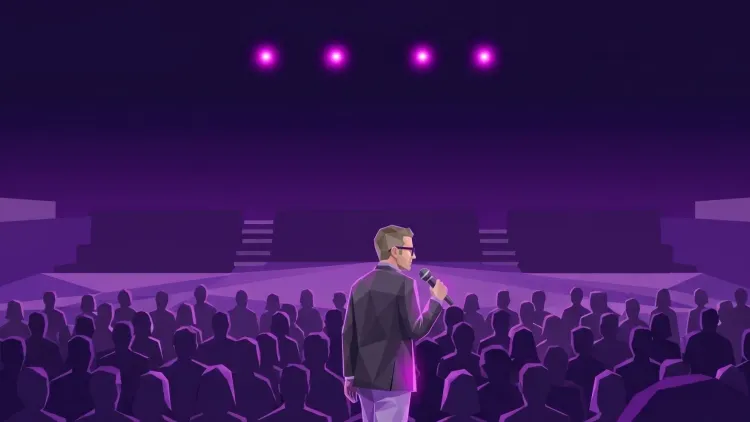
This matters because the energy is already doing something in your body before it reaches anyone else. The state you speak from is physical, and the person in front of you is reading it, whether either of you realizes it. It's the same truth underneath what an audience picks up from a speaker, where people always know when the words and the feeling don't line up.
It also travels outward and compounds. When I changed the energy I was bringing to my own language, I noticed how my relationship with my husband improved, and not only in how I spoke to him. He started feeling more valued and cared for, and that changed how he spoke to me and others. The tone we choose doesn't stay put in one conversation; it creates a ripple effect.
I want to be careful here, because forcing brightness on top of a repressed or reactive state is its own kind of pressure. This is where we get that kind of toxic positivity, the "I noticed I don't feel good, so I should just feel better" voice. It doesn't work that way. It's a practice, and it begins with noticing which corner you're actually speaking from before you try to move anywhere.
Before you can change anything, nonjudgmental awareness of how you’re using your energy comes first. Most of us default to one corner of that triangle out of long habit, and that default isn't set in stone. It can be different for different people, and different for the same person in different circumstances. We can't choose another corner until we notice the one we're already standing in. Once you can hear and feel it, the responsive corner becomes more available as a choice, and getting there gets easier, the way any skill does. You start where you are and build the capacity over time, the same way you'd train a muscle you can't see. Some days you'll catch the reactive edge only after it's already out of your mouth, and that still counts, because catching it late is how you eventually catch it early. This kind of self-noticing is part of mental fitness, and just like physical fitness, the more you build your skills, the stronger they get.